
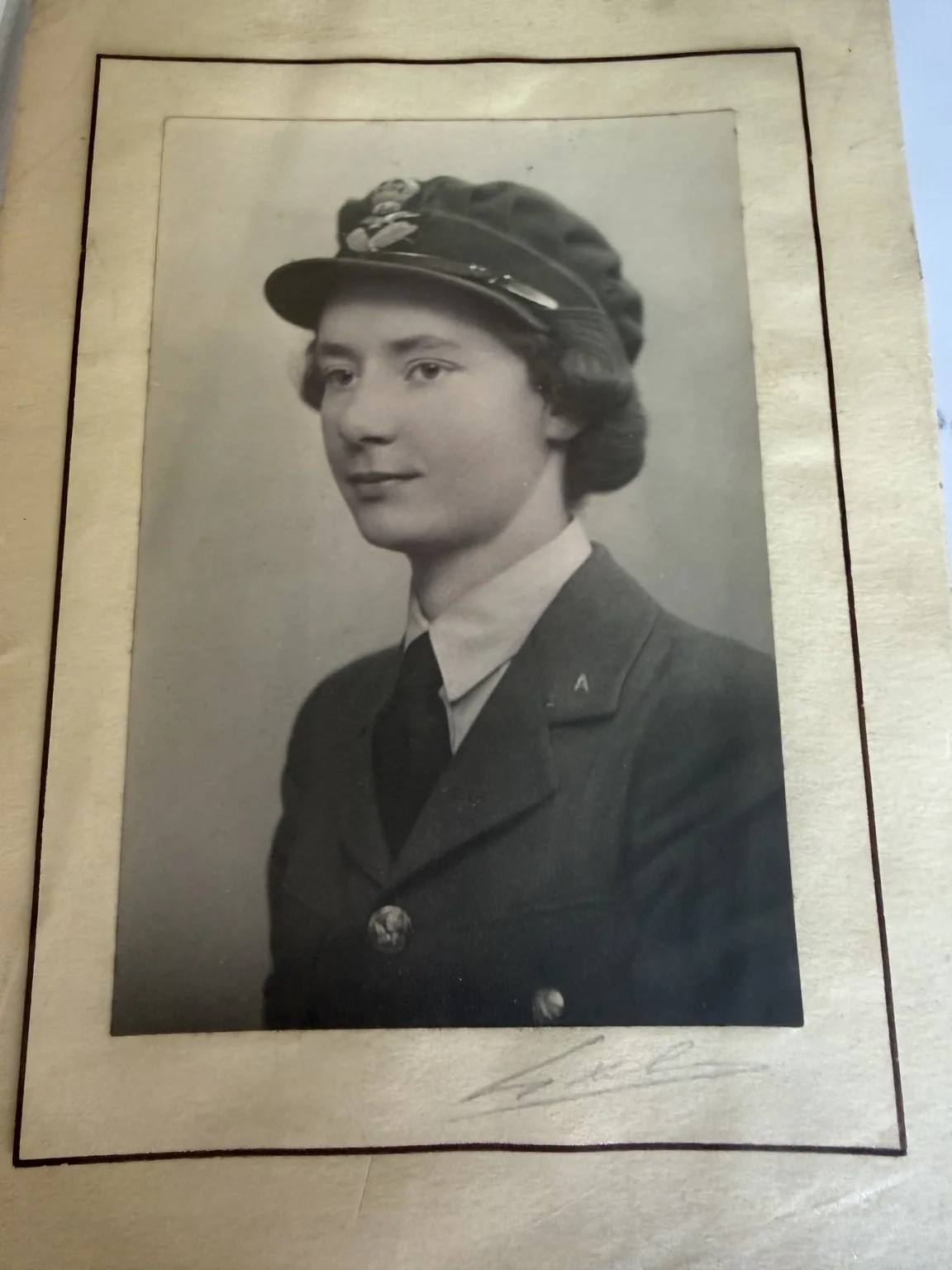
I knew her simply as Granny. She knitted jumpers for me — including Transformers and Care Bears designs — and made stuffed animals, especially a lion I remember fondly. She died when I was six, long before I was old enough to ask her about the life she had led.
Only many years later, after moving from Britain to Poland and developing a passion for the country’s history, did I begin to understand that my own family had a connection to Poland going back to the Second World War. Mum had kept Granny’s photographs, notes and military papers. Together, we began following their clues.
A young woman in wartime uniform
My grandmother, Peggy Lovell Wood (later Bloxham), joined the Women’s Auxiliary Air Force. Her service papers identify an Intelligence-branch commission in 1941; she later held the rank of Section Officer. By early 1942, the records and photographs place her in the world of RAF Hemswell in Lincolnshire — home to Polish bomber squadrons fighting alongside Britain.
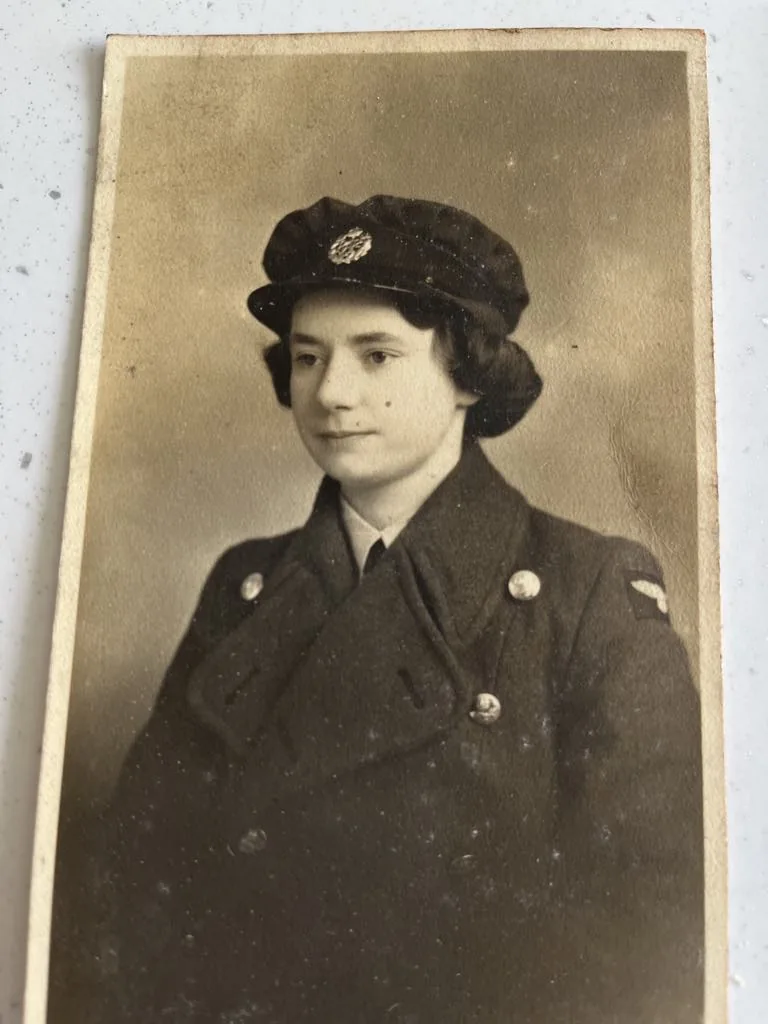
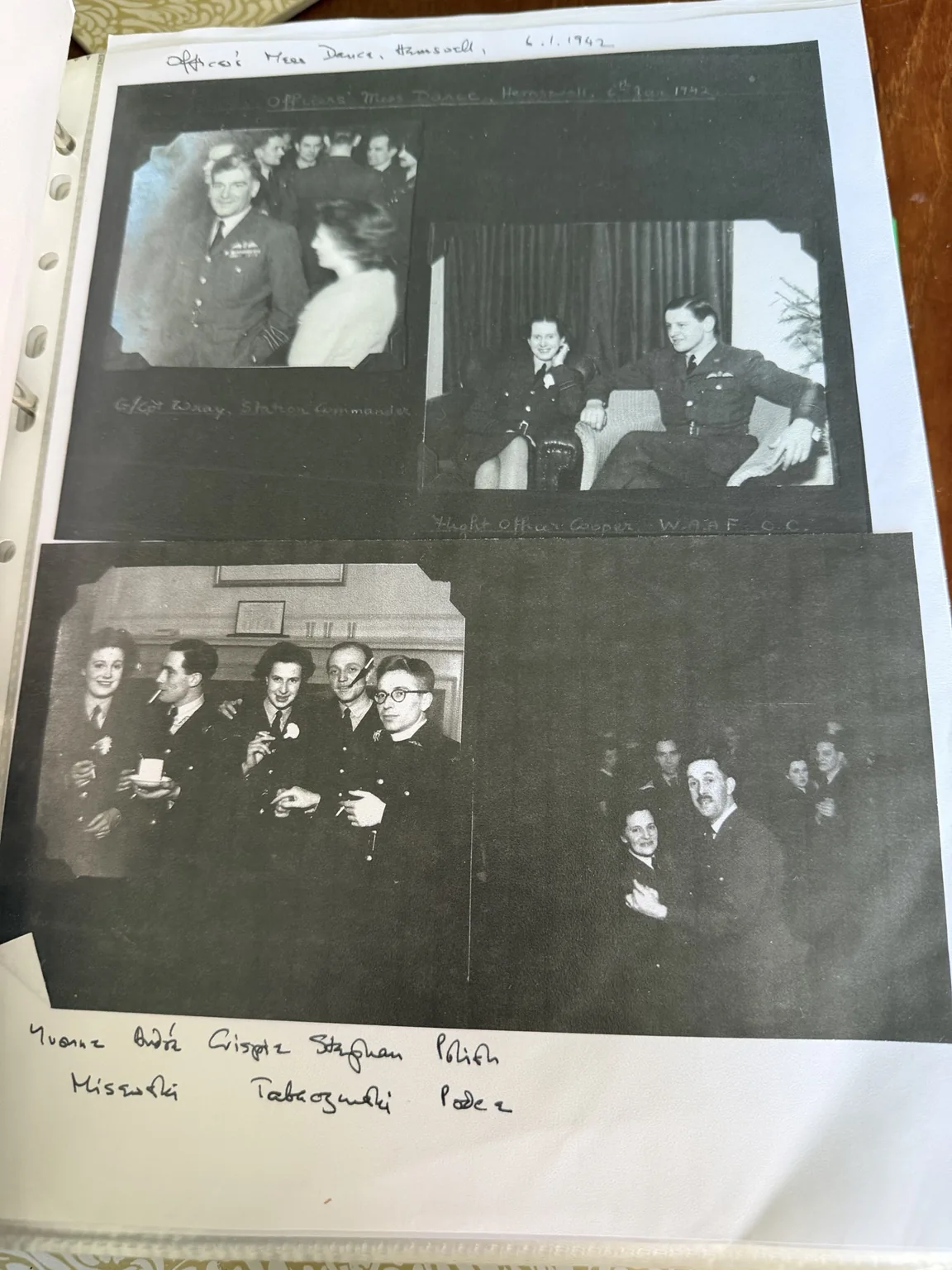
Much of the formal record concerns postings and appointments. The family album tells a different story: dances, colleagues and friendships. The people in these photographs weren’t simply names on squadron lists; they were part of Granny’s everyday life.
The Polish airmen in Granny’s album
In the winter of 1941–42, No. 300 and No. 301 Polish Bomber Squadrons operated from RAF Hemswell. One of Granny’s photographs is annotated as a presentation of Distinguished Flying Crosses, showing Squadron Leader Romuald Suliński of No. 300 Squadron, Wing Commander Witold Jacek Piotrowski of No. 301 Squadron, and Air Vice-Marshal R. D. Oxland, Air Officer Commanding No. 1 Group.
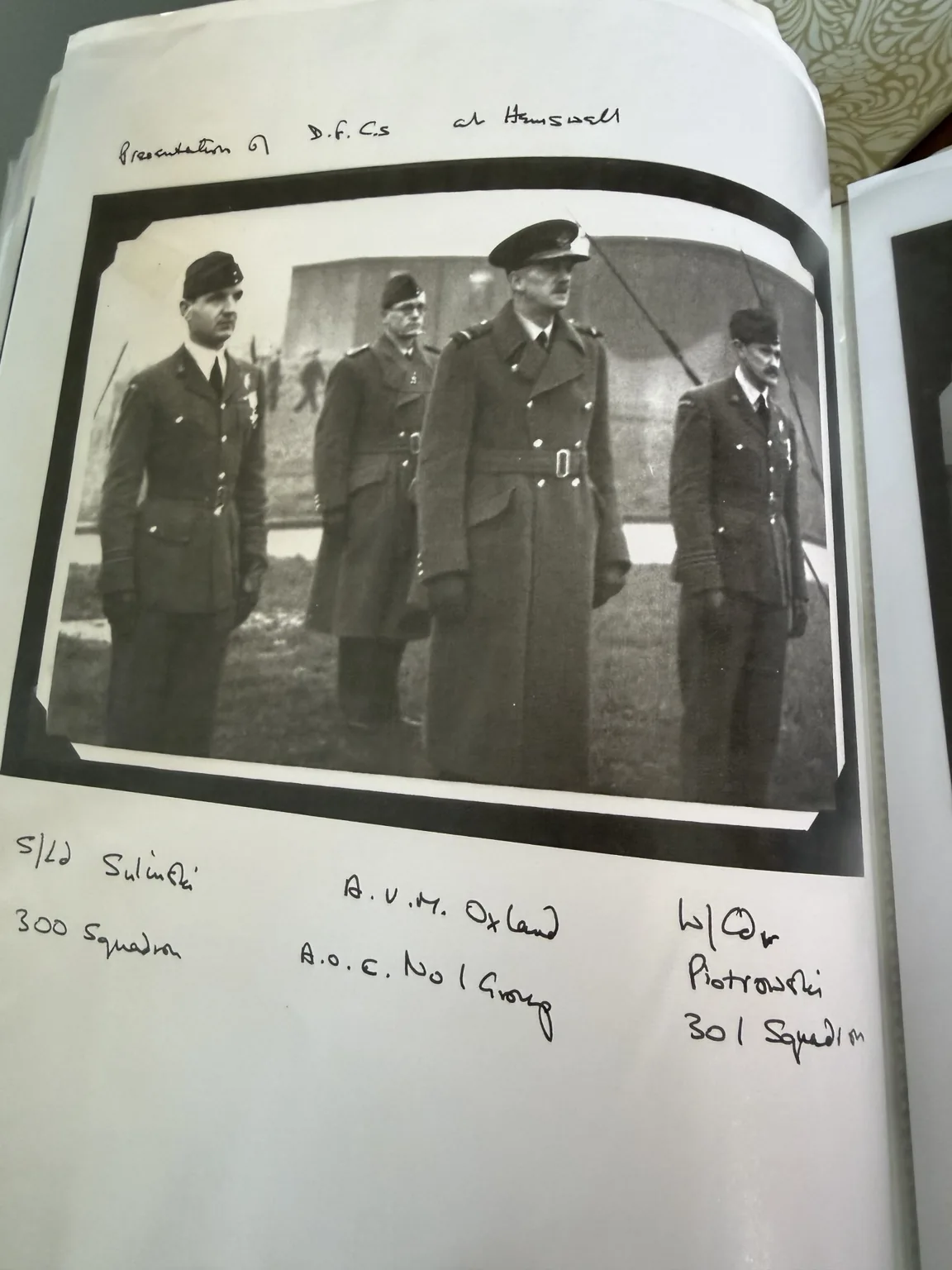
We subsequently obtained copies of the original RAF Operations Record Books. The No. 301 Squadron diary records Piotrowski’s decoration on 1 January 1942; No. 300 Squadron records Suliński’s decoration on 2 January 1942. These records independently corroborate the events associated with the photograph, though they do not establish whether Granny personally attended either ceremony.
Other pictures are filled with people identified in her handwriting: Zbyszek Szostak (spelling from the album, not yet independently verified), Jan, Joanna, and others whose full names remain uncertain. In several captions, the word “Self” refers to Granny herself — a simple but useful clue when reading the albums.
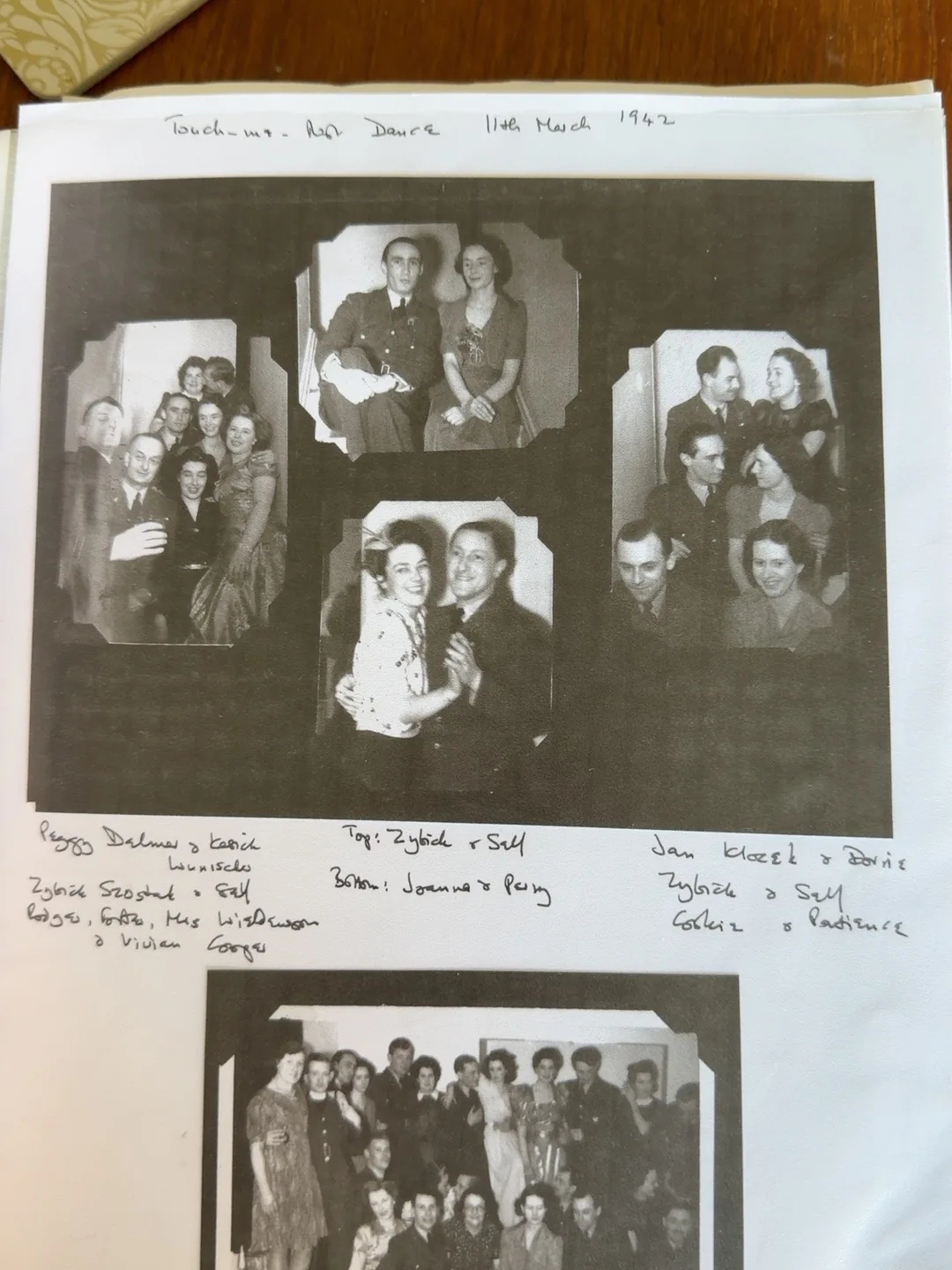
For me, these images make the British–Polish alliance tangible. They show not just aircraft and airfields, but people becoming friends in the middle of a war.
Finding her name in the intelligence records
Another discovery came from the Air Ministry lists. Granny’s service record includes an appointment associated with ACAS(I), the Assistant Chief of the Air Staff (Intelligence). A wartime Air Force List also records Section Officer P. L. Wood within the Deputy Directorate of Intelligence (Security) in 1943.
This directorate was concerned with matters such as safeguarding classified information, personnel and document security, and protective security policy. Her precise section and personal responsibilities remain unknown. Being named in an intelligence organisation is important evidence — but it does not, by itself, establish involvement in codebreaking or secret operations.
WAAF Intelligence officer; service at Hemswell; later Air Ministry intelligence appointment. The exact duties within those postings have not been recovered from the records currently available to our family.
The account Billy Mountain left behind
Granny rarely spoke about her wartime work, even to Grandad. Mum remembers how seriously she treated the duty to keep official secrets.
But around 2005, Mum visited Billy Mountain in Doncaster. Billy was a longtime friend of my grandfather, John Bloxham, and was said to have worked with Granny during the war. According to Mum, he told her that Peggy passed intelligence derived from Enigma decryptions to Allied generals in North Africa.
Billy died not long after that conversation, and the family never had an opportunity to ask him more. We have not found an independent record confirming his description of Granny’s assignment. Nevertheless, it is a named witness account, passed directly to Mum, and I believe it deserves to remain part of her story.
It is also an important distinction: Billy described the distribution of intelligence, not Granny personally breaking Enigma codes or working at Bletchley Park. Polish mathematicians and cryptanalysts had made pioneering contributions to breaking Enigma before the war; that historical connection gives Billy’s account particular resonance for this website, without proving that Peggy worked with Polish codebreakers.
Another mystery: a body on a Spanish beach
Mum also remembers Granny mentioning that she helped supply documents for a body placed on a Spanish beach to mislead the enemy about an Allied invasion. That description strongly resembles Operation Mincemeat, the 1943 deception operation before the Allied invasion of Sicily. The family recollection associates the deception with D-Day, but the known operation concerned Sicily, not the Normandy landings.
We have no documentary evidence linking Peggy personally to Mincemeat, so I present this as a recollection that remains to be tested — not a confirmed part of her service.
Cairo, Jerusalem, and the beginning of our family
Granny’s wartime travels later took her to Egypt and Palestine. It was in this part of the world that she met my grandfather, John Bloxham. Mum told me that John had gone to Cairo for training in interpreting aerial photographs for Royal Engineers route planning. A friend asked him to visit his fiancée in Jerusalem — and Peggy happened to be staying in the same house.
According to Mum, Granny knew John was due to be posted to Palestine before he was informed, but couldn't tell him. Their paths crossed again, and a relationship developed. They married in Jerusalem in November 1945, partly because a married couple had a better chance of avoiding demobilisation months apart.
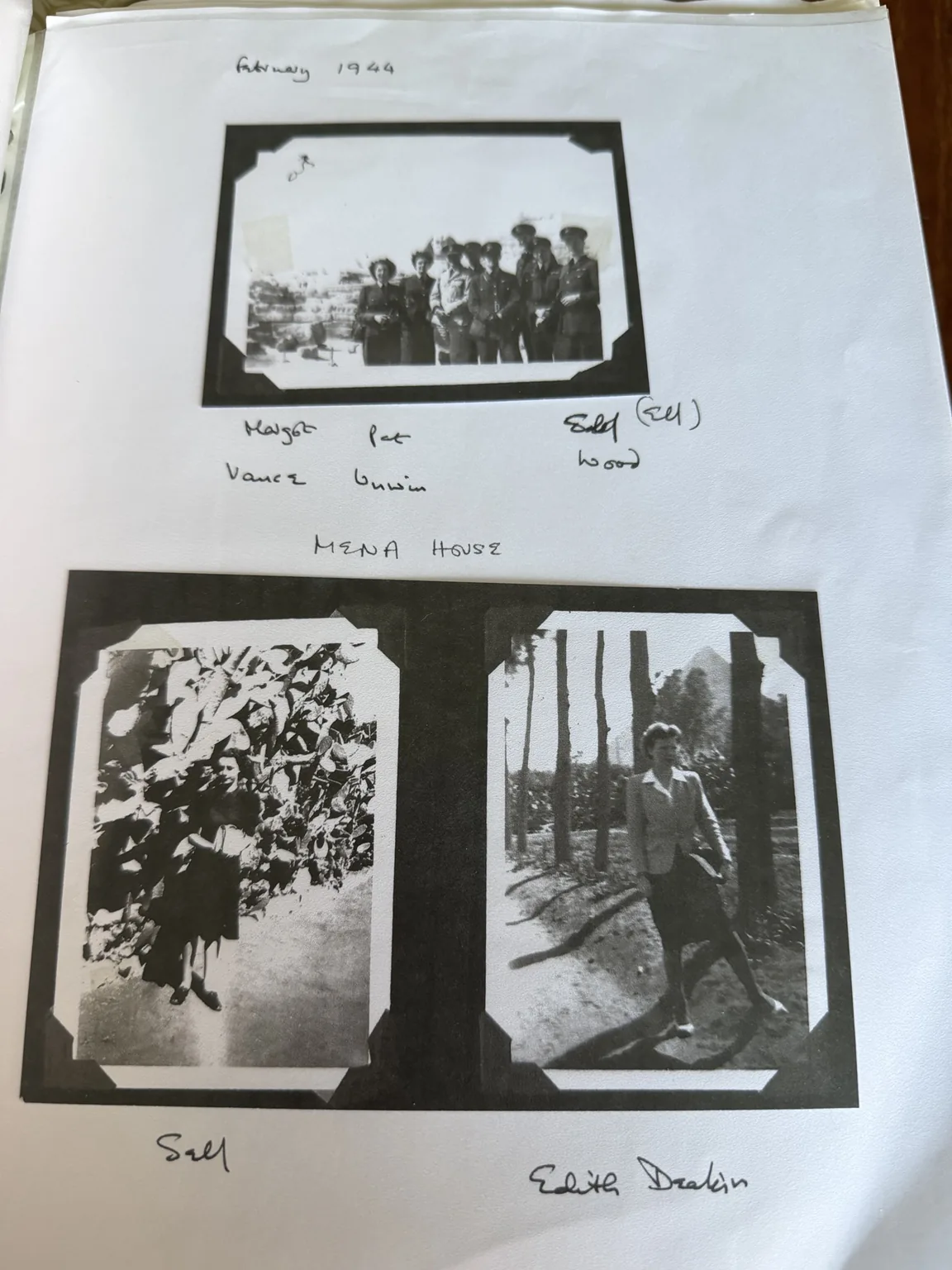
The military records may never tell us everything about what she did. But family memory tells us how two lives met against the backdrop of war, and how that encounter eventually led to my own family.
The Granny I remember
To the RAF, she was Section Officer P. L. Wood. To the people who knew her in wartime, she was Peggy. To me, she was Granny — the person who made a little boy a lion and knitted his favourite characters onto jumpers.
I wish I could ask her about Hemswell, the Polish friends in her photographs, or what Billy Mountain told Mum. I never had the chance. But thanks to Mum’s care in keeping the albums and papers, and the surviving wartime records, we're beginning to piece together the story she left behind.
After making my home in Poland and spending years documenting the country’s history, discovering my family’s own connection to Polish airmen has been an unexpected gift. This article is for Granny, and for Mum, who kept her story alive.
Can you help identify someone?
If a name or face in these albums is familiar — especially if your family served with No. 300 or No. 301 Polish Squadron at Hemswell — I would love to hear from you. Please include the photograph, name and any supporting details when you get in touch. We’ll distinguish family memories from independently verified identifications as new information arrives.
Sources and research notes
This is a personal family-history account. Where the evidence cannot establish an individual duty, the distinction is made explicitly.
- Family archive: Peggy’s RAF Form 543, Service and Release Book, wartime photographs and handwritten annotations, and recollections supplied by Mum.
- The National Archives: No. 300 Squadron Operations Record Book, AIR 27/1656/1 (January 1942); No. 301 Squadron Operations Record Book, AIR 27/1660/31 (January 1942).
- Air Ministry: 1943 Air Force List, Deputy Directorate of Intelligence (Security), listing P. L. Wood. RAFWeb transcription; original printed list is the preferred verification source.
- Family testimony: Mum’s account of Billy Mountain’s conversation and Peggy’s remarks about deception documents. Neither alleged activity has yet been confirmed in Peggy’s individual records.
Names transcribed from handwritten album captions may need corrections; readers with corroborating information are warmly invited to contact the site.