Victory is not the test.
Defeats, sieges and failed uprisings belong here when they altered the state, changed a campaign or became central to national memory.

Not a victory parade. This is a guide to the battles, sieges and military turning points that changed the Polish state, affected its survival or borders, or became important parts of how Poles remember their history. The battlefield matters — but so do the campaign around it, the people who fought it and the places where that history can still be explored.
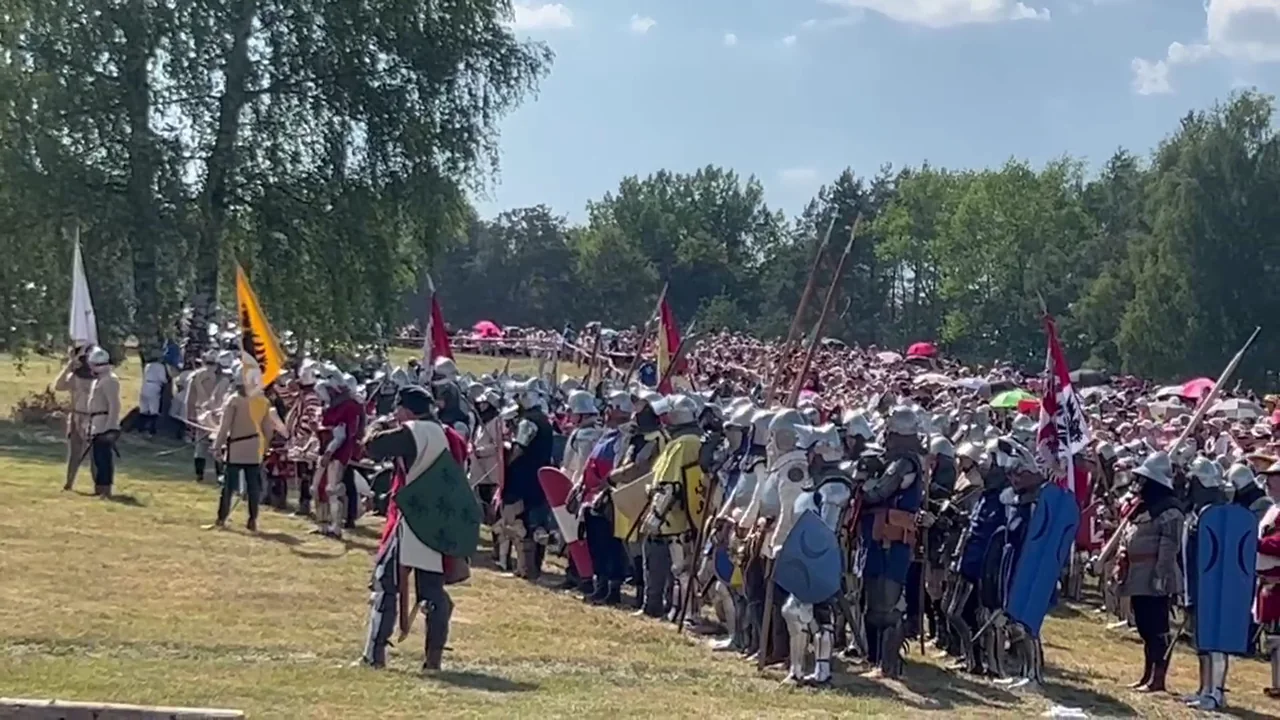
A famous charge can make a wonderful story, but importance is not measured by how good the painting looks. These entries are selected for consequence, campaign value and historical memory.
Defeats, sieges and failed uprisings belong here when they altered the state, changed a campaign or became central to national memory.
Deep dives will explain what each side was trying to achieve, what happened before the battle and what the result actually changed afterwards.
Commanders link to the People collection; battlefields, museums, monuments and cities link back into Discover Poland and the wider Timeline.
These filters preview the deeper campaign guides that will eventually sit above individual battle pages. Start with a conflict and the isolated engagements begin to make sense.
Showing 35 of 35 entries
Early Piast state
Why it matters. One of the earliest recorded military victories associated with the emerging Piast state — important less for scale than for what it represents: a new political power defending its frontier.
German–Polish war of 1109
Why it matters. A famous episode of resistance during Henry V’s invasion. The siege became part of the heroic memory surrounding Bolesław III and the defence of the early Polish kingdom.
Mongol invasion of Europe
Why it matters. Henry II the Pious was killed and the battle became the defining Polish episode of the first Mongol invasion — a reminder that medieval Polish history was part of much wider Eurasian conflict.
Polish–Teutonic War
Why it matters. Not a second Grunwald, but an important battle in the revived kingdom’s struggle with the Teutonic Order and a useful marker of Poland’s return as a more coherent state.
Polish–Lithuanian–Teutonic War
Why it matters. One of medieval Europe’s largest battles and one of the central military memories of Poland and Lithuania. The victory shattered much of the Order’s military prestige, although the political struggle continued for decades.
Thirteen Years’ War
Why it matters. A turning point in the Thirteen Years’ War after earlier Polish setbacks. It helps explain how the longer Teutonic struggle moved from the drama of Grunwald toward the territorial settlement of 1466.
Muscovite–Lithuanian War
Why it matters. A major victory over Muscovy under Konstanty Ostrogski. It belongs to a shared Lithuanian–Polish military history and shows why modern national labels need care when describing the Jagiellonian world.
War of the Polish Succession
Why it matters. A battle with enormous state consequence and surprisingly little international fame: Zamoyski defeated and captured Maximilian, securing the contested throne for Sigismund III Vasa.
Polish–Swedish War
Why it matters. One of the classic tactical victories associated with the Commonwealth cavalry tradition. The army was led by a Lithuanian hetman, making it a particularly useful example of why “Polish battle” can be an oversimplification.
Polish–Muscovite War / Time of Troubles
Why it matters. A remarkable battlefield victory with unusually large political consequences. It opened the road to Moscow and to the extraordinary episode in which Prince Władysław was offered the Russian throne.
Polish–Ottoman War
Why it matters. A major defensive campaign on the Commonwealth’s south-eastern frontier. The fighting is inseparable from the role of Cossack forces and from the death of Grand Hetman Jan Karol Chodkiewicz.
Khmelnytsky Uprising
Why it matters. One of the largest battles of the Khmelnytsky Uprising. It belongs to the history of a Commonwealth already under intense internal and external pressure — victory on the field did not resolve the deeper crisis.
The Swedish Deluge
Why it matters. Militarily small compared with the wider war, culturally enormous. The monastery’s survival became one of the defining later images of resistance during the Deluge and a powerful part of Polish national memory.
Russo–Polish War
Why it matters. A major eastern victory after the catastrophic middle years of the seventeenth century. It briefly restored the Commonwealth’s position and belongs beside Orsha and Kłuszyn in the longer story of wars with Muscovy.
Polish–Ottoman War
Why it matters. Sobieski’s great field victory before Vienna. It transformed his political standing and helped propel him to the Polish throne the following year.
Great Turkish War
Why it matters. The most internationally recognisable battle associated with Jan III Sobieski. Its significance is European and coalition-based: Polish forces were central, but this was not simply “Poland versus the Ottomans”.
War in Defence of the Constitution
Why it matters. A battlefield victory in the doomed War in Defence of the Constitution and the event traditionally associated with the creation of the Virtuti Militari. It gives military context to the political crisis of 1792.
Kościuszko Uprising
Why it matters. The iconic victory of the Kościuszko Uprising, remembered especially for the participation of scythe-bearing peasant troops. Its symbolic afterlife became far larger than its immediate strategic effect.
Kościuszko Uprising
Why it matters. The reverse image of Racławice: a decisive defeat that broke the uprising’s momentum and led to Kościuszko’s capture. The two battles make far more sense when read together as one campaign story.
Peninsular War
Why it matters. Not fought in Poland and not fought by an independent Polish state — which is precisely why it belongs here. The charge became one of the most enduring images of Polish soldiers in the Napoleonic era.
Austro–Polish War
Why it matters. The better Napoleonic battle for understanding the Polish state itself. Poniatowski checked the Austrian advance, withdrew from Warsaw, and then turned the wider campaign into territorial gains for the Duchy.
November Uprising
Why it matters. A central battle of the November Uprising. It checked the immediate Russian drive on Warsaw and became one of the defining military memories of the nineteenth-century struggle against imperial rule.
First World War / Polish Legions
Why it matters. Important less as a war-winning battle than as part of the independence movement’s military memory. The Legions’ performance strengthened the political argument that Polish forces could form the nucleus of a future army.
Polish–Ukrainian War
Why it matters. More campaign than single-day battle, but fundamental to the founding mythology of the Second Republic. The Orlęta Lwowskie — the “Lwów Eaglets” — became enduring symbols of sacrifice and contested memory.
Polish–Soviet War
Why it matters. The decisive turning point of the Polish–Soviet War and a battle with consequences beyond Poland. It preserved the restored state at its moment of greatest danger and shattered the Soviet offensive toward the capital.
Polish–Soviet War
Why it matters. A major cavalry battle that broke the offensive power of Budyonny’s Konarmiya after the failure to take Zamość. It belongs inside the wider 1920 campaign, not as a colourful cavalry footnote.
IPN describes Komarów as one of the most important clashes of the Polish–Soviet War.
Polish–Soviet War
Why it matters. Warsaw stopped and reversed the Soviet offensive; the Niemen operation prevented Tukhachevsky from rebuilding the campaign. It is the essential final act when telling the military story of 1920.
IPN describes the Niemen offensive as the action that finally broke the rebuilt Soviet Western Front.
September Campaign
Why it matters. Militarily small, culturally immense. The defence became one of the defining symbols of September 1939 and of resistance against the German invasion.
September Campaign
Why it matters. Often remembered as the “Polish Thermopylae”. Its place on a general page comes primarily from the extraordinary imbalance of forces and the later memory of a defence undertaken with almost no realistic prospect of relief.
September Campaign
Why it matters. The largest Polish counter-offensive of the September Campaign. It failed to reverse the invasion, but forced major German formations to respond and is essential to understanding that 1939 was not simply a sequence of passive retreats.
September Campaign
Why it matters. The last major battle of the September Campaign. It provides the right closing point for the conventional 1939 military story — organised resistance continued after Warsaw had fallen.
Eastern Front
Why it matters. Its military effect was modest; its later political use was not. Communist Poland elevated Lenino into a foundational battle of the army formed under Soviet sponsorship, making the memory of the battle part of its significance.
Italian Campaign
Why it matters. One of the defining battles of the Polish Armed Forces in the West. The victory linked battlefield achievement with the tragedy of an army fighting for a homeland whose postwar political future was being decided elsewhere.
Operation Tempest / German occupation
Why it matters. Not a conventional set-piece battle, but impossible to omit from Polish military history. It was the Underground State’s attempt to liberate the capital before Soviet-backed power took control — followed by defeat and the city’s systematic destruction.
Normandy Campaign
Why it matters. The Western-front companion to Monte Cassino. Maczek’s division held the crucial Mont Ormel–Chambois area under intense pressure and helped close the pocket around retreating German forces.
The long-term goal is not 35 isolated articles. Each deep dive will sit inside a campaign and connect outward to the people who fought it, the places where it happened, the relevant Timeline moments and any Brit in Poland videos or travel guides that bring the history into the present.