Gniezno & Poznań
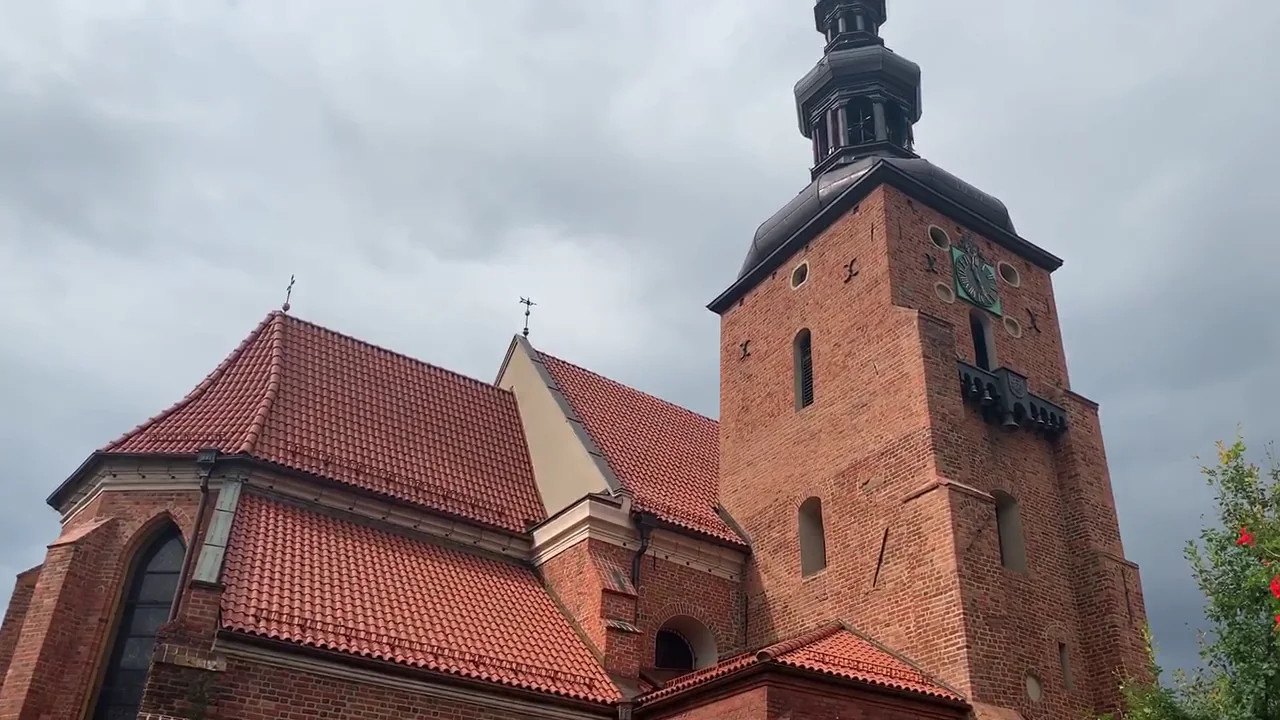
Early Piast political and ecclesiastical centres; “first capital” is useful shorthand, not a modern legal designation.

Poland’s borders have moved. Its centres of power have moved. For 123 years there was no sovereign Polish state on the map at all — yet the political and cultural idea of Poland survived.
Showing all 100 events
Medieval “capital” is slippery. Rather than force one neat sequence, this strip shows the changing centres of rule and the exceptional wartime cases.
Early Piast political and ecclesiastical centres; “first capital” is useful shorthand, not a modern legal designation.
Casimir the Restorer rebuilds the state from the south; Wawel becomes the dominant royal centre.
A principal seat under Władysław Herman and Bolesław III Wrymouth, both buried in the cathedral.
Coronations at Wawel anchor the reunited kingdom and later Commonwealth tradition.
The Sejm already meets here; court and central offices gradually make Warsaw the working royal centre.
The Polish government-in-exile preserves state continuity abroad after the 1939 invasions.
Seat of the Soviet-backed PKWN and emerging postwar authorities before government returns to Warsaw.
The communist constitution is the first Polish constitution to state directly that Warsaw is the capital.
Large cards mark structural turning points: a new state, a major constitutional change, invasion, partition, regime change or a moment deeply embedded in national memory.
Compact cards stop history from teleporting. They keep the Second Partition, First Peace of Toruń, Płock, treaties, protests and other connecting tissue on the page.
Content links appear only where Brit in Poland already has something useful. More will light up organically as new historical videos and articles are created.
A Piast-ruled polity consolidates around strongholds in Greater Poland before the famous baptism date.
There is no single morning when “Poland begins”. The 960s are better understood as the period in which Mieszko I appears in written sources as ruler of an expanding state.
The ruler of the emerging Piast state accepts Latin Christianity — the conventional starting point of Polish statehood.
The baptism links Mieszko’s realm to the Latin Christian political world and creates a durable date around which later Polish historical memory is organised.
Mieszko I defeats forces led by Margrave Odo near the western edge of his realm.
Cedynia is important less because it decides the future of Europe than because it is one of the earliest battles attached to the Piast state and later acquires a large place in national memory.
Emperor Otto III meets Bolesław Chrobry and an independent Polish church province is established at Gniezno.
Gniezno becomes a crucial sacred and political centre. Treat “first capital” as useful shorthand rather than a modern legal designation.
The Piast ruler takes the royal title shortly before his death, elevating the status of the young kingdom.
The royal title will disappear and return more than once during the unstable centuries that follow.
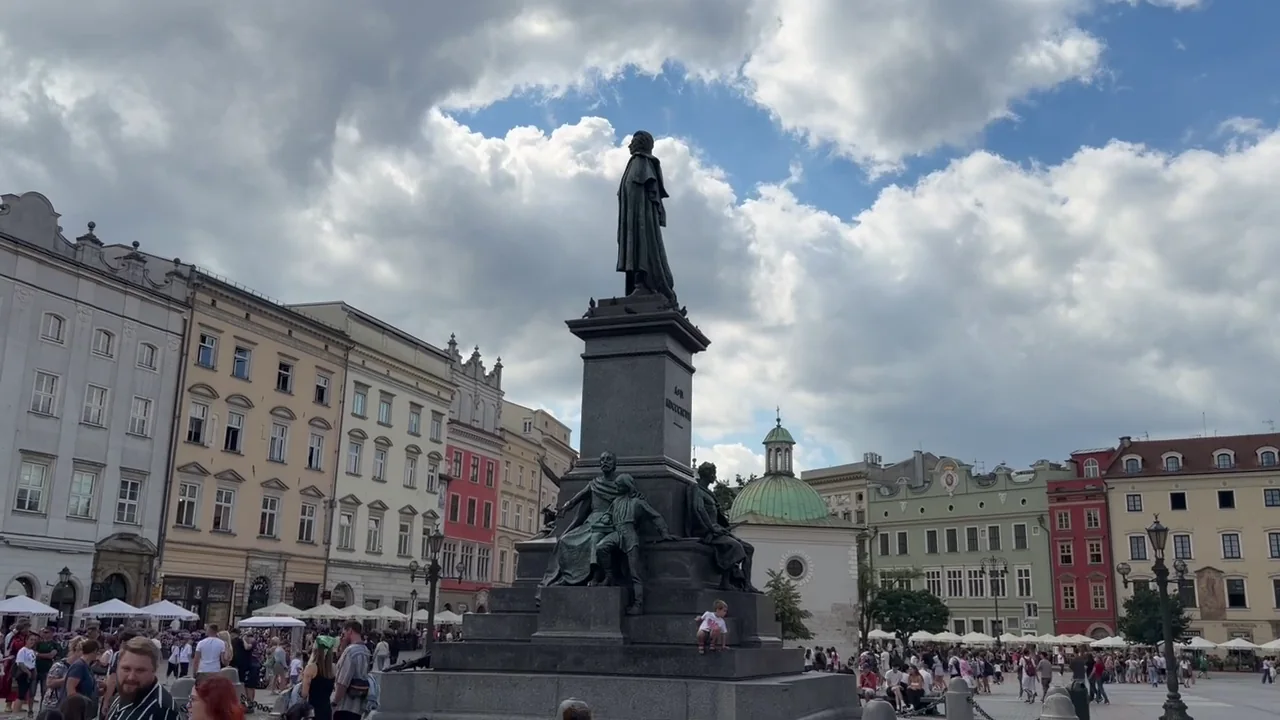
Dynastic crisis, revolt and a devastating Czech invasion weaken the early Piast core; Casimir the Restorer rebuilds power with Kraków as a principal seat.
This is the first major shift in Poland’s political geography. Kraków becomes the long-term royal centre, although medieval rule remains itinerant.
Under Władysław Herman and Bolesław III Wrymouth, Płock serves as one of the principal seats of Poland’s rulers.
Both rulers are buried in Płock Cathedral. It is a useful reminder that medieval Poland did not have one permanently fixed capital in the modern sense.
Bolesław III Wrymouth’s succession arrangements divide the Piast realm among his sons and open a long period of regional duchies.
The fragmentation era helps explain why the Polish lands of the 12th and 13th centuries look like a dynastic patchwork — and why some regions begin following different political paths.
Konrad of Mazovia invites the Teutonic Knights to help fight pagan Prussians on his frontier.
The arrangement produces a powerful military state on Poland’s northern flank and sets up centuries of conflict, diplomacy and eventually Prussian state-building.
A Mongol army defeats a coalition led by Henry the Pious during the first Mongol invasion of Poland.
The battle is remembered as a major shock to the fragmented Polish lands. The Mongols soon withdraw, but further incursions follow later in the century.
A royal coronation returns after a long gap, signalling that reunification is becoming a realistic political project.
Przemysł II is murdered the following year, but his coronation is an important bridge between fragmentation and the restored kingdom of the 14th century.
Władysław I Łokietek is crowned in Kraków, restoring a durable Polish kingship after the fragmentation era.
Not every historical Polish territory is recovered, but the political centre of a reunited kingdom is now unmistakably tied to Kraków and Wawel.
Casimir III strengthens royal administration, develops towns and castles, and expands the kingdom eastward.
The famous saying that he “found Poland wooden and left it brick” is a later simplification, but it captures the scale of building and institutional change associated with his reign.
Casimir the Great establishes the university that will later become the Jagiellonian University.
It becomes one of the most enduring institutions in Polish intellectual life and a useful reminder that state-building is not only borders and battles.
Casimir the Great dies without a legitimate son and the Polish crown passes to the Angevin dynasty.
The succession crisis opens the route to Jadwiga and then the Lithuanian union — one of the biggest changes in Poland’s historical scale.
Jadwiga of Anjou is crowned “king” of Poland, giving the kingdom a sovereign ruler before the Lithuanian marriage settlement.
Her reign is central to the dynastic transition that links Poland with Lithuania and later to the foundation story of the Jagiellonian University.
The Polish crown and the Grand Duchy of Lithuania are joined through the marriage arrangement of Jadwiga and Jogaila.
The union changes Poland’s strategic orientation and begins a political relationship that will evolve for almost two centuries before the Union of Lublin.
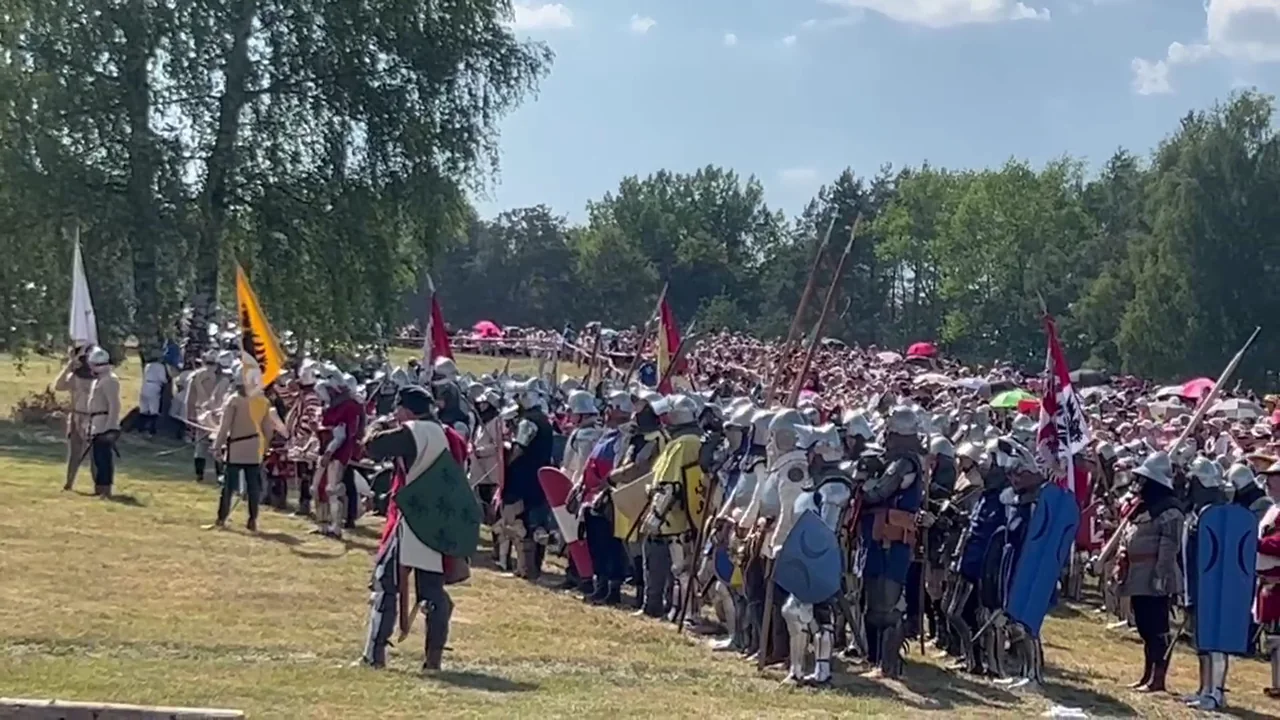
Polish-Lithuanian forces defeat the Teutonic Order in one of medieval Europe’s largest battles.
The victory does not instantly destroy the Order or deliver Malbork. Its political consequences unfold over decades, which is why the Toruń settlements matter too.
The war containing Grunwald ends with a settlement far less dramatic than the battlefield victory.
The peace leaves the Teutonic state intact. The unresolved struggle helps explain why another major war follows in the middle of the century.
The Prussian Confederation rebels against Teutonic rule and the Polish crown enters a long war with the Order.
This conflict, more than Grunwald alone, transforms control of the Baltic-facing territories and leads directly to the Second Peace of Toruń.
Royal Prussia comes under the Polish Crown while the remaining Teutonic state becomes a Polish fief.
Gdańsk, Toruń and other important territories are drawn into the Polish political system, changing the kingdom’s relationship with the Baltic.
A bicameral parliament of the Crown develops into the form associated with the later noble republic.
The Sejm becomes one of the defining institutions of Polish political culture, balancing monarchy with a politically powerful nobility.
The king accepts that major new laws require the consent of the Sejm.
The act is a landmark in the development of the “noble democracy” that will later characterise the Commonwealth — both admired and criticised in hindsight.
Albert of Brandenburg-Ansbach secularises the Teutonic state and pays homage to the Polish king as Duke of Prussia.
The image is iconic; the longer-term irony is enormous. Ducal Prussia will eventually become part of the political tradition that produces the Kingdom of Prussia.
Poland and Lithuania create the Polish-Lithuanian Commonwealth with a common elected monarch and parliament.
The new Commonwealth remains institutionally complex rather than becoming a simple unitary state. It also contains many peoples, languages and religions beyond ethnic Poles and Lithuanians.
Sigismund II Augustus dies without an heir, forcing the Commonwealth to formalise an elective monarchy.
The interregnum leads directly to the first free royal election, the Henrician Articles and new guarantees about the political system.
The nobility elects Henry of Valois and sets permanent constitutional conditions on future monarchs.
The Commonwealth’s monarchy is now explicitly elective. Royal authority exists inside a negotiated political framework rather than simple hereditary succession.
The nobility adopts an agreement associated with protection of religious peace during the interregnum.
It becomes one of the best-known symbols of the Commonwealth’s tradition of confessional coexistence, even though tolerance was never absolute or equal for everyone.
Sigismund III Vasa gradually makes Warsaw the principal royal residence and central offices follow.
The Sejm had already been meeting in Warsaw. Kraków remains the coronation and symbolic royal city for much longer; the “capital shift” is a process, not a single legal switch.
Commonwealth forces under Jan Karol Chodkiewicz defeat a much larger Swedish army.
It is one of the classic battlefield demonstrations of the winged hussars, although strategically it does not settle the long rivalry with Sweden.
A Cossack uprising led by Bohdan Khmelnytsky explodes across the Commonwealth’s Ukrainian lands.
The conflict draws in social, religious and political tensions and becomes a turning point in Polish, Ukrainian and Jewish histories. It also helps open the Commonwealth’s mid-17th-century crisis.
Swedish invasion and wider wars devastate large parts of the Commonwealth.
The state survives, but the demographic, economic and military damage is enormous. The defence of Jasna Góra becomes one of the conflict’s most powerful later symbols.
John III Sobieski leads a coalition relief army that helps break the Ottoman siege of Vienna.
The victory gives Poland one of its most enduring European military legends. It does not, however, reverse the Commonwealth’s growing internal and geopolitical problems.
Augustus II the Strong is elected king, linking the Commonwealth in personal union with Saxony.
The next decades draw the Commonwealth deeper into dynastic and great-power struggles while its own political institutions become increasingly vulnerable to outside pressure.
The Commonwealth becomes a major theatre of a war dominated by Sweden, Russia and Saxony.
Even when Polish-Lithuanian interests are not the main cause of the conflict, armies cross and devastate its territory. Russia emerges with far greater influence in the region.
A one-day parliamentary session approves reforms under heavy Russian mediation and pressure.
It becomes a symbol of the Commonwealth’s weakening sovereignty and Russia’s growing ability to shape its political order.
The last king of the Commonwealth begins a reign associated with both reform and dependence on Russian power.
Education, administration and culture modernise, while the political struggle over sovereignty grows more intense.
A confederation of nobles fights against Russian influence and King Stanisław August’s political direction.
The conflict becomes one of the immediate crises preceding the First Partition and an early touchstone in later traditions of armed resistance.
Russia, Prussia and Austria seize large parts of the Commonwealth.
The state survives, but the partition makes the loss of sovereignty impossible to ignore and sets the background for the reform movement of the Great Sejm.
A four-year parliament attempts major reforms while the international balance briefly gives the Commonwealth room to act.
Its work culminates in the Constitution of 3 May and a wider attempt to strengthen a state already damaged by the First Partition.
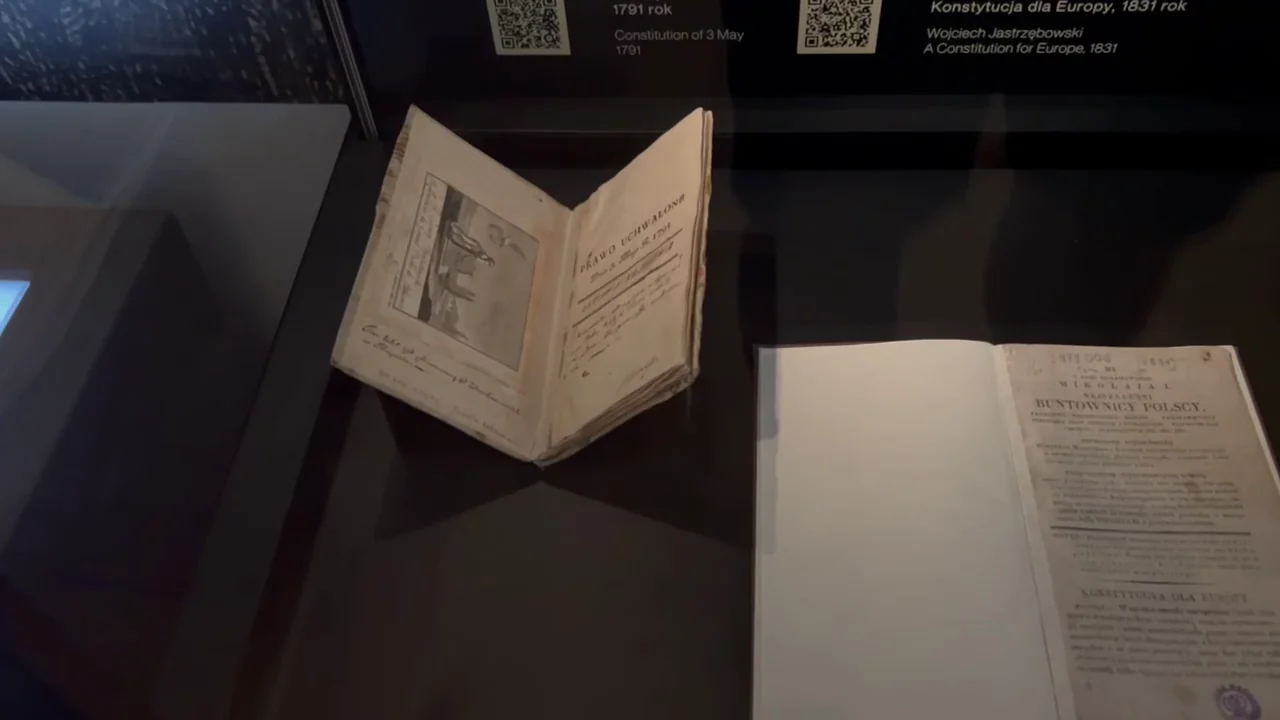
The Commonwealth adopts a major constitutional reform intended to strengthen government and limit political dysfunction.
It is commonly described as Europe’s first modern written constitution and the world’s second after the United States. Its symbolic importance far outlives its brief operation.
Russian forces invade after opponents of the reforms form the Targowica Confederation.
The king eventually joins Targowica and the reform project collapses. The defeat directly precedes the Second Partition.
Russia and Prussia take another huge share of the Commonwealth, reducing it to a rump state.
Leaving this partition out makes the final collapse look inexplicable. It is the immediate political landscape in which the Kościuszko Uprising begins.
Tadeusz Kościuszko leads a final large-scale attempt to defend the Commonwealth’s independence.
Racławice becomes the iconic victory; defeat at Maciejowice and the fall of Warsaw end the uprising. The Third Partition follows the next year.
Russia, Prussia and Austria divide the remaining Commonwealth and the Polish-Lithuanian state disappears from the map.
For the next 123 years there is no sovereign Polish state, although Polish political institutions, culture and independence movements continue in many forms.
Napoleon creates a Polish state from territories taken from Prussia, reviving Polish administration and military institutions.
It is dependent on Napoleonic France and short-lived, but it proves that the partition settlement is not politically final.
The Congress of Vienna creates a Kingdom of Poland linked to the Russian emperor.
It initially possesses its own constitution and institutions, but autonomy is progressively curtailed, especially after the November Uprising.
Kraków and a small surrounding territory exist as a formally independent city-state under the supervision of the partitioning powers.
The unusual arrangement ends after the failed Kraków Uprising of 1846, when Austria annexes the city.
Polish officers and political forces rebel against Russian rule in the Kingdom of Poland.
The uprising fails and is followed by heavier repression, emigration and the weakening of the kingdom’s remaining autonomy.
An attempted national uprising in Austrian Galicia collides with a violent peasant revolt against local landowners.
The episode is a sharp reminder that “the Polish nation” was socially divided and that independence politics did not automatically unite peasants and nobles.
Polish activists take part in the revolutionary wave across Europe, especially in Prussian and Austrian territories.
The revolutions fail to restore Poland, but they deepen political organisation and reveal how different the three partition zones are becoming.
A long guerrilla insurrection against Russian rule spreads through the former Commonwealth’s eastern lands.
Its defeat brings severe repression and confiscations. The uprising becomes a foundational memory for later generations of independence activists.
Austrian constitutional reforms give Galicia far more Polish self-government than exists in the Russian or Prussian partitions.
Kraków and Lwów become major centres of Polish cultural, educational and political life, illustrating how differently Polish society develops under each empire.
Partition authorities pursue different assimilation policies while Polish activists increasingly invest in education, business, associations and social organisation.
Not all resistance is an uprising. “Organic work” becomes an alternative strategy for strengthening society until political circumstances change.
Strikes, demonstrations and political violence shake the Russian partition during the wider 1905 Revolution.
The upheaval expands mass politics and forces limited concessions, while socialist, nationalist and independence movements compete for influence.
Polish soldiers fight in opposing imperial armies while leaders pursue different diplomatic and military strategies for restoring a state.
Piłsudski’s Legions are one route; diplomatic work by figures such as Roman Dmowski and Ignacy Paderewski is another. Imperial collapse finally creates the opening.
Germany and Austria-Hungary proclaim the creation of a Polish kingdom in territories taken from Russia.
The declaration is designed to mobilise Polish support, but it internationalises the Polish question and helps reopen the issue of statehood before the war ends.
Polish institutions take control as the partitioning empires collapse; 11 November becomes the principal symbolic date of restoration.
Independence is a process rather than a single day. The new republic still has to establish borders, merge three inherited systems and build functioning institutions.
The restored Polish state grants women equal electoral rights by decree.
Women vote and stand for election in the first parliamentary elections of 1919, placing Poland among the European states adopting female suffrage around the end of World War I.
Polish and West Ukrainian forces fight over Eastern Galicia and Lwów/Lviv after the collapse of Austria-Hungary.
The conflict is crucial background to later Polish-Ukrainian relations and to the complicated ethnic geography inherited by the Second Republic.
Polish forces in the former Prussian partition seize control of much of Greater Poland in a successful uprising.
Unlike the famous failed 19th-century risings, this one materially changes the territory entering the restored Polish state.
The postwar settlement recognises an independent Poland and shapes parts of its western and northern frontier.
Not every border question is settled at Versailles; plebiscites, uprisings and wars continue in several regions.
Three uprisings and an international plebiscite contest the future of Upper Silesia.
The eventual division gives Poland much of the region’s industrial capacity while leaving a large Polish-speaking population on the German side and German-speaking communities in Poland.
Polish forces halt and reverse the Red Army’s advance on the capital during the Polish-Soviet War.
The victory preserves the Second Republic at a moment of extreme danger. Wider claims about “saving Europe” are best treated as later interpretations rather than the event’s literal description.
Poland and Soviet Russia conclude the Polish-Soviet War and establish the interwar eastern border.
The settlement leaves large Ukrainian and Belarusian populations inside Poland and divides lands claimed by competing national projects.
The Second Republic adopts a parliamentary constitution.
It creates a democratic framework with a relatively weak presidency, reflecting suspicion of concentrated executive power after the partition era.
Gabriel Narutowicz, the first president of the Republic, is murdered only days after taking office.
The assassination exposes the intensity of political and nationalist conflict inside the young state.
Józef Piłsudski uses military force to overthrow the government and inaugurates the Sanacja political order.
The republic remains formally constitutional, but political power becomes more authoritarian and the balance between parliament and executive shifts.
A new constitution strengthens the presidency; Piłsudski dies weeks later.
The late Second Republic continues under leaders associated with his camp but without the figure who had dominated Polish politics since independence.
The German attack opens the European war and begins a brutal occupation in the west and centre of the country.
Poland fights without having completed mobilisation and faces a technologically stronger enemy. Warsaw resists until late September.
Soviet forces enter eastern Poland while the country is already fighting Germany.
The invasion follows the secret protocols of the Molotov-Ribbentrop Pact and divides the Second Republic between two occupying powers.
Polish state institutions continue abroad while a clandestine administration and resistance network operate inside occupied Poland.
This is why 1939 is not simply a repeat of 1795. Territory is occupied and partitioned, but legal and institutional continuity is deliberately maintained.
The Soviet NKVD murders thousands of Polish officers, officials and members of the prewar elite at Katyń and other execution sites.
The Soviet Union denies responsibility for decades. Katyń becomes both a mass murder and a symbol of imposed silence, memory and Polish-Soviet relations.
Jewish residents of Jedwabne are murdered by Polish neighbours in a town under German occupation.
The event became a major part of modern Polish debate about local participation, German occupation, responsibility and the memory of Polish-Jewish relations during the Holocaust.
Nazi Germany carries out the mass murder of Jews on occupied Polish territory, including through extermination centres such as Auschwitz-Birkenau, Treblinka, Bełżec, Sobibór and Chełmno.
The destruction of Polish Jewish civilisation is indispensable to understanding the country before and after the war. The German occupation also targets many other groups through terror, forced labour and mass killing.
Jewish fighters resist the German liquidation of the Warsaw Ghetto for nearly a month.
The uprising becomes one of the defining symbols of Jewish armed resistance during the Holocaust and a central part of Warsaw’s wartime history.
Roosevelt, Churchill and Stalin discuss the postwar Polish-Soviet border around the Curzon Line.
Poland is not represented at the conference. The decisions and understandings reached by the Allied great powers foreshadow the enormous territorial changes imposed after the war.
Ukrainian nationalist forces carry out mass killings of Polish civilians in Volhynia and Eastern Galicia; retaliatory Polish violence kills Ukrainian civilians.
The events remain deeply important in Polish and Ukrainian historical memory and continue to affect public discussion. The timeline names the conflict without pretending the memory dispute is simple.
The Home Army launches an uprising intended to liberate Warsaw from German occupation before Soviet-backed forces take control.
After 63 days the uprising is defeated and the city is systematically destroyed. Militarily it fails; in Warsaw’s modern identity it is impossible to ignore.
The Soviet-backed Polish Committee of National Liberation establishes itself in Lublin as the Red Army advances west.
The London-based Polish government remains internationally recognised by key Allies for a time, while a competing political order is being constructed inside liberated territory.
Allied decisions confirm the broad shape of Poland’s postwar borders and political position in a Europe divided by Soviet and Western influence.
The conferences are central to Polish memory because decisions about the country’s territory and political future are made primarily by the great powers.
The eastern border moves to roughly the Curzon Line while Poland receives former German territories in the west and north.
Millions of people are displaced, expelled, resettled or repatriated. The ethnic and geographic map of Poland changes more radically than at almost any previous moment.
A violent antisemitic pogrom in Kielce kills Jewish Holocaust survivors and accelerates postwar Jewish emigration.
The massacre is a painful reminder that the end of German occupation did not end antisemitic violence or insecurity for surviving Polish Jews.
A falsified parliamentary election, repression and the destruction of legal opposition help the communist-led bloc secure control of the state.
Postwar Poland retains the name “Republic of Poland” until 1952, but political pluralism is effectively eliminated much earlier.
A new constitution renames the state the Polish People’s Republic and explicitly identifies Warsaw as the capital.
The document formalises the Stalinist political order. Curiously, this is the first Polish constitution to state directly that Warsaw is the capital.
Workers’ protests in Poznań are violently suppressed, while a political crisis later brings Władysław Gomułka back to power.
1956 does not end communist rule, but it marks a break with the high Stalinist period and demonstrates that social unrest can force political change.
Student protests are repressed and the authorities launch an “anti-Zionist” campaign that drives thousands of Polish Jews and others from the country.
The episode leaves a lasting scar in Polish-Jewish history and reveals the regime’s willingness to use nationalist and antisemitic rhetoric during internal power struggles.
Price rises trigger worker protests in Gdańsk, Gdynia, Szczecin and other cities; security forces open fire.
The bloodshed brings down Gomułka and adds another layer to the political memory of the Baltic shipyards that will matter enormously a decade later.
Worker protests in Radom and Ursus are repressed; intellectuals form the Workers’ Defence Committee to support victims.
KOR helps create durable networks linking workers and opposition intellectuals — a crucial foundation for the much larger movement that follows in 1980.
Karol Wojtyła becomes pope in 1978 and returns to Poland the next year to enormous public gatherings.
The visit is both religious and social: millions experience a form of mass public assembly outside direct communist control, reinforcing a shared language of dignity, faith and national community.
Strikes centred on the Gdańsk Shipyard produce an independent trade union that rapidly becomes a mass social movement.
Solidarity is not simply a union dispute. It creates a nationwide civic network challenging the communist monopoly while still operating inside the Soviet bloc.
The communist authorities impose martial law, arrest opposition activists and use force to suppress Solidarity.
The movement is driven underground rather than destroyed. Martial law becomes one of the defining memories of late communist Poland.
A new strike wave convinces the authorities and opposition that a negotiated settlement is increasingly unavoidable.
The talks that follow create the path to the Round Table and the partially free election of 1989.
Government and opposition negotiate political reforms; Solidarity-backed candidates dominate the contested seats in the partially free election.
By the end of the year Poland has a non-communist prime minister and the constitutional name “Republic of Poland” is restored. The transition is negotiated rather than revolutionary.
President-in-exile Ryszard Kaczorowski hands the prewar presidential insignia to newly elected President Lech Wałęsa at the Royal Castle in Warsaw.
The ceremony symbolically joins the legal continuity preserved in exile with the democratic state created after 1989.
Poland holds its first fully free parliamentary election since the interwar period.
The fragmented result reflects a genuinely plural political landscape and marks another step beyond the semi-free arrangements of June 1989.
A new constitution defines the institutions and rights framework of the Third Republic.
It remains the basic constitutional order of contemporary Poland, making it a natural endpoint for the long constitutional thread running through the page.
Poland enters the North Atlantic Treaty Organization alongside the Czech Republic and Hungary.
Membership marks a fundamental shift in Poland’s post-Cold-War security alignment and its relationship with Western institutions.
Poland becomes an EU member on 1 May 2004 after a national referendum the previous year.
The accession reshapes movement, investment, law and everyday connections with the rest of Europe. It is a fitting modern counterpart to the many earlier unions on the timeline.
A Polish government aircraft crashes near Smolensk, killing all 96 people on board, including President Lech Kaczyński.
The delegation was travelling to commemorate the Katyń massacre. The disaster becomes a major national trauma and remains deeply present in Polish public memory and political argument.
History does not become more understandable by pretending the list is finished. As new places are visited, new research is done and new videos are made, events can be added or expanded without changing the structure of the page.