
Culture & traditions · Eyewitness report · 11 November 2026
Warsaw Independence Day 2026: Among the Sea of Flags
A British resident's experience of Poland's Independence Day: from the runners and official commemorations to a vast gathering of people at Rondo Dmowskiego, with original images and a film from the streets.
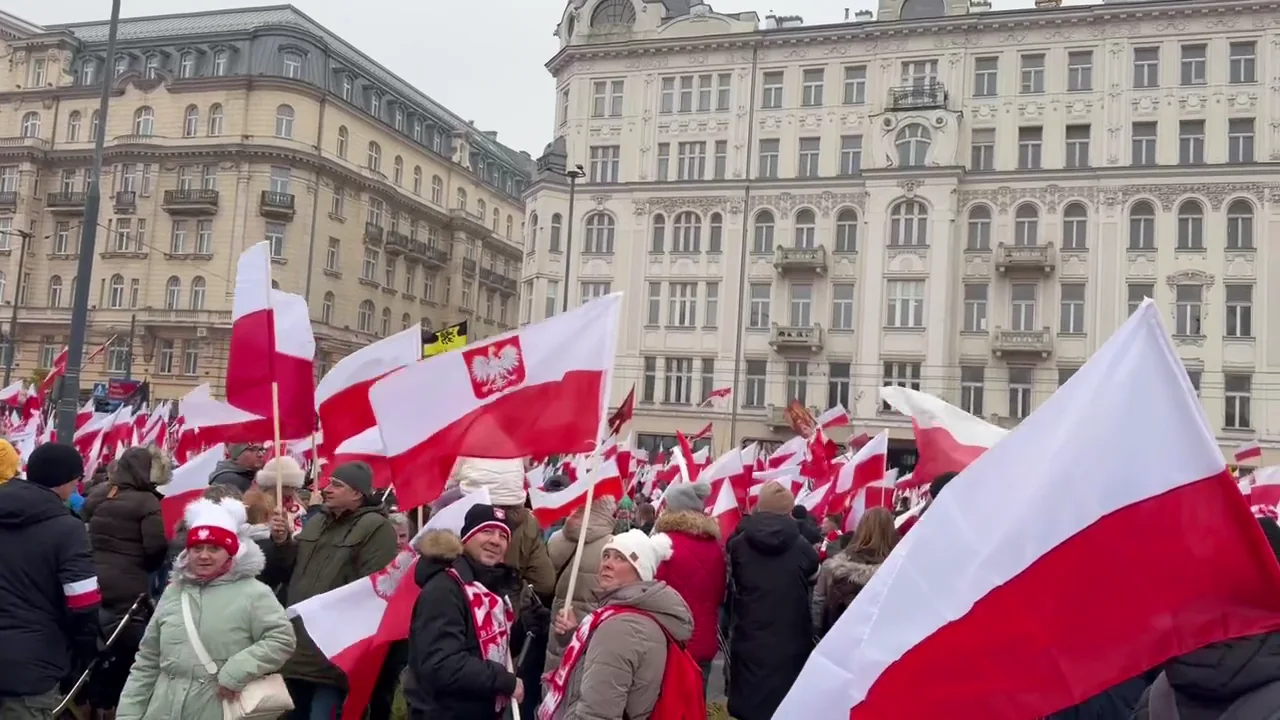
On 11 November, Poland commemorates the return of its independence in 1918, after 123 years of partition. In Warsaw the anniversary is marked in several distinct ways: sporting events, official ceremonies, cultural activities and, most visibly, the annual Marsz Niepodległości (Independence March).
I spent part of the 108th anniversary walking through the capital with my camera and a Polish flag over my shoulders. The day was bitterly cold, but the streets offered an extraordinary view of public celebration.
From the Independence Run to Piłsudski Square
My first glimpse of the programme was close to home, where I caught a little of the Bieg Niepodległości. Warsaw's 36th Independence Run included a 10-kilometre race starting at 11:11. Runners in white and red shirts formed a living Polish flag — one of the many ways the holiday extends beyond political speeches and marches.
At Piłsudski Square, the official state commemorations took a more solemn form. Military personnel stood in formation around the Tomb of the Unknown Soldier and President Karol Nawrocki addressed the occasion. His speech also touched on the deadly attack in Kraków four days earlier and on Poland's political and constitutional disputes.
The formal ceremony was historically significant, even if much of the footage shows soldiers standing rather still. The streets, however, had a very different energy.
Rondo Dmowskiego: a sea of people
By the time I reached the area around Rondo Dmowskiego, thousands of people were already gathering for the Independence March. More arrived continuously along surrounding streets. White-and-red flags stretched into the distance, punctuated by scarves, banners and the red smoke of flares.
The people around me moved almost like blood through an artery: streams joining and separating as the crowd found its way through central Warsaw. I ordinarily dislike being caught in large gatherings, yet here I didn't feel crushed, trapped or pushed about. In the areas I visited before the procession departed, the atmosphere was relaxed and good-natured. I saw families with children and people of different generations enjoying the occasion.
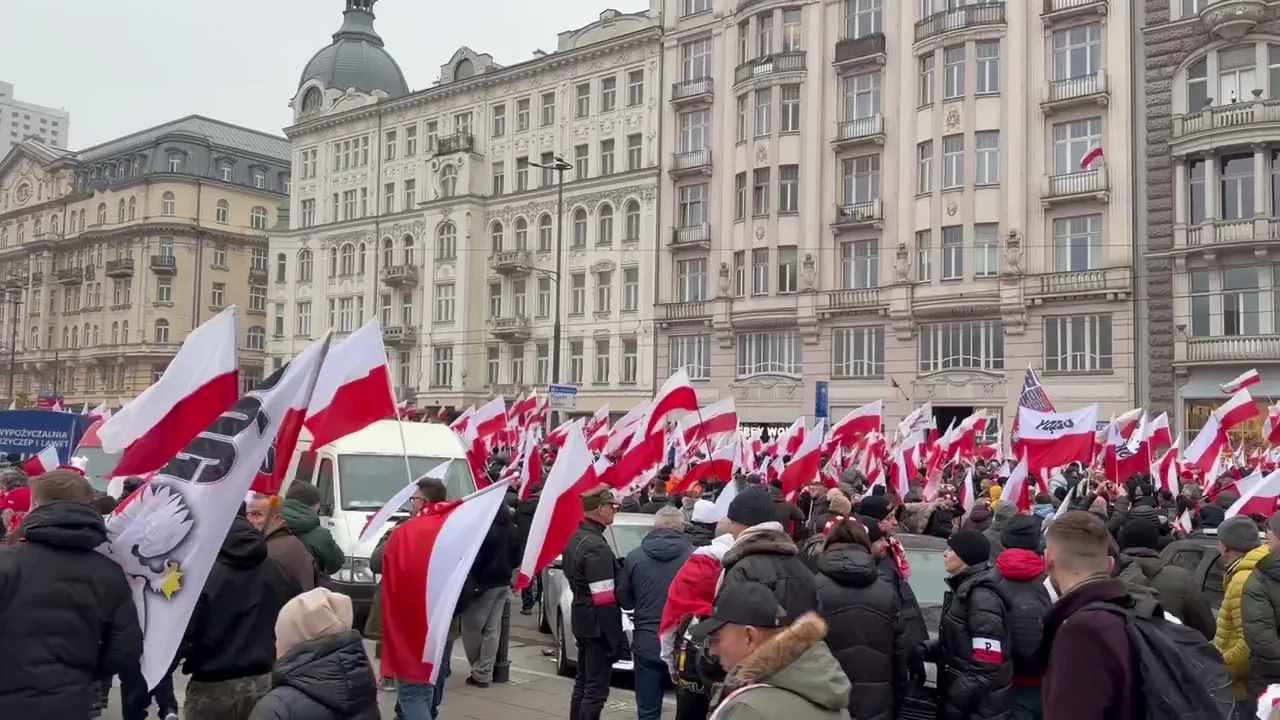
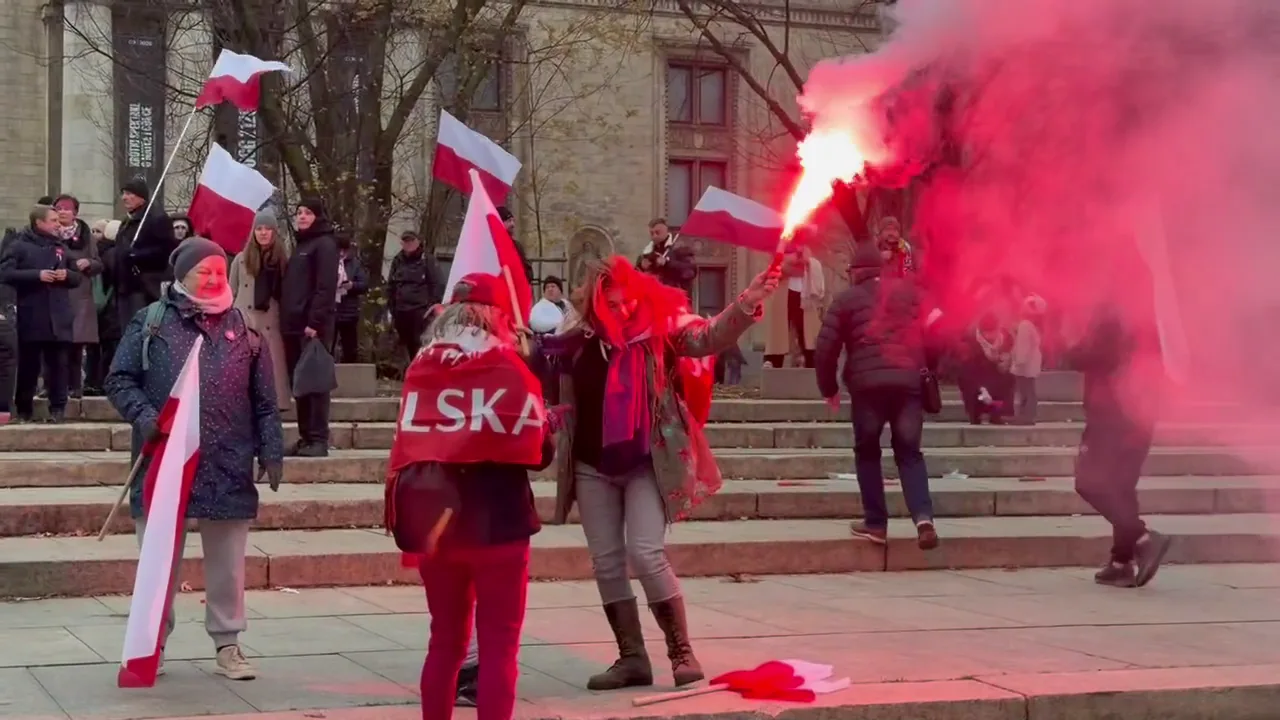
I left before the procession set off. It travelled from Rondo Dmowskiego along Aleje Jerozolimskie and across Poniatowski Bridge towards the National Stadium, so this account describes my experience of the gathering rather than the entire route.
How many people attended?
Warsaw's City Security Centre, drawing on police estimates, said attendance may have reached 250,000. Organisers claimed considerably higher numbers, from around 500,000 to one million. These are competing estimates, not a confirmed final count. Standing amid the crowds, the scale was obvious even without settling on a number.
Patriotism, politics and perceptions
The Independence March is independently organised and has roots in Polish nationalist movements. Its politics and some incidents in earlier years have made it controversial; the 2026 slogan was “Polak w Polsce gospodarzem”, roughly “Poles are the hosts in their own country”. Political signs were present — I noticed an anti-Tusk banner — but most of what filled my view was the national flag.
It would be misleading to dismiss the march's political character, just as it would be unfair to assume that every participant shared identical views. My experience was one of ordinary people publicly expressing affection for their country. For somebody from Britain, where national symbols can be the focus of heated political arguments, the visibility of Polish patriotism was striking.
A calm day after a difficult week
Security had been on my mind before I went out. The attack in Kraków on 7 November had shaken Poland, and gathering in such numbers so soon afterwards inevitably made me consider the risks. I noticed police and armed personnel on rooftops, but felt safe throughout my own visit.
Warsaw police subsequently described the capital's Independence Day celebrations as having passed safely. Reporting noted no major public-order disturbances, although prohibited pyrotechnics were used and there were isolated incidents. That doesn't mean every corner of the event was identical to the places I saw. It does mean that many people came together to celebrate after a deeply troubling week, and the atmosphere I personally encountered was positive.
That is what I will remember: not a single slogan or political argument, but a vast flow of people and flags, and a capital city finding several ways to mark its independence.
Watch the day unfold
My 12-minute eyewitness film includes the Independence Run, state ceremonies, excerpts of President Nawrocki's speech and the crowds around Rondo Dmowskiego, with original street audio.
Watch the Independence Day film on Rumble ↗About this report: This is a firsthand account from the locations I visited on 11 November 2026, not a comprehensive account of the procession or an endorsement of its organisers. Crowd estimates and security statements are attributed to their reporting sources.
Further reading
Explore Poland's year-round customs and cultural calendar, visit the Warsaw City Guide, or read more about life and society in Poland.