
Poland Explained · Culture & Traditions
All Saints’ Day in Poland — A Nation Illuminated by Memory
Every November, Polish cemeteries become landscapes of candlelight. Behind the flames is a story of faith, family, the changing ways people honour the dead, and older folk beliefs that once welcomed ancestors home.
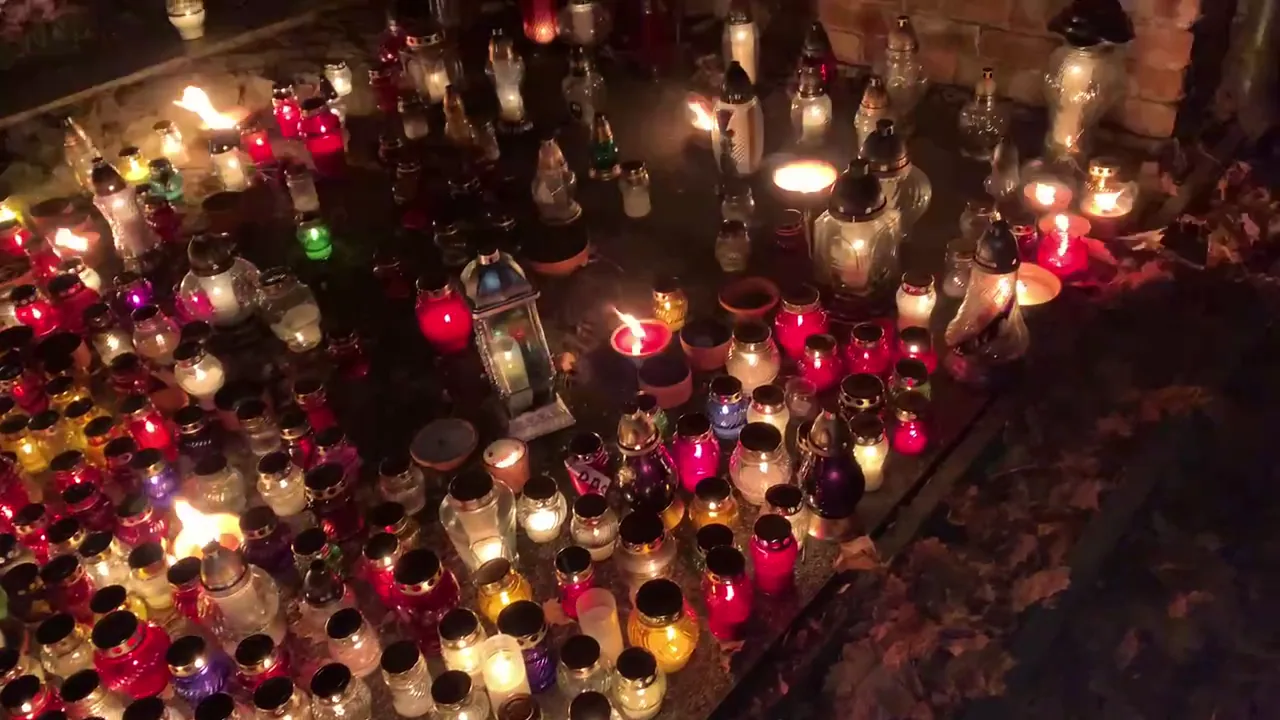
1. A country illuminated
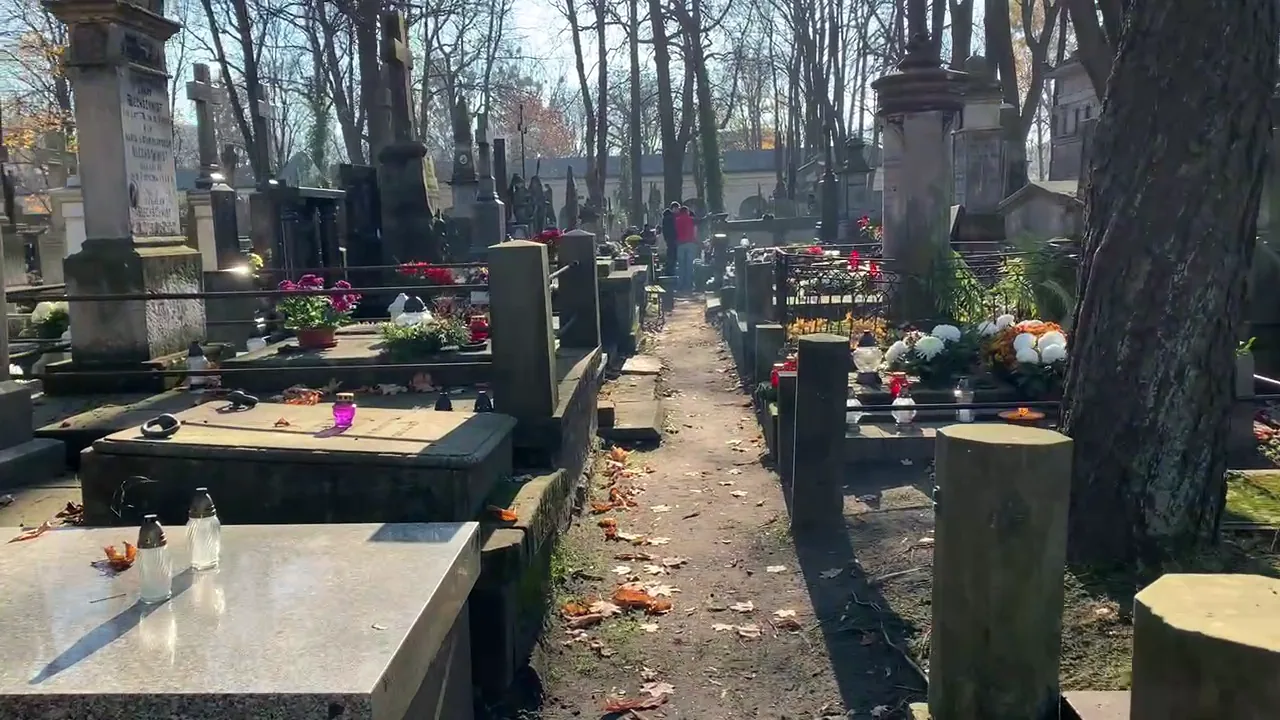
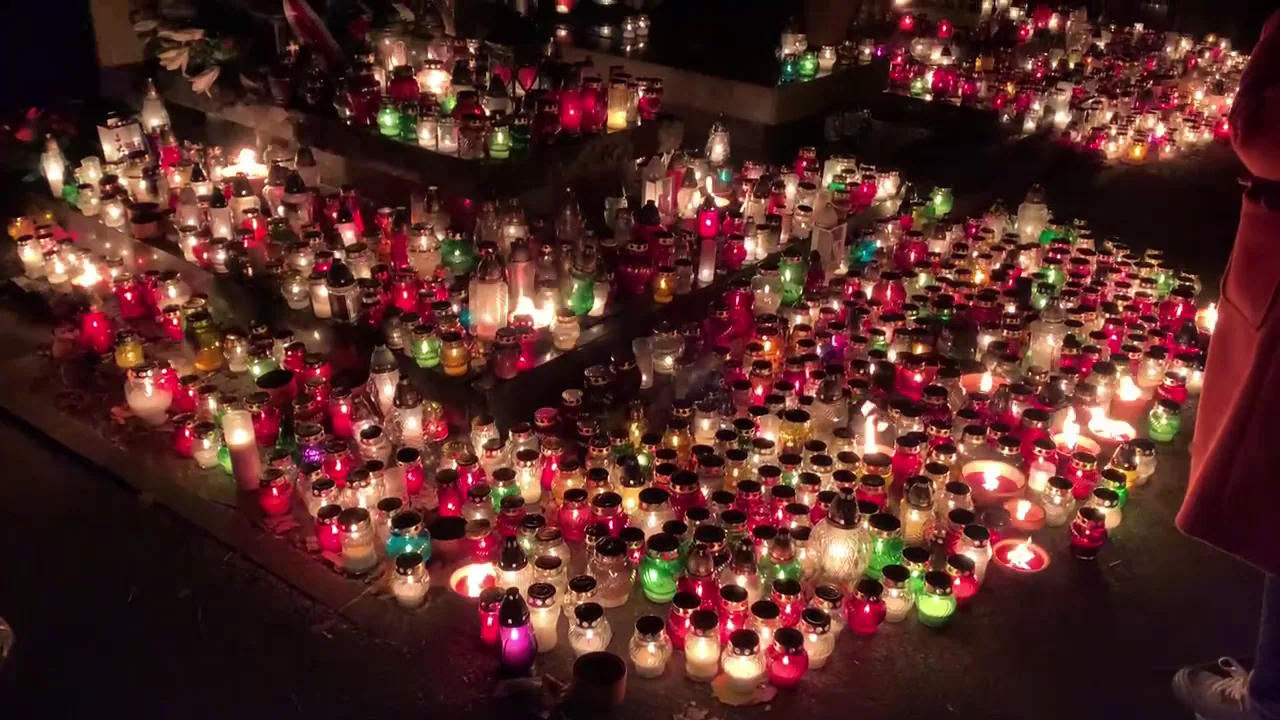
At the beginning of November, ordinary cemetery paths fill with families carrying chrysanthemums and glass lanterns. Gravestones are washed, old leaves cleared and fresh flowers arranged. When darkness falls, the lights multiply: red, white, gold and green flames glow against the polished stone. At some memorials, there are so many candles that the ground itself seems illuminated.
For someone arriving from Britain, the sight can be startling. Late October at home is often associated with Halloween, while November brings Remembrance Sunday and poppies. Poland’s early-November observances have a different scale and focus: entire families travel to the graves of parents, grandparents and relatives, sometimes crossing the country to do so. The atmosphere is collective, but the reasons for being there are intensely personal.
Two dates form the centre of this season: Wszystkich Świętych (All Saints’ Day) on 1 November and Zaduszki (All Souls’ Day) on 2 November. The ceremonies have distinct religious meanings, although in practice families often treat them as a connected period of remembrance. And the familiar spectacle of decorated graves is younger than many people imagine.
2. Two days, two meanings
In Catholic teaching, All Saints’ Day celebrates all who are in heaven, including people never formally canonised. It is a solemnity of hope, rather than a day specifically dedicated to praying for the dead. Its roots include the early medieval cult of martyrs, Pope Boniface IV’s dedication of the Roman Pantheon as a Christian church in 609 or 610, and later developments under Popes Gregory III and Gregory IV that established and extended the 1 November observance in the Western Church. Sources differ on the precise year of Gregory IV’s extension, commonly given as 835 or 837.
All Souls’ Day on 2 November, by contrast, is devoted to prayer for the faithful departed. The abbot Odilo of Cluny promoted this commemoration among Cluniac monasteries around the end of the tenth century. It spread through medieval European religious networks; evidence of observance in Polish monastic life appears by the twelfth century. In Catholic belief, prayers, Masses and acts of devotion may be offered for those undergoing purification after death.
Why, then, do so many people visit graves on All Saints’ Day? Part of the answer is practical: 1 November is a Polish public holiday; 2 November generally is not. The free day makes family gatherings and journeys to ancestral towns possible. The Church also offers opportunities to pray for the departed during the first eight days of November, and churches observe wypominki, prayers in which the names of deceased people are remembered aloud.
The formal theology is not the same as the older folklore. The Church honours the saints and prays for the departed; folk accounts sometimes imagined ancestors physically returning to their old homes. The two worlds met and influenced one another over centuries.
3. When the dead returned: Dziady
In parts of the old Polish-Lithuanian Commonwealth and neighbouring Slavic and Baltic regions, people once marked seasonal occasions when deceased ancestors were believed able to return to the living. These varied observances are associated with Dziady, a word connected with forefathers or ancestors. They were not a single uniform ceremony, and they were not limited to the beginning of November: springtime rites and other occasions also played a part.
Most detailed descriptions come from nineteenth- and early twentieth-century collectors, long after Christianisation. They document real regional beliefs but cannot prove an identical, unbroken ritual stretching back into prehistory. By the time ethnographers recorded them, Christian practices and older ideas had already become entangled.
In some eastern traditions, families left bread, grain dishes, eggs, honey or drink for visiting souls, and did not clear the table at night. Water and a towel might be prepared for invisible guests. Certain chores were avoided out of fear that a soul could be injured or disturbed. One particularly haunting account forbade whitewashing a house because ancestral souls were imagined nesting in cracks as little birds; covering the cracks could trap them inside.
Old accounts also distinguish honoured ancestors, who had died naturally, from the feared wandering spirits of those who died violently or under tragic circumstances. These are descriptions of historical folk beliefs, not statements about what happens after death. Nor did all Polish regions share them equally: practices associated with Dziady survived especially strongly in some eastern borderland communities.
Food offerings and Christian charity sometimes overlapped. Wandering beggars, also called dziady, received bread or alms in exchange for prayers for named relatives. The dead could be honoured through hospitality shown to the living. Other accounts describe leaving doors ajar, observing silence or taking care around household fires because souls were believed to occupy the places familiar to them.
4. From ancestral fires to the znicz
The modern grave lantern is so familiar that it feels timeless. Yet the znicz as a standard object placed on individual graves is relatively recent. Older folk accounts describe bonfires at crossroads, meadows and other places where spirits were expected to arrive. Depending on the tradition, fire might warm returning souls, show them a way or guard the living from dangerous wanderers. Those fires were not necessarily lit on graves.
Some Polish ethnographers draw a direct line between these earlier fires and today’s grave candles. It is an evocative explanation, but the evidence establishes a shared symbolism more securely than an unbroken, unchanged custom. The National Centre for Culture notes that the word znicz entered Polish in the nineteenth century as a borrowing from Belarusian, where it was connected with sacred or pagan fire. The word was borrowed and repurposed as modern practices took shape.
For Catholics, the flame may evoke prayer, hope and eternal light; for other visitors, it expresses love or remembrance without a religious interpretation. Many people who light candles today do not attach any belief about guiding spirits to them. The older story, nevertheless, gives the quiet flame another fascinating historical dimension.
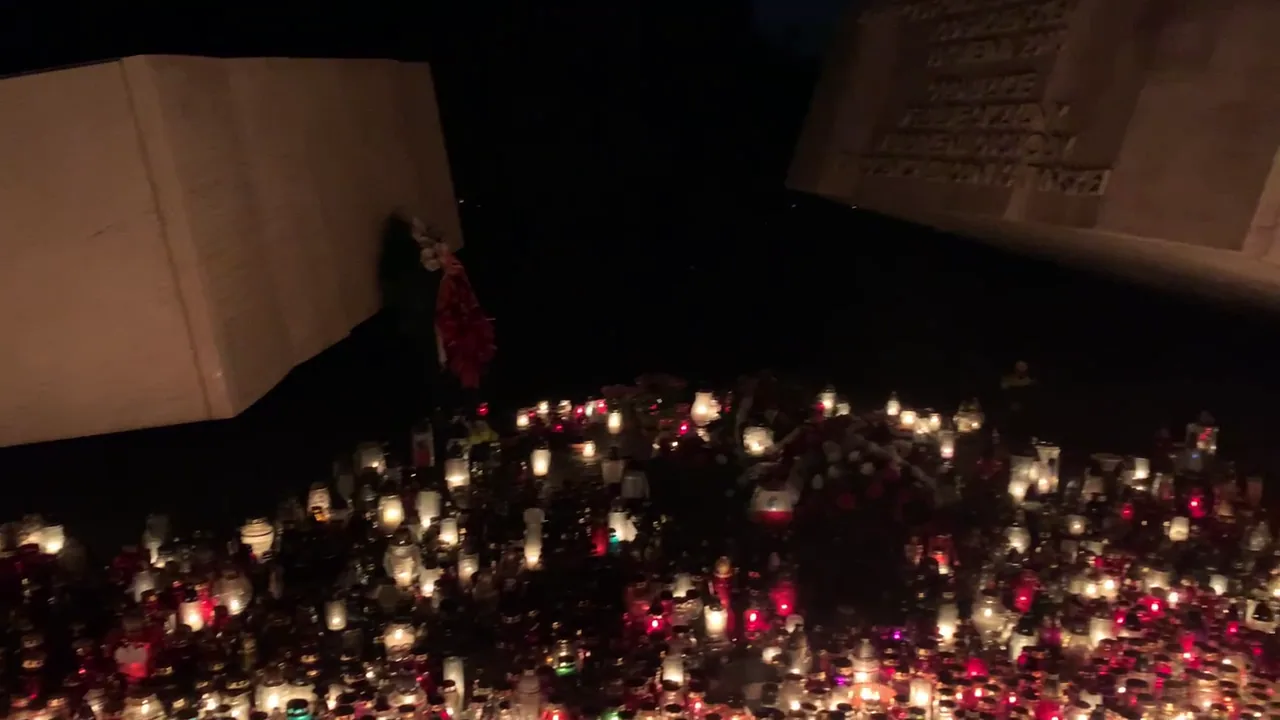
5. Cleaning graves, flowers and family journeys
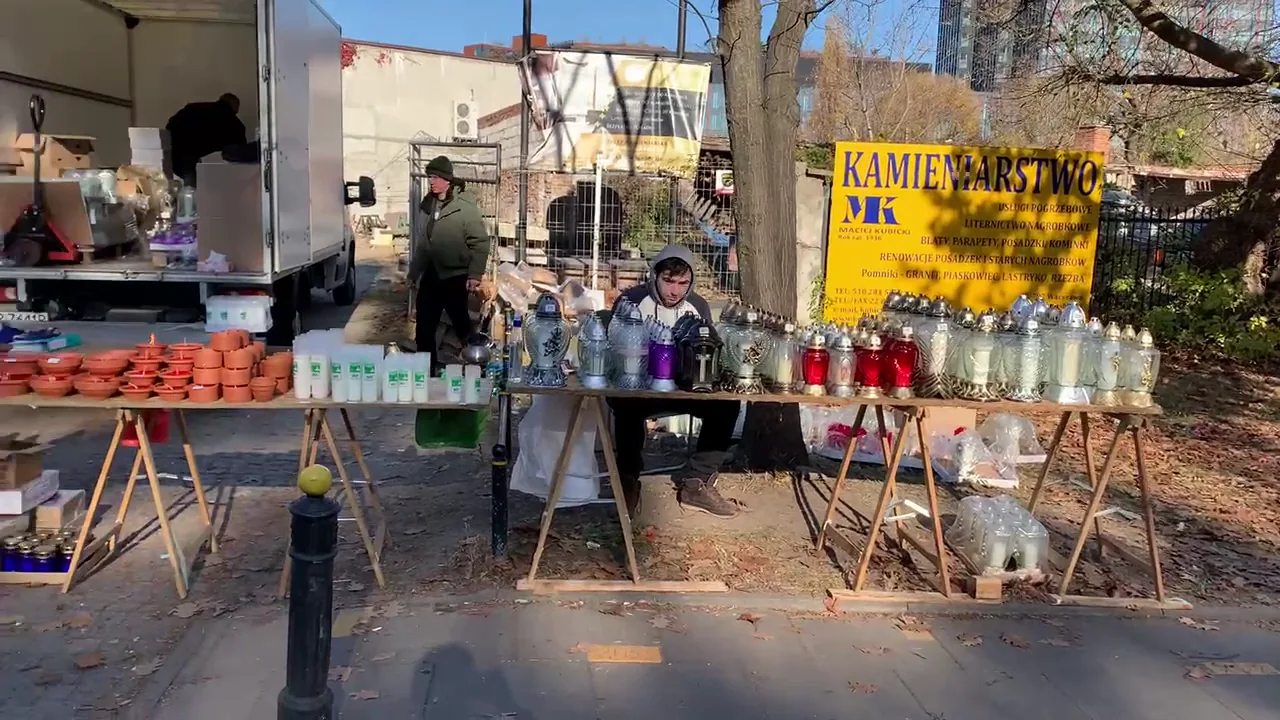
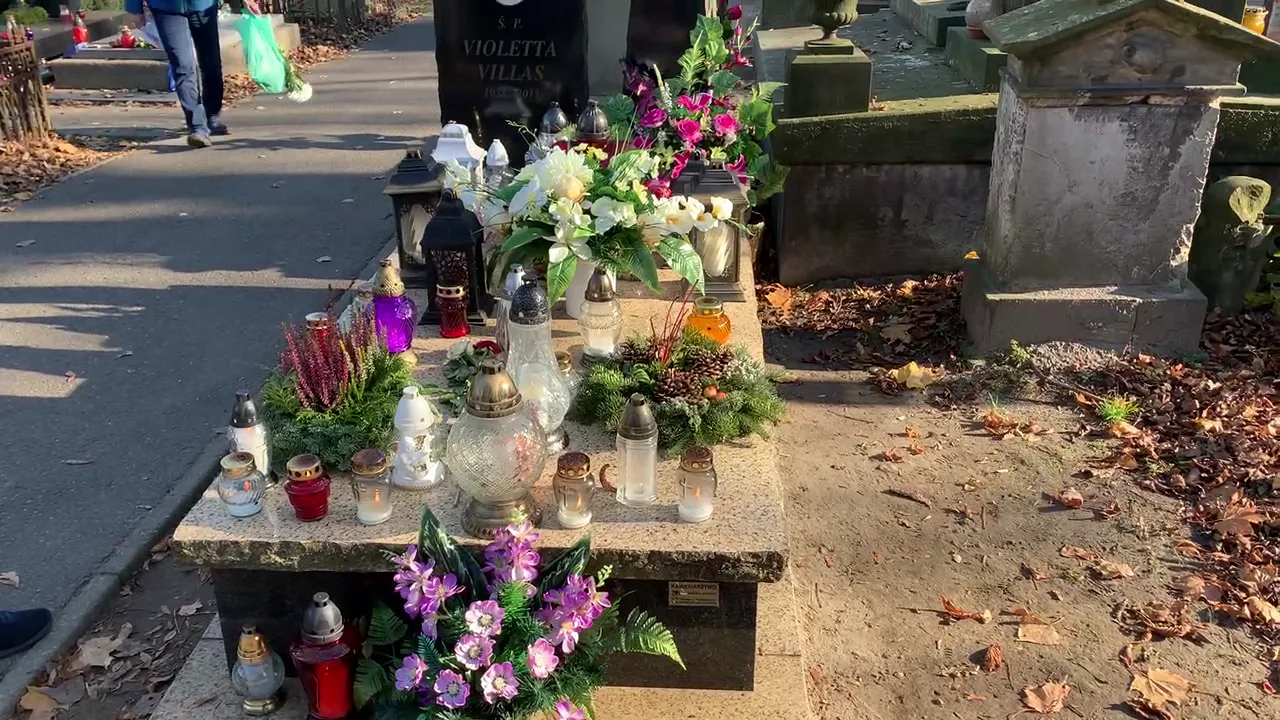
For many families the observance starts several days before the holiday. People sweep leaves, scrub stone, remove spent candles and replace flowers. It is practical work, but it carries emotional significance: an ordinary act of care offered to someone who can no longer be cared for in everyday life. In earlier domestic customs, it was sometimes the home that was prepared to receive ancestors; the modern cemetery centres the attention on a grave and the people who visit it.
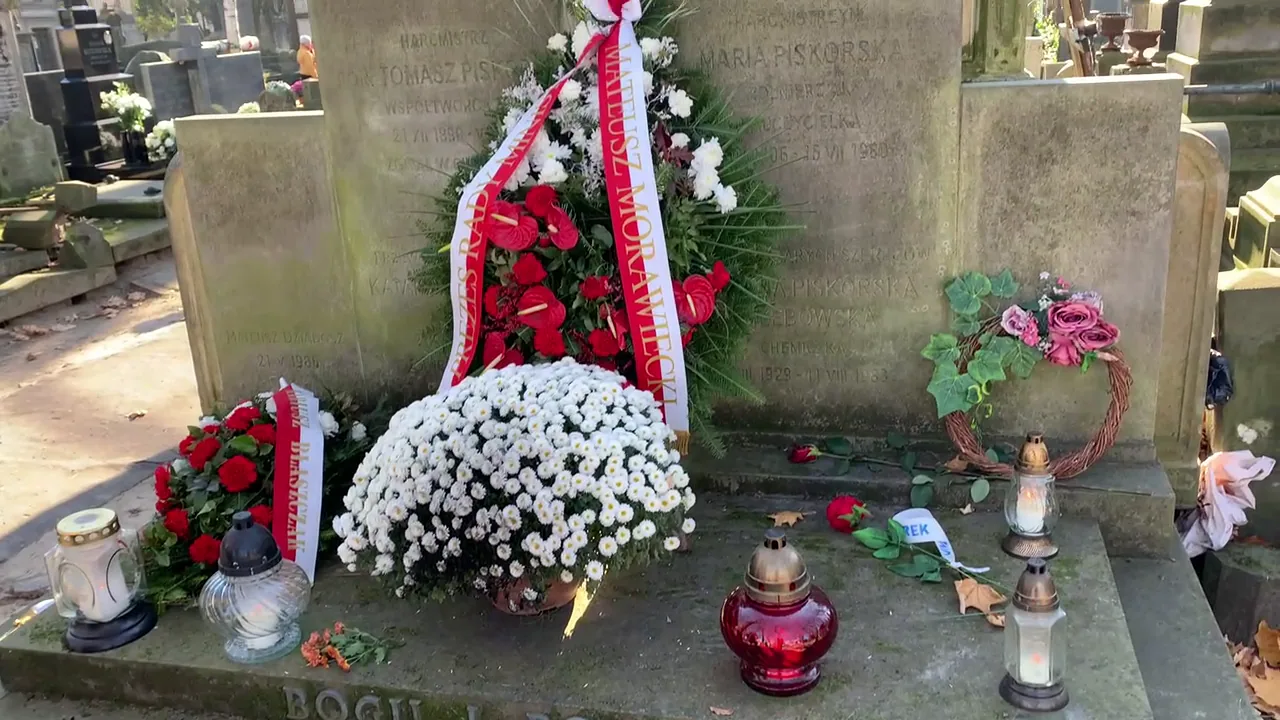
Chrysanthemums are now inseparable from the season, but they were not always standard cemetery flowers. European cultivation expanded in the nineteenth century, and their popularity at graves developed later. Ethnographers also describe interwar decorations such as evergreen branches and cone crosses. In Kashubia, handmade paper flowers were among the local traditions. Chrysanthemums' ability to withstand cool autumn weather helped make them a practical choice, as well as a powerful visual symbol.
Family visits can mean long journeys, reunion with relatives and stories told to younger generations. A cemetery becomes a kind of family archive: names engraved on stone are given back their voices through memory. The ritual is less about achieving a flawless display than about making time for those who came before.
6. When personal remembrance becomes national memory
Poland’s cemeteries are also archives of public history: writers, artists, soldiers, political figures and people whose lives were shaped by partitions, uprisings and wars lie beside the relatives of ordinary families. Visitors place candles at monuments and forgotten graves as well as their own family plots. A light for someone without surviving relatives can become a simple expression of shared responsibility for memory.
Warsaw’s Stare Powązki, founded in 1790, shows how remembrance and heritage preservation meet. On 1 November 1975 the Committee for the Care of Old Powązki organised its first collection for monument conservation; accounts describe almost 200 artists and cultural figures taking part. The initiative, closely associated with Jerzy Waldorff, developed into a lasting tradition of volunteers collecting funds at cemetery gates. The historic stones are themselves worth saving, not only the names they bear.
Historic cemeteries also reveal why today's practices are not simply medieval rites frozen in time. The move of burial grounds outside crowded churchyards and the development of permanent family plots in the eighteenth and nineteenth centuries changed where and how people visited their dead. The candlelit landscape familiar now emerged through those changes and later customs of decoration.
7. Experiencing the tradition today
For a visitor, the most rewarding way to experience the occasion is with quiet respect. Many cemeteries are open to the public, but they remain places where people are grieving and remembering. Follow local rules, be discreet with photography, do not intrude on private moments, and allow families room to visit. With roads crowded around cemeteries, expect special traffic arrangements, busy public transport and closures on the 1 November holiday.
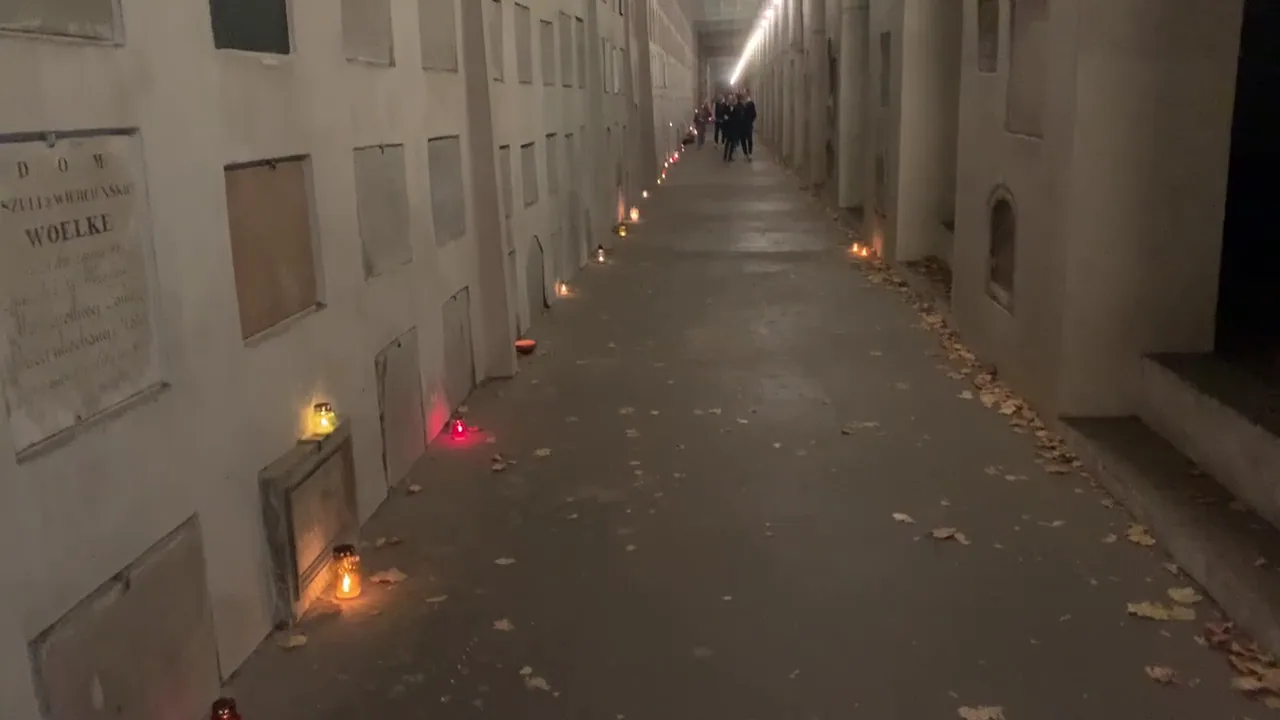
Go during the day and you can appreciate the architecture, flowers and personal details; return after sunset and the mood changes as each candle becomes part of a wider constellation. Even a small memorial in a quiet passage can feel moving.
8. Different cultures, shared remembrance
There are echoes of this tradition in Mexico’s Día de los Muertos. Both bring families together through visits, offerings, flowers, light and the continued presence of loved ones in memory. Mexico’s celebrations often make greater public use of colour, music and festive hospitality; Poland’s November cemeteries are generally quieter and more contemplative. But Mexican observances can also be deeply reverent, and neither tradition has only one mood.
As a Brit living in Poland, I also think of Remembrance Sunday. Britain's shared commemorations place particular emphasis on those killed in military service; Poland’s November remembrance embraces soldiers and national heroes too, but its most visible focus is the everyday work of families honouring their own dead. There is dignity in both ways of remembering.
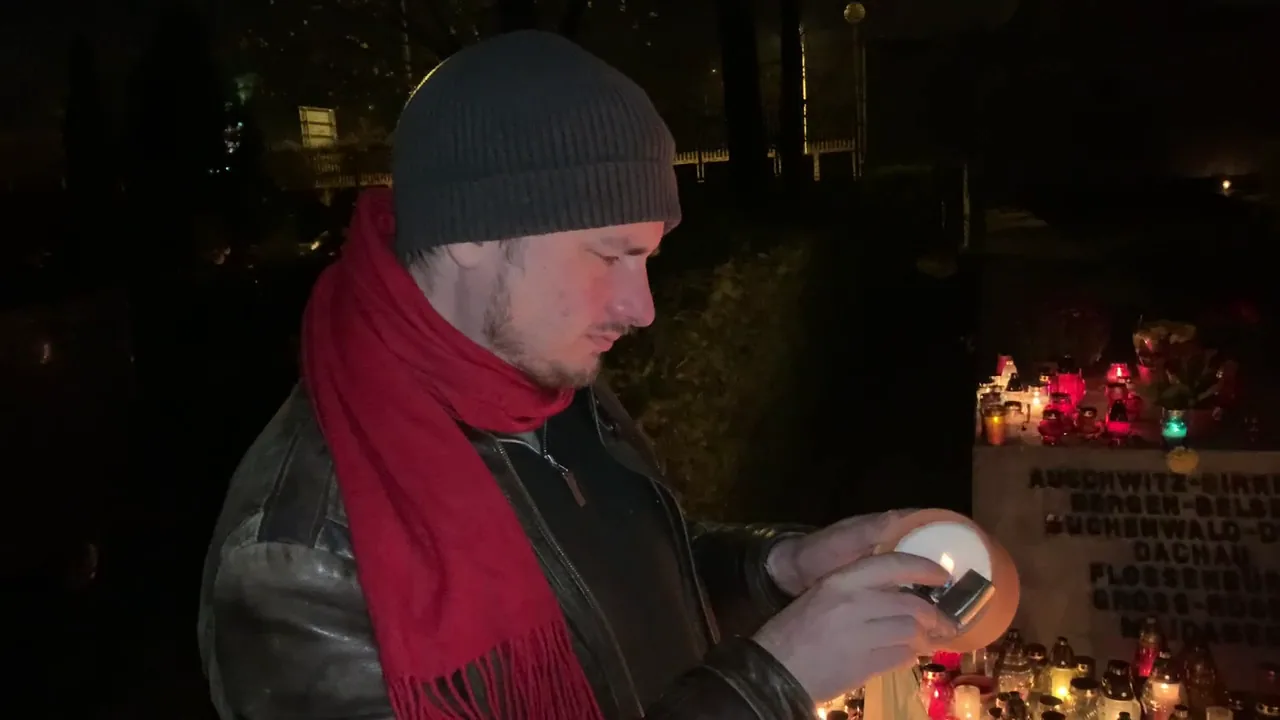
Personally, I love this Polish tradition. For me it embodies qualities I admire in Polish culture: respect, continuity and a sense that meaningful gestures matter. I find something powerful in families travelling long distances, cleaning graves and lighting candles for people who may have died decades before. No single occasion can define a country, but this one makes those values especially visible. Lighting a candle myself brings the history down to a simple human act: pausing, remembering and caring.
The light that remains
These customs have changed. Catholic observances developed their own meaning; folk beliefs imagined ancestral visitors; growing cemeteries made family grave tending a widespread practice; and flowers and glass lanterns reshaped the November landscape. The stories are not one continuous, unchanged ritual. They are layers of memory.
A cleaned gravestone, a name spoken aloud, a chrysanthemum or a flame cannot alter the past. Each can, however, affirm that a life still matters to those who remain.
For one night in November, an entire country seems to glow with that promise.Research and further reading
Religious history, ethnography and folklore have different evidentiary strengths. The following sources support the key interpretations; historical beliefs are identified as beliefs, not presented as contemporary universal customs.
- Dzieje.pl / PAP — Dziady and remembrance traditions (2023)
- National Centre for Culture — The word znicz
- Ethnographic Museum in Kraków — All Saints, All Souls and Halloween
- Dzieje.pl — The Stare Powązki preservation collection (2018)
Further reading: Adam Mickiewicz, Dziady, Part II; Zygmunt Gloger, Encyklopedia staropolska, entry “Dziady”; regional ethnographic studies by Oskar Kolberg and Kazimierz Moszyński.