
Poland Explained / Politics & Society / Poland’s security
Is Poland Still Safe? From the Mafia Years to Modern Threats
Poland has transformed from the turbulent post-communist years into a country whose residents overwhelmingly describe it as safe. Yet violent incidents, online extremism, organised criminal networks and foreign interference raise uncomfortable questions. Are things getting worse—or has the nature of the danger changed?
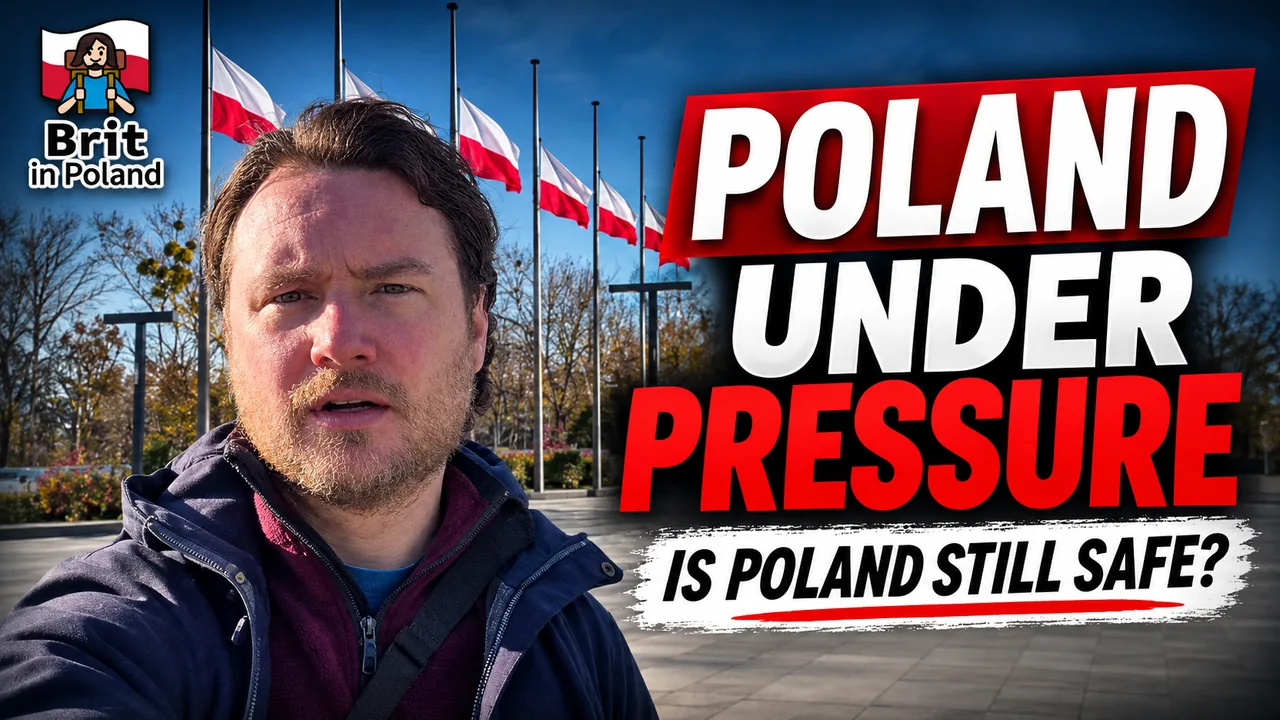
Watch the full investigation
From Mafia to Modern Threats: What Is Happening to Poland? A chaptered documentary examining Poland’s violent past, modern crime, political responses and foreign pressure.
From the mafia years to a safer Poland
After communism fell in 1989, Poland opened its economy and rebuilt institutions at remarkable speed. Criminal organisations exploited the upheaval. Groups associated with Pruszków and Wołomin became notorious for extortion, drugs and violent competition; their reputations still shape how many Poles remember the 1990s.
Policing changed too. A crown-witness law entered into force in 1998, allowing eligible insiders to cooperate with investigators. The Central Bureau of Investigation was founded in 2000, helping police work across regional boundaries. Major organised-crime prosecutions followed. This was not an overnight victory, and criminal groups did not disappear. But some of the most visible networks fragmented and lost influence.
At the same time, jobs, living standards, demographics and opportunities changed. EU accession in 2004 helped reshape the economy. It is tempting to attribute falling crime to any single cause, but the transformation involved several factors—and there is no sound basis for claiming Poland simply ‘exported its criminals’ through emigration.
Is Poland safer than it used to be?
The clearest answer concerns everyday lethal violence. Statistics Poland’s homicide mortality indicator fell from 0.92 deaths per 100,000 people in 2010 to 0.48 in 2024—a decrease of approximately 48%. That measures deaths, not the number of police homicide investigations or attempted killings, and it does not capture every form of crime.
The April 2026 survey came before the autumn’s shocking attacks. Perceptions may have changed since then. Even so, the long-term improvement deserves recognition: Poland’s reputation for safety has a measurable foundation.
Organised crime changed rather than vanished
Today’s criminal networks may be smaller, more specialised and less visible than the gangs of the 1990s. The Polish Central Bureau of Investigation (CBŚP) reported disrupting 157 organised criminal groups in 2025: 131 classified as Polish, 20 international and six Russian-speaking. These categories describe the bureau’s cases, not the entire criminal landscape or proof that crime is rising. Nor does ‘Russian-speaking’ mean a group worked for Russian intelligence.
Investigations of methamphetamine laboratories involving Mexican suspects in 2024 and 2025 illustrate the transnational dimension. Their discovery demonstrates criminal links across continents; it does not mean Mexican cartels control Polish territory. Polish and foreign police cooperation remains central to tackling such networks.
For the longer historical picture, see our Poland Timeline and essay on Poland’s transformation.
Individual violence, extremism and the online environment
Some of Poland’s most disturbing recent attacks were not attributed to conventional organised-crime groups. The murder of Gdańsk mayor Paweł Adamowicz in 2019, the University of Warsaw attack in 2025 and the school incidents of October 2026 had different circumstances. They should not be treated as a single movement or assumed to share a political or online motive.
The internet nevertheless matters. Extremist material, glorification of violence, imitation threats and rumours can spread rapidly after an attack. In an October 2026 statement, Poland’s Resilience Council warned about online nihilistic violent extremism and the amplification of public fear. It also repeated the police finding that the school incidents were not shown to be a coordinated social-media challenge.
The mass shooting in Kraków on 7 November 2026 underlines the human cost of extreme violence. Six people were killed; responding police officers were among the injured. Prosecutors opened a terrorism investigation, but assigning a settled ideological motive or claiming a connection to other attacks would go beyond what had been established at the reporting cutoff. The people who were killed, their families and the officers who intervened should remain at the centre of that story—not unverified viral material about the suspect.
The distinction matters: online material may magnify a crisis even when it did not cause the crime. That creates a serious challenge for schools, media, police and the public alike.
When crime becomes a political argument
Violent incidents can provoke grief, demonstrations, fear and legitimate demands for protection. In Poland, arguments about migration, citizens’ patrols, border procedures and public order have sometimes followed serious crimes. But the nationality of an accused person cannot establish the behaviour of an entire community, and a criminal allegation is not a conviction.
Social media often compresses uncertainty into instant political conclusions. A video clip, misleading screenshot or unsupported claim about motive may race ahead of the investigation. That makes careful sourcing particularly important when discussing both crime and government responses.
Poland’s debate over national institutions also has its own history. For a separate treatment, read Poland and the EU: Prosperity, Sovereignty and a Turbulent Partnership and our Constitutional Crisis explainer. Those legal disagreements should not be conflated with hostile sabotage by foreign governments.
Foreign interference is a different security challenge
Beyond ordinary crime, Poland faces pressures linked to Russia’s war against Ukraine and its place on NATO’s eastern flank. These include the Belarus border crisis, suspected Russian-directed arson and railway sabotage, espionage cases, hostile information operations and attempts to disrupt digital infrastructure. Allegations made by prosecutors should always be distinguished from final convictions.
On 10 September 2025, Russian drones violated Polish airspace and Polish and allied aircraft responded. Residents of eastern Poland have also received air-threat alerts when Russian strikes occurred close to the border. An alert does not always mean a drone entered Poland, but the warnings make an external conflict tangible for civilians.
In December 2025, a coordinated destructive cyberattack targeted more than 30 wind and solar facilities and other energy-sector targets. CERT Polska reported disrupted communications at some sites, not a nationwide blackout. Its August 2026 follow-up identified an additional targeted heating facility.
There is a related information challenge. Russian-linked influence operations have sought to exploit existing disagreements, including tensions around Polish–Ukrainian history. That is not evidence that Russia directed every crime, political argument or violent incident in Poland. The critical task is to investigate each allegation on its own merits.
So, is Poland becoming less safe?
It depends on the question. In the measurable everyday sense, Poland has made substantial progress over decades. That achievement is real and should not be erased by dramatic recent headlines.
At the same time, criminal networks have adapted; violent incidents have exposed vulnerabilities; online material can accelerate fear and imitation; and foreign actors can target infrastructure, public trust and social cohesion. These are different kinds of risk, often requiring different responses.
I’m British, and Poland is the country I chose to call home. I believe it remains a remarkably safe country. That is precisely why I think its security, institutions and independence deserve serious, evidence-led scrutiny. Appreciating Poland is not the same as pretending it has no problems.
The question is not just whether Poland is safe today, but how it protects what it has achieved.
Watch by chapter
- 00:00 — Introduction
- 02:26 — Why I Am Talking About This
- 04:35 — Poland’s Violent Past
- 13:22 — The Criminal World Never Disappeared
- 21:35 — Violence, Extremism and the Digital World
- 36:34 — When Crime Becomes a Political Issue
- 49:42 — Foreign Interference and Polish Sovereignty
- 1:08:14 — A Country Worth Protecting
Sources and further reading
- Statistics Poland — homicide mortality indicator
- CBOS — public safety surveys (April 2026)
- CBŚP — Statistical Report 2025 (PDF)
- Polish Ministry of Foreign Affairs — Resilience Council statement, 12 October 2026
- CERT Polska — December 2025 energy-sector cyberattack
- Polskie Radio / prosecutor reporting — Kraków investigation, 8 November 2026
This article is a companion to an independently produced documentary, not a substitute for official crime reporting or current security advice. Original reporting, government findings, allegations and judicial decisions are distinguished where possible.