
Bródno Jewish Cemetery: The Lost Stones of Warsaw
Older than Okopowa, marked by destruction, and being painstakingly reclaimed — a buried history on the Praga side of Warsaw.
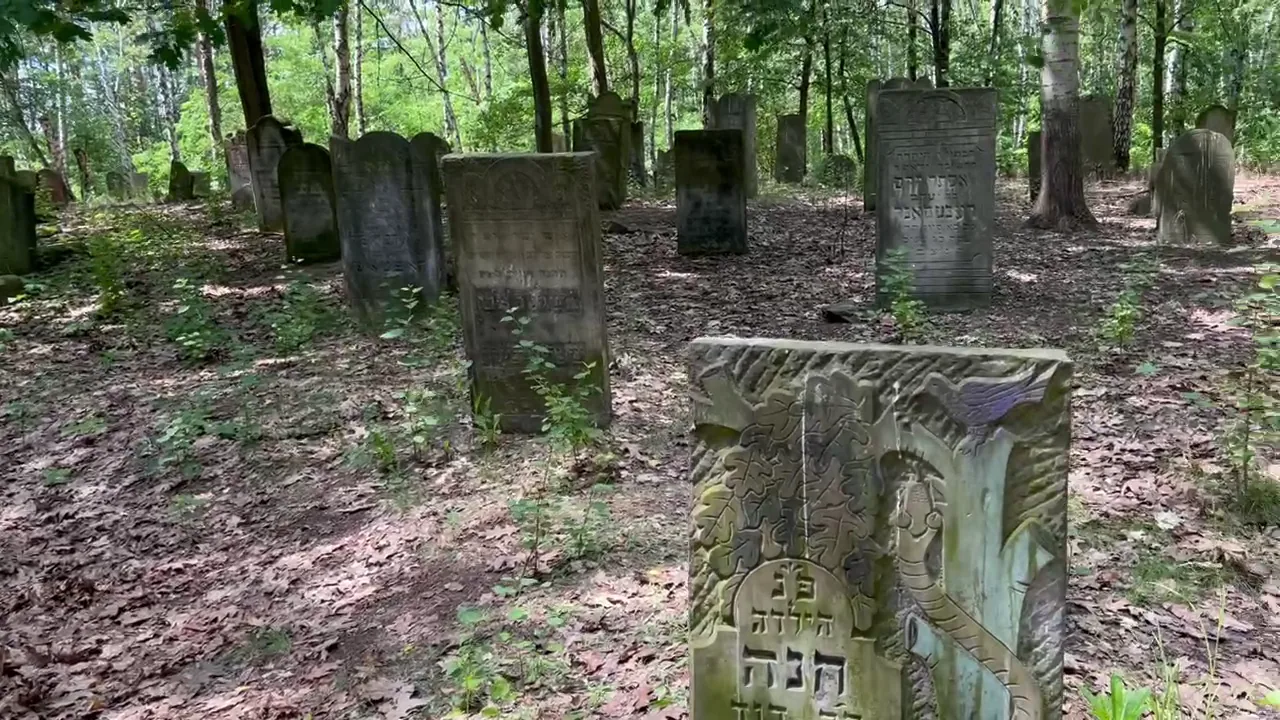
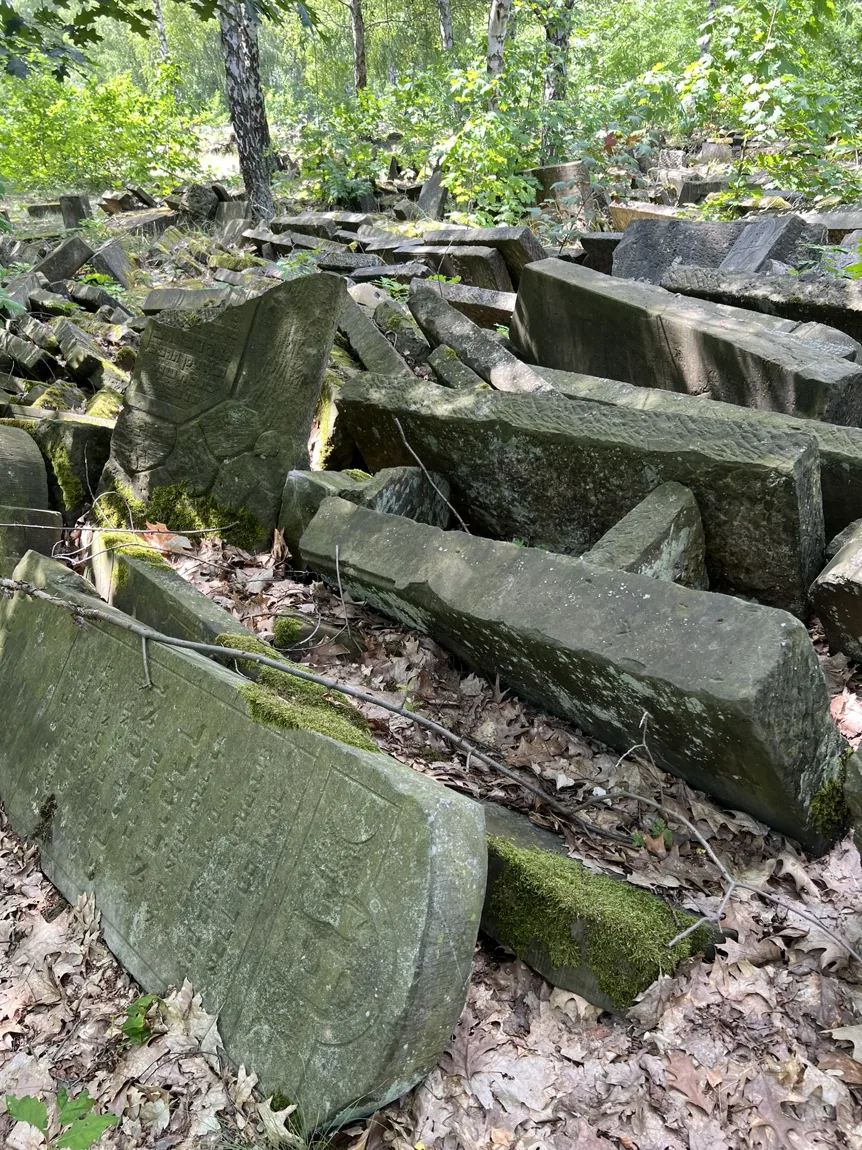
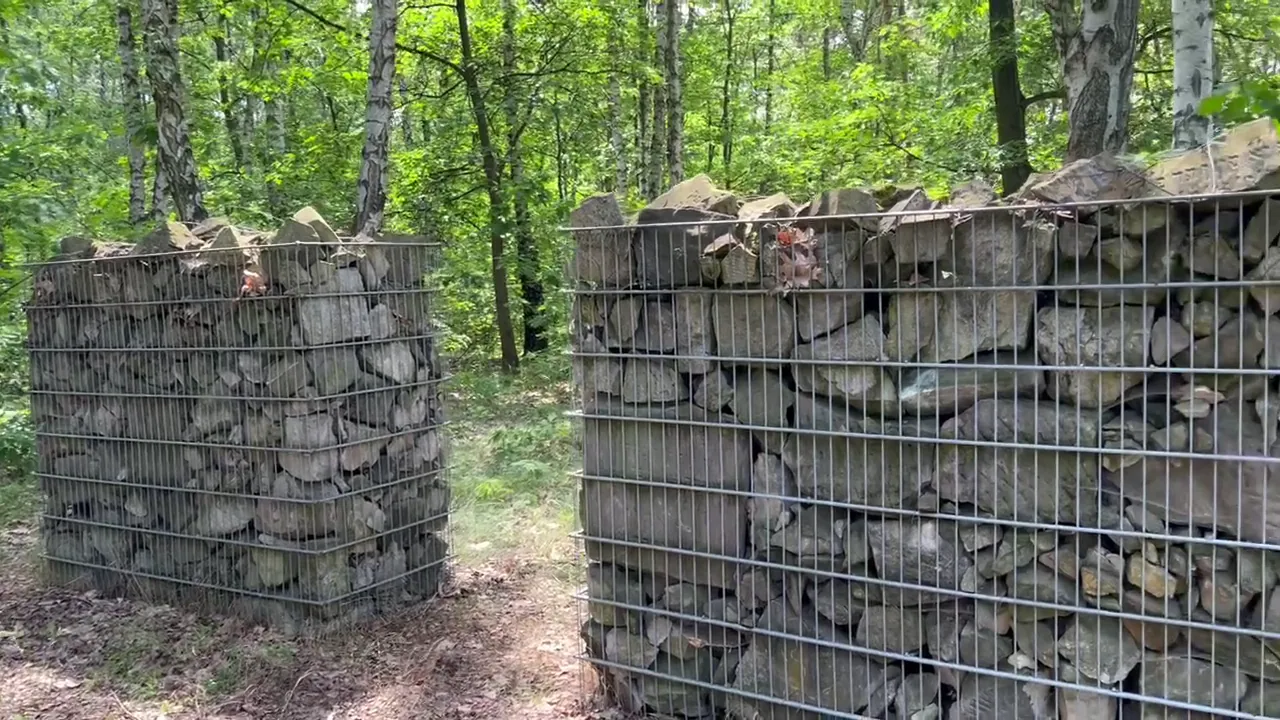
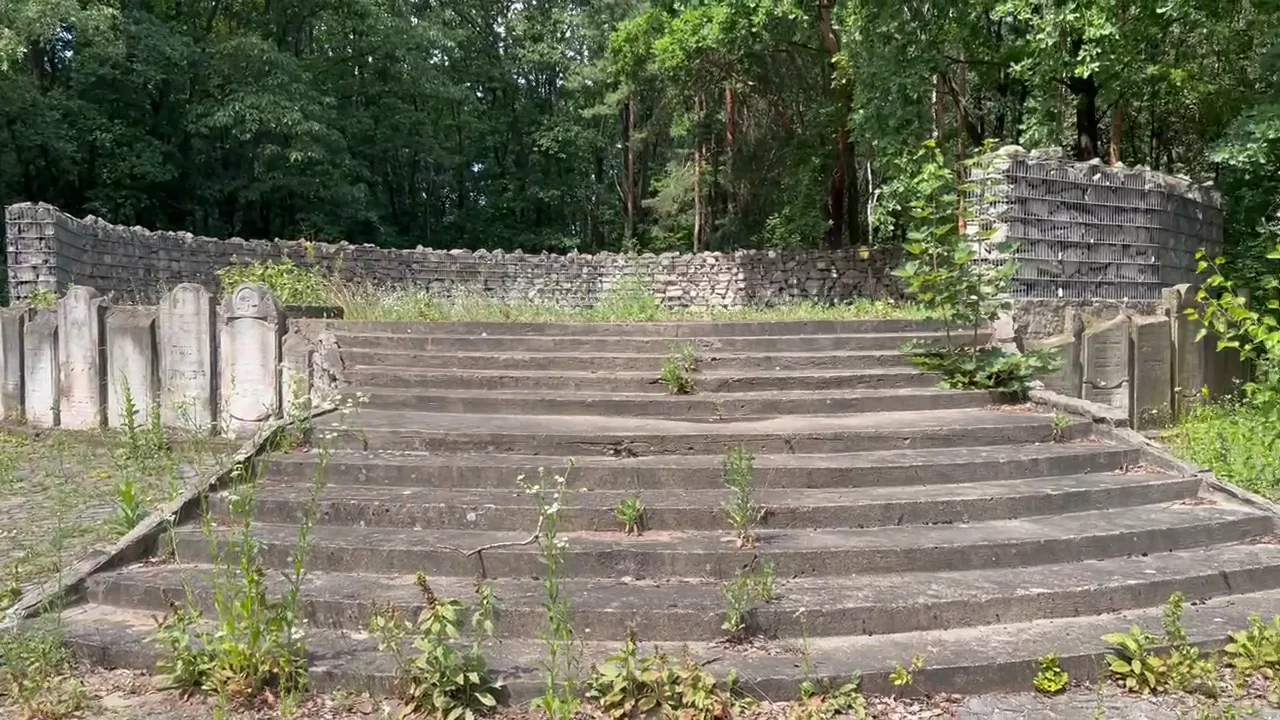
Begin the story ↓At Bródno, I found something that hardly resembled the familiar picture of a cemetery. Stones lay beneath the trees. Others had been stacked in great cages, and a few remained upright, their inscriptions still holding onto the names of the dead. This is the oldest surviving Jewish burial ground in Warsaw — and its very appearance is part of the story.
These photographs are not simply of a ruin. They show a place where the history of ordinary Jewish Warsaw is being recovered, fragment by fragment.
A Jewish cemetery older than its official founding
Most visitors associate Jewish Warsaw’s burial history with the vast cemetery on Okopowa Street. But on the opposite bank of the Vistula, Bródno tells an older and in some ways more fragile story. The oldest identified gravestones here date to 1743–1760. In 1780, merchant and banker Szmul Zbytkower secured the royal and ecclesiastical permission that formally established the burial ground. Those are different dates, and both matter.
The cemetery grew on what was then a sandy landscape beyond the built-up city, serving Jews connected with Praga and Warsaw. Over time roughly 250,000 people would be buried here, making it one of Poland’s most significant Jewish burial grounds by number of interments.
From a royal banker to a scientific pioneer
Szmul Zbytkower, who negotiated the cemetery’s recognition, was a prosperous merchant, banker and supplier to the court of King Stanisław August. Among the other notable people buried at Bródno is Abraham Stern, a mathematician and inventor whose calculating machines became part of the history of Polish science.
After the Jewish cemetery at Okopowa was established in 1806, Bródno became especially associated with poorer Jewish families and residents of Praga. That distinction helps explain why its history matters: the people whose names are most famous are only a fraction of the community buried here.
Jewish soldiers in Poland’s struggle for freedom
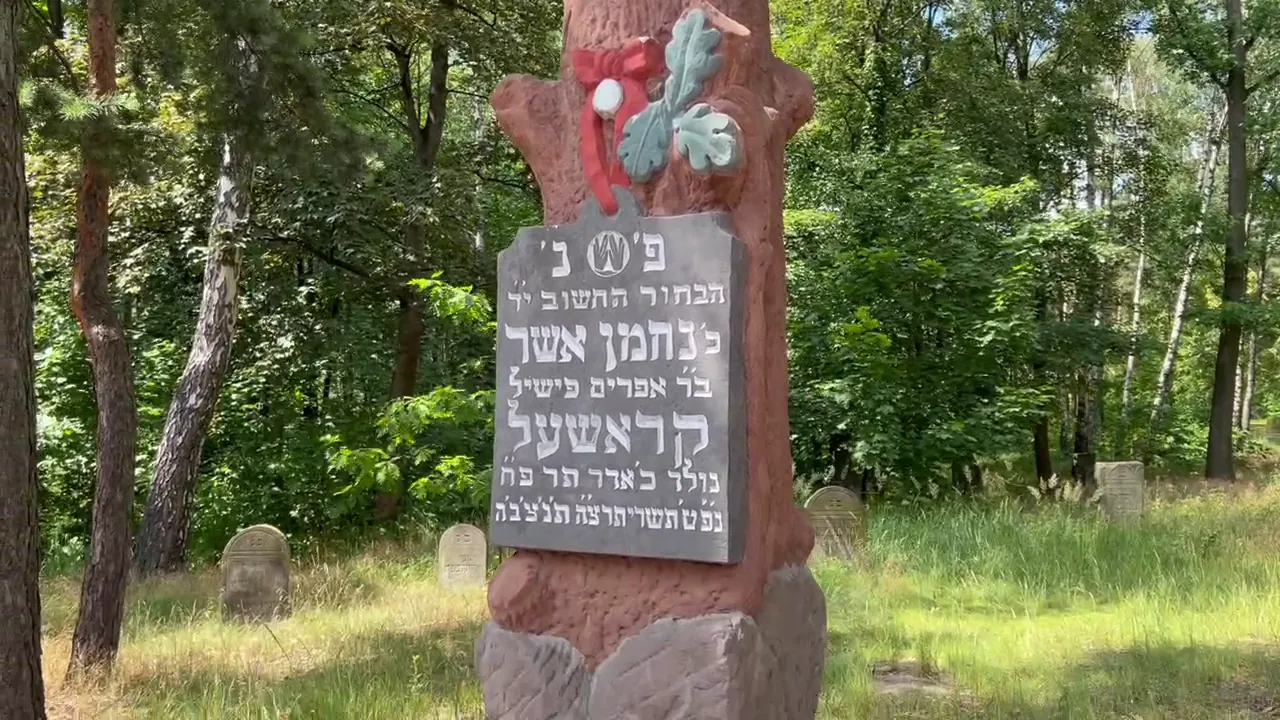
In November 1794, Russian troops stormed Praga during the final phase of the Kościuszko Uprising. The fighting and massacre of civilians left a lasting scar on this part of Warsaw. Soldiers of the Jewish light-cavalry regiment associated with Berek Joselewicz fought in defence of Praga, and members of that formation are remembered among those buried here.
This is a vital part of the story. Jewish Warsaw was not merely a bystander to the country’s political upheavals: Jewish residents were participants in the defence of the city and in Poland’s long struggle for independence.
Destruction that continued after the war
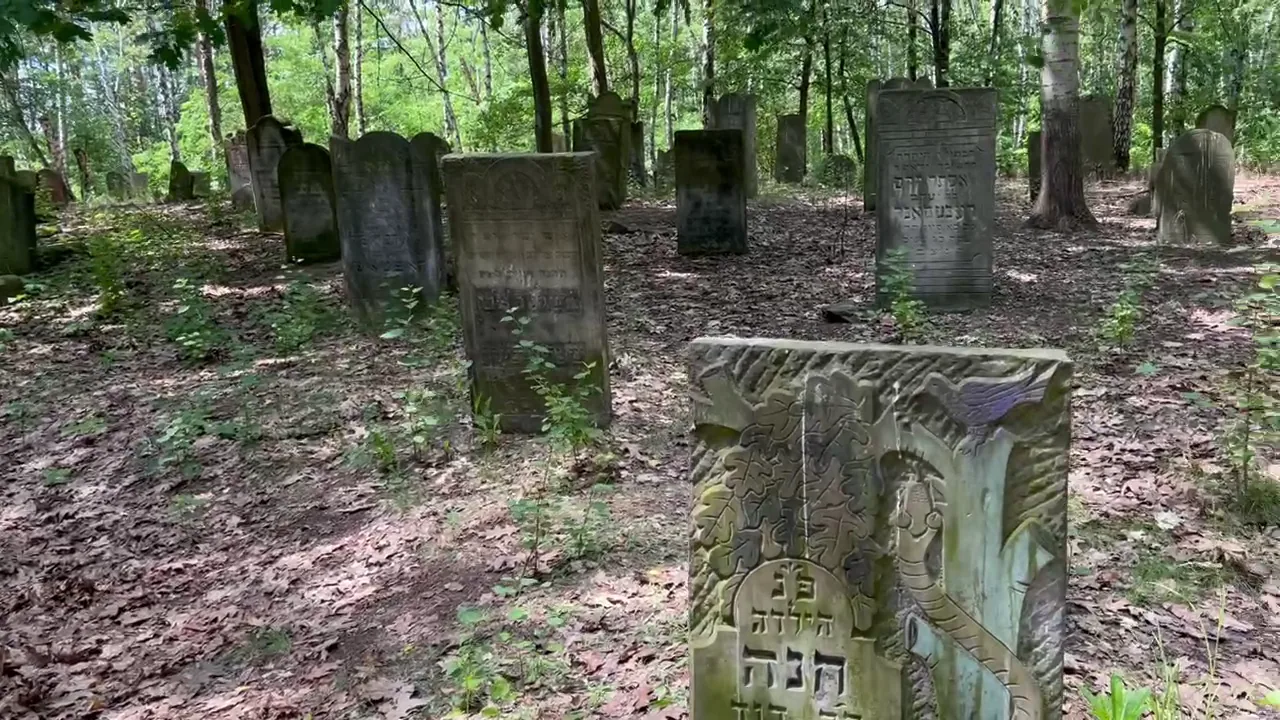
Bródno was devastated during the German occupation and suffered further destruction and neglect after the war. Many matzevot — traditional Jewish gravestones — were removed and reused as construction material. The burial ground was later treated in part as a wooded public space, and its historical boundaries were reduced.
What remains is startling: some stones still stand in their old setting, while others lie displaced in the undergrowth. To walk here is to encounter not an intact cemetery but a landscape where preservation, loss and reconstruction exist side by side. A gravestone moved from its original position may still carry a readable name, yet the relationship between inscription and actual burial place has often been broken.
The stacks that tell their own history
Perhaps the cemetery’s most arresting feature is the large collection of recovered stone fragments, piled and stored together. The sight can feel like an archaeological depot, but every piece once marked an individual life. This is why recovery here is not simply a matter of beautifying the grounds; it involves documenting surviving inscriptions and the fragments of families’ histories.
The photographs show both the vast accumulation of stones and the attempts to gather and protect them. They also explain why some parts of Bródno look unlike a traditional cemetery: many of the surviving monuments are no longer standing over their original graves.
From the Nissenbaum Foundation to the Jewish Community
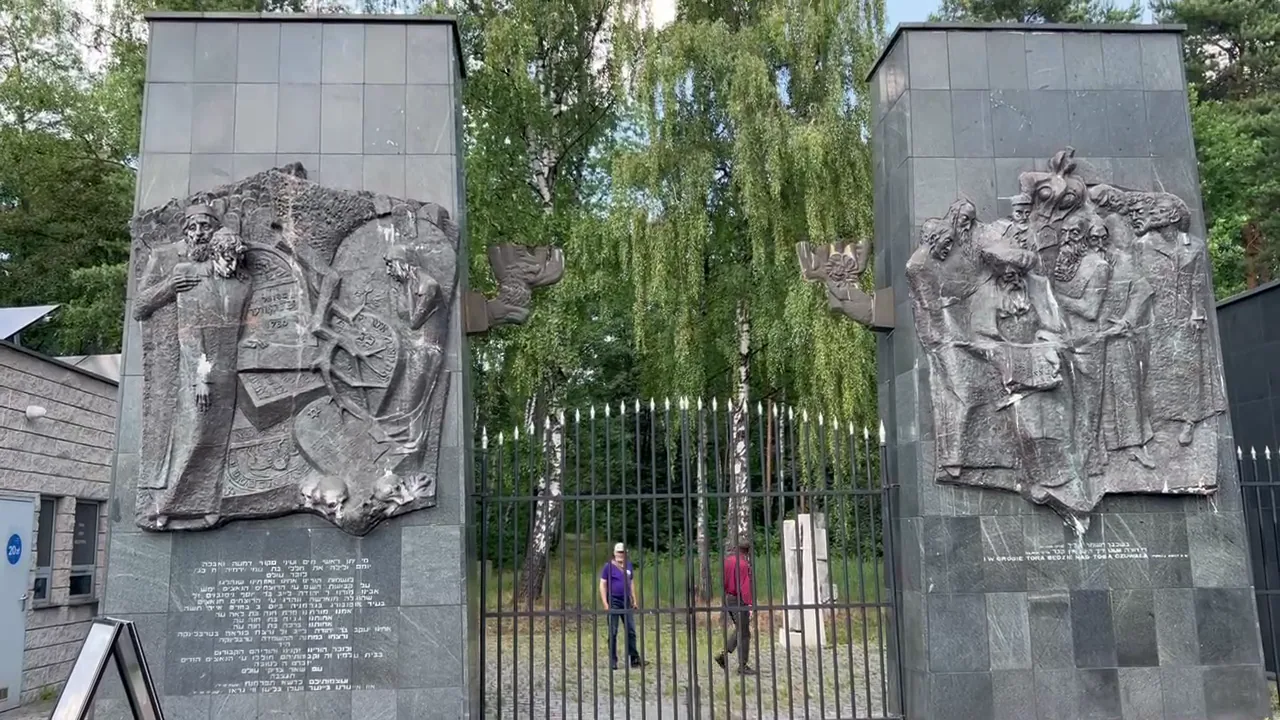
The Nissenbaum Family Foundation helped initiate major work in the late 1980s, including the prominent entrance gate. The grounds were returned to Warsaw’s Jewish Religious Community in December 2012, supporting a new phase of protection, documentation and education.
Restoration is not a finished task. The community notes that more than a hectare of the historic cemetery area remains beyond the present boundary, with burial places still outside adequate protection. Bródno therefore shows visitors that heritage preservation can be an unfinished and sometimes urgent responsibility.
The House of Eternity
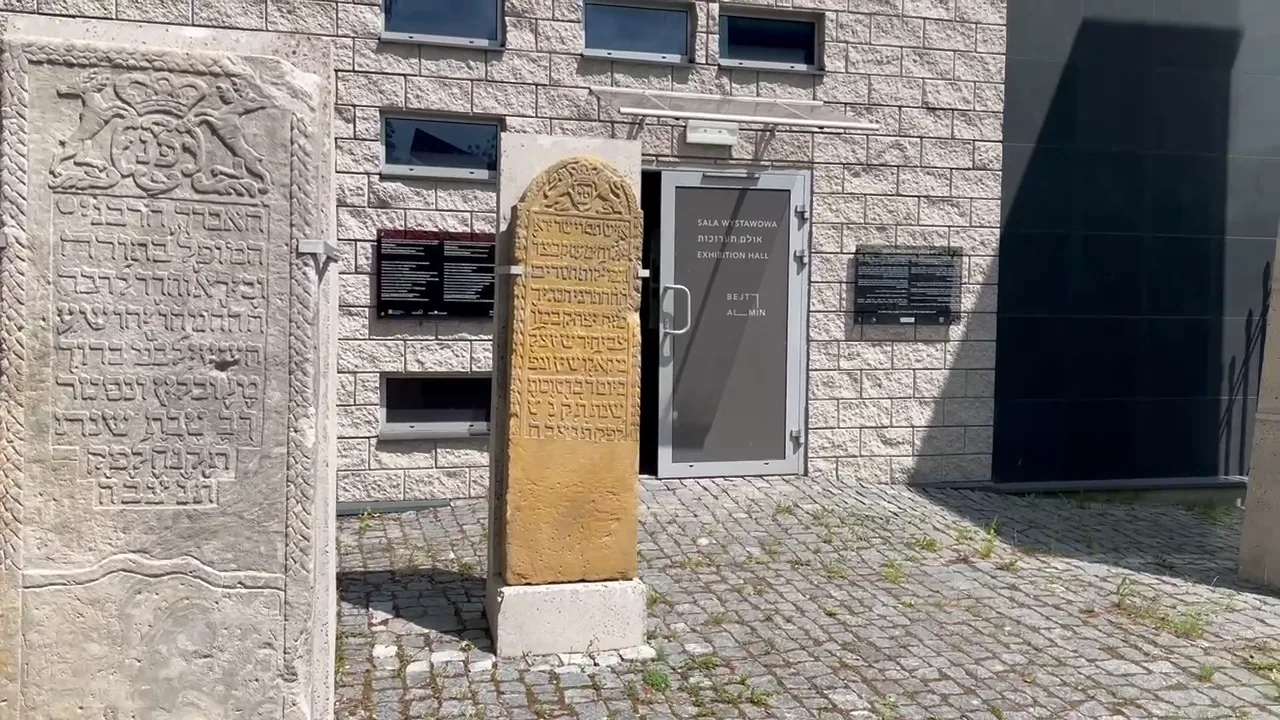
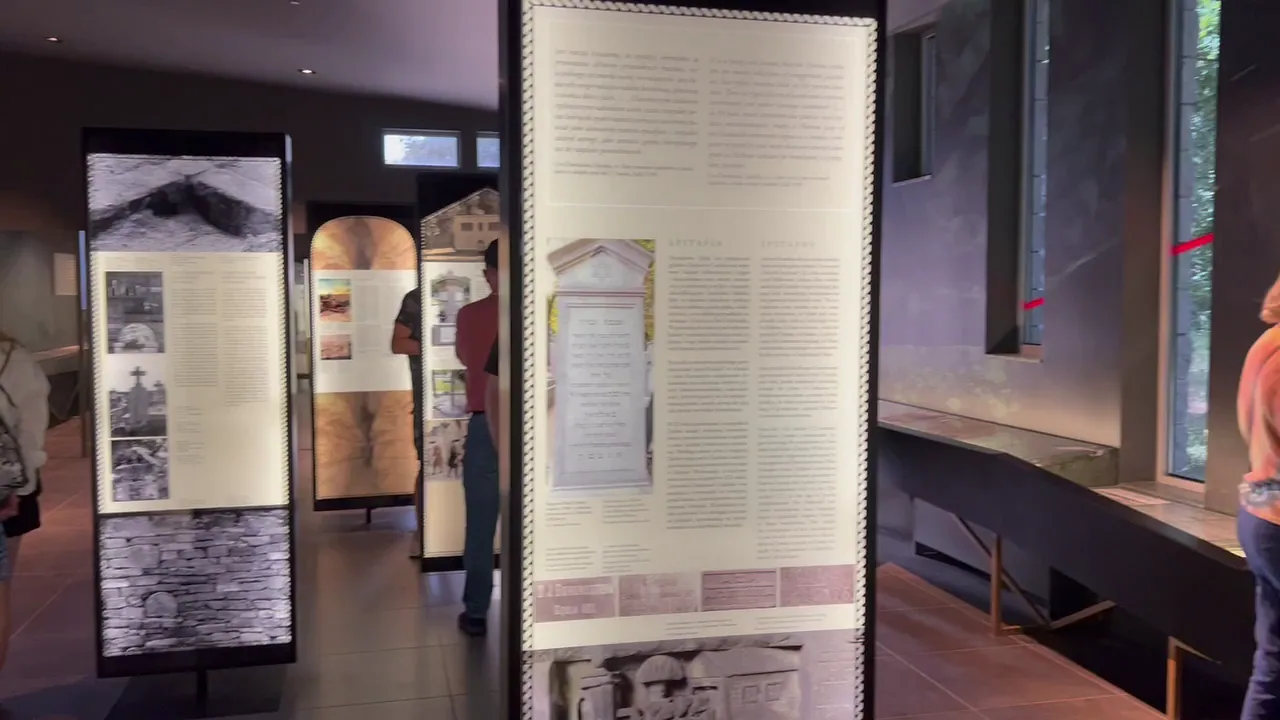
Opened in February 2018, the on-site exhibition Bejt Almin — House of Eternity helps visitors understand Jewish funerary traditions as well as the cemetery’s changing history. It gives context to what can otherwise be a puzzling walk: why gravestones carry particular symbols, why so many stones have moved, and why their return matters.
The exhibition is worth experiencing before exploring the wooded sections. It turns piles of fractured stone and isolated Hebrew inscriptions into part of a much longer history of mourning, community life and remembrance.
A heritage site, not an abandoned forest
Address: ul. św. Wincentego 15, Warsaw. This is the Jewish cemetery, distinct from the much larger Catholic Bródno Cemetery nearby at ul. św. Wincentego 83.
Visiting: the Jewish Religious Community currently lists Sunday visiting from 10:00 to 16:00 and an entrance charge of 20 zł. Arrangements can change for holidays, restoration work and special periods, so verify access on the community’s official Bródno page ↗ before setting off. Some visitors may wish to arrange an appointment in advance.
Respect: remain on designated routes, never move stone fragments, and photograph visitors and commemorations considerately. The apparent woodland is a burial ground, including places whose markers have disappeared.
Every stone held a life
Bródno is not just the story of something destroyed. It is also the story of people who insisted that this neglected landscape was still a cemetery, still sacred, and still worth recovering. Its gravestones remind us that the loss of heritage is also a loss of names.
Continue with Okopowa Jewish Cemetery or return to the Warsaw Cemeteries & Memorials hub.
Jewish Religious Community of Warsaw ↗ · Polish National Heritage Board ↗