
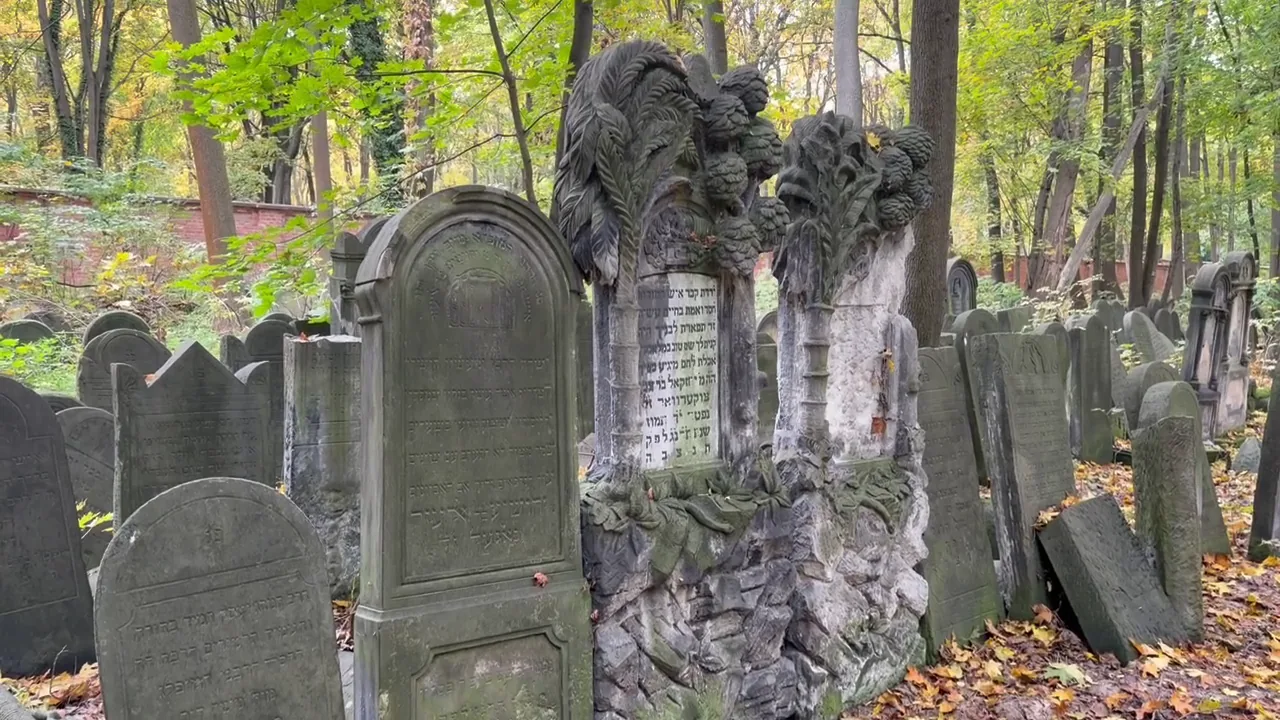
Okopowa: A City of Lives in Stone
Among the Hebrew inscriptions and wooded avenues survives a history of Jewish Warsaw, its culture and its losses.
Begin the story ↓The Jewish Cemetery on Okopowa Street is one of the places where Warsaw’s past still feels startlingly close. Paths wind between tightly packed gravestones, monumental family tombs and memorials to lives that ended in catastrophe. The city beyond the walls is busy and modern; here, you can trace generations of its Jewish community in stone.
This is not merely a cemetery of famous names, nor solely a site of Holocaust remembrance. It holds more than two centuries of religious, intellectual, cultural and family history — and it remains a place of burial and prayer.
Beyond the old city walls
When Warsaw’s Jewish community established a cemetery on the road that would become Okopowa Street in 1806, it was laying down more than a burial ground. The site became an enduring record of a community whose religious, intellectual and commercial life shaped the city. Before the war it was often called the Gęsia Street cemetery, after the road that led towards it.
Although later absorbed into the dense fabric of Warsaw, the cemetery initially lay beyond the city’s settled core. Its earliest surviving gravestone commemorates Sara, daughter of Eliezer, who died in 1807. The original grounds expanded repeatedly over the nineteenth century, ultimately reaching about 33.5 hectares. Today the Jewish community records more than 200,000 burials here.
Not everyone had equal access to burial here in the early decades. The fees tended to favour wealthier families, while many poorer Warsaw Jews were buried at the cemetery on the Praga side of the Vistula, now known as Jewish Bródno. Two cemeteries thus offer contrasting views of the same city's social history.
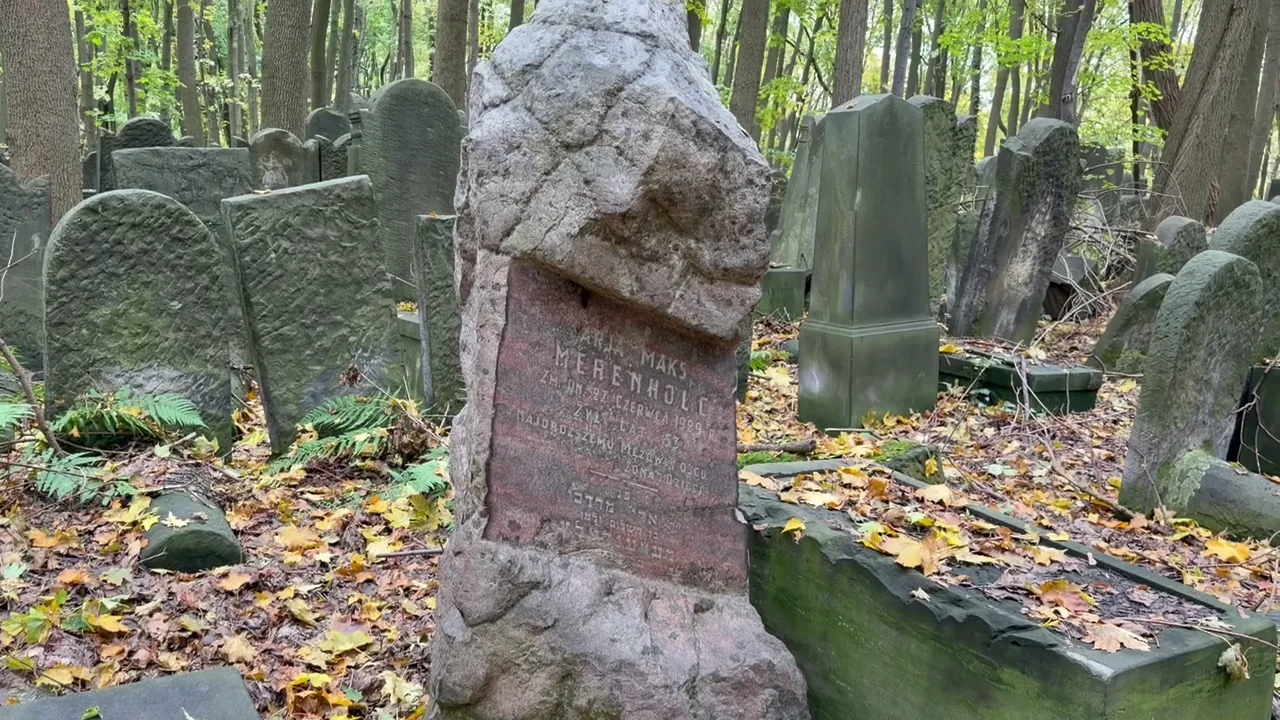
A forest of matzevot
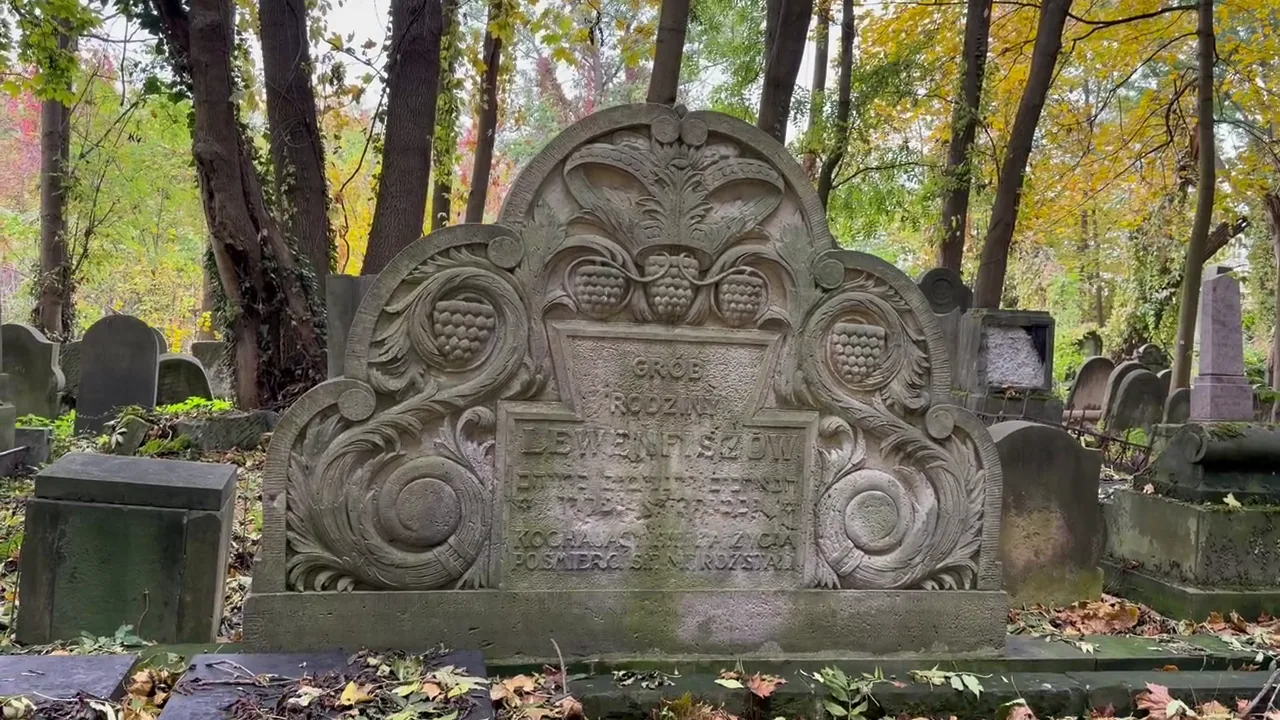
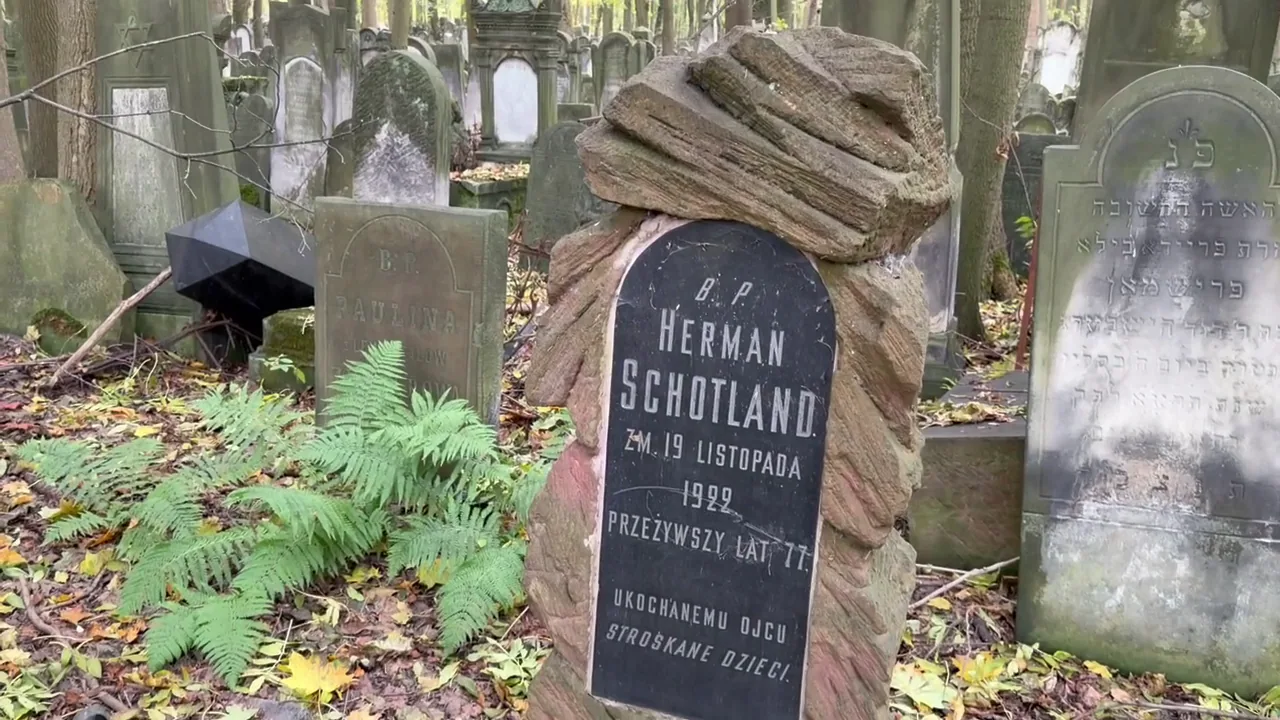
In parts of Okopowa, the gravestones seem to crowd together so closely that the avenues disappear into a forest of stone. Traditional upright Jewish headstones are called matzevot. Their inscriptions frequently record the name of the deceased, family relationships and words of remembrance. Hebrew appears throughout, while styles and languages change across generations.
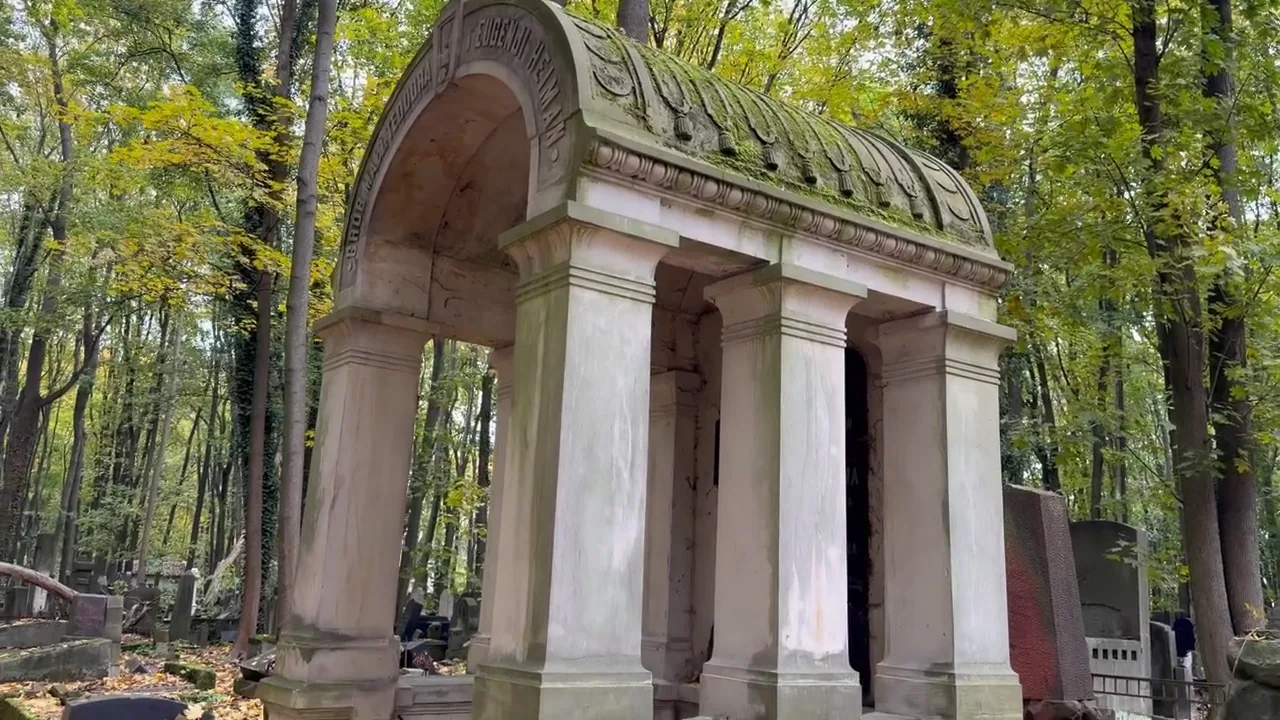
Some monuments are modest; others are elaborate works of nineteenth-century craftsmanship. The cemetery also contains ohels, small structures built over particular graves, often associated with revered rabbis and spiritual leaders. It is important not to treat a single symbol as proof of a person's profession, family background or religious role without reading the inscription and understanding its context.
What struck me while walking here was not only the age of the stones, but the density of lives they represent. It is easy to lose any sense of the modern city beyond the boundary walls.
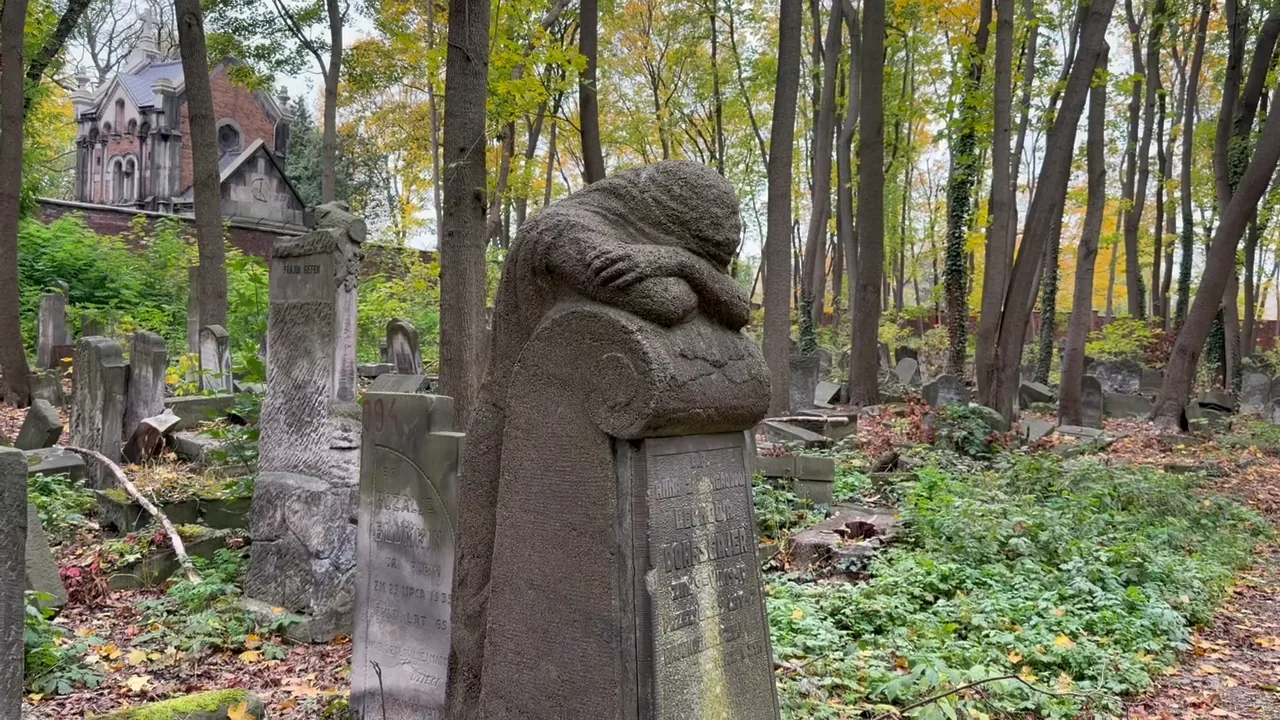
Writers, physicians, performers and reformers
Okopowa is a record of Jewish Warsaw in all its variety. Ludwik Zamenhof, creator of Esperanto, is buried here. So too are writers Icchok Lejb Perec, Jakub Dinezon and S. An-ski, whose work helps illuminate the literary life of Jewish Eastern Europe. The grave of Ester Rachel Kamińska, a pioneering figure of Yiddish theatre, connects this quiet place to Warsaw’s stage history.
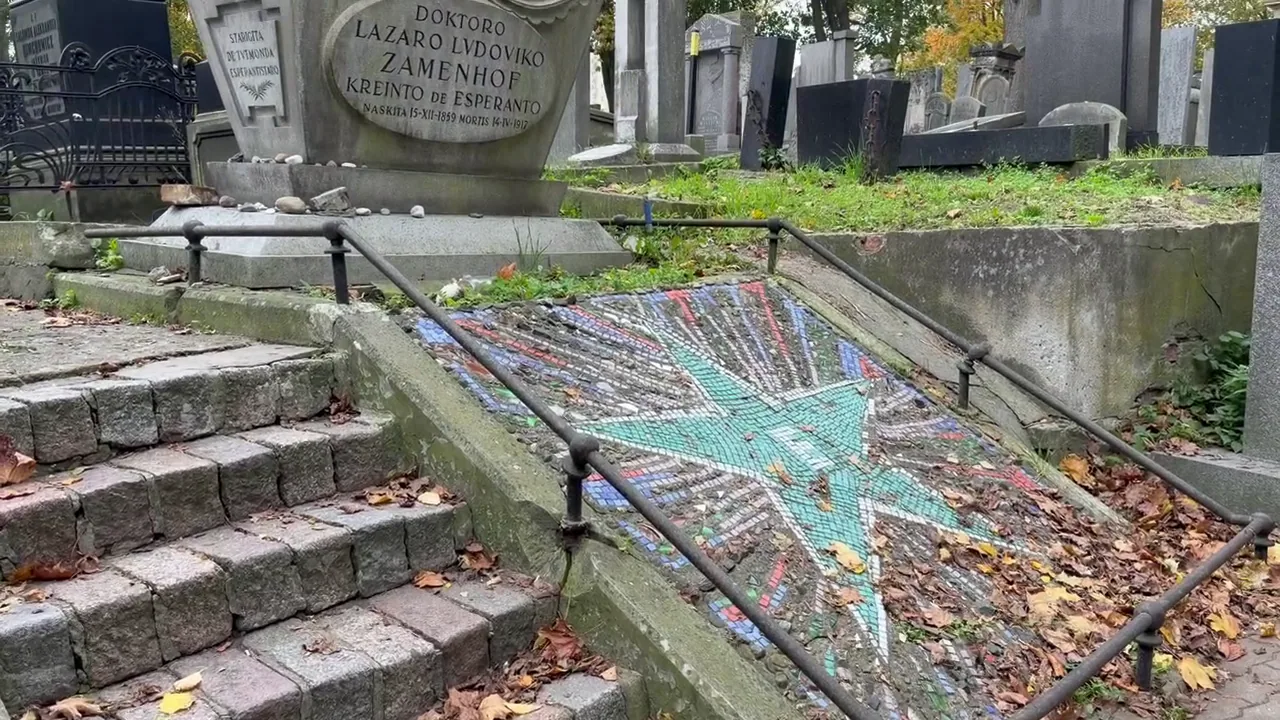
Among the cemetery’s other notable burials are physicians and scholars, publishers, merchants, rabbis and community leaders. Their names form a map of the schools, theatres, hospitals, publishing houses and congregations that once animated the capital. The People of Poland collection can eventually expand these connections with individual biographies.
We deliberately do not publish guessed grave coordinates. For someone seeking a specific burial, the cemetery’s official information and records are better starting points than an unverified pin.
The cemetery during the Holocaust
Under German occupation, this burial ground became bound to the history of the Warsaw Ghetto. Mass burials took place as disease, hunger, deportation and violence devastated the community. Some graves and memorials relate directly to the thousands who died in the ghetto; others remember people murdered elsewhere whose burial places are unknown.
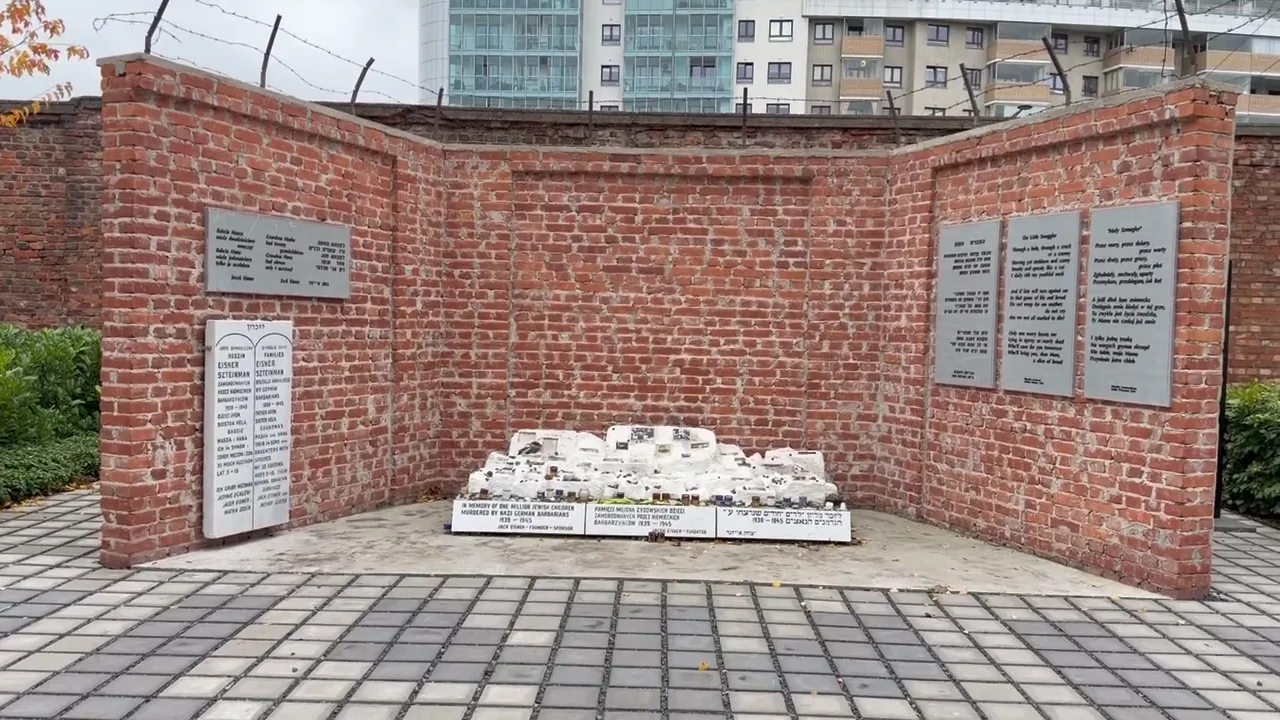
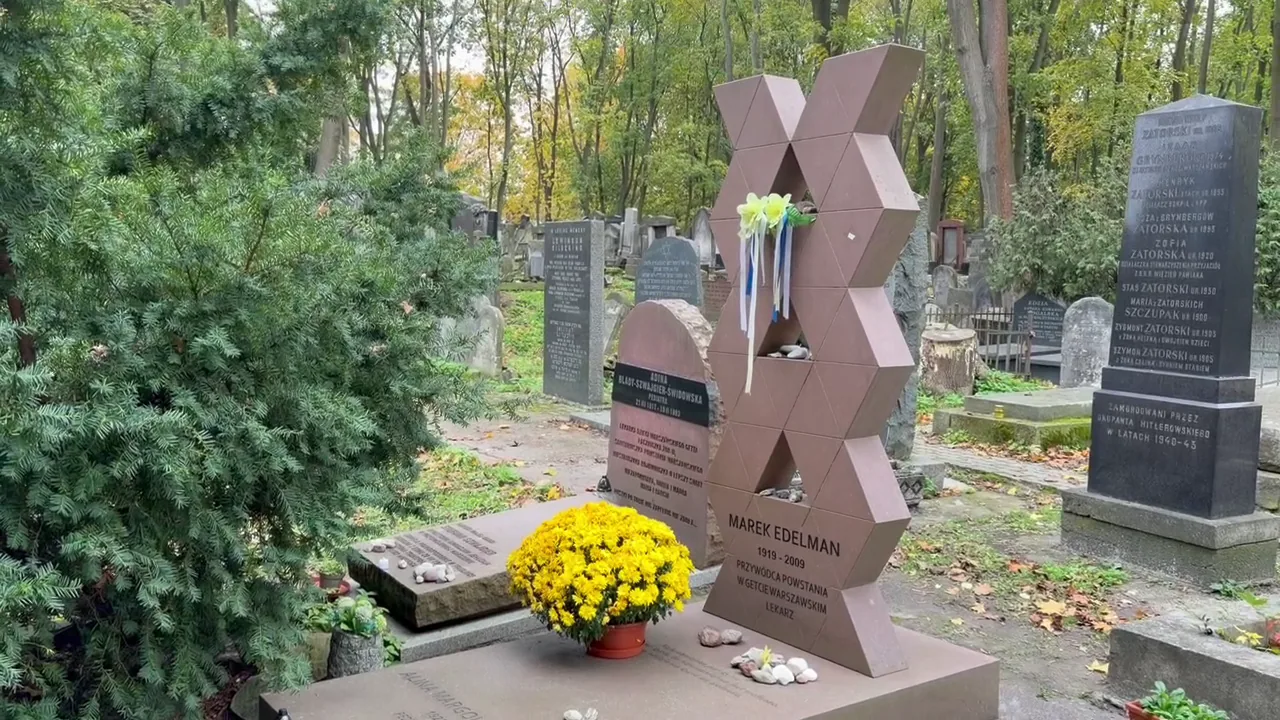
Among those buried here is Adam Czerniaków, chairman of the ghetto’s Jewish Council, and Marek Edelman, a leader of the 1943 Ghetto Uprising who later became a cardiologist and civic activist. Near the entrance, memorials honour murdered children and Janusz Korczak, who has no grave here. These are not interchangeable forms of remembrance: a memorial can mark an absence rather than a burial.
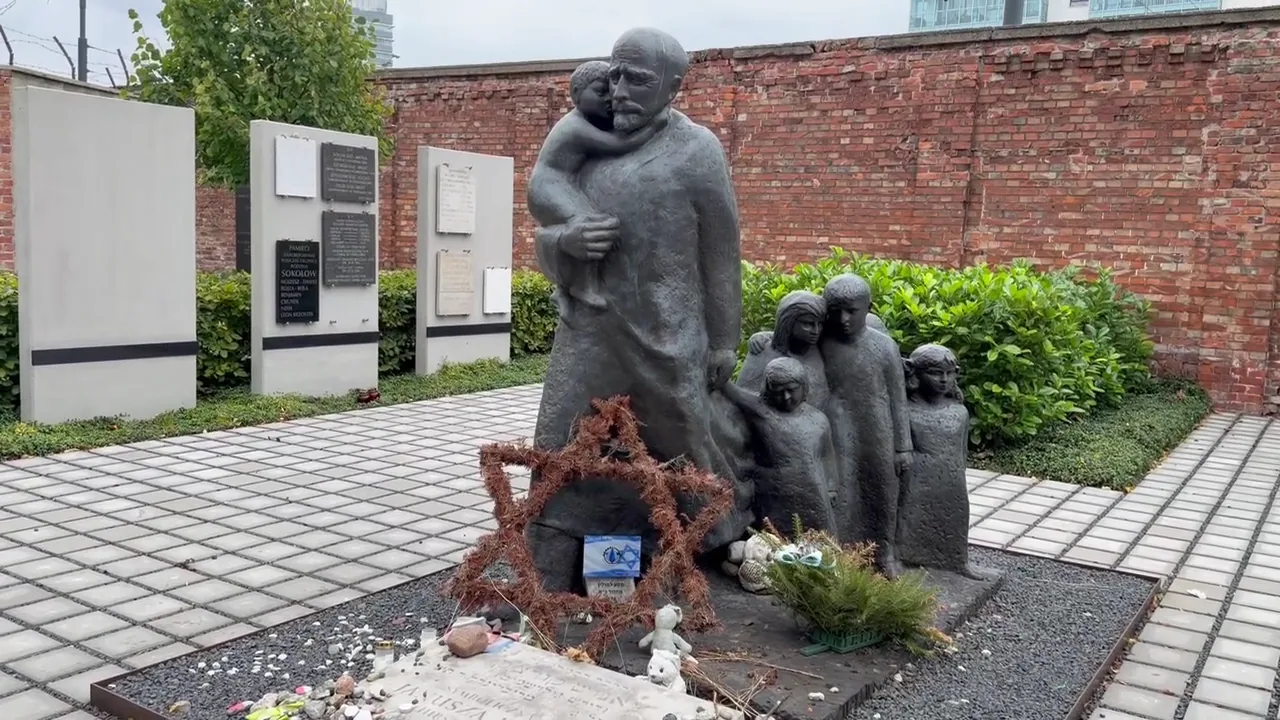
The full story reaches well beyond the cemetery walls. Our Jewish Warsaw and Muranów guides explore the ghetto, its inhabitants and the traces still visible in the city.
Two uprisings, and the Jewish citizens who fought
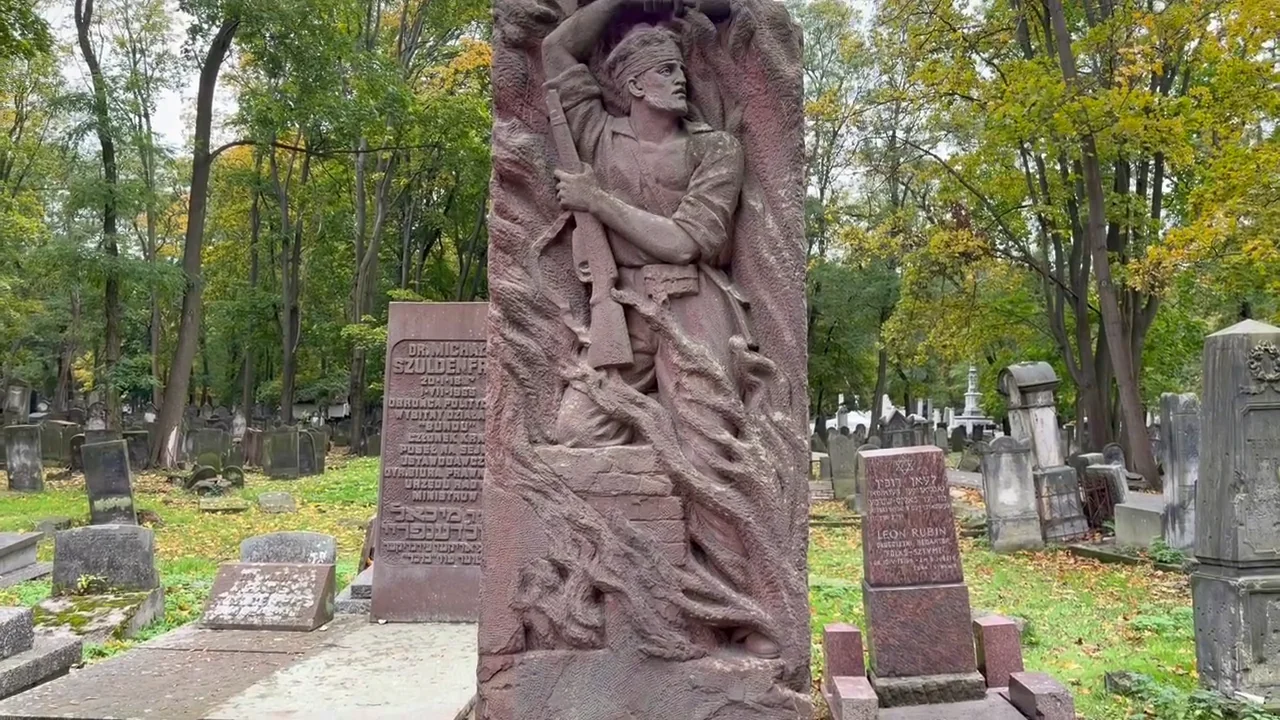
Two different uprisings belong to this landscape. In April–May 1943, Jewish fighters resisted German forces during the Warsaw Ghetto Uprising; some participants are buried at Okopowa. In August–October 1944, the Warsaw Uprising brought another struggle against German occupation, involving people of different backgrounds, including Jewish participants. Their histories should not be collapsed into one event.
Among the most striking memorials here is the stone relief of an armed fighter, commemorating Bundist participants in the 1943 Warsaw Ghetto Uprising. The monument is attributed to sculptor Nathan Rapoport. Its armed figure evokes the Jewish resistance against the German liquidation of the ghetto; it should not be confused with a memorial specifically to the separate Warsaw Uprising of 1944.
The cemetery includes wartime soldiers’ graves and memorials. Jewish soldiers who died defending Poland in September 1939 are buried here, while memorials honour Jewish service in the Polish armed forces. One section commemorates Jewish participants in the 1944 Warsaw Uprising. This is another important aspect of the cemetery: it records Jewish lives not only within the history of the ghetto, but within the wider history of Poland’s fight for freedom.
For the wider history of the 1944 uprising, see our Wola guide. A dedicated Warsaw Uprising guide will follow once its research and museum photography are complete.
The Mausoleum of Jewish Fighters for Poland’s Independence
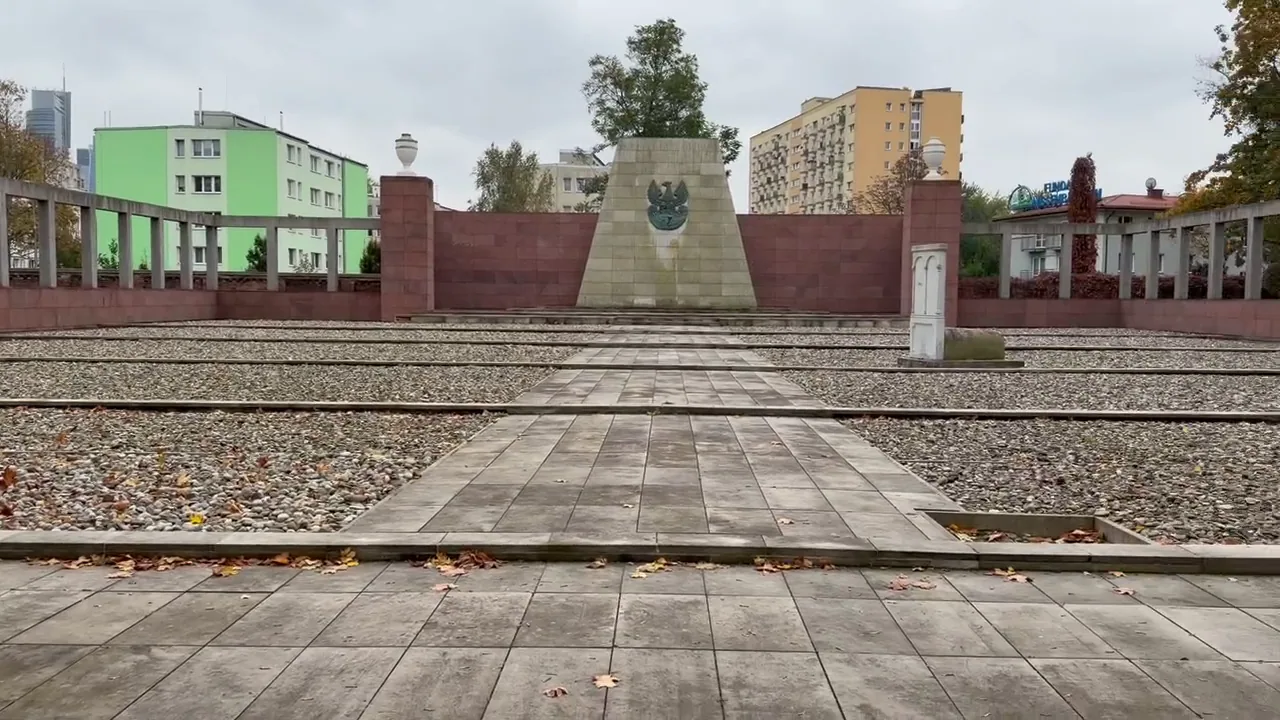
The Mauzoleum Żydów Bojowników o Niepodległość Polski honours Jewish soldiers and insurgents who fought for Poland in conflicts including the Kościuszko Uprising, the Napoleonic period, the November and January Uprisings, the First World War and the struggle to defend the newly independent country.
Planned in 1938 by Warsaw’s Jewish community and designed by architect Marcin Weinfeld, the mausoleum was left unfinished when the Second World War began. Work to complete the historic scheme resumed decades later, concluding in 2019. It offers a powerful correction to any account of Polish history that treats Jewish citizens as spectators rather than participants in the country's struggle for independence.
A memorial close to Okopowa
Not every important place of remembrance on Okopowa Street is inside the cemetery. Just outside the burial ground is another memorial that can easily be mistaken for part of the cemetery itself. Keeping the two locations distinct matters, especially when explaining the history of wartime victims and those whose remains were recovered and reburied.
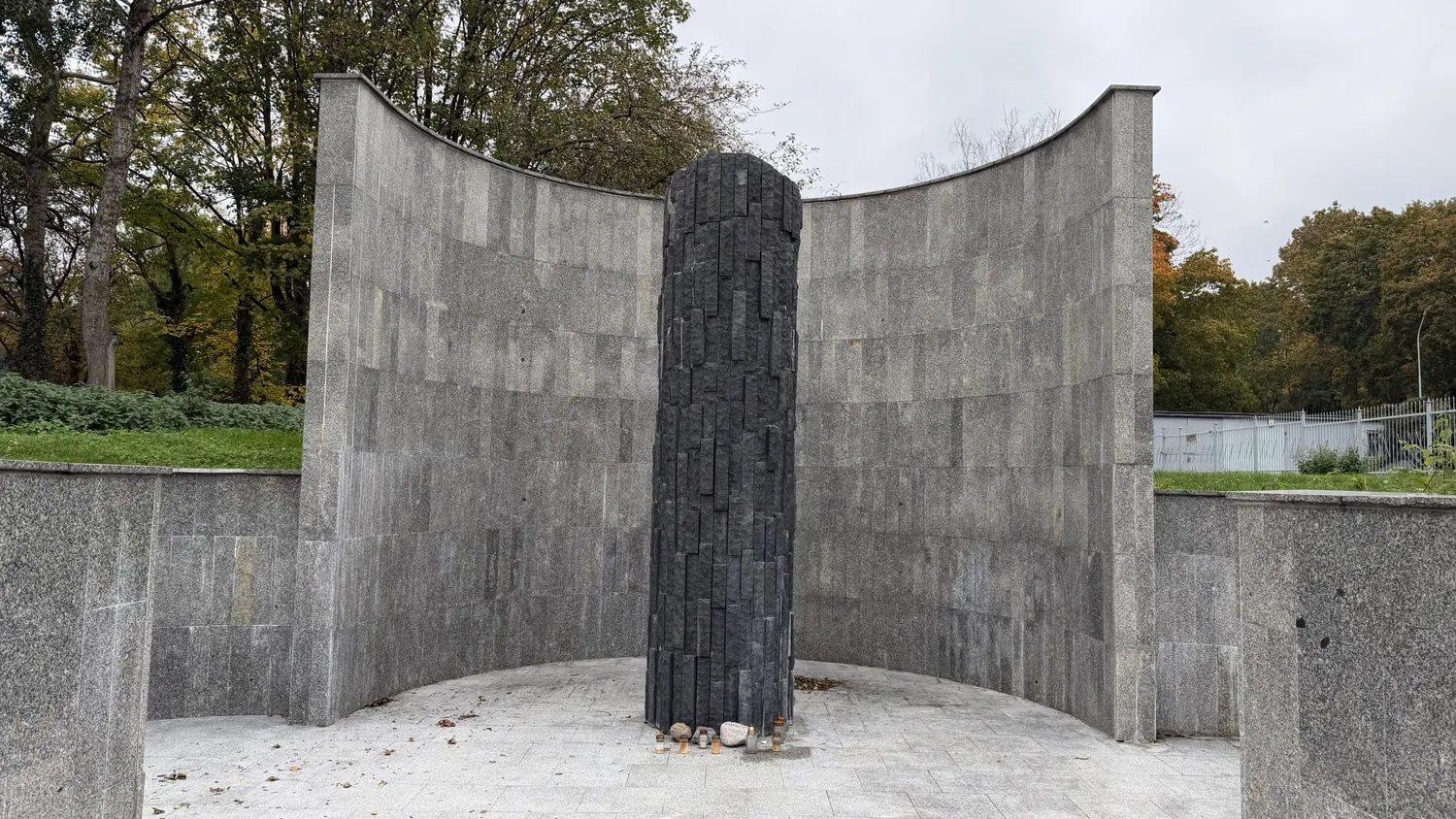
The nearby Memorial to the Martyrdom of Jews and Poles also documents the discovery of human remains in 1988 and their subsequent reburial. It provides another perspective on the city’s efforts to remember those killed in the wartime ghetto.
What remains, and who protects it
The cemetery was damaged during the Second World War, yet tens of thousands of historic stones remain. Time, weather, vegetation and earlier neglect create continuing challenges for conservation. This is not a frozen monument: it is both an active cemetery and a place where careful documentation of individual gravestones matters.
Researchers and conservators have inventoried many thousands of inscriptions. Their work helps recover names, relationships and small pieces of Warsaw’s history that would otherwise be lost. The site was added to the heritage register in 1973 and forms part of the nationally recognised historic cemetery complex of Powązki.
The contrast between richly carved monuments and almost illegible stones is part of the experience. So is the responsibility to visit without treating the grounds as a backdrop: many families still come here to remember people they loved.
How to explore Okopowa respectfully
Where: Okopowa 49/51, Warsaw. Enter through the authorised visitor entrance, not through neighbouring memorial sites. Set aside at least an hour for a brief visit; allow considerably longer if you want to explore the grounds thoughtfully.
When: The Jewish Community currently lists Sunday–Thursday 10:00–17:00 and Friday 10:00–15:00, with the cemetery closed on Saturdays. Jewish and Polish holidays can affect access. Check the current rules and ticket arrangements before travelling. Men are required to cover their heads; follow the guidance provided at the entrance.
Stay on established routes where possible, avoid stepping on graves, and be considerate of mourners and religious ceremonies. The avenues may be uneven and slippery in wet weather. Unlike an ordinary city park, this is a sacred burial ground.
Official Okopowa visitor information ↗ · Cemetery history and preservation ↗ · Explore the cemetery map →
Many names, one city's history
Okopowa holds the traces of a community whose contributions to Warsaw were immense, and whose history was violently interrupted. Visiting is an invitation to understand individual lives alongside that larger history — without forgetting that this is still a place where people come to mourn.
Continue through our Warsaw Cemeteries & Memorials guide, or explore Jewish Warsaw and Muranów.