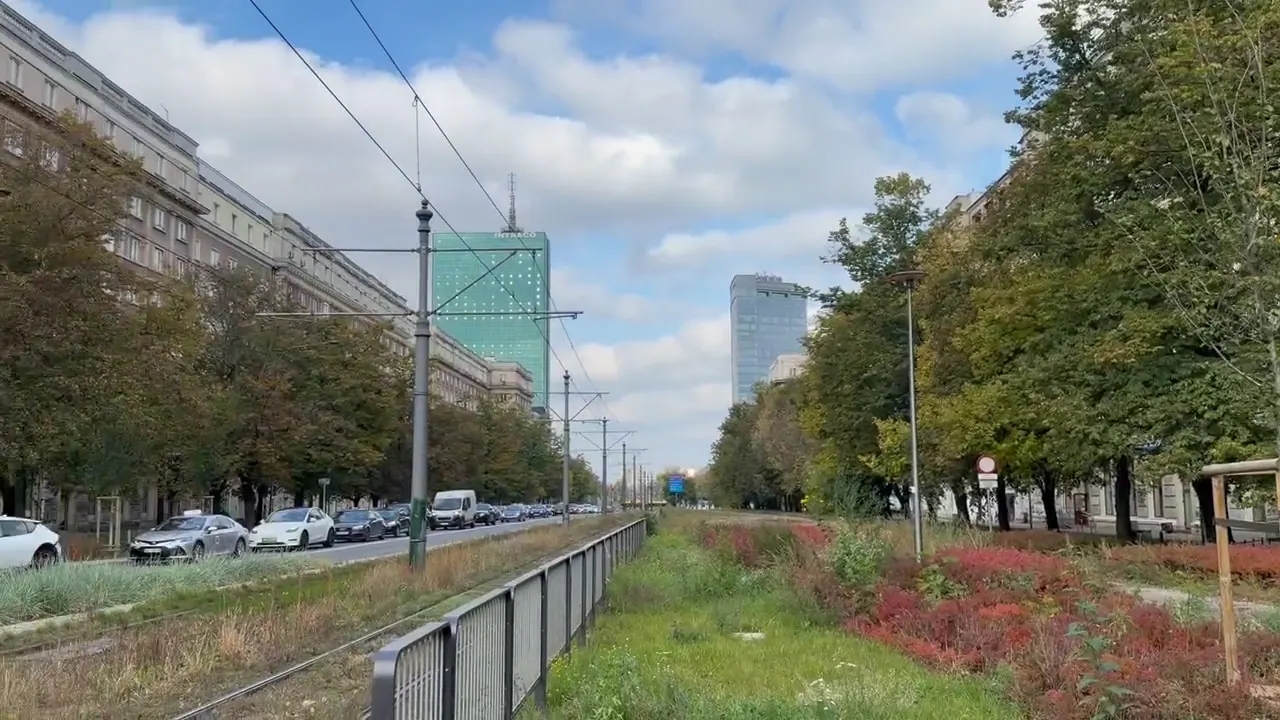
Trams travel along Andersa, trees shade the residential courtyards, and local people visit shops, cafés and the cinema. Yet this peaceful neighbourhood stands on land profoundly altered by the Second World War. Before the occupation, much of the area formed Warsaw's densely populated Northern District, home to a large Jewish community. It became part of the Warsaw Ghetto and was devastated by German forces. After the war it was redesigned as a place to live again.
This guide looks at Muranów as a living neighbourhood — the buildings, parks and culture alongside the memory of what stood here before. For a deeper citywide history of Jewish life and the ghetto, see our Jewish Warsaw guide.
Chapter 01
Where is Muranów?
Muranów lies immediately northwest of Warsaw's Old Town. Andersa Street, POLIN Museum and the postwar housing estates form useful points of orientation. There are several overlapping definitions: the historic neighbourhood, the municipal neighbourhood and wider areas associated with the Muranów housing developments are not identical.
Finding Muranów: The highlighted area shows the narrower central neighbourhood. This guide also visits nearby historical streets, Krasiński Garden and closely connected landmarks outside that boundary. Map: OpenStreetMap-derived reference supplied for this guide; attribution and map details are retained in the SVG.
Map key · what the numbers mean
These numbers identify landmarks on the map; they are not a fixed walking order.
1
POLIN MuseumMuseum of the History of Polish Jews
2
Ghetto Heroes MonumentMonument beside POLIN
3
Umschlagplatz MemorialStawki Street
4
Nowolipki residential areaPostwar housing and architecture
5
St Augustine’s ChurchHistoric church on Nowolipki
6
Kino Muranów and Andersa 5Cinema and monumental gateway
7
Bar Gdański / Andersa StreetNeighbourhood life
8
Krasiński GardenHistoric park
9
Krasiński PalacePalace beside the garden
10
Warsaw Uprising MonumentKrasiński Square
The red outline shows the narrower Muranów neighbourhood boundary; some locations in this guide lie just outside it.
The core of this guide is easily explored on foot, with some optional extensions to nearby heritage sites.
Chapter 02
From Murano to Muranów
An Italian name in Warsaw
The name reaches back to 1686, when royal architect Józef Szymon (Simone Giuseppe) Belotti built a residence called Murano, named after the glassmaking island near Venice. The residence disappeared, but the name lived on in the district that grew around it.
The vanished Northern District
By the early twentieth century, streets such as Nalewki, Gęsia, Miła and Nowolipki formed part of a dense neighbourhood of tenement houses, workshops, shops, schools and places of worship. Warsaw's Jewish communities played a central role in its commercial and cultural life. The old streetscape differed radically from today's open postwar estates. Many streets were destroyed, reconfigured or lost altogether.
Our Jewish Warsaw guide traces the people and institutions of this vanished landscape in greater detail.
Chapter 03
Destruction and survival
The Warsaw Ghetto
During the German occupation, much of this area was enclosed within the Warsaw Ghetto. Its residents faced hunger, persecution and severe overcrowding. During the mass deportations of summer 1942, more than a quarter of a million people were sent to the Treblinka extermination camp. In April 1943, Jewish resistance fighters launched the Warsaw Ghetto Uprising; German forces responded by systematically burning and destroying the district.
The Ghetto Heroes Monument, Miła 18 memorial, Umschlagplatz and the Memorial Route of Jewish Martyrdom and Struggle are central to remembering this history, but here we also ask what happened to the streets and buildings afterward.
St Augustine's Church
Nowolipki 18. Built between 1891 and 1896, St Augustine's Church survived while much of the surrounding ghetto was destroyed. Its tower appears in photographs standing almost alone amid the postwar ruins. A visit provides one of the clearest physical connections between the vanished city and modern Muranów.
Chapter 04
Bohdan Lachert and a new estate
A residential memorial
Architect Bohdan Lachert helped plan Muranów Południowy as an answer to Warsaw's urgent housing shortage. Some of the rubble from the ruined neighbourhood was reused in raised terrain and construction materials, including gruzobeton (rubble concrete). The rubble included debris from destroyed buildings and, in places, human remains of people killed during the occupation.
Lachert envisioned an osiedle-pomnik: an estate of new homes that would also acknowledge the community destroyed there. His initial modernist thinking stressed light, air, functional apartments and green communal spaces.
Changed by socialist realism
Political directives changed the appearance of the scheme. Monumental arches, colonnades, decorative details and plastered facades replaced aspects of the original exposed-material concept. Muranów became a layered architectural project rather than the pure execution of one design.
The Muranów Południowy estate, built between 1949 and 1956, received heritage-register protection following a decision dated 20 December 2023.
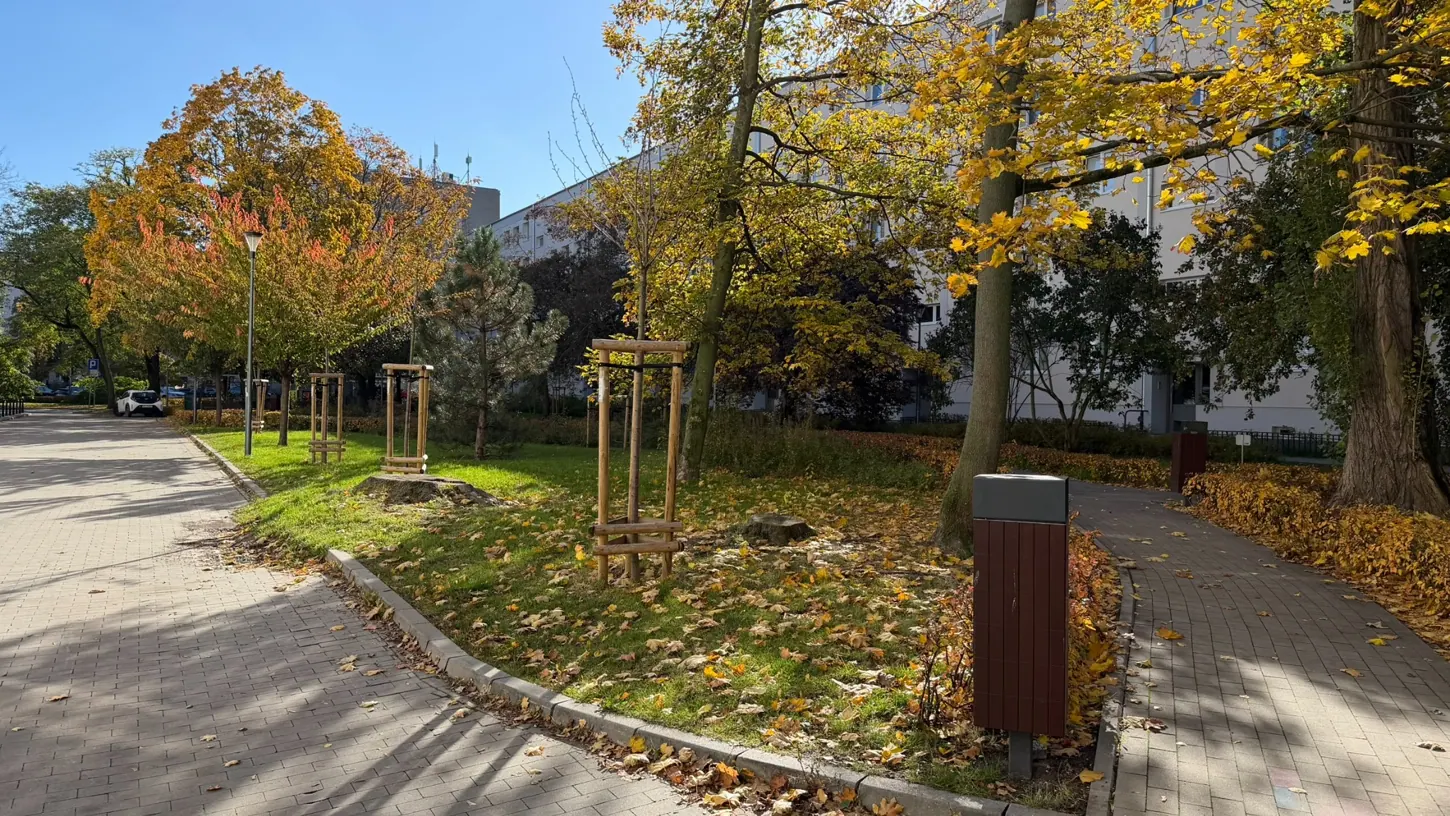
Postwar residential blocks and carefully planted communal greenery.
Chapter 05
An architectural walk through Muranów
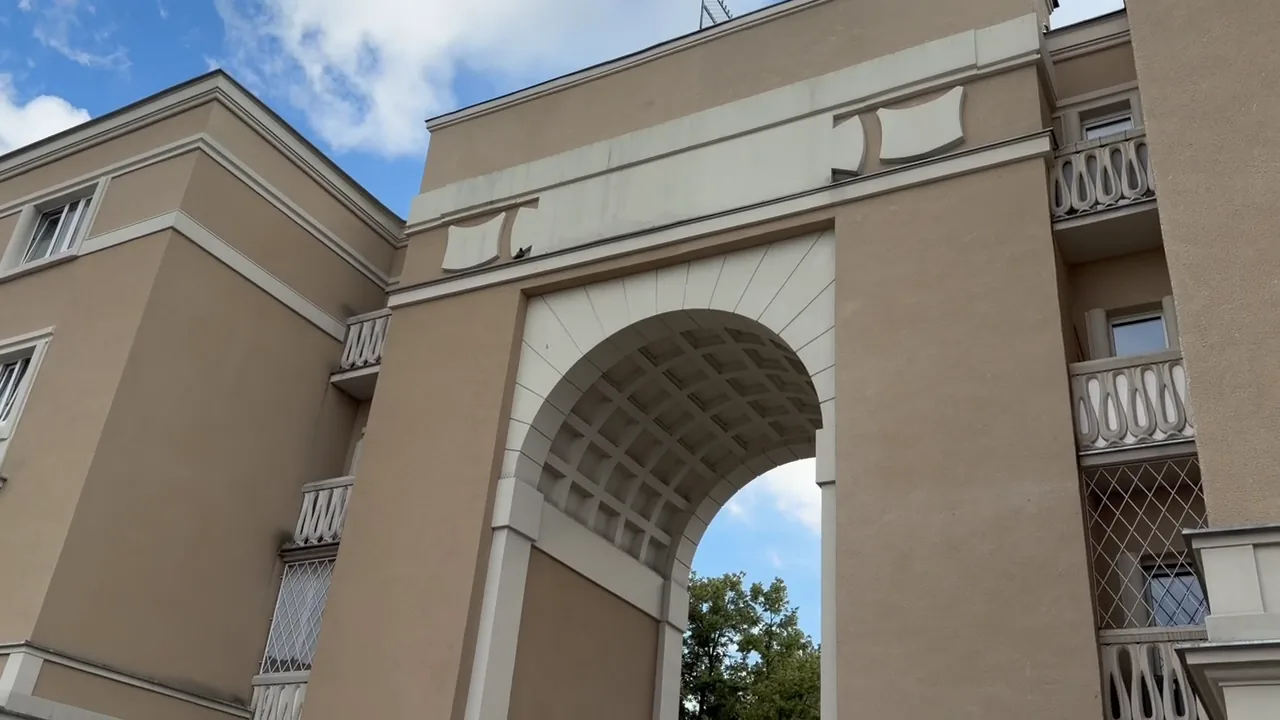
The monumental gateway at Andersa 5
Near Kino Muranów, an impressive archway announces the entrance into the residential estate. The formal gateway, columns and surrounding facades reveal the influence of socialist realism. Moving through it shows the contrast between the busy avenue and the more sheltered streets and courtyards beyond.
A monumental arched passageway in the postwar Muranów housing estate.
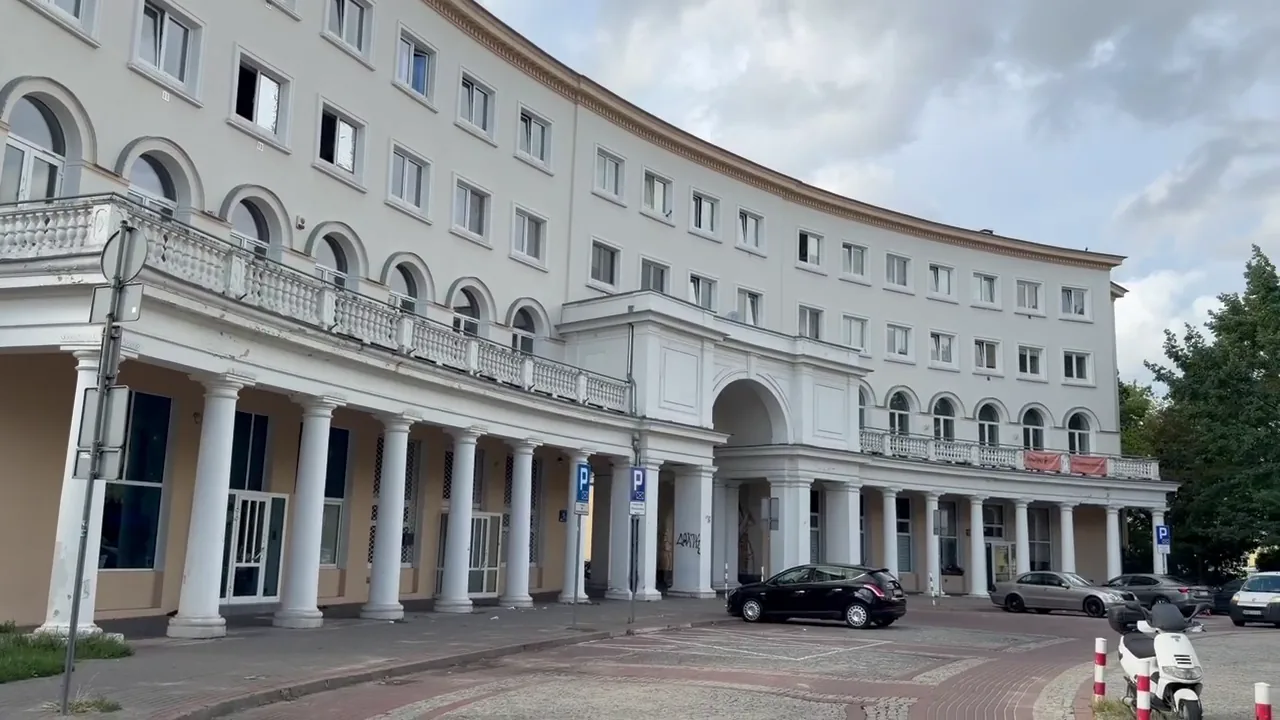
The curved frontage at Nowolipki 9B
Near Plac Dziewcząt z Nowolipek, the curved building frontage combines columns and decorative arches. Historical photographs document its construction in 1952, making it a useful reference point for comparing the original project with the neighbourhood today.
A curved residential frontage with a ground-floor colonnade in Muranów.
A quieter entrance at Nowolipki 19–21
The gateway between Nowolipki 19 and 21 offers a more modest counterpoint to the grand passage beside the cinema. It shows how the development provided different kinds of entrances and connections between residential blocks.
Raised courtyards and rubble concrete
Across Muranów Południowy, steps, terraces and changes in level testify to the postwar rebuilding on reshaped ground. Heritage documentation identifies retaining walls that incorporate rubble concrete; individual exposed sections should be interpreted with care rather than every old wall being described as gruzobeton.
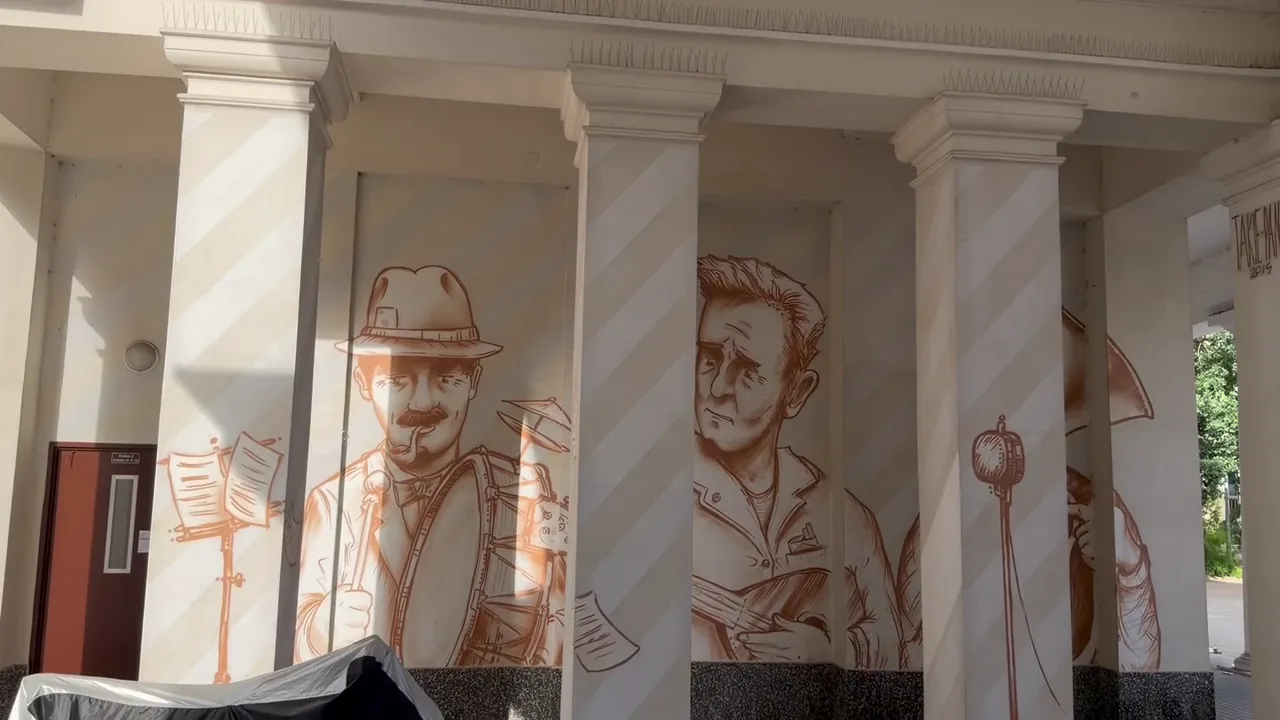
Illustrated figures decorating the walls beneath a Muranów colonnade.
Chapter 06
Krasiński Garden and Krasiński Square
A green escape beside the neighbourhood
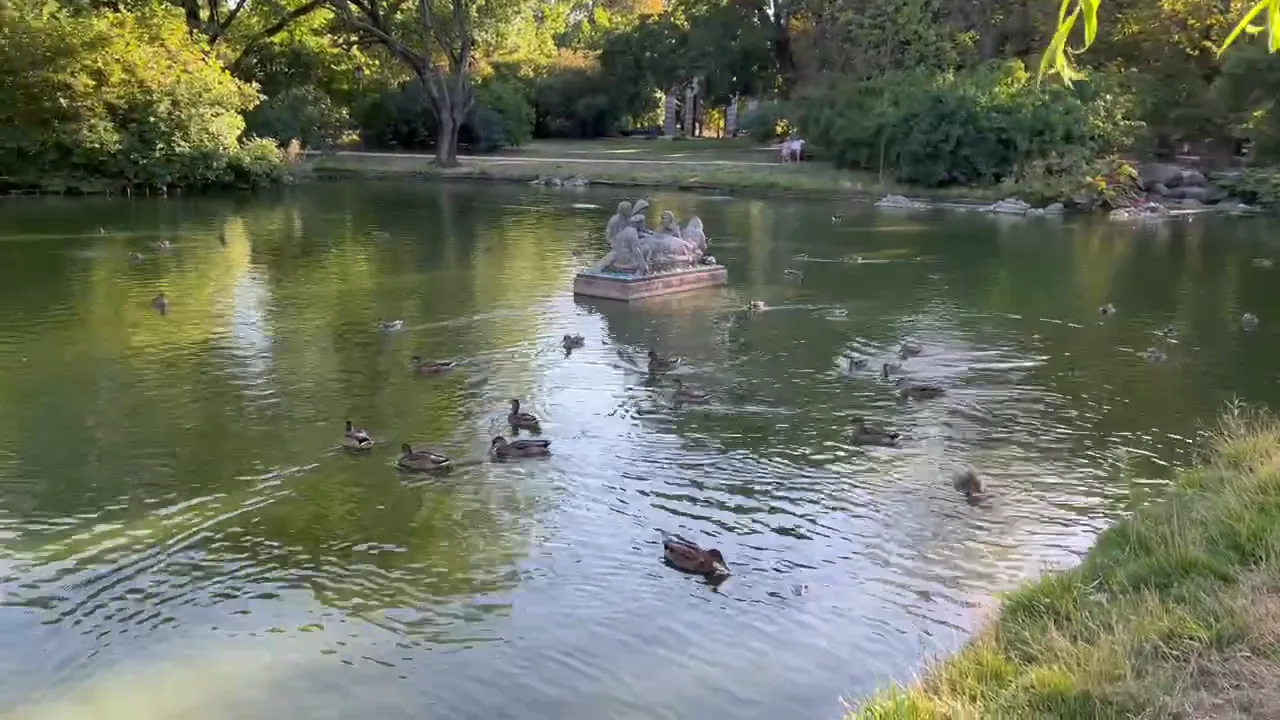
Krasiński Garden began in the seventeenth century as the grounds of Krasiński Palace. Its landscape character evolved over time, notably through late nineteenth-century work associated with Franciszek Szanior; substantial renovations in the 2010s gave it the carefully maintained appearance seen today. Paths, mature trees and water features provide a quiet counterpoint to the nearby avenues.
Krasiński Palace
The Baroque palace, extensively reconstructed after wartime damage, now houses an exhibition presenting treasures from the National Library's collections. Check current arrangements before visiting.
The Warsaw Uprising Monument
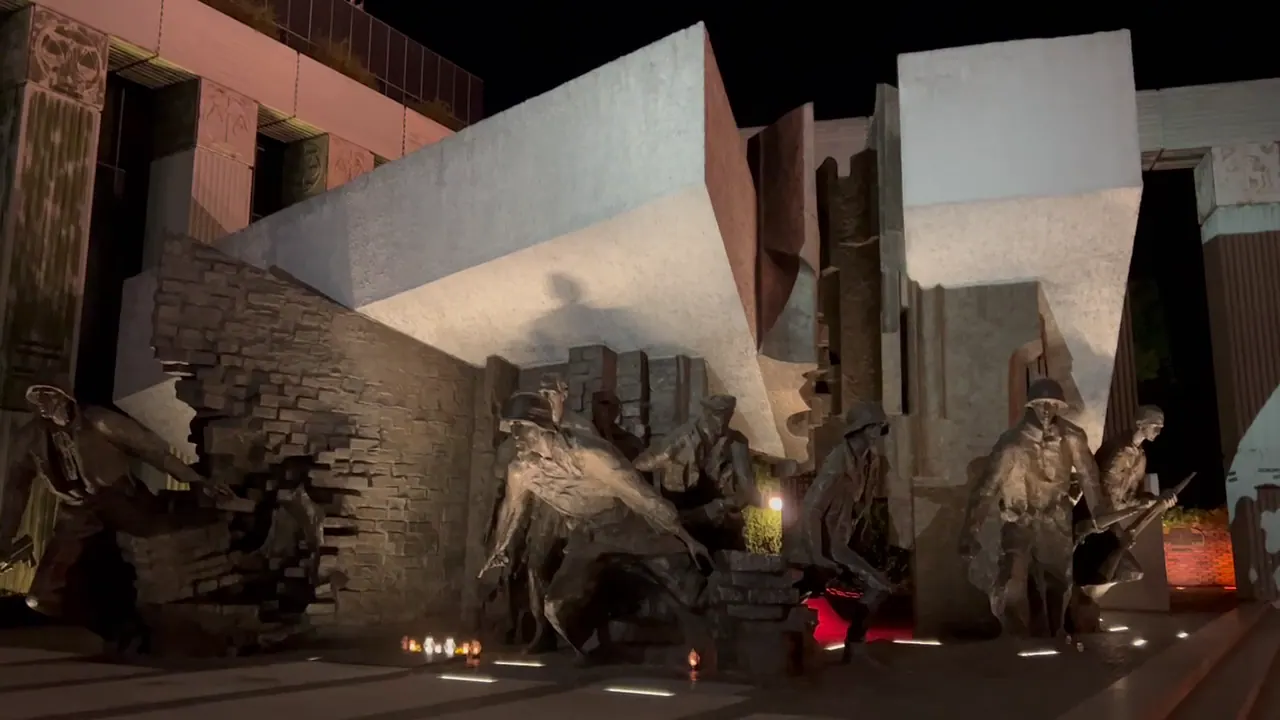
On adjacent Krasiński Square, the Warsaw Uprising Monument was unveiled on 1 August 1989, the uprising's forty-fifth anniversary. Created by sculptor Wincenty Kućma and architect Jacek Budyn, it shows insurgents fighting and entering the sewers. A marked historic manhole nearby recalls the September 1944 evacuation from the Old Town. This 1944 Warsaw Uprising was distinct from the 1943 Warsaw Ghetto Uprising.
The Warsaw Uprising Monument at Krasiński Square, photographed at night.
The carousel and Miłosz's poem
During the 1943 ghetto uprising, a carousel operated near Krasiński Square, beyond the ghetto wall. Czesław Miłosz reflected on the juxtaposition of the burning ghetto and daily life outside in his poem Campo di Fiori. Jan Błoński's 1987 essay The Poor Poles Look at the Ghetto drew on that poem and helped ignite a national debate about Polish responses to the Holocaust. The carousel itself no longer stands here.
A pond and greenery in Krasiński Garden.
Chapter 07
Kino Muranów and neighbourhood life
Kino Muranów
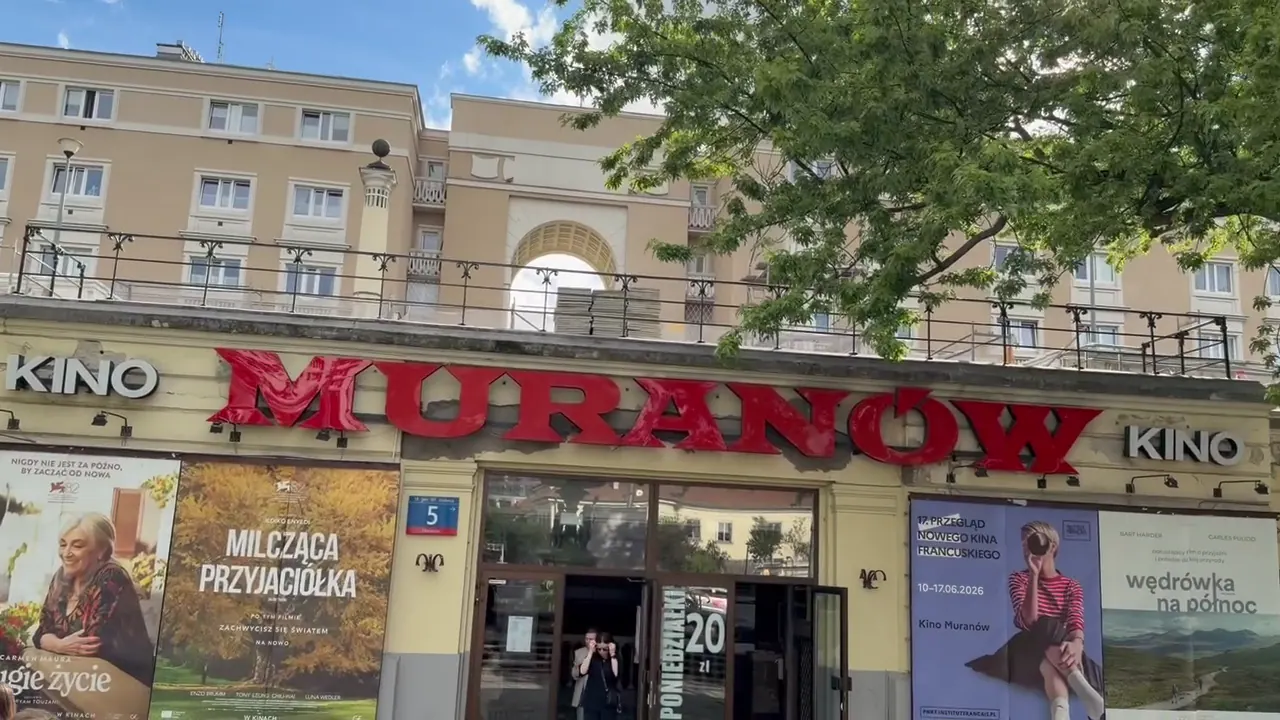
Andersa 5. Opened in 1951 during the estate's construction, Kino Muranów became an important neighbourhood cultural venue. Today it is known for arthouse and international film programming. Its entrance and setting are worth seeing even if you are not attending a screening.
Kino Muranów remains a landmark on Andersa Street.
Bar Gdański
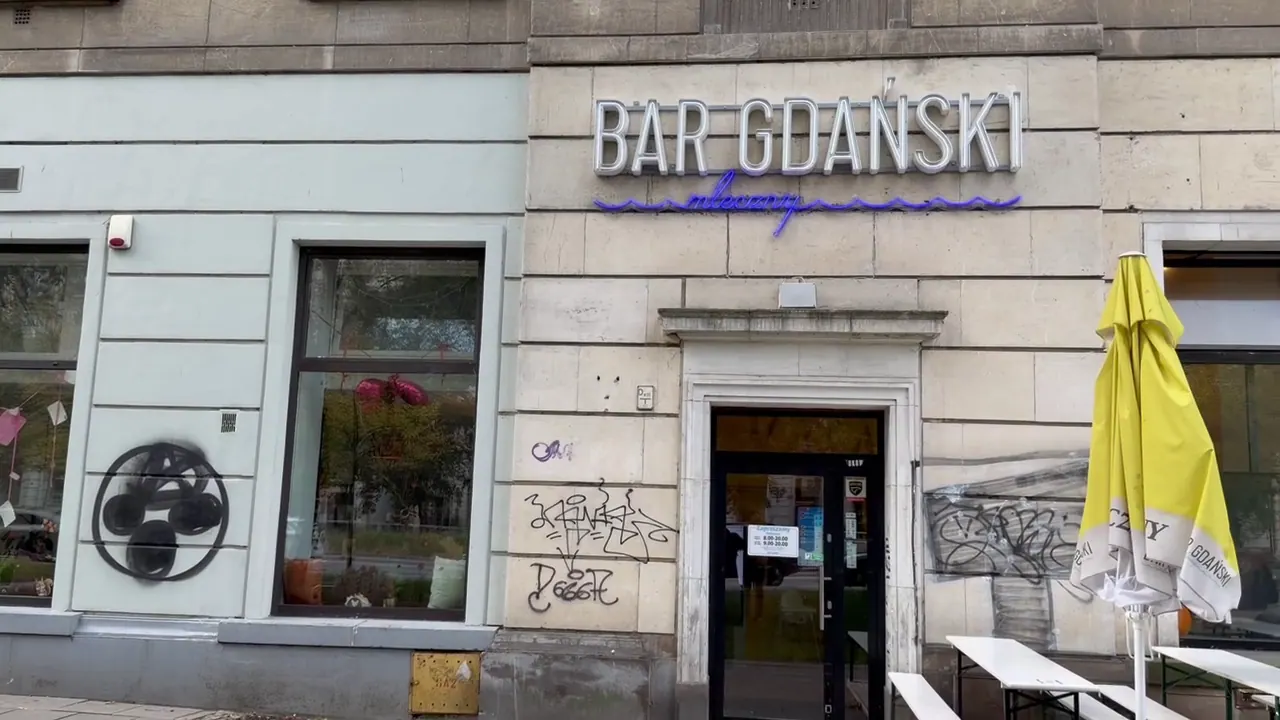
Andersa 33. This operating traditional Polish milk bar is a good place to stop for an inexpensive, straightforward meal. Try a classic Polish dish and order in the informal counter-service style familiar from bar mleczny establishments.
Bar Gdański: a traditional milk bar in the neighbourhood.
Andersa today
The broad tram corridor, postwar blocks, small cafés and newer bars show a neighbourhood whose identity is still changing. It is more rewarding to walk through than to treat solely as a series of memorials.
Andersa Street combines trams, greenery and substantial postwar housing blocks.
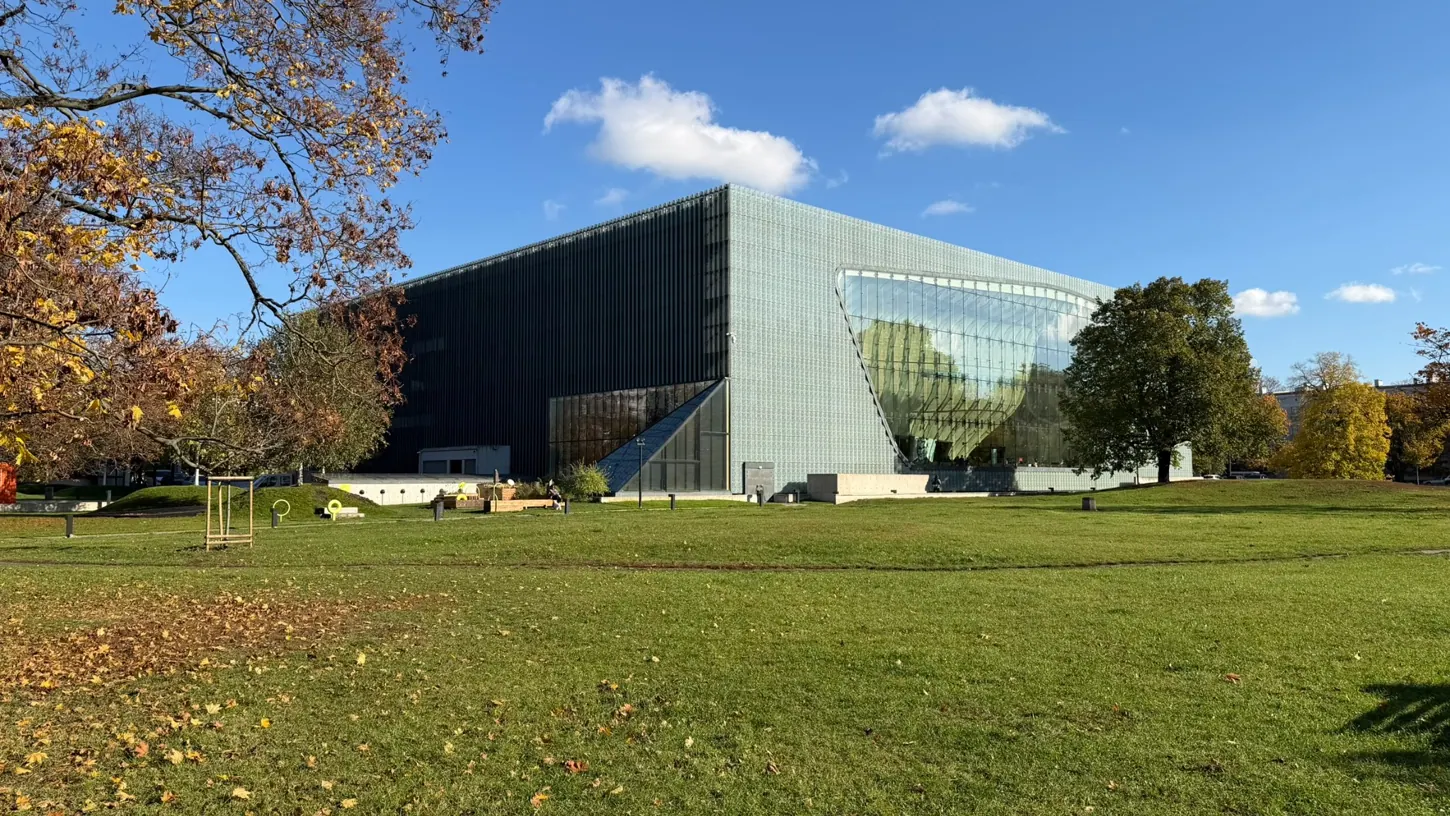
Anielewicza 6. POLIN Museum's building opened on 19 April 2013, followed by its permanent core exhibition on 28 October 2014. Designed by the Finnish studio Lahdelma & Mahlamäki, it won the European Museum of the Year Award in 2016.
Inside, its sweeping canyon-like central hall is commonly interpreted as evoking the parting of the Red Sea. Outside, POLIN faces the Ghetto Heroes Monument, placing contemporary architectural expression beside a central site of Holocaust remembrance.
POLIN Museum and its landscaped setting in Muranów.
Chapter 09
Memorials and historical sites
The Ghetto Heroes Monument, the Miła 18 memorial, Umschlagplatz and the Memorial Route of Jewish Martyrdom and Struggle are all important stops. Nearby extensions include Pawiak Prison Museum, the Gęsiówka Liberation Memorial and Okopowa Jewish Cemetery.
These sites have substantial histories that deserve more than a short caption. Explore them in our dedicated Jewish Warsaw guide, which includes original photography and a historical trail.
Chapter 10
Two ways to explore Muranów
Walk A · Buildings, gardens and everyday life
Krasiński Garden → Krasiński Square → Kino Muranów and gateway → Nowolipki 9B → Nowolipki 19–21 → St Augustine's Church → residential courtyards.
A discovery route that brings together Baroque Warsaw, the postwar rebuilding and neighbourhood culture. Stop along Andersa for something to eat.
Walk B · History and remembrance
POLIN Museum → Ghetto Heroes Monument → Memorial Route of Jewish Martyrdom and Struggle → Miła 18 → Umschlagplatz.
A reflective route through the main memorial landscape of the former ghetto; best accompanied by our citywide Jewish Warsaw guide.
These are suggested walking sequences, not measured accessibility-tested routes. Check museum access separately and allow extra time for exhibitions.
Chapter 11
Practical advice
How long?
Allow two or three hours to appreciate the architecture and neighbourhood atmosphere. A half day adds Krasiński Garden and the most prominent memorials; a full day lets you visit POLIN or explore the historic sites in depth.
Getting here
Trams and buses serve Andersa and adjoining avenues. The Ratusz Arsenał metro station provides access to the eastern side of the area.
Respect residential spaces
Many of Muranów's most interesting courtyards are ordinary places where people live. Avoid locked entrances, respect privacy and be considerate when photographing.
Chapter 12
Why Muranów matters
Its history is written not only in memorials but also in the shape of streets, raised ground, residential blocks and sheltered courtyards. Postwar planners sought to create homes on a landscape of destruction; later generations brought cinemas, cafés and new institutions into those spaces.
Muranów is neither simply a memorial nor merely a postwar housing estate. It is a living neighbourhood in which Warsaw's past remains embedded in the landscape, while its present continues to change.