
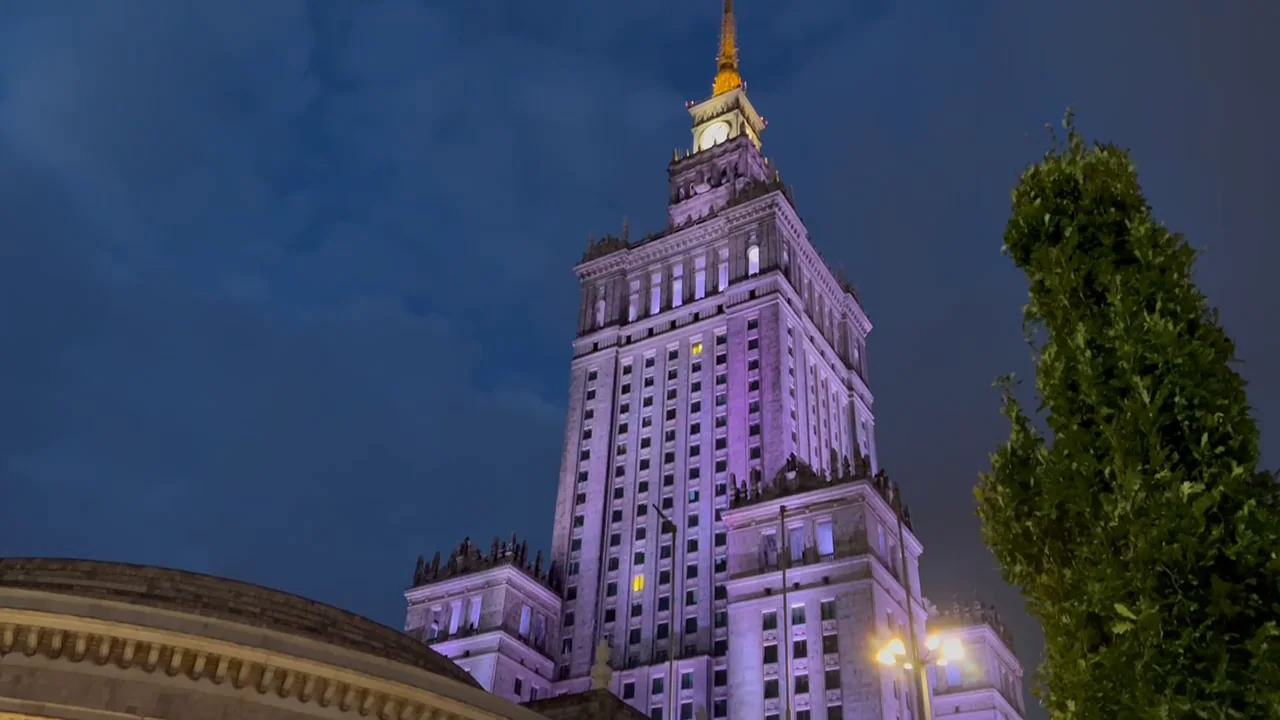
The Palace of Culture and Science is one of those buildings you can recognise long before you understand it.
From a distance, it is a tower and a silhouette. Up close, it becomes a much larger world: theatres, museums, classrooms, offices, a cinema, public halls and countless doors that seem to belong to different buildings altogether.
Its history is equally layered. Presented as a gift from the Soviet Union, it rose above a capital still recovering from wartime destruction. It became a stage for communist power, but also somewhere people learned to swim, went to the cinema, discovered science and saw performances they would remember for the rest of their lives.
That combination helps explain why the Palace still provokes such different reactions. It is an imposed political monument, an architectural landmark and a place woven into ordinary Warsaw life.
Watch: a “gift” from the USSR
Explore the building with A Brit in Poland. Watch on YouTube ↗
A Soviet “gift” in a devastated capital
The Palace was built between 1952 and 1955, during the Stalinist period. Soviet architect Lev Rudnev led the design team, and Soviet and Polish workers took part in its construction.
The official language of friendship concealed a profoundly unequal relationship. Poland was governed by a communist regime dependent on Moscow, and the Palace made that relationship visible at the centre of the capital. Its original dedication to Joseph Stalin left little doubt about the political message.
The setting made that message even stronger. Warsaw had suffered catastrophic wartime destruction. While rebuilding was already under way, ruined buildings and damaged streets remained part of the urban landscape. Against that background, a vast prestige project rose with extraordinary speed.
The contrast is essential to understanding the Palace. It demonstrated which projects the Soviet-backed order wanted to make highly visible: a monumental building that could present socialism as modern, generous and powerful.
That does not mean the rest of Warsaw was simply left untouched while the tower went up. Housing, infrastructure and historic areas were also being rebuilt. The more revealing point is the symbolic priority given to a monumental “gift” in a city where everyday recovery remained an enormous task.
Nor was the site empty land waiting for a landmark. Construction and the creation of its vast surrounding square removed buildings and sections of the earlier street network. The Palace transformed both the skyline and the texture of the city at ground level.
It opened to the public on 22 July 1955, a date chosen for the communist state’s calendar of celebrations. Stalin’s name was subsequently removed, but the building remained.
Soviet scale, Polish details
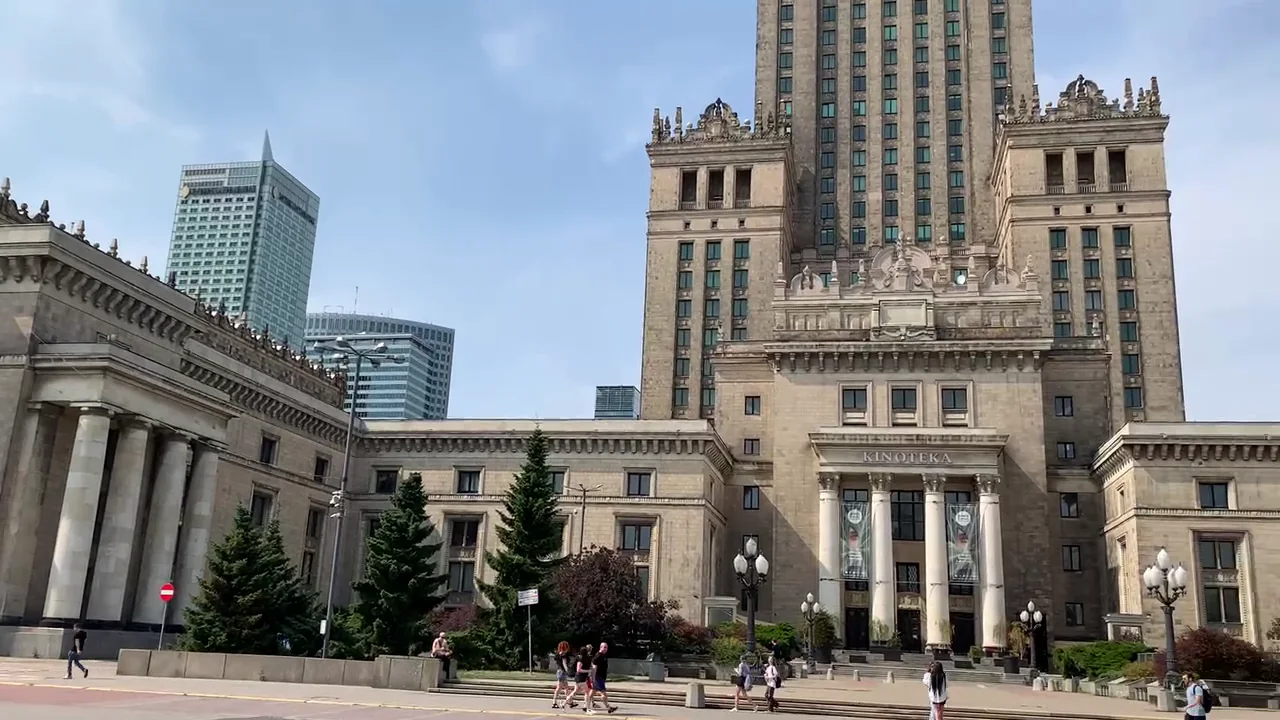
The Palace belongs to the family of monumental Soviet skyscrapers, yet its details also draw on Polish historic architecture. Renaissance-style attics and decorative references were used to give a recognisably local language to an imported model of power.
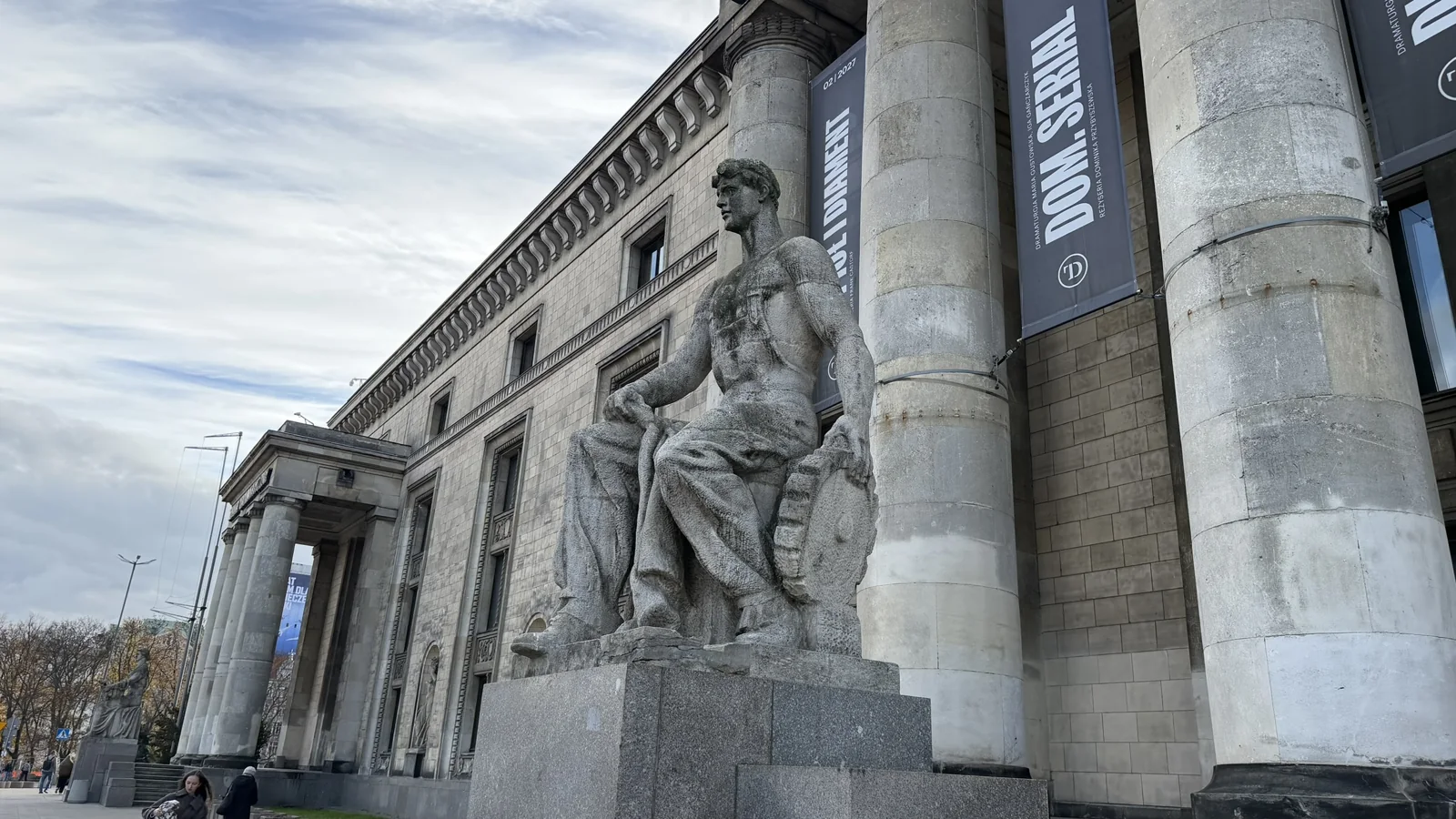
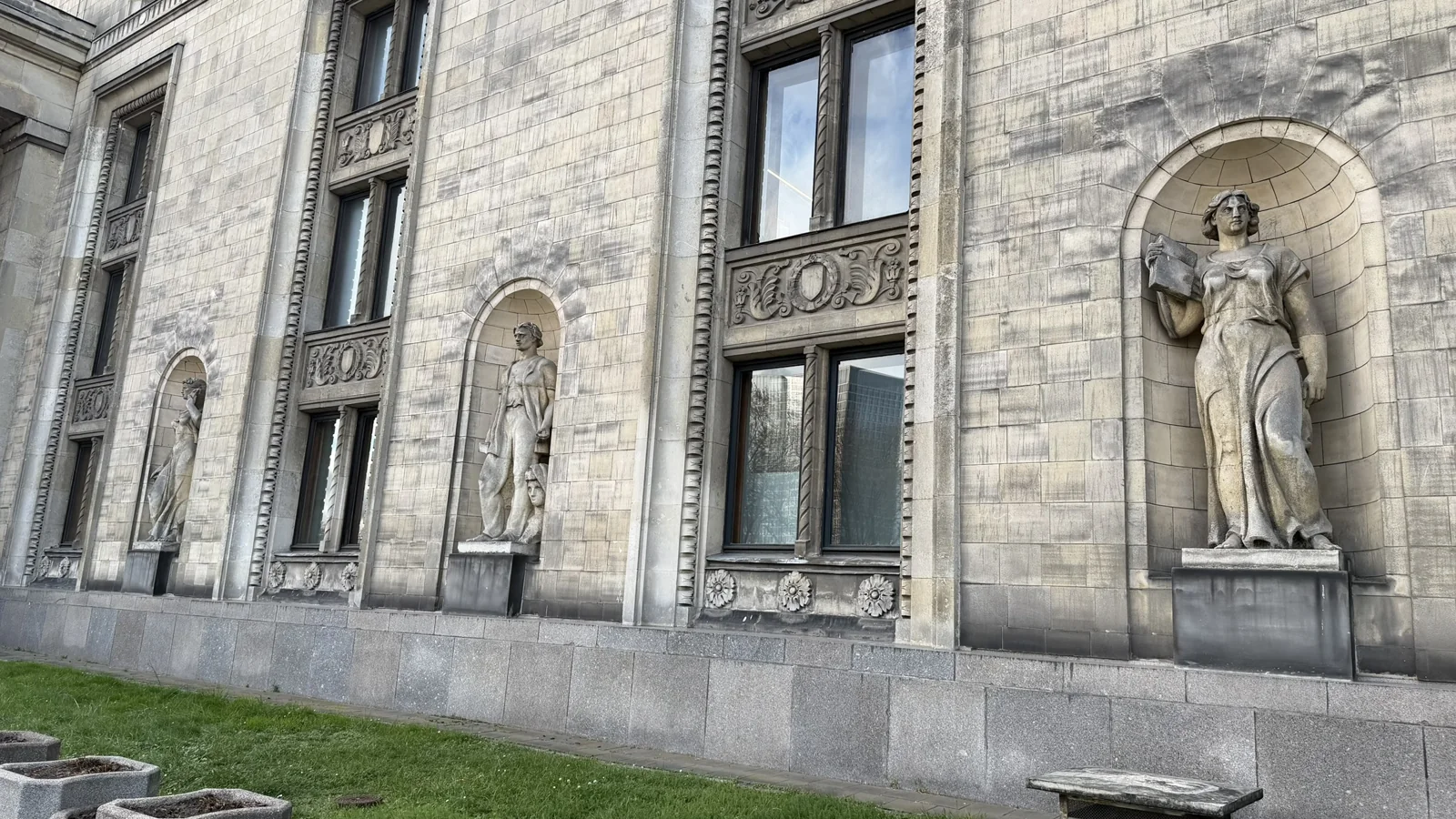
Look at the building in stages. First take in the tower, then the lower wings, then the entrances and sculptures. The change of scale is part of the experience: the distant silhouette gives way to individual figures, stone surfaces and doors intended to make arrival feel ceremonial.
Its height is usually given as approximately 237 metres including the antenna. The visitor viewing terrace is much lower, on the 30th floor at 114 metres, but still provides an expansive view of the city.
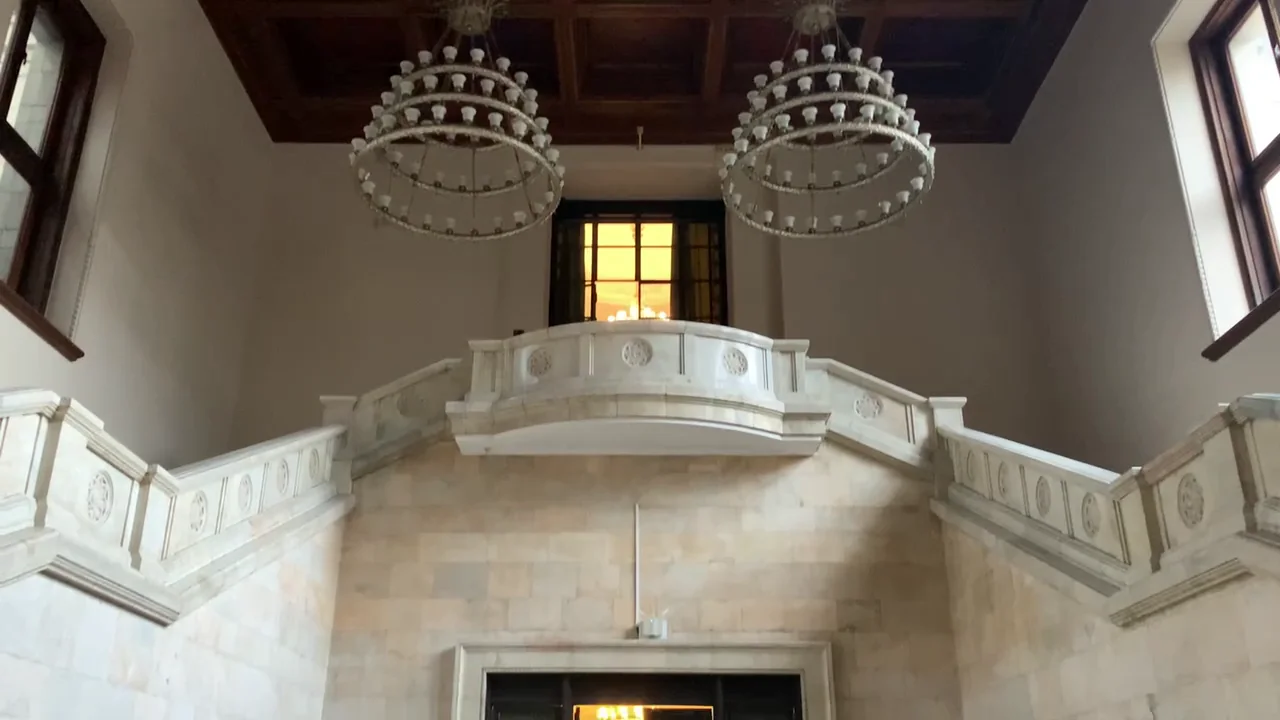
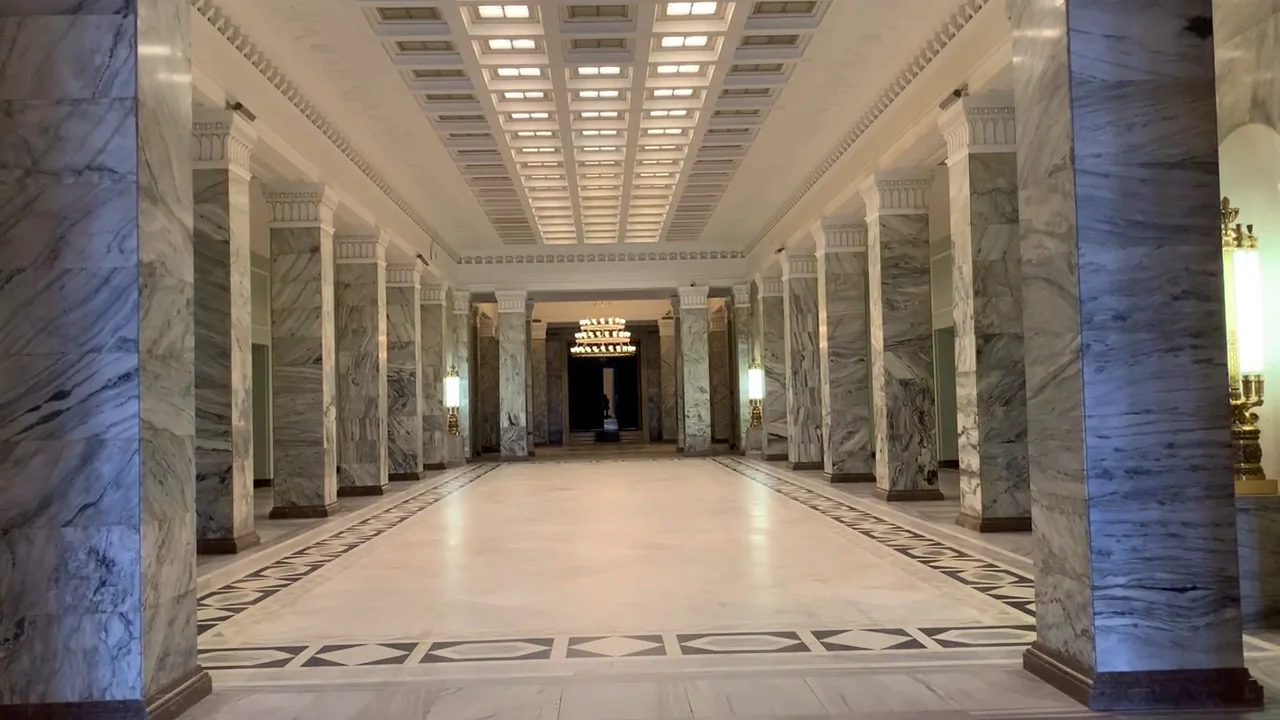
The interiors were designed for a similar effect. Grand staircases, stone finishes and large ceremonial rooms created a setting for official culture and public events. Access to particular rooms depends on the tour or event, so historic interior photographs should not be treated as a standard visitor route.
The best way to understand the architecture is to look at both its ambition and its uses. A building designed to impress also had to accommodate thousands of people doing surprisingly ordinary things.
Keep it, change it or pull it down?
The Palace’s place in Warsaw has been debated for decades, particularly since the end of communist rule.
For its critics, it is an unwelcome reminder of Soviet domination, imposed at the heart of a damaged city. Its size and the destruction associated with its setting are part of that objection. Some would have preferred its removal; others question how much of the surrounding urban landscape should continue to be organised around it.
For its defenders, the building is now inseparable from Warsaw’s history and skyline. It has architectural value, houses useful institutions and carries generations of personal memories. Preserving it can also mean preserving difficult evidence of the past rather than endorsing the regime that created it.
Many views fall somewhere between those positions. It is possible to dislike what the Palace represented while valuing a theatre inside it, remembering childhood classes there or feeling that Warsaw would look strange without its tower.
The Palace entered the heritage register in 2007. That protection matters when discussing proposals for its future: public arguments about demolition are not the same as an approved demolition project.
The city around it continues to change. New buildings and public spaces can alter the Palace’s role without erasing it. A monument intended to dominate the capital is increasingly being experienced as one element of a more varied centre.
The Rolling Stones behind the Iron Curtain
On 13 April 1967, the Rolling Stones played two concerts in the Palace’s Congress Hall.
The setting alone makes the story remarkable: a band associated with youthful rebellion performing inside one of communist Poland’s most politically charged buildings. Demand vastly exceeded access, and the events around the concerts included confrontations between crowds and the militia outside.
It was a moment when the gap between official cultural control and popular enthusiasm became particularly visible. For fans, the significance went well beyond a famous band visiting Warsaw.
And then there is the vodka story.
A frequently repeated version claims that the Stones were paid in vodka. Other versions say they received Polish currency that was difficult to take out of the country and converted it into a wagon-load of spirits. The details vary, and the most colourful accounts are disputed.
It is a wonderful piece of rock folklore, but the vodka payment should not be presented as established fact. The concerts themselves need no embellishment: the Rolling Stones really did perform inside the Palace during the communist era. The train-load of vodka belongs in the “good story, uncertain evidence” compartment.
The Palace’s ghosts
A building this large, with this history and this many shadowy corridors, was unlikely to escape a ghost story.
One legend says the Palace is haunted by workers who died during its construction. Accounts of its folklore connect unexplained presences with the speed and danger of building the tower.
The distinction between history and legend matters here. Fatal construction accidents were real. Claims that the dead haunt the building are folklore, not evidence of supernatural activity. More sensational stories about bodies concealed within the structure should not be repeated as established history either.
The legend reveals something about how people make sense of an imposing building: behind the stone and political symbolism were human beings whose work, and sometimes deaths, helped create it.
If you enjoy Warsaw’s darker stories, this one belongs alongside the Palace’s history rather than replacing it. There is enough unease in the documented past without manufacturing extra victims for atmosphere.
What is actually inside the Palace?
The Palace is a working complex with separate institutions, entrances, programmes and tickets. Buying admission to the viewing terrace does not automatically give you access to its museums or performances. Tour packages may combine selected experiences, so read the specific offer rather than assuming everything is included.
The public-facing directory below covers its permanent museums and principal cultural, educational and visitor functions. Individual offices, private tenants and temporary events can change; the Palace is not a single attraction with one universal opening time.
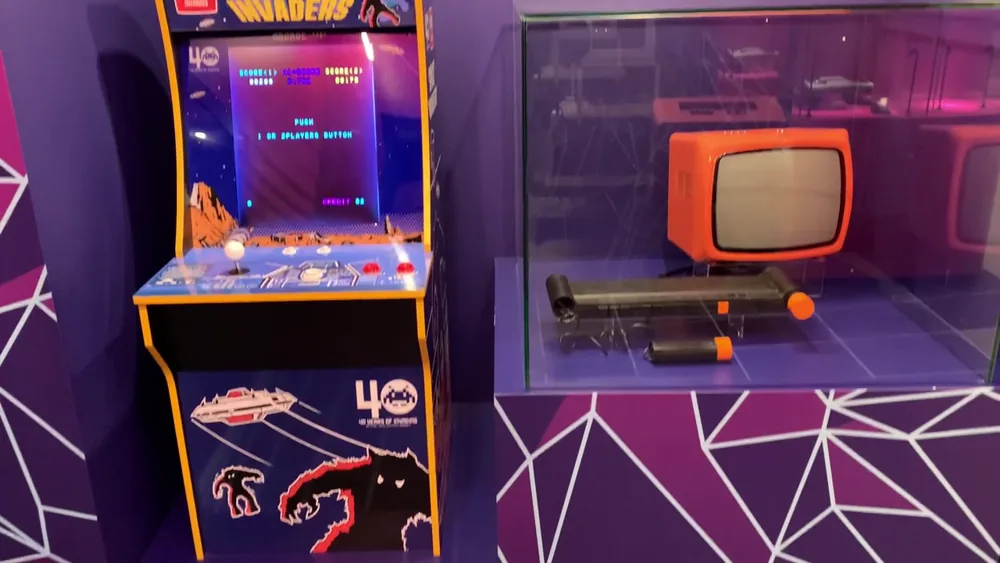
National Museum of Technology
The National Museum of Technology — Narodowe Muzeum Techniki — explores machines, inventions and the development of science and technology, including Polish contributions.
It is a good choice if your interest in the Palace extends beyond architecture. Transport, communication, computing and other technical fields offer a very different experience from the view upstairs. Allow time to follow the subjects that interest you rather than treating it as a small extra on the way to the lifts.
Use the museum’s own website for its current exhibitions, admission and entrance information: National Museum of Technology.
Museum of Evolution
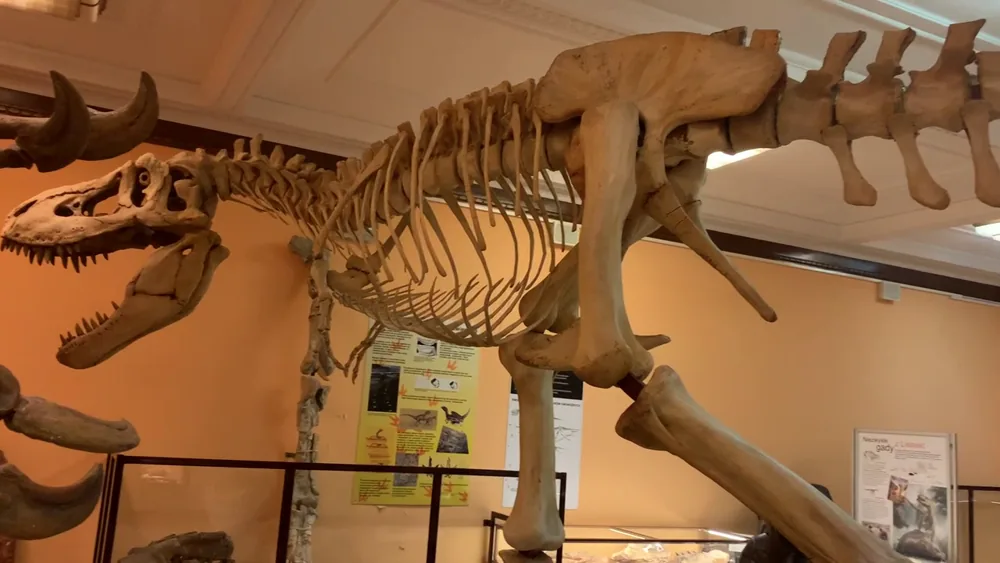
The Museum of Evolution — Muzeum Ewolucji — is associated with the Institute of Paleobiology of the Polish Academy of Sciences.
Fossils and palaeontological displays take the story far beyond Warsaw, into the history of life on Earth. Dinosaurs may be the obvious attraction for younger visitors, but the museum also offers a connection with the scientific work behind the exhibits.
It occupies part of the Palace complex associated with the Youth Palace, so check the museum’s access instructions instead of joining the main terrace queue: Museum of Evolution.
Neon Museum
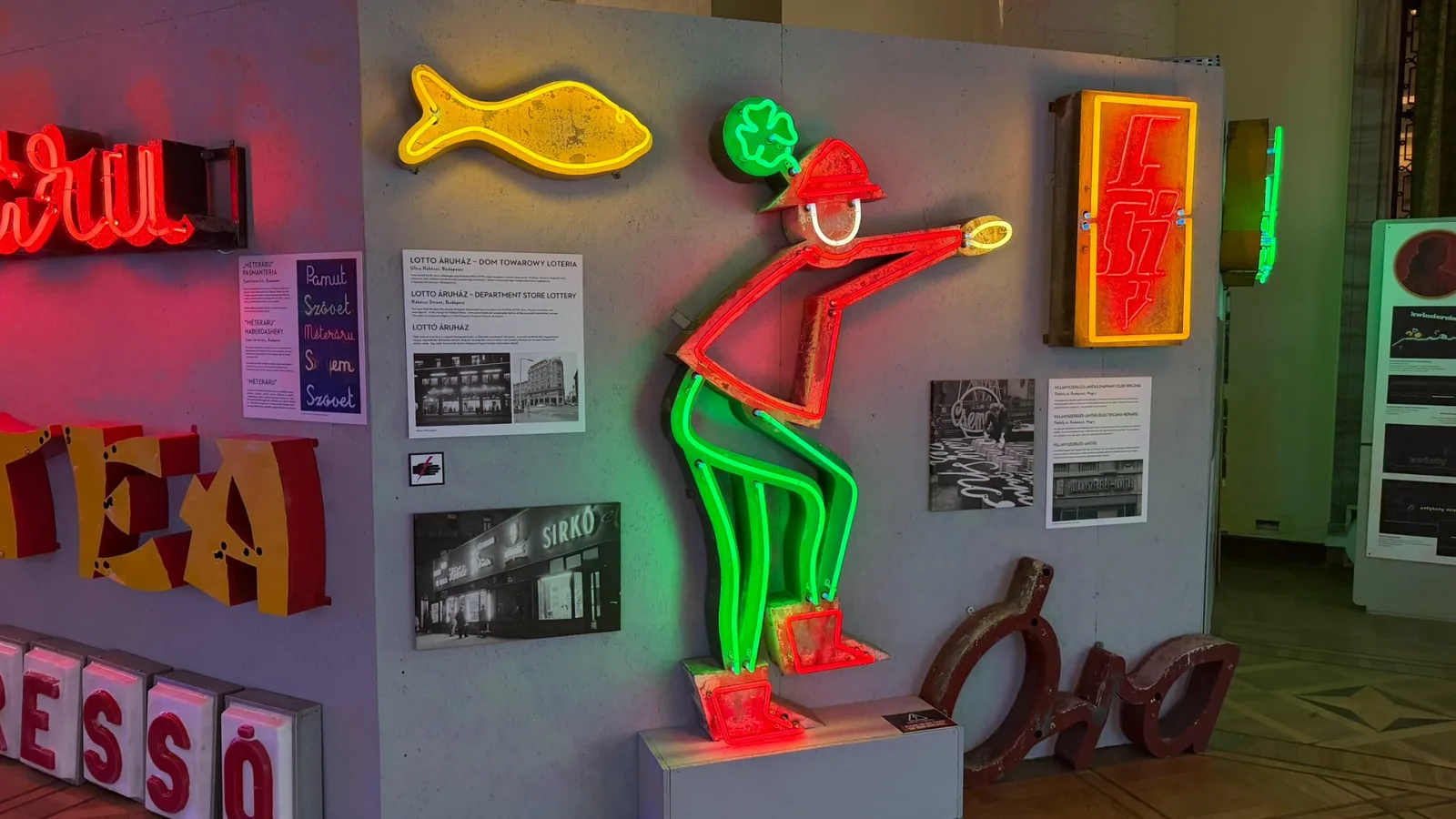
The Neon Museum — Muzeum Neonów — brings an especially fitting collection into the Palace: illuminated signs associated with the visual culture of Poland’s communist decades.
These were pieces of graphic design as well as advertisements. Lettering, colour and distinctive shapes gave shops, cinemas and other institutions identities that still carry strong associations for people who remember them.
Founded by Ilona Karwińska and David Hill, the museum moved to the Palace in August 2025. Older guides directing you to its former Praga location are therefore out of date.
It is on the fourth floor, with access instructions provided by the museum. A visit pairs naturally with looking for surviving signs and modernist details around central Warsaw: Neon Museum visitor information.
The Palace memorabilia exhibition
The Palace also has its own memorabilia exhibition, presenting objects and stories connected with the building and the people who have used it.
This is distinct from the three museums above. Located on the 31st floor, it is offered through booked, curator-led visits. It is particularly relevant if your main interest is the Palace itself rather than a broader subject collection.
Check the current booking arrangements, language and accessibility before planning around it: Palace memorabilia exhibition.
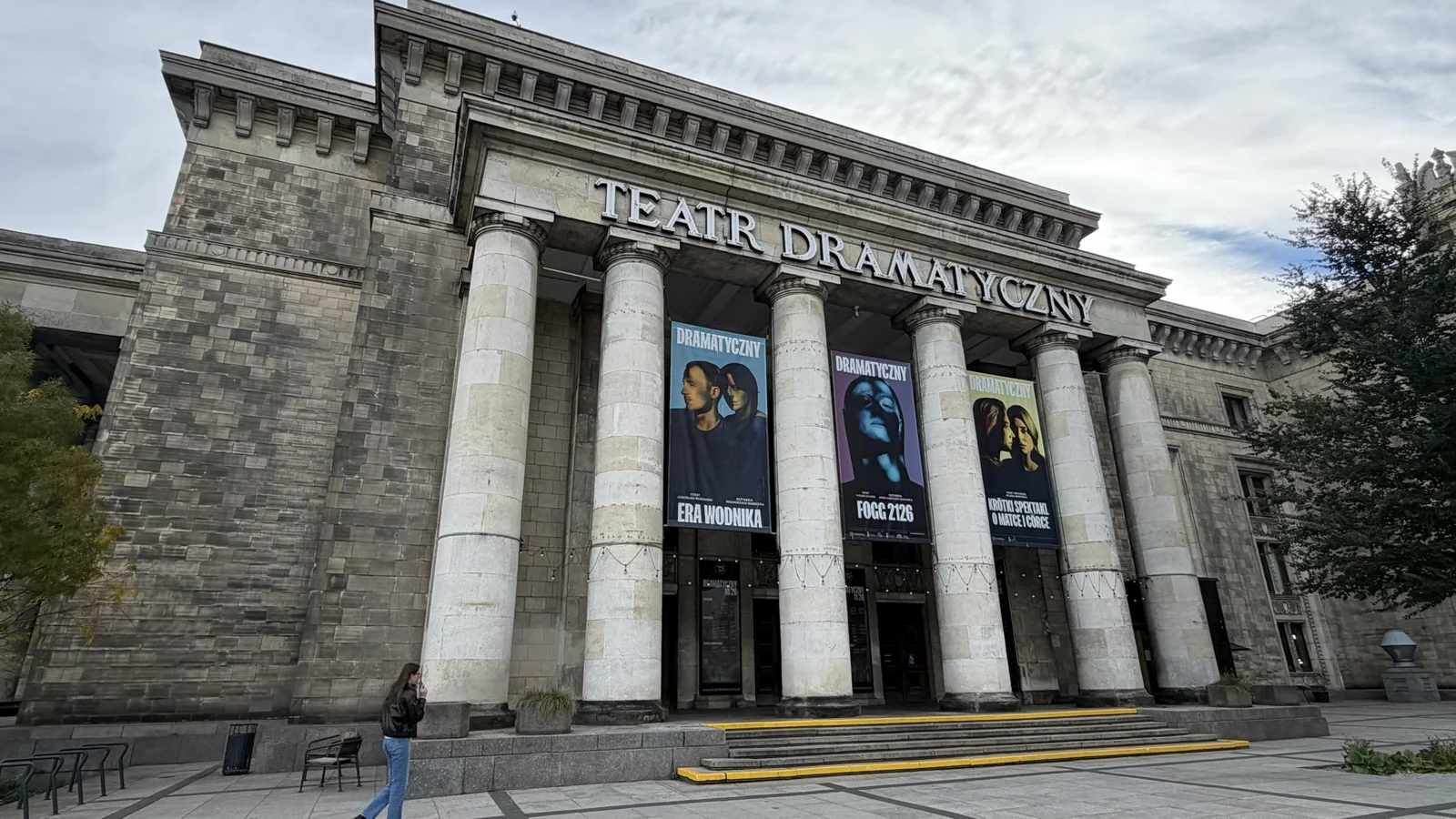
Four theatres under one roof
The Palace houses four separately programmed theatres. Their identities and audiences differ, which is another reason not to think of the complex as a single cultural institution.
| Theatre | What to look for |
|---|---|
| Teatr Dramatyczny m.st. Warszawy | A major Warsaw dramatic theatre; choose by the current production and language arrangements. |
| Teatr Studio | Theatre and artistic activity with an experimental tradition; check its programme for performances and associated events. |
| Teatr Lalka | Puppetry and theatre particularly relevant to families, with age suitability depending on the production. |
| Teatr 6. piętro | A separately run theatre whose name refers to the sixth floor; book against its own schedule. |
A performance can be a much richer way to experience the building than a quick look through the front doors. Check language, surtitles where offered, age recommendations and the correct entrance before booking.
The Palace’s theatre directory links to the individual institutions.
Kinoteka: cinema in the Palace
Kinoteka adds another everyday cultural use to the complex. Its programme gives visitors the option of spending an evening inside the Palace without booking a formal building tour.
As elsewhere in Poland, check the language of the screening carefully. Original-language films, subtitles and dubbing arrangements vary, particularly for family titles. The venue and the film are separate considerations: choose something you actually want to watch.
See the Kinoteka programme for screenings and tickets.
The Youth Palace: classes, sport and growing up here
The Youth Palace — Pałac Młodzieży — is one of the clearest examples of how the building became part of Warsaw life.
Its activities span science, technology, computing, languages, visual arts, music, theatre, dance and sport. Water-based activities are also part of its programme, alongside other physical disciplines.
These are organised educational and recreational activities, not a promise of walk-in tourist access to classrooms or a public swimming pool. Participation depends on the institution’s arrangements and enrolment.
For many families, this practical side of the Palace matters more than its international reputation. A building discussed as a symbol of Soviet power has also been somewhere children learn a skill, make friends and discover an interest.
Explore the Youth Palace’s current activities.
Universities, research, offices and institutional life
The words “culture and science” are not simply decorative. The building accommodates educational, academic and administrative uses alongside its visitor attractions.
The Palace operator’s education directory lists Uniwersytet Civitas, the Higher School of Promotion, Media and Show Business, MBA programmes associated with the Institute of Economics of the Polish Academy of Sciences, Akademia WSB, and Akademia Fotografii, as well as the Youth Palace.
For prospective students, those listings are starting points: use the institution’s own current information to confirm the programme and teaching location. They should not be interpreted as a visitor route through university facilities.
Research, offices and administration help explain why so much of the Palace operates behind ordinary working doors. Not every corridor leads to an attraction, and not every part of the building is open to casual exploration.
Congress Hall, events and temporary exhibitions
The Congress Hall — Sala Kongresowa — is central to the Palace’s cultural and political history. Its past includes official gatherings and major concerts, including the Rolling Stones’ 1967 visit.
It has been closed since 2014 for a prolonged modernisation process. As checked for this draft, it is not an available visitor or performance space. Announced future dates are project targets, so check for an actual reopening announcement before building an itinerary around it.
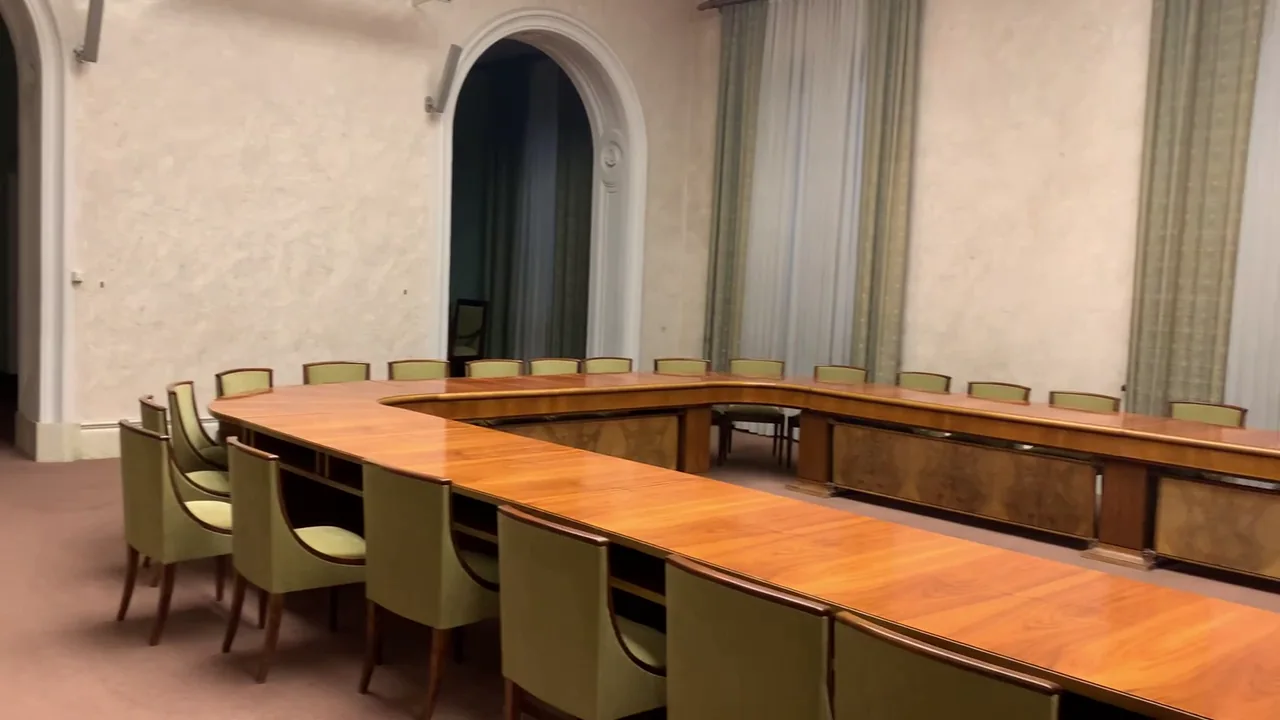
Elsewhere in the Palace, rooms and halls accommodate conferences, exhibitions, fairs, meetings and other events. Temporary displays can bring very different subjects into the building, but their presence changes. A listing or photograph from a previous visit is not evidence that an exhibition is still running.
Guided tours can provide access to selected interiors and architectural details. Routes vary according to the operator and the building’s programme; ask which rooms are included if there is something specific you want to see.
Start with the Palace’s visiting information and current events.
Cafés, bars and a social life of its own
The Palace also works as somewhere to meet people before a performance, have a drink or pause between visits.
Its operator lists Cafe Kulturalna, Bar Studio, Kawiarnia Kinoteka, Bistro Trójka, So! Coffee, Green Caffè Nero, and Gwiazdy Bliżej Gwiazd among its food and drink venues. Check current opening arrangements and the relevant entrance, particularly when visiting outside the main daytime sightseeing hours.
These places add another layer to the building’s identity. Around the theatres and cinema, the Palace can feel less like a monumental historical statement and more like a place where an evening happens.
The list is a directory, not a restaurant ranking: Palace cafés, bars and restaurants.
The viewing terrace
For many visitors, the 30th-floor viewing terrace is the main reason to enter.
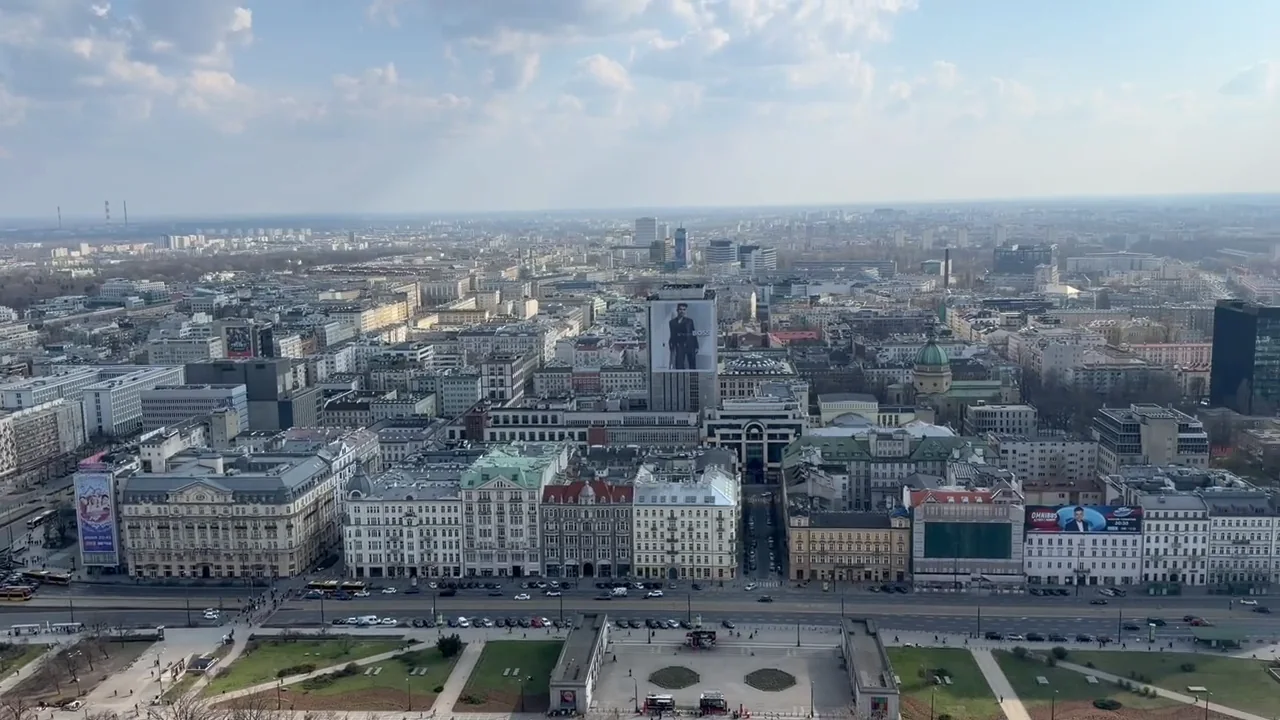
At 114 metres above ground, it offers an opportunity to understand the city’s layout: railway infrastructure, broad avenues, dense neighbourhoods, newer towers and the distances between Warsaw’s better-known areas.
The experience is different from seeing the Palace from outside. From here, the building becomes a platform from which to read the city it was designed to dominate.
Conditions matter. Haze, rain, low cloud and seasonal daylight can change the visit considerably. Choose visibility over a rigid schedule when possible, and expect exposed conditions on the terrace.
Use the official viewing terrace information for tickets, opening arrangements and access. This is a separate attraction from the museums and theatres; check any combined offer carefully.
What is nearby, but not inside?
Several nearby places are easy to confuse with Palace tenants.
The Museum of Modern Art in Warsaw occupies its own building beside the Palace. It is an excellent companion visit, but belongs to a separate institution with its own access arrangements.
The Dollhouse Museum should not be included as a current Palace museum simply because older articles place it here. Its Old Town address is on Podwale, and visitors should consult its current information.
Likewise, artwork, markets and temporary events around Plac Defilad are not automatically part of an indoor Palace visit. Check their location and duration individually.
Planning your visit
Choose the experience first. For a short introduction, see the exterior and the terrace. For the building’s own history, look at a guided tour or the memorabilia exhibition. For a longer visit, select one of the three museums and allow it proper time. For an evening, check the theatres or Kinoteka.
The Palace stands beside major public transport connections, but its size makes the final approach worth planning. “At the Palace” is not a precise meeting point. Agree on a named venue or entrance.
Accessibility also depends on the destination. A step-free route to one part of the building does not establish access to every room, exhibition or tour. Confirm arrangements with the institution you intend to visit.
Temporary access note, checked 16 November 2026: the Palace operator has announced restrictions around the site during the Christmas market period, from 5 November 2026 to 16 January 2027, alongside works affecting some surrounding passages. Check its current approach advice, especially if you require step-free access.
Return to the Central Warsaw guide to connect the Palace with shopping streets, Jewish heritage, market halls and the gardens and squares to the north.
Sources & visitor information
Historical research is paired with original photographs and film. Practical arrangements can change; use each institution’s current visitor information.