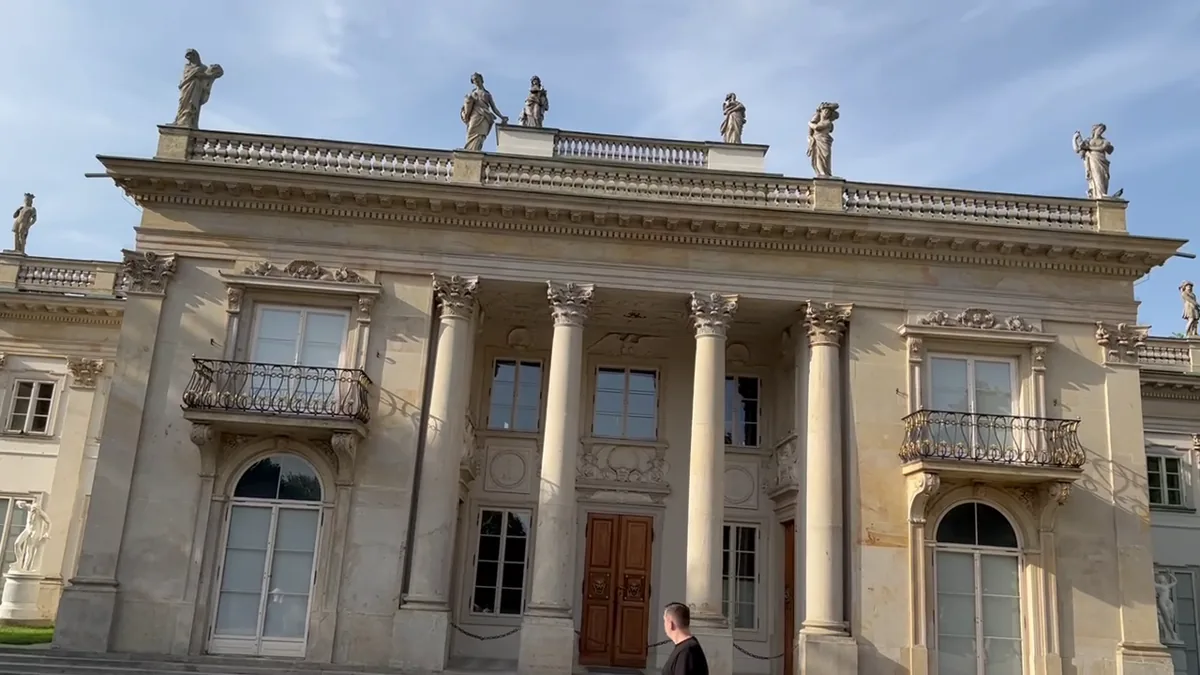
Royal Łazienki
King Stanisław August Poniatowski transformed Łazienki into an elegant royal landscape. The original Chopin Monument here was destroyed by the Germans in 1940; its replacement was unveiled in 1958.
Explore Łazienki & Ujazdów →
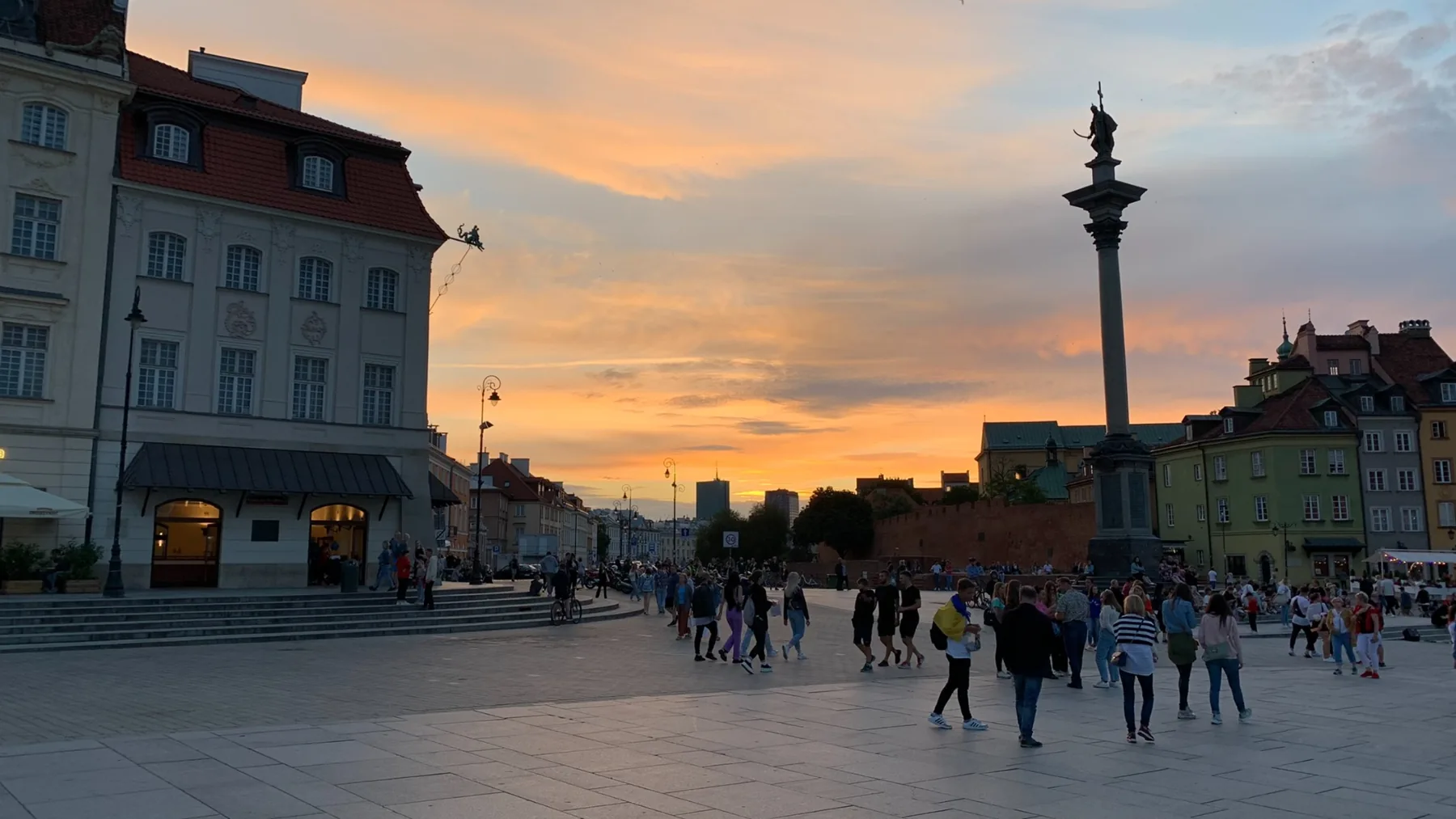
From royal palaces and Chopin’s childhood to wartime resistance — follow one of Warsaw’s most historic streets, one story at a time.
Plan your walk ↓In a single walk, you can pass a palace where an eight-year-old Chopin performed, find the church holding his heart and stand beside a monument involved in a daring act of wartime resistance. Warsaw’s Royal Route is full of stories hiding behind grand façades.
The wider Trakt Królewski connects the Royal Castle with royal residences to the south. Here we follow its walkable central section, from Castle Square along Krakowskie Przedmieście and Nowy Świat to Plac Trzech Krzyży. The buildings may look timeless, but many were painstakingly reconstructed after the Second World War.
The walk is free outdoors; museum entry and St Anne’s bell-tower viewpoint may cost extra. For the northern starting point, Ratusz Arsenał (M1) is a walk away; Nowy Świat-Uniwersytet (M2) serves the middle section. Current traffic restrictions and bus diversions can change — consult Warsaw Public Transport before travelling.
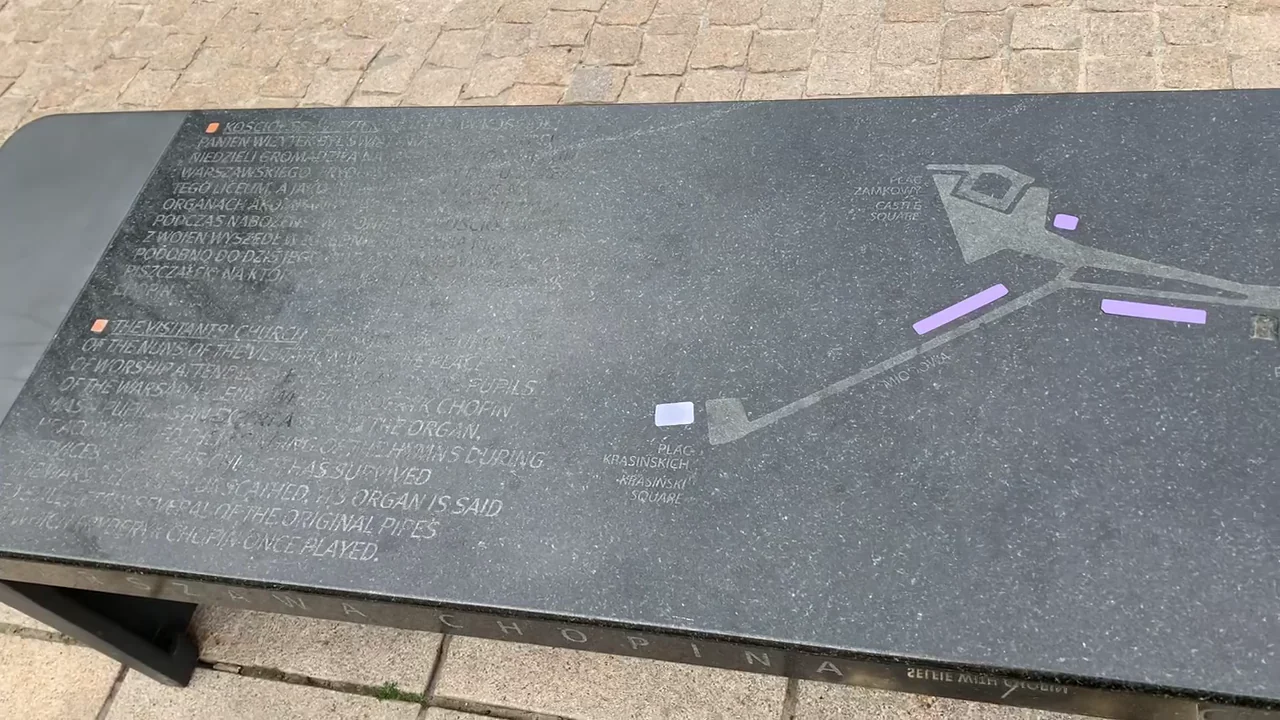
Look out for the black Chopin musical benches along the way. Start earlier for quieter streets, or photograph Castle Square towards sunset for warmer light.
Follow the dark line from Castle Square to Plac Trzech Krzyży; the numbers match the stops below. Dashed gold lines show two optional branches, to the Tomb of the Unknown Soldier and the Chopin Museum. Select any stop for a short summary.
Our walk starts at Plac Zamkowy, where Sigismund’s Column rises above the colourful façades of Warsaw’s historic centre. King Sigismund III Vasa helped make Warsaw the principal seat of royal government at the end of the sixteenth century, transforming the city’s political importance.
Inside the Royal Castle, the Constitution of 3 May 1791 was adopted — a landmark effort to reform the Polish-Lithuanian Commonwealth. Yet the castle that visitors admire today has its own twentieth-century story. Damaged and burnt during the siege of 1939, it was blown up by German forces in 1944. Reconstruction began in 1971; the restored interiors opened in 1984.
Sigismund’s Column was also destroyed in 1944. Its damaged earlier shaft is displayed beside the castle: a small but powerful reminder that this familiar skyline was almost lost.
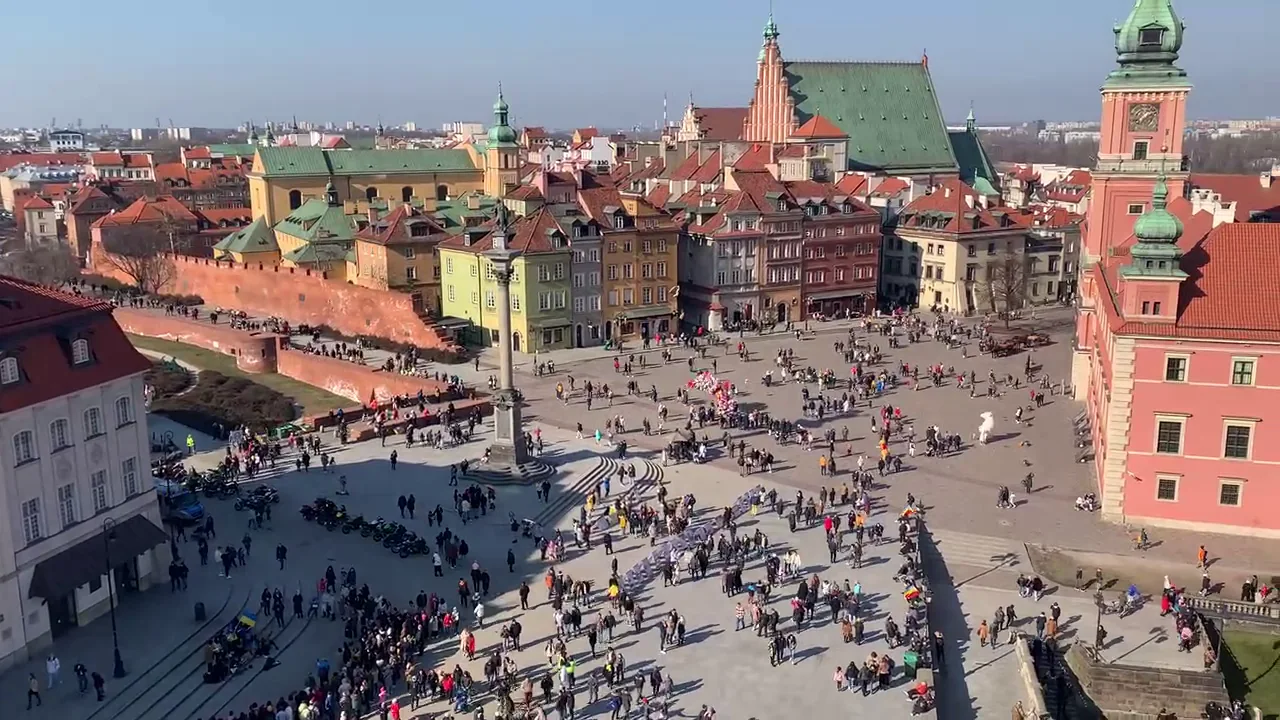
Just beyond Castle Square stands St Anne’s Church, with origins in the fifteenth century. Its neoclassical façade hides a richly decorated interior, while the separate bell tower offers one of the finest elevated views of Castle Square and the beginning of Krakowskie Przedmieście.
The viewpoint normally charges admission and requires climbing stairs. Access may depend on weather and current opening arrangements. It is an especially useful place to understand the route before setting off south.
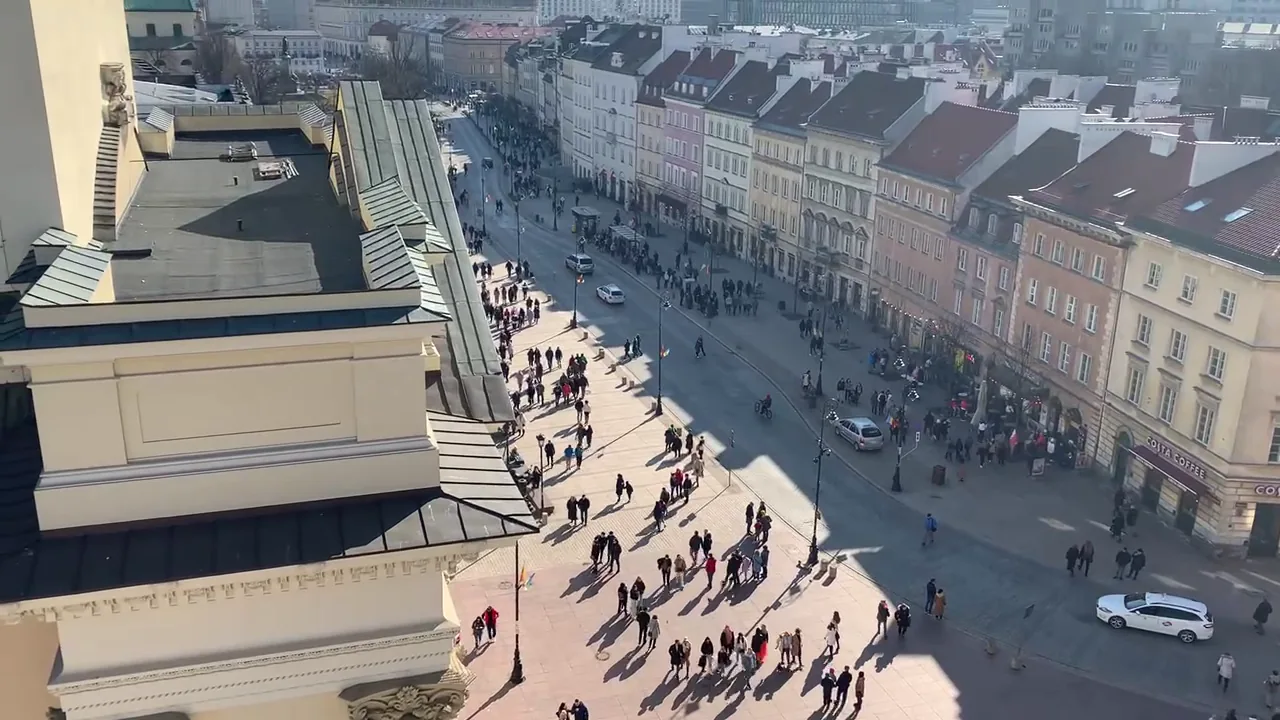
The street’s name recalls the old road towards Kraków. Over the centuries it became one of Warsaw’s grandest addresses, lined with churches, aristocratic residences and academic institutions. Look above the shopfronts: decorative gateways, sculpted figures and rooflines reward a slower walk.
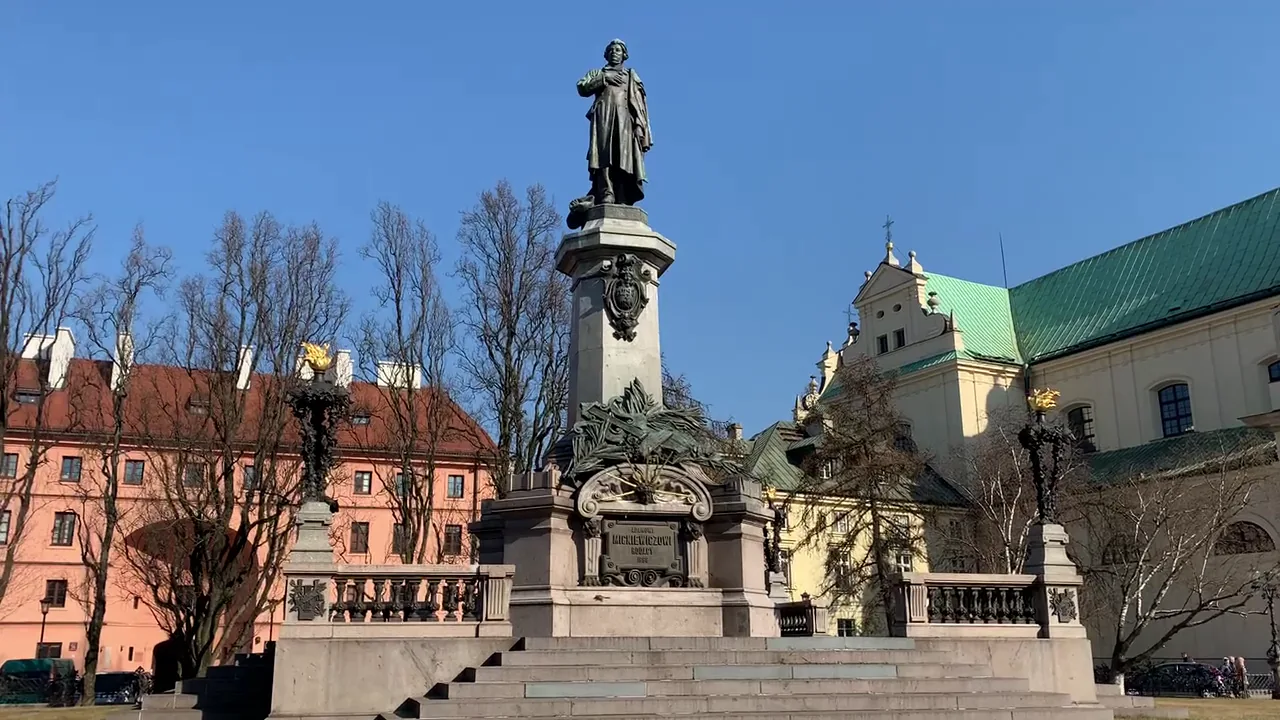
The Adam Mickiewicz Monument, unveiled in 1898, celebrates a poet whose writing helped sustain Polish national identity during the partitions. Nearby the former Carmelite Church, now the Seminary Church, adds another historic façade to the route.
Many buildings have been restored or reconstructed after wartime destruction. The street therefore tells two histories at once: the earlier city and the enormous effort to recover its appearance.
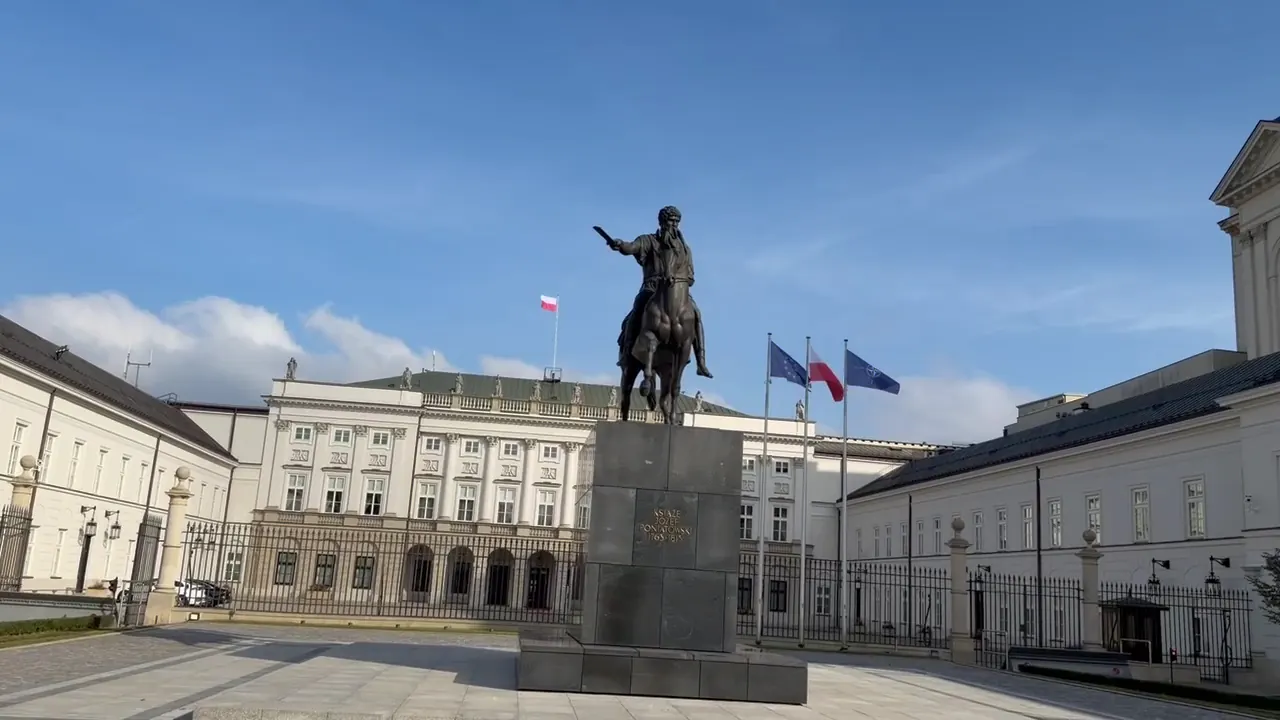
The Presidential Palace began as an aristocratic residence and is now the official seat of Poland’s president. In front stands the equestrian statue of Prince Józef Poniatowski, a Polish commander who became a marshal of Napoleon’s empire.
On 24 February 1818, eight-year-old Fryderyk Chopin gave one of his earliest public performances here, when the building was known as the Radziwiłł Palace. It is a useful reminder that Chopin’s Warsaw was not simply a collection of musical monuments: these were the rooms and institutions where his career began.
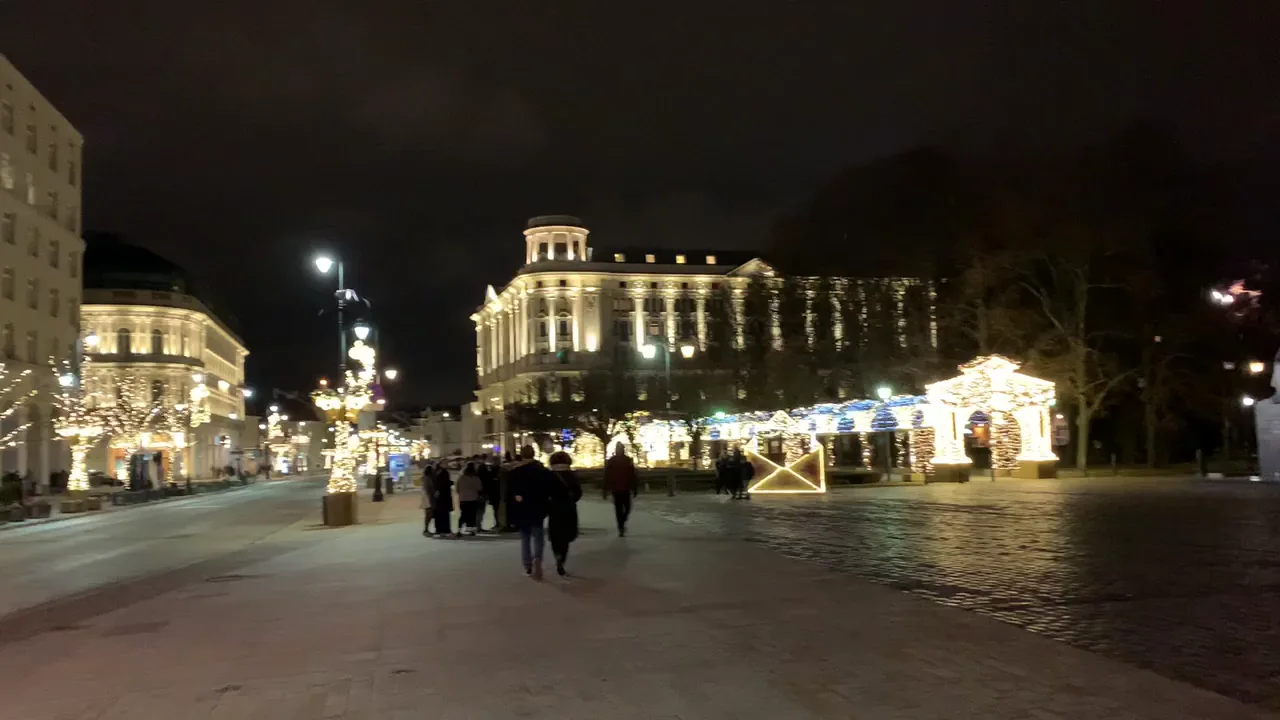
Hotel Europejski dates from the nineteenth century; neighbouring Hotel Bristol opened in 1901. Together they recall a more cosmopolitan, fashionable side of historic Warsaw. Bristol was associated with Ignacy Jan Paderewski, the internationally known pianist who later became Poland’s prime minister.
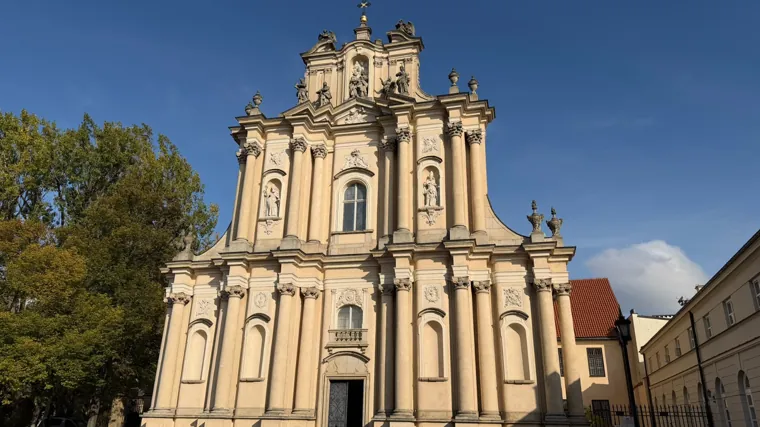
A little farther along is the Visitationist Church (Church of St Joseph), where the young Chopin played the organ during school services. Unlike many buildings along the route, it survived the Second World War largely intact. That contrast is worth remembering as you pass restored streetscapes elsewhere.
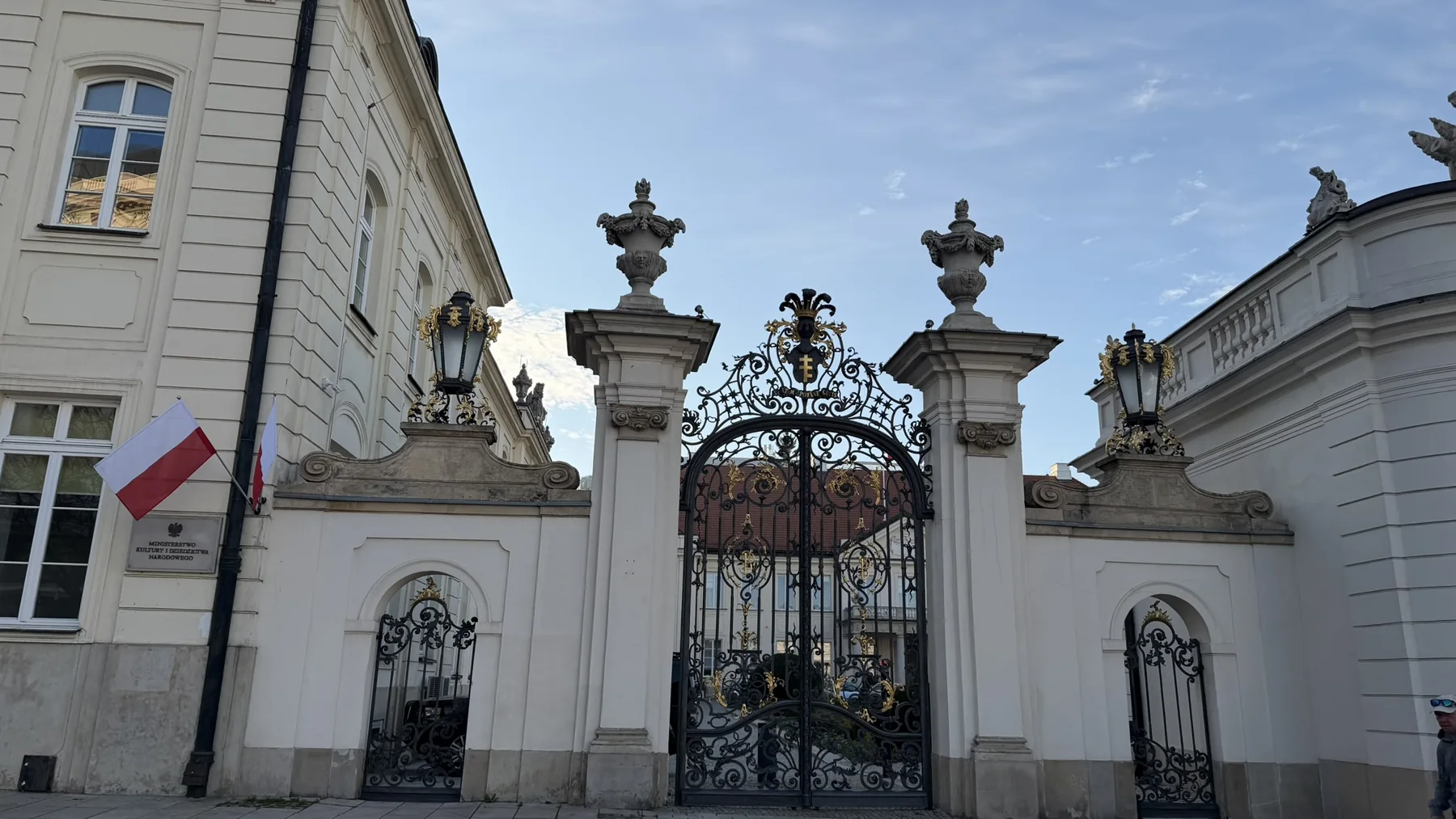
The ornamental gateway of the University of Warsaw leads to an ensemble of historic buildings and courtyards. The university was founded in 1816, but the site includes older royal and aristocratic properties, notably Kazimierzowski Palace.
Chopin’s father taught at the Warsaw Lyceum, and the young composer grew up in this educational world. Across the street at Czapski Palace, the Chopin family lived from 1827. It was from here that Fryderyk left Warsaw in 1830, never to return.
When open to visitors, the university courtyard makes a rewarding short detour from the boulevard.
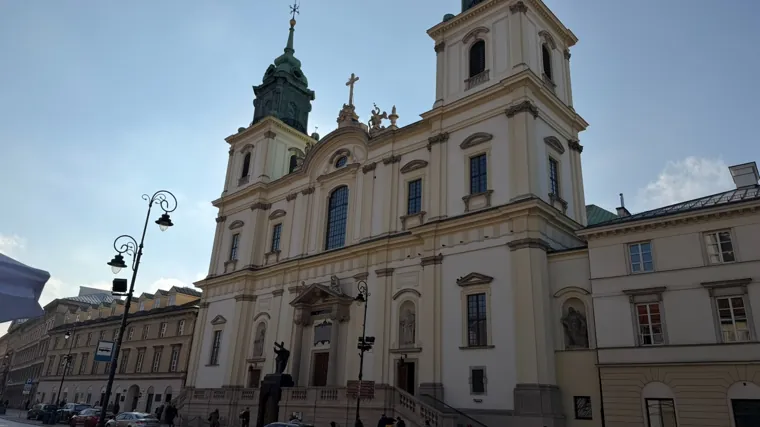
The Basilica of the Holy Cross is one of the most consequential stops on this walk. Outside, the statue of Christ bearing the cross carries the inscription Sursum Corda — “Lift up your hearts.”
When Chopin died in Paris in 1849, his sister Ludwika brought his heart back to Warsaw. It was placed within the church, while his body remained buried in France. During the Warsaw Uprising the heart was removed from the building and came into German custody before being entrusted to church authorities; it returned to Holy Cross on 17 October 1945.
That single memorial connects the composer’s life abroad with the fate of his home city. The church also contains memorials to other notable Poles, making it worth a respectful look inside when services permit.
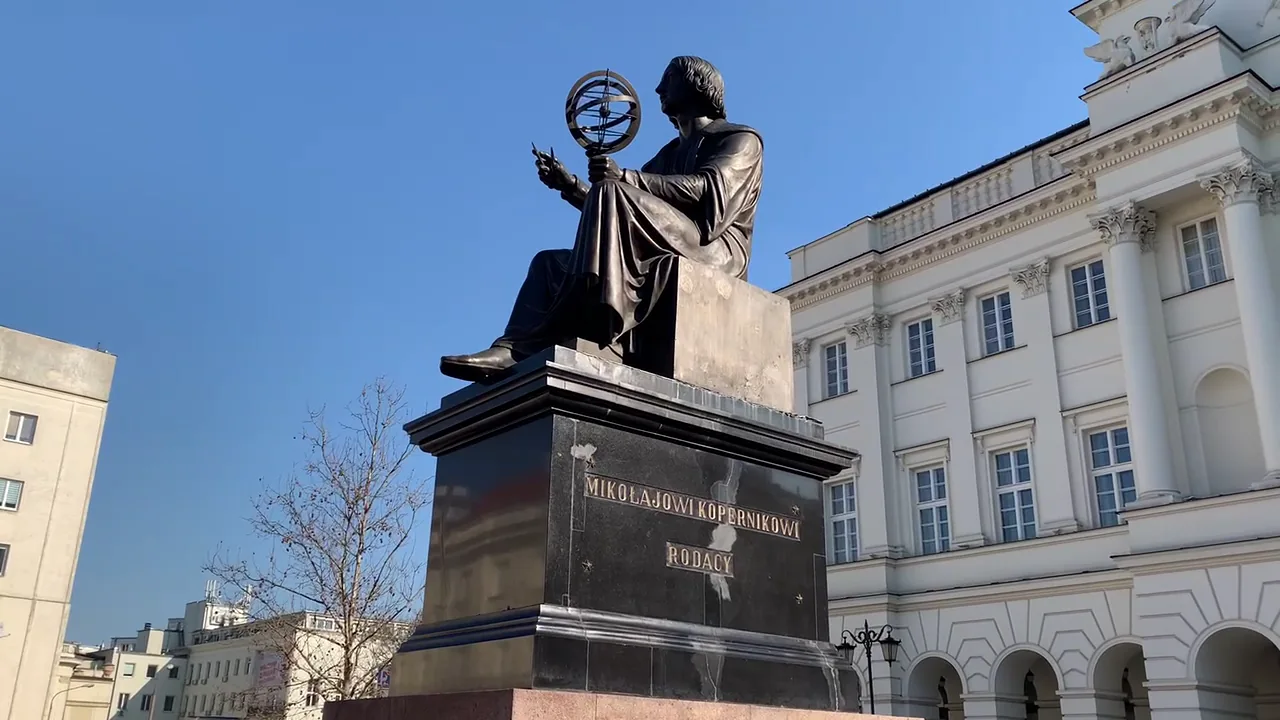
The seated Nicolaus Copernicus monument faces Staszic Palace, now associated with the Polish Academy of Sciences. Unveiled in 1830, the statue celebrates the astronomer whose heliocentric model transformed our understanding of the universe.
Under German occupation, a plaque in German was fixed over the monument’s Polish inscription. On 11 February 1942, underground scout Maciej Aleksy “Alek” Dawidowski removed it — a celebrated act of mały sabotaż, or “small sabotage.” A seemingly quiet monument was briefly at the centre of a bold act of resistance.
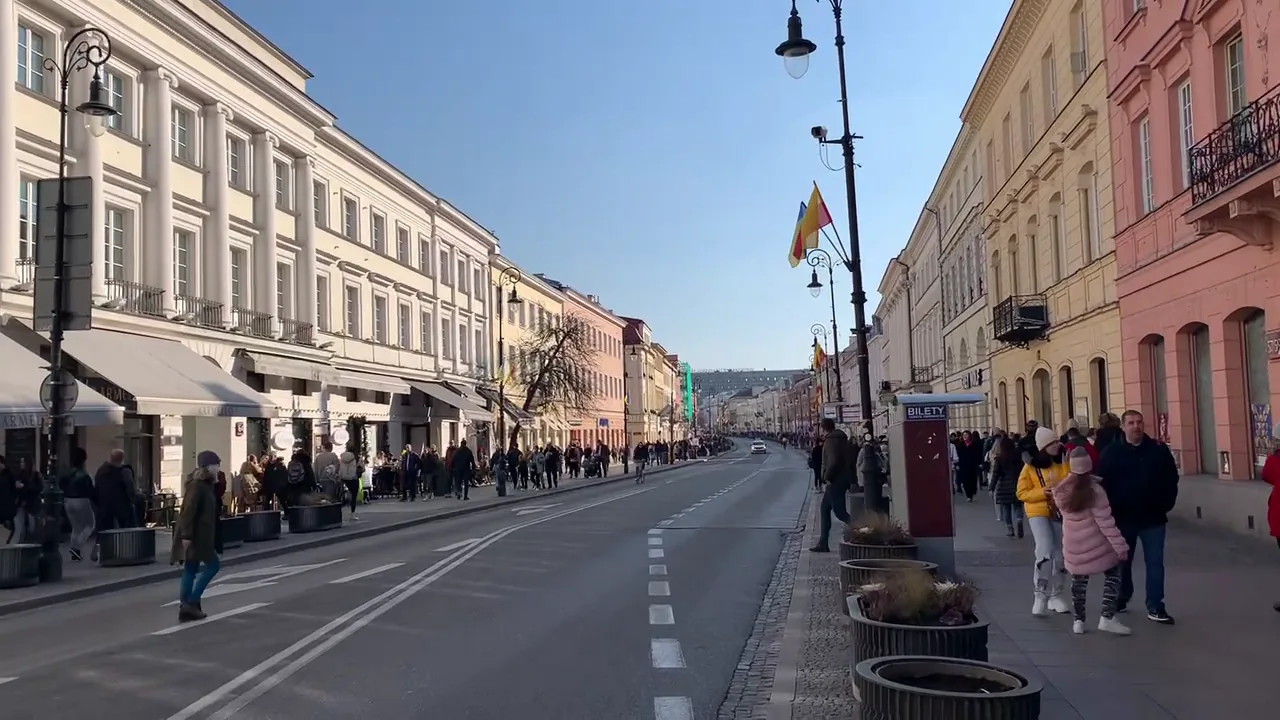
South of Świętokrzyska, Krakowskie Przedmieście becomes Nowy Świat. The formal boulevard gives way to colourful façades, restaurants and shops. The district became fashionable in the nineteenth century and was badly damaged during the war; many elegant street fronts owe their appearance to reconstruction.
For a Chopin detour, follow Ordynacka towards the Fryderyk Chopin Museum at ul. Okólnik 1. The museum is closed for renovation throughout 2026, with reopening planned for 2027; check its official website before a visit.
At Warecka Street, look for the commemoration of the sewer evacuation during the Warsaw Uprising. In early September 1944, insurgents and civilians escaped from the besieged Old Town through dark, dangerous sewers, emerging here in the city centre. It is one of those places where ordinary street life and dramatic history occupy exactly the same ground.
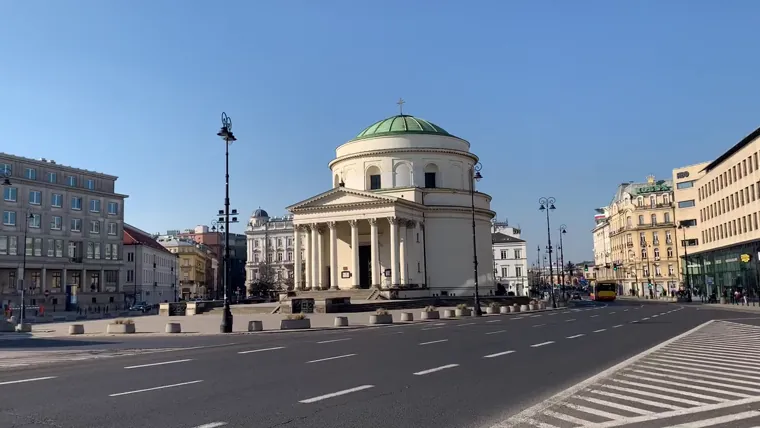
Our central walk finishes at Plac Trzech Krzyży, where the neoclassical St Alexander’s Church dominates the square. The church was originally built to honour Tsar Alexander I, ruler of Russia and king of the Congress Kingdom of Poland — a revealing twist on a route often associated with Polish statehood.
The church was badly damaged during the Second World War and subsequently rebuilt. From here, Aleje Ujazdowskie leads south towards Warsaw’s royal parks and residences. It is a sensible endpoint for the city-centre walk, whether you stop for coffee or carry on.
King Stanisław August Poniatowski transformed Łazienki into an elegant royal landscape. The original Chopin Monument here was destroyed by the Germans in 1940; its replacement was unveiled in 1958.
Explore Łazienki & Ujazdów →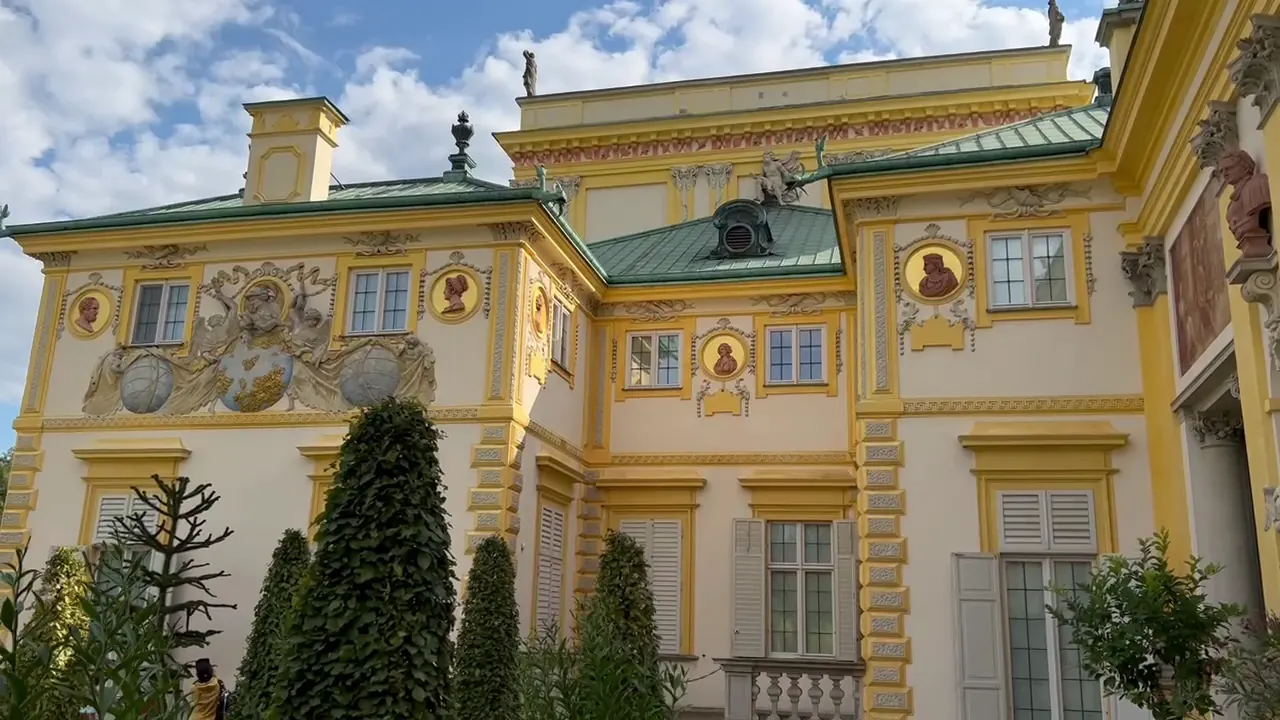
Associated with King Jan III Sobieski and Queen Marie Casimire, Wilanów survived the war comparatively well, though its collections and estate suffered losses. Treat this as a separate excursion.
Discover southern Warsaw →Summer brings café terraces and long evenings; autumn softens the light around the university and churches. At Christmas, illuminations transform the boulevard and its grand hotels into a very different walk. If you have the chance, return after sunset.
What makes the route memorable is not just what you see. The Royal Castle looks centuries old but was painstakingly rebuilt. Chopin’s childhood and heart are linked to neighbouring buildings. A monument to an astronomer carries a story of resistance. And in between those histories, Warsaw goes about its ordinary day.