Warsaw’s Palaces: Kings, Magnates and the Buildings That Came Back
Who built Warsaw’s grand residences, who took possession of them — and what survived? Follow royal ambition, noble rivalry, wartime destruction and the extraordinary decision to rebuild.
Ask the question today and the answers are surprisingly modern. The President works in a palace once associated with magnate families. A royal residence now anchors Warsaw University. A palace built to impress aristocratic rivals houses treasures of the National Library. Other grand buildings contain museums, offices and contemporary art — or no longer exist at all.
Warsaw’s palaces tell a story of power passing from dukes and elected kings to powerful families, foreign rulers, the Polish state and modern cultural institutions. They also present an unusual question: how much of what you are looking at actually survived the war? Here the answer is often more complicated — and more remarkable — than it first appears.
This is a selective illustrated guide to the places with the strongest stories and most rewarding visits. For the lanes around the Castle, see our Old and New Town guide; for the royal park in depth, see Łazienki and Ujazdów.
Before you go
How to read a Warsaw palace
Largely surviving means important historic structure remains, though interiors may have been repaired. Restored means substantial historic fabric was conserved. Rebuilt means the structure was reconstructed after wartime destruction, sometimes incorporating salvaged pieces. Lost marks places where the palace no longer stands; reconstruction project means plans and works are underway, not that the palace can be visited. These are broad visitor labels, not a substitute for conservation reports.
Each entry also distinguishes publicly visitable museum spaces, exterior viewpoints and working government or university buildings. Never assume a palace interior is open simply because you can reach its courtyard.
13th–17th centuries
A king moves in — and Warsaw becomes a capital
Warsaw began this story as a Mazovian ducal centre, not as Poland’s unquestioned capital. After Mazovia was incorporated into the Polish Crown in 1526, the castle's importance grew. Sejm sessions and the political geography of the Polish–Lithuanian Commonwealth increasingly brought national business to Warsaw. When Sigismund III Vasa established his court here towards the end of the sixteenth century, the move strengthened a shift already taking place — it did not make Warsaw the capital overnight.
The court attracted architects, officials and ambitious magnates. They built residences along the Vistula escarpment and the roads leading to the castle, asserting their own importance in a Commonwealth whose monarch was elected and whose political elite expected to be heard.
Royal Castle — where Poland’s government assembled
Museum interiorsRebuilt after 1944
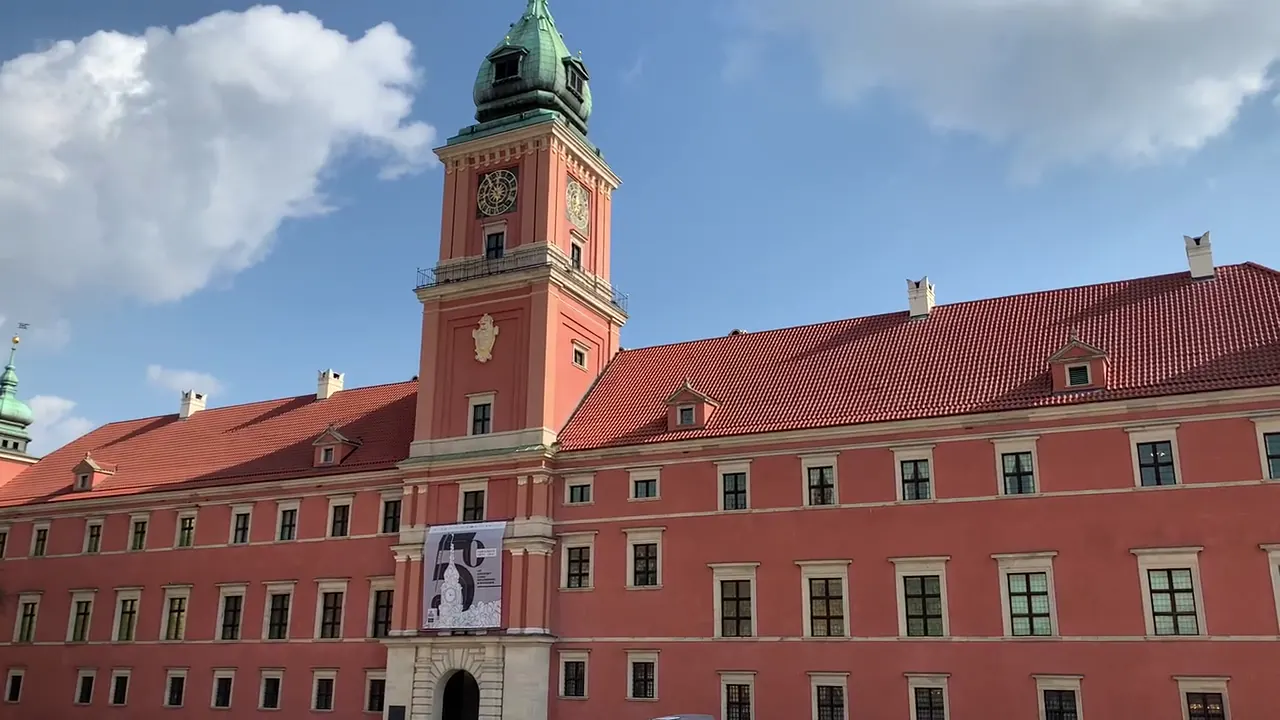
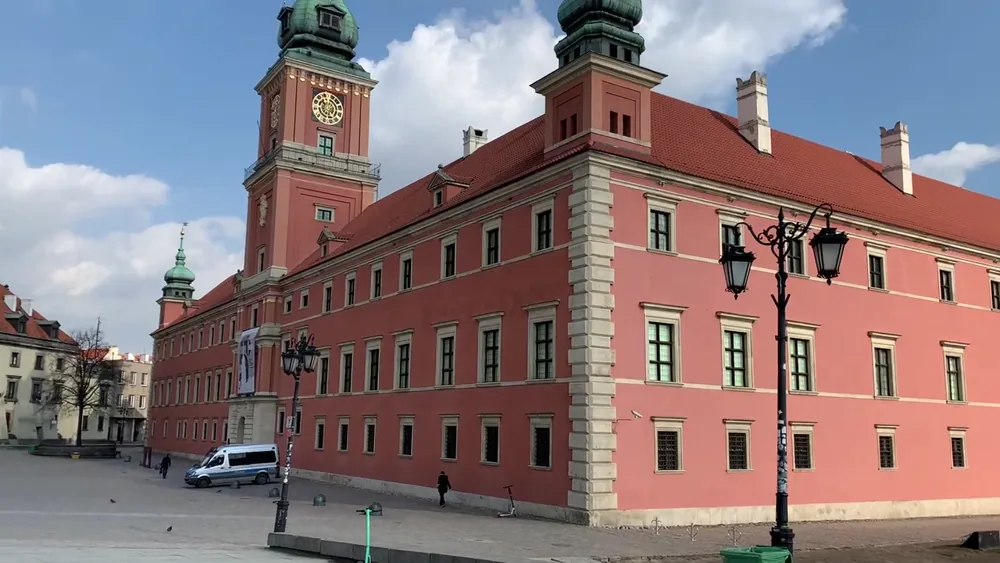
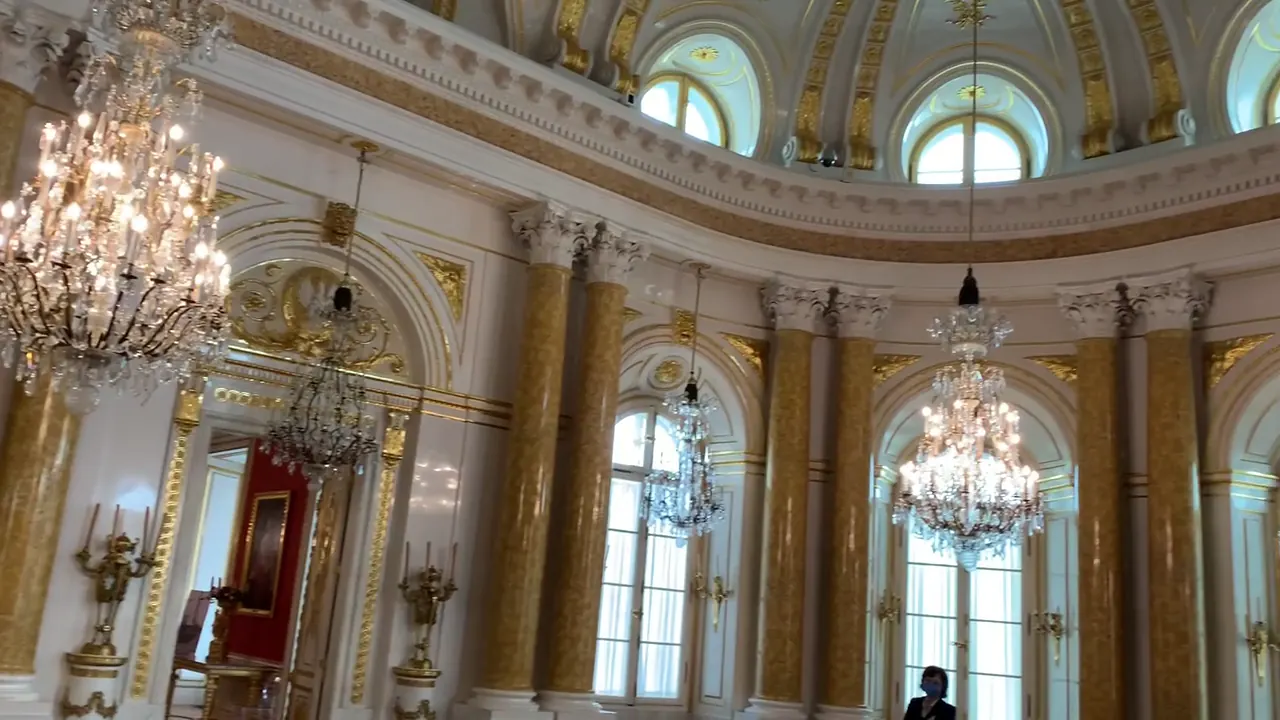
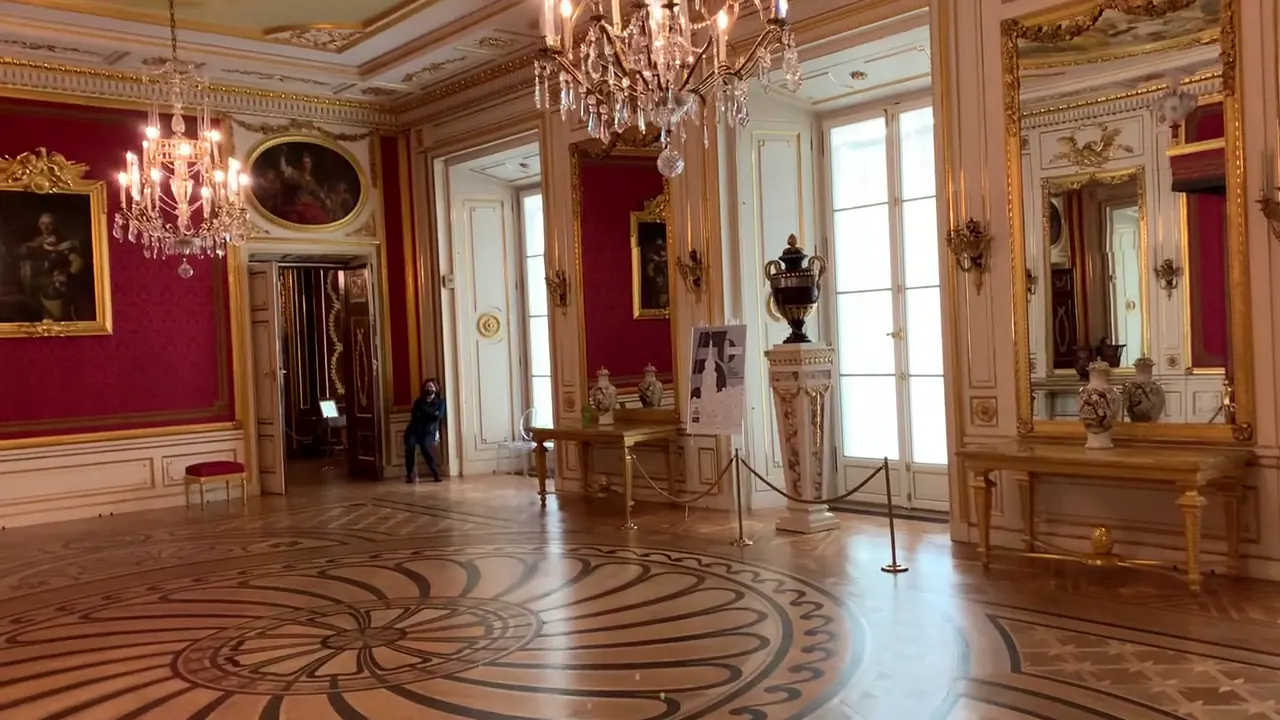
More than a royal home, the Royal Castle was a seat of parliamentary life and a stage for some of the Commonwealth’s defining moments. Its medieval ducal origins grew into a five-winged royal residence under Sigismund III Vasa. In the eighteenth century, Stanisław August Poniatowski commissioned splendid ceremonial interiors; the Constitution of 3 May 1791 was adopted in the castle’s Senators’ Chamber.
Bombed in 1939, the castle was deliberately blown up by German forces in September 1944. Museum workers and conservators had already risked their lives salvaging art and architectural fragments. The reconstruction decision came in 1971, after years of delay. Supported by donations from Poles at home and abroad, the rebuilt interiors opened to visitors in 1984. The building you enter is therefore both an extraordinary museum and a record of a national act of recovery.
Look for: ceremonial chambers, the royal collection, the contrast between reconstructed rooms and surviving objects, and the gardens towards the river. Official castle visitor information ↗.
The reconstructed Royal Castle overlooking Castle Square — the historic royal and parliamentary seat, rebuilt after its destruction in 1944.A ceremonial interior of the reconstructed Royal Castle; surviving collections and rebuilt decoration tell different parts of the story.The royal apartments show the grandeur of Stanisław August’s court — with careful reconstruction following wartime destruction.
Ujazdowski Castle — destroyed twice in different ways
Exhibitions / groundsRebuilt in the 1970s
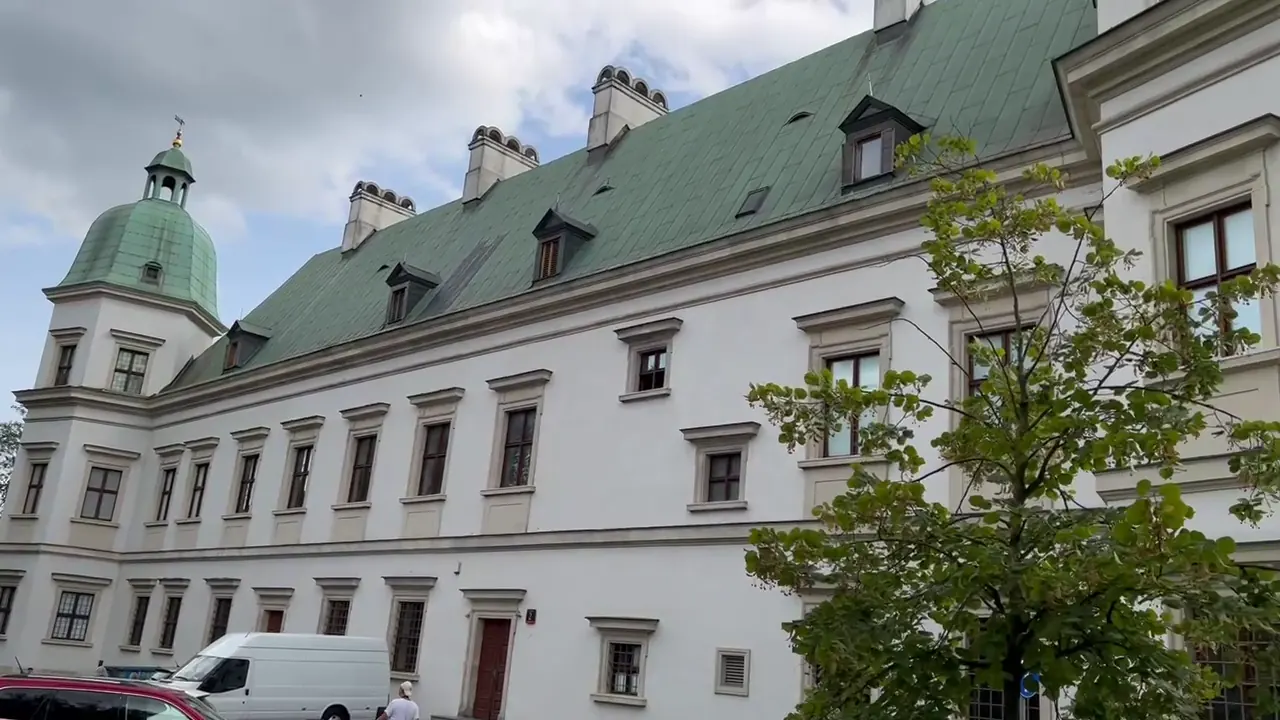
Ujazdowski has one of the most striking survival stories in the city. A royal residence developed here under the Vasas; in later centuries the complex took on military and hospital functions. During the Warsaw Uprising it served as an insurgent hospital. Its interiors burnt in wartime, but substantial outer walls remained standing.
In 1954 those walls were demolished by decision of the communist authorities. The castle you see today is a reconstruction from the 1970s, based on an early-Baroque appearance rather than the building’s final prewar form. Since 1985 it has housed the Centre for Contemporary Art, turning a royal and military site into a place for new ideas.
Look for: the four corner towers, the landscape of the Ujazdów escarpment, and the artistic programme inside. Centre for Contemporary Art ↗.
The reconstructed Ujazdowski Castle recalls an early-Baroque royal residence; the wartime-damaged standing walls were demolished in 1954.
Wilanów — Jan III Sobieski’s palace of victory and family
Museum / gardensSubstantial historic fabric
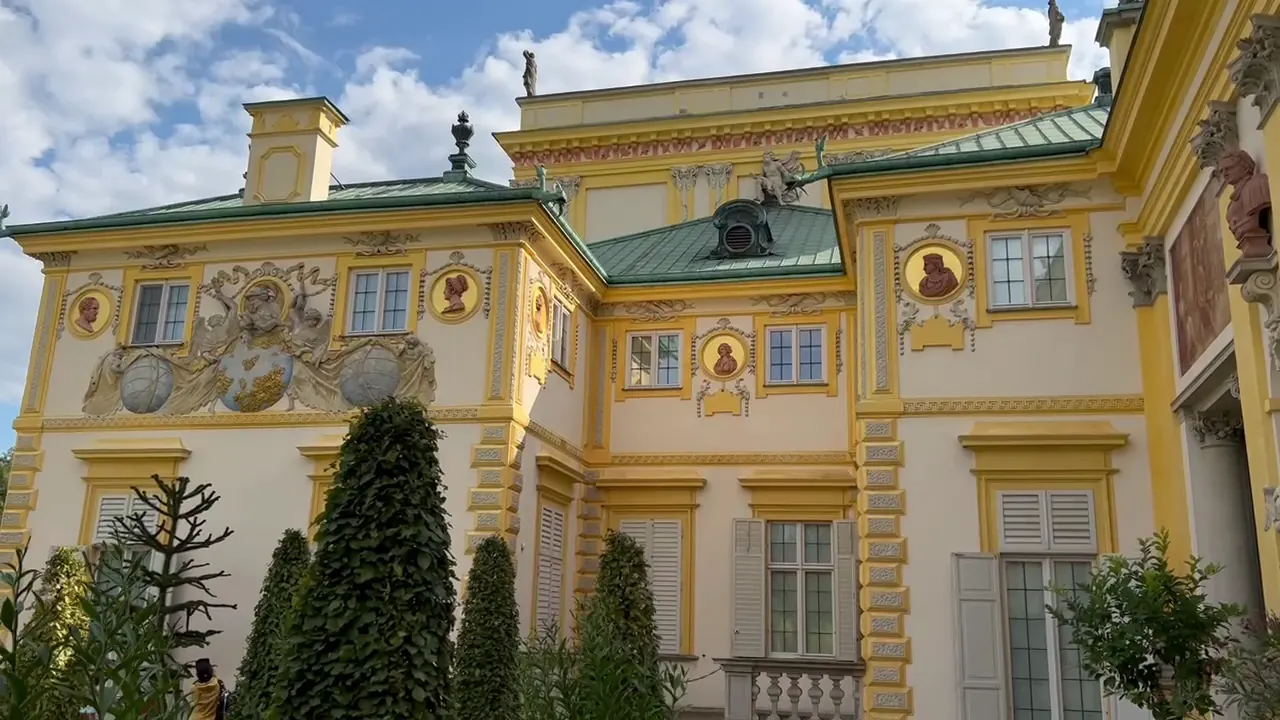
Wilanów offers a different kind of royal Warsaw: a residence outside the crowded centre, built from 1677 for Jan III Sobieski and his wife Marie Casimire — often remembered as Marysieńka. Its architecture celebrated status and the king’s achievements, but it was also a family retreat framed by gardens and art.
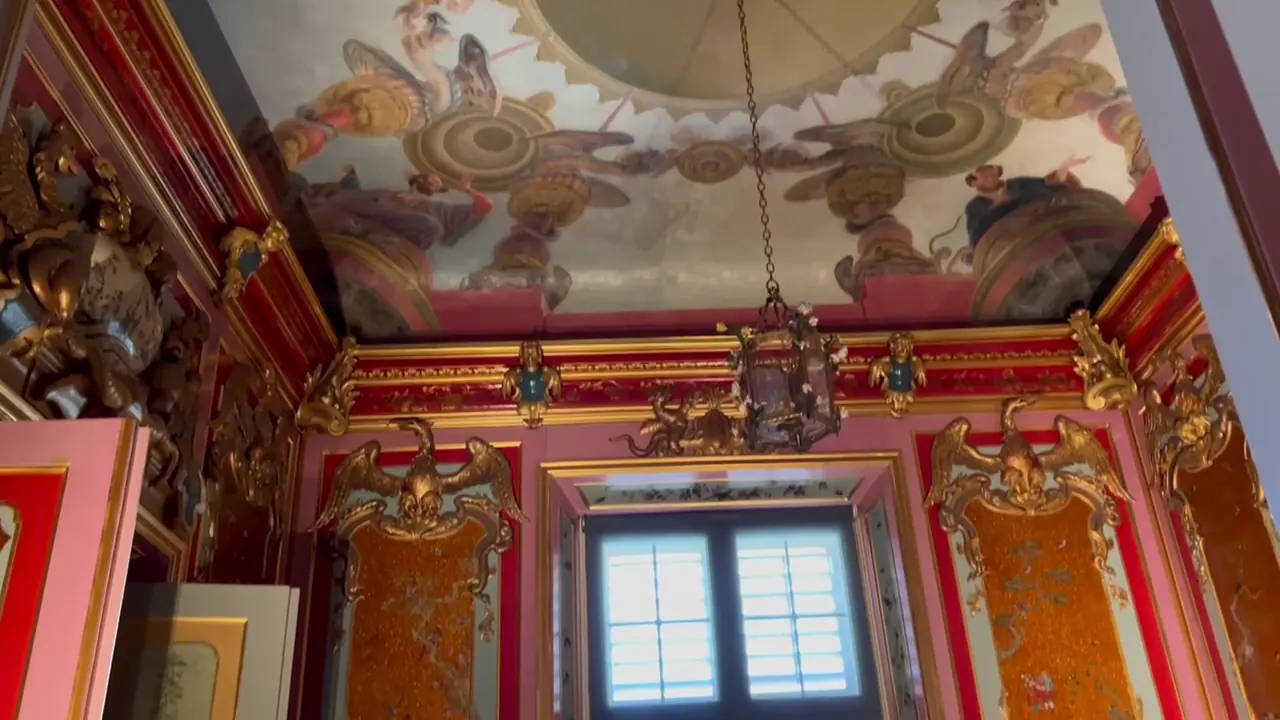
Successive owners enlarged and reshaped the estate. Unlike so many Warsaw palaces, the main building survived the Second World War without wholesale destruction, although the collections and interiors suffered wartime losses and damage. The layers of ownership are visible in the paintings, rooms and landscapes. This is one of the best places to understand royal domestic life rather than merely state ceremony.
Look for: the exterior decoration, garden axis, richly painted chambers and sculptural details. Wilanów Museum ↗.
Wilanów’s garden façade links the royal apartments to the estate landscape.A richly decorated Wilanów interior reveals how art and architecture projected royal status.
17th–18th centuries
The magnates who rivalled the Crown
Warsaw’s great families did not merely imitate kings: they negotiated with them, challenged them and sometimes helped choose them. Building a palace near the Royal Route was a political statement. Look past the decorative gateways and you find stories of diplomacy, patronage, succession and the competition to leave an architectural mark on the city.
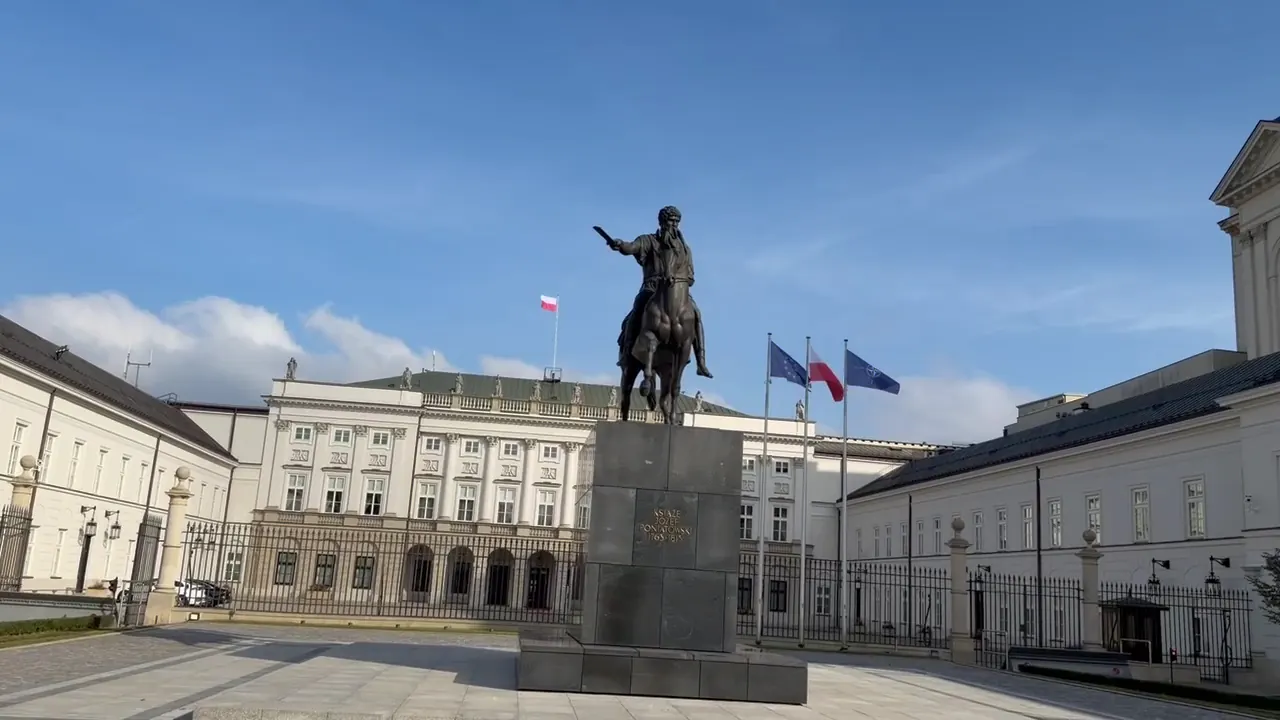
The Presidential Palace seen across the square with the equestrian statue of Prince Józef Poniatowski.
Presidential Palace — power with new occupants
Working state residenceHistoric, altered
First a magnate residence, later a seat of the Russian imperial administration, this building hosted the signing of the Warsaw Pact in 1955 and Poland’s Round Table negotiations in 1989. It is now associated with the presidency, so the exterior — rather than casual interior touring — is the realistic visitor experience.
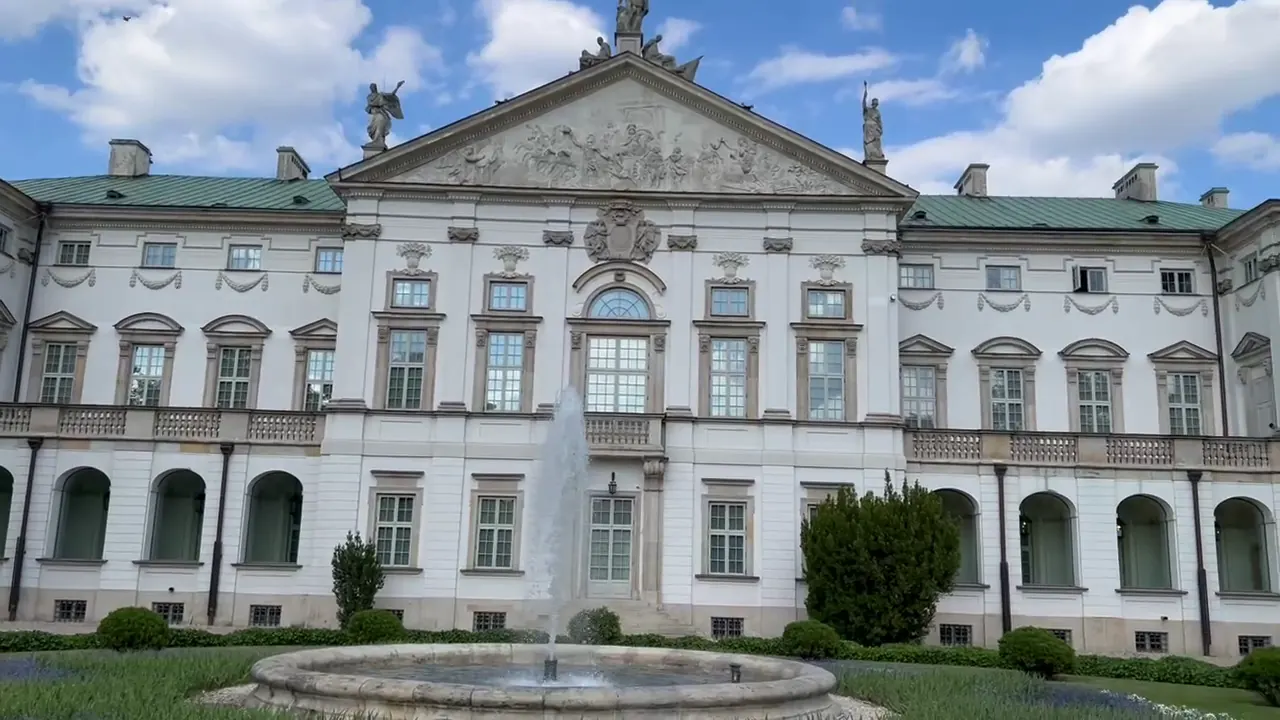
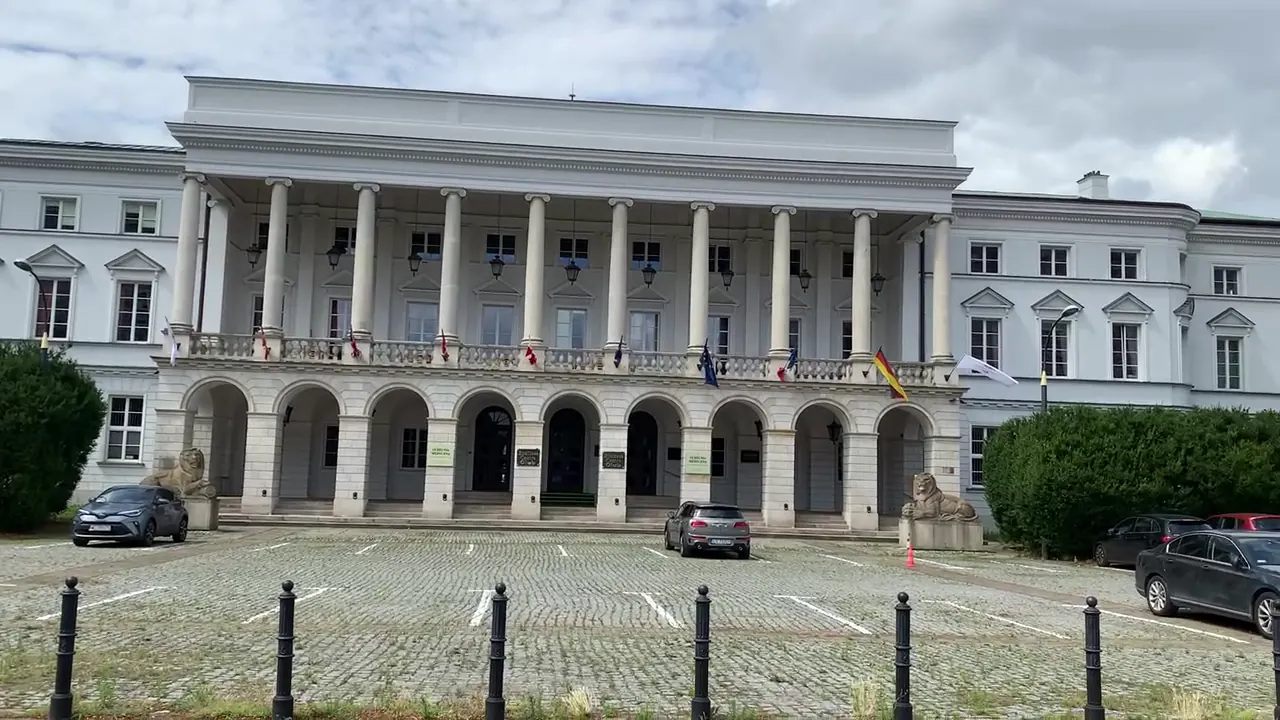
Krasiński Palace: its monumental façade faces a public garden.
Krasiński Palace — grandeur becomes a public collection
Cultural institutionRebuilt after 1944
Built for Jan Dobrogost Krasiński, this was a statement of aristocratic wealth. Heavily damaged in 1944 and rebuilt, today it houses the National Library’s extraordinary historic collections. Check the library’s current visiting arrangements for exhibitions and interiors.
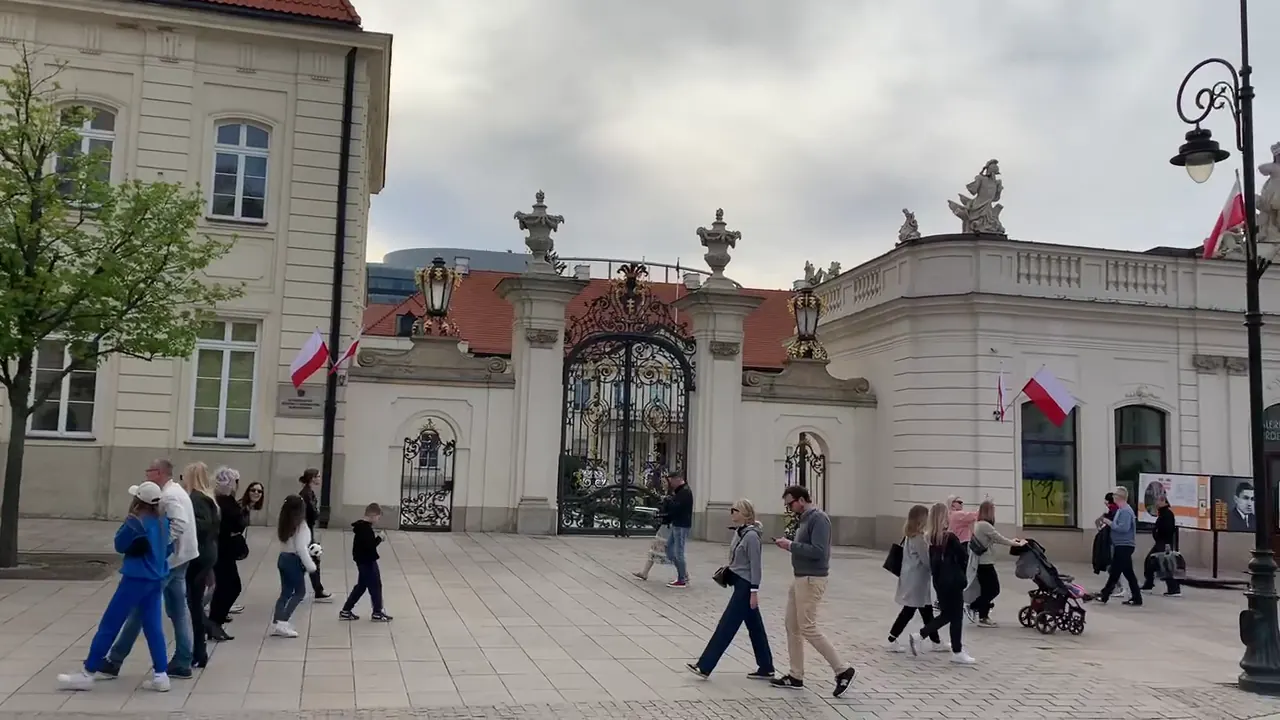
The ornamental gate and frontage of Potocki Palace on Krakowskie Przedmieście.
Potocki Palace — the gate that makes you stop
Exterior / eventsRestored and altered
Its elaborate gateway captures the ceremonial language of the Royal Route. The building later acquired cultural and institutional roles. Admire the gateway from the street and note the gallery and event uses rather than assuming a palace-tour circuit.
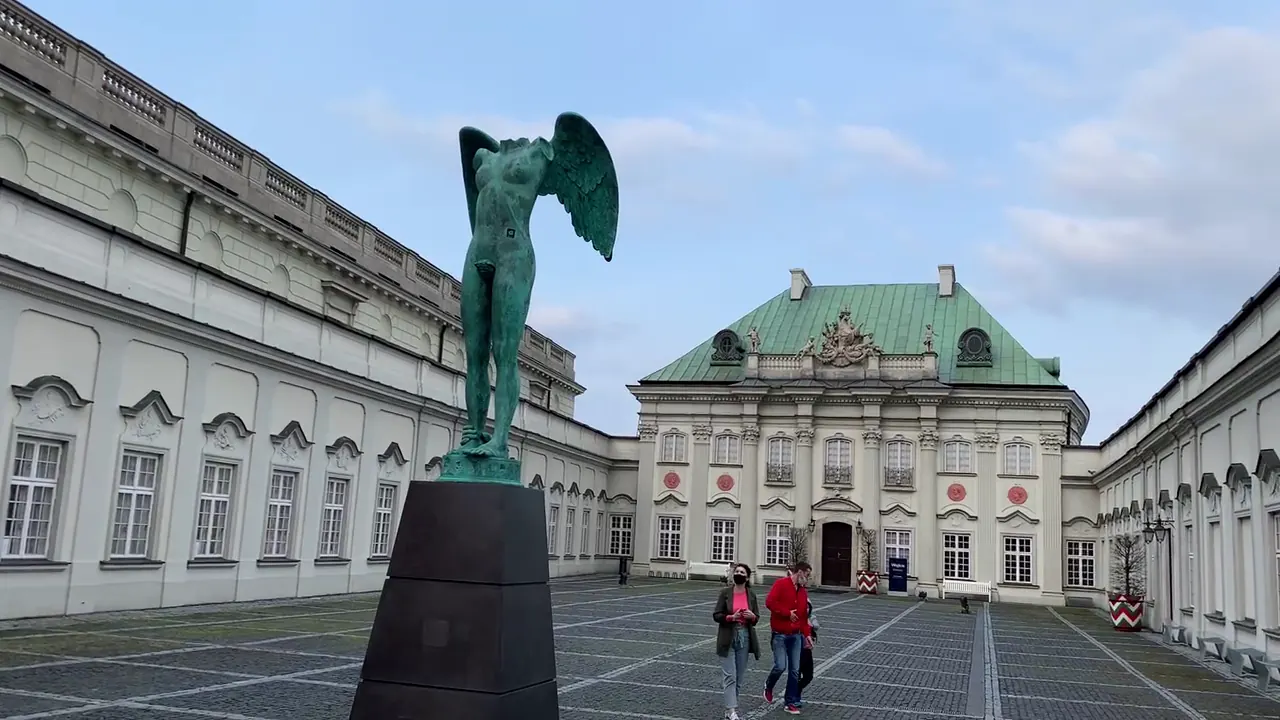
The courtyard of the Tin-Roofed Palace beside the Royal Castle.
Tin-Roofed Palace — the prince next to the castle
Museum complexRestored / rebuilt
Known in Polish as Pałac pod Blachą, this residence became associated with Prince Józef Poniatowski. It is part of the Royal Castle complex today, but has its own story of aristocratic life and architectural change.
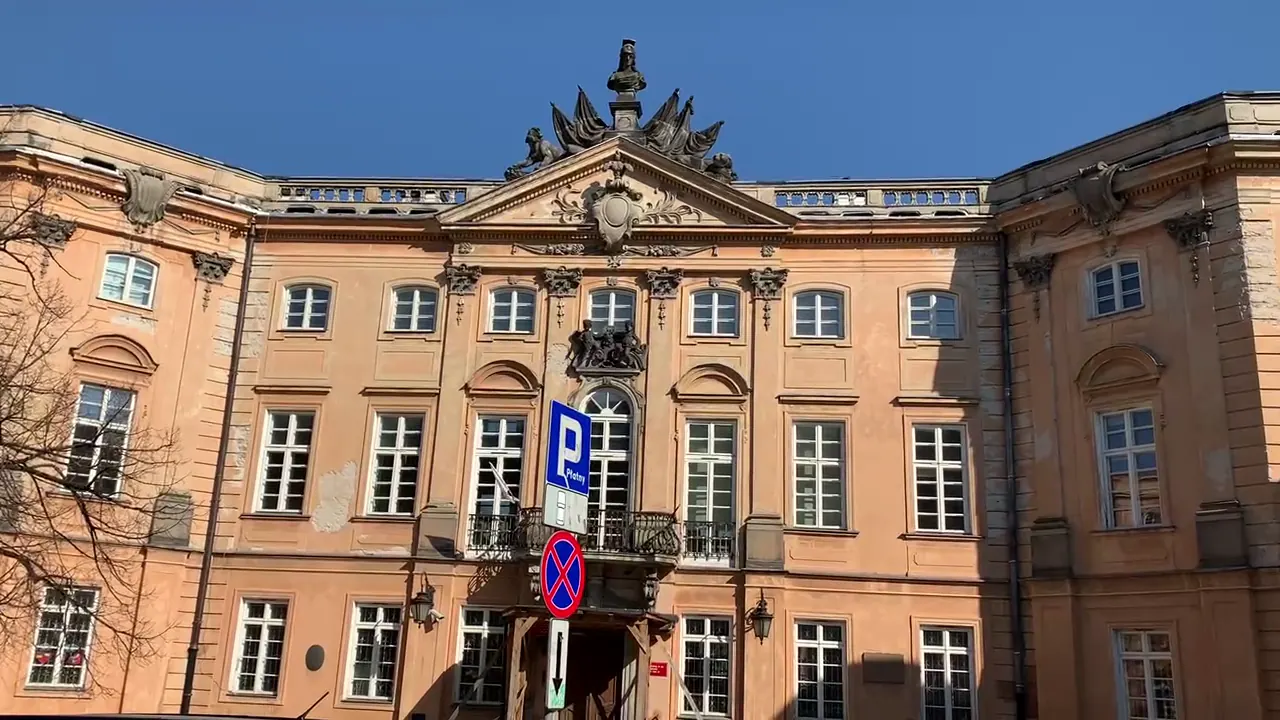
Sapieha Palace on Zakroczymska, photographed from the street.
Sapieha Palace — splendour and reconstruction
Institution / exteriorRebuilt after 1944
Eighteenth-century nobility left a mark beyond the Royal Route. This New Town palace later served military purposes, was devastated in 1944 and was reconstructed after the war. It is primarily an exterior heritage stop today.
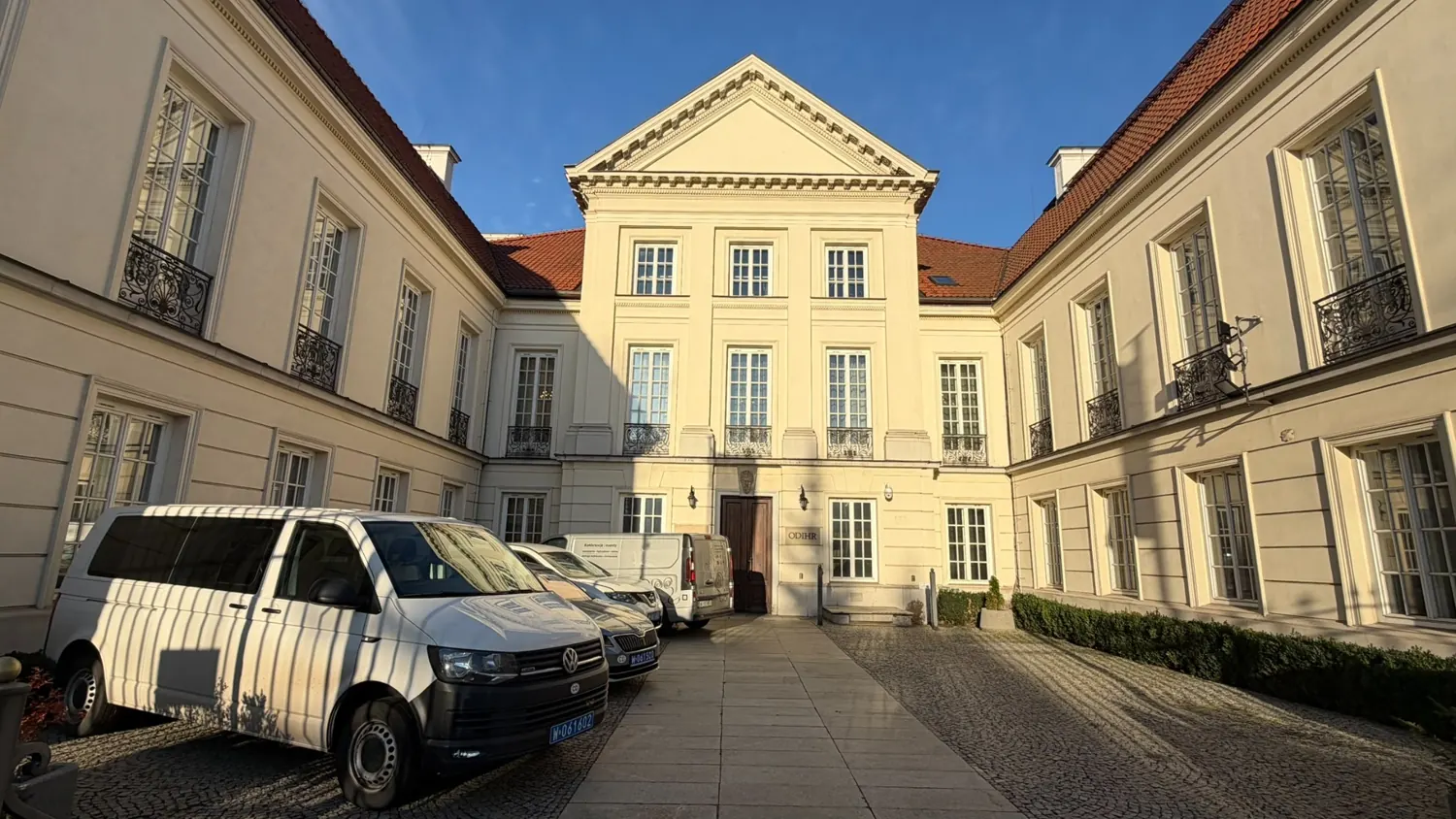
A view into the courtyard at Miodowa 10, where an international institution now works.
Młodziejowski Palace — uprising and a young Chopin
Working institutionRebuilt after 1944
The building served as a Russian diplomatic headquarters and was attacked during the 1794 uprising. Decades later, Chopin performed here in 1829, when the building had a different social role. Today it houses the OSCE’s ODIHR; this is not a walk-in palace museum.
Also worth noticing: the aristocratic residences of the Czapski, Branicki, Mostowski and Tyszkiewicz-Potocki families. Names often recur across several unrelated Warsaw buildings — check the exact address rather than assuming every “Potocki Palace” is the same one.
The last Polish king · Royal Łazienki
The royal palaces and pavilions of Łazienki
Stanisław August Poniatowski reshaped the former bathing grounds of a great noble estate into a royal landscape of art, architecture and ideas. The Palace on the Isle was his principal summer retreat, but the park contains a whole collection of royal residences and purpose-built cultural spaces — each with a different role at court. These are worth introducing here, even though our dedicated Łazienki and Ujazdów guide covers the park, its walks and museum buildings in much greater detail.
The palace on the water was set alight by German forces in 1944 and prepared for demolition, which was not carried out. Its subsequent restoration is part of the same complex story of survival and reconstruction found throughout Warsaw.
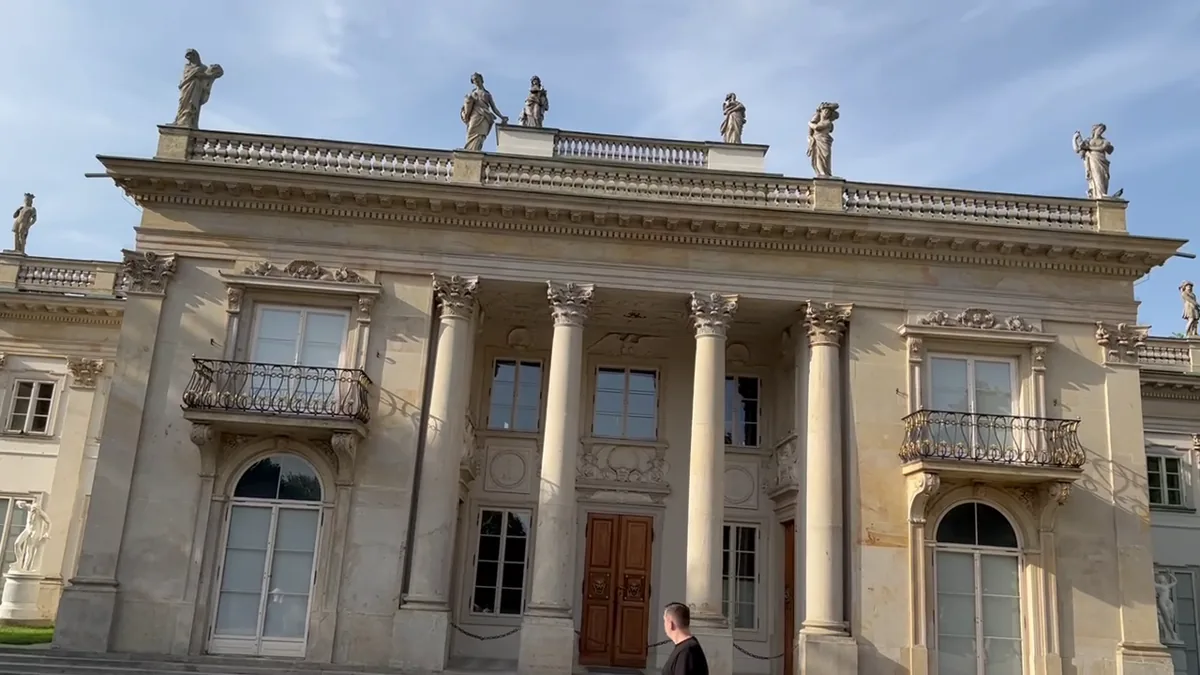
The Palace on the Isle, transformed for Stanisław August from an earlier bathing pavilion into an elegant royal retreat.
Palace on the Isle — the king’s retreat
Museum interiors / parkWartime fire; restored
The centrepiece of the royal landscape: ceremonial rooms, paintings and carefully framed views across the water reveal how the last Polish king used art and architecture to express his Enlightenment ideals.
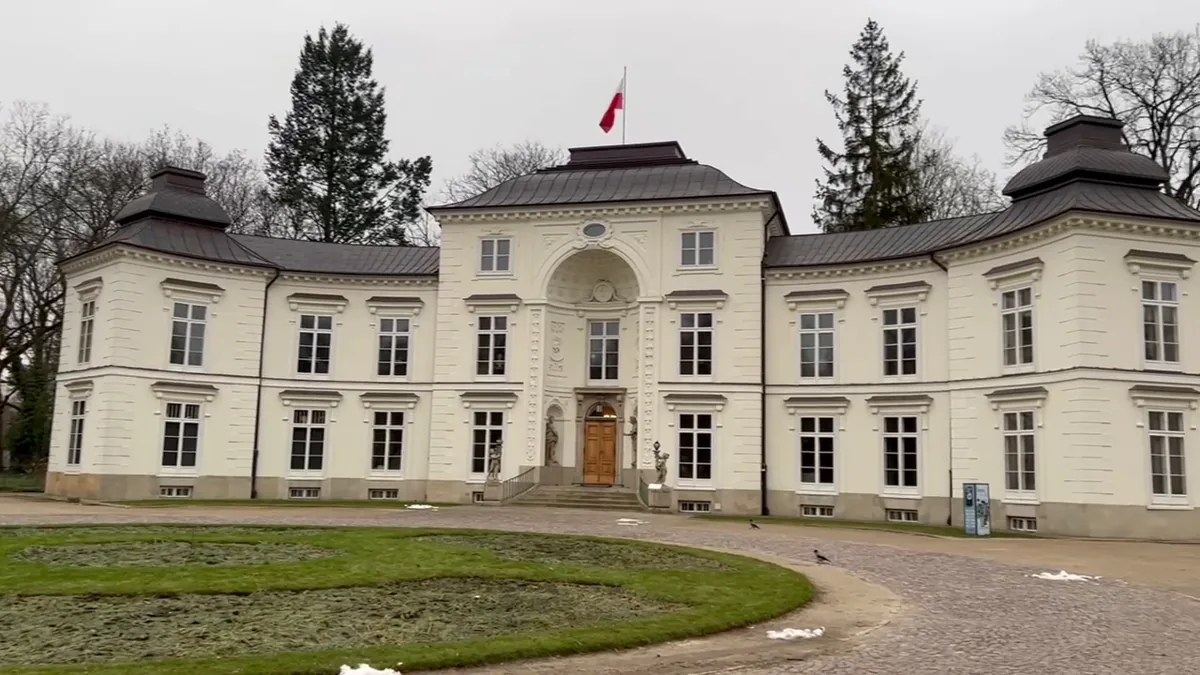
Myślewicki Palace, a more intimate residence within the royal park.
Myślewicki Palace — life beyond the main court
Museum building; check accessHistoric palace
This smaller palace, associated with members of Stanisław August’s family and court, makes an important contrast with the more ceremonial Palace on the Isle. Its elegant, curved plan shows how the royal grounds also provided more private living spaces.
The White Pavilion, one of the earliest buildings created for Stanisław August’s new royal park.
White Pavilion — an intimate royal residence
Museum building; check accessHistoric garden pavilion
Built during the king’s transformation of Łazienki, the White Pavilion offers a quieter, more domestic glimpse of royal life. Its modest scale is part of the attraction: Warsaw’s royal residences were not all monumental palaces.
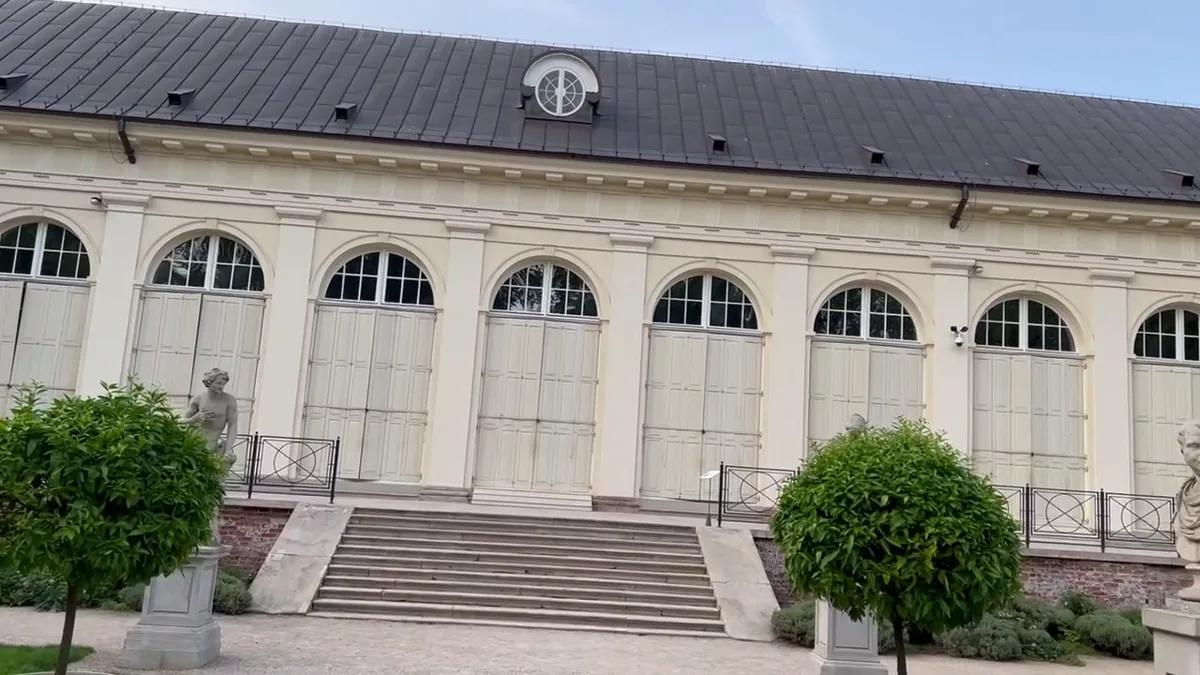
The Old Orangery combined a practical winter home for plants with one of the park’s most remarkable court interiors.
Old Orangery — court culture under one roof
Museum / theatre; check accessHistoric garden building
Not a palace residence, but essential to understanding the court: the Old Orangery houses the Royal Theatre and demonstrates how gardens, performance and collecting were woven into Stanisław August’s cultural ambitions.
Planning a visit: The park is one experience; individual museum interiors are another. Check current admission arrangements for each building. Explore the full Łazienki guide, photographs and walking map before setting out. Belweder, on the park’s edge, is covered separately below because of its later role in Polish statehood.
Partitions to modern Poland
Palaces without kings — and the return of the state
After the partitions, former royal and aristocratic spaces were absorbed into an administration serving other rulers. The nineteenth century added monumental public buildings whose Polish name includes pałac although they were built for government rather than as homes. Independence in 1918 changed the occupants again; the twentieth century changed the buildings themselves.
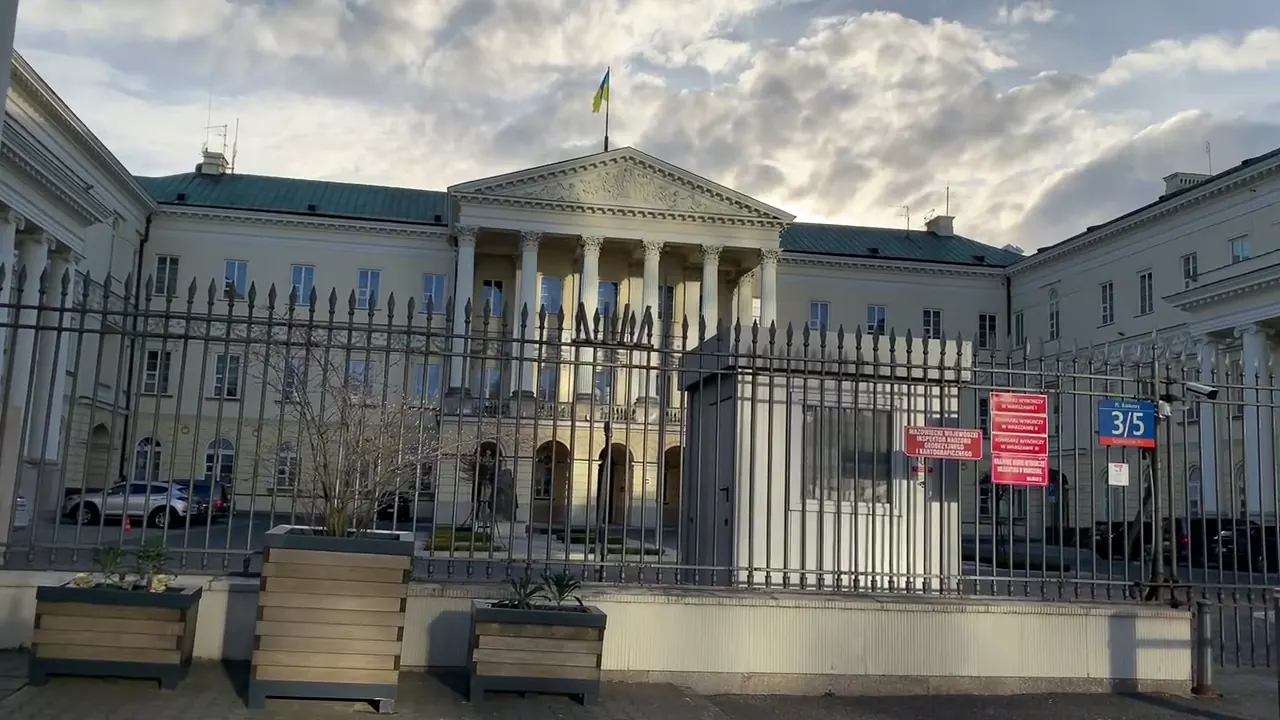
The colonnaded former government palace on Plac Bankowy.
Plac Bankowy — a palace of administration
Government buildings / exteriorReconstructed and altered
Antonio Corazzi’s nineteenth-century governmental ensemble makes the point neatly: grand palace architecture could signal authority without housing a monarch. Several neighbouring buildings form an administrative group and should be read together.
Lubomirski Palace and its long classical colonnade, seen from Plac Żelaznej Bramy.
Lubomirski Palace — the palace that turned
ExteriorRebuilt, then moved
The entire postwar-rebuilt structure was rotated on engineered supports in 1970 to alter the city’s planned views. The manoeuvre is one of Warsaw’s strangest architectural stories: a historic façade literally moved to serve a new urban plan.
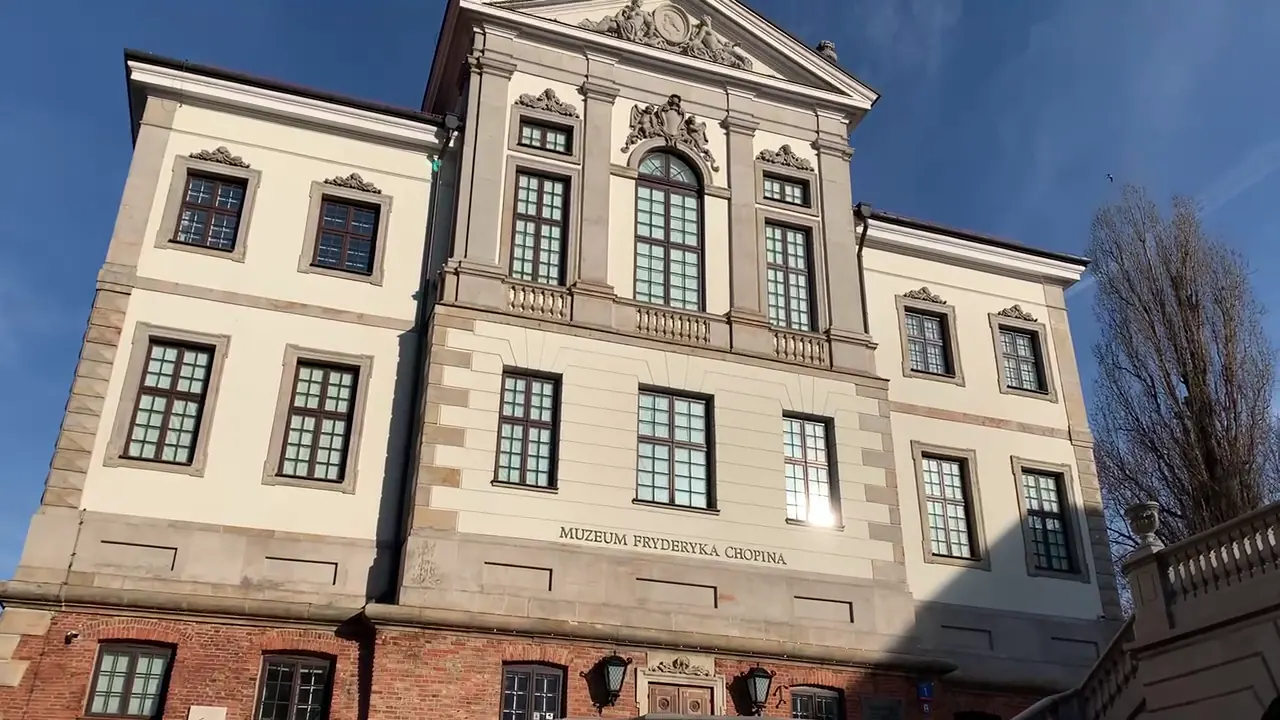
The historic palace now associated with the Fryderyk Chopin Museum.
Ostrogski Palace — from residence to music
Museum interiorsRestored / reconstructed
Also called Ostrogski Castle, this building is best experienced through its musical story and museum role. Follow the Warsaw museums guide for more museum ideas.
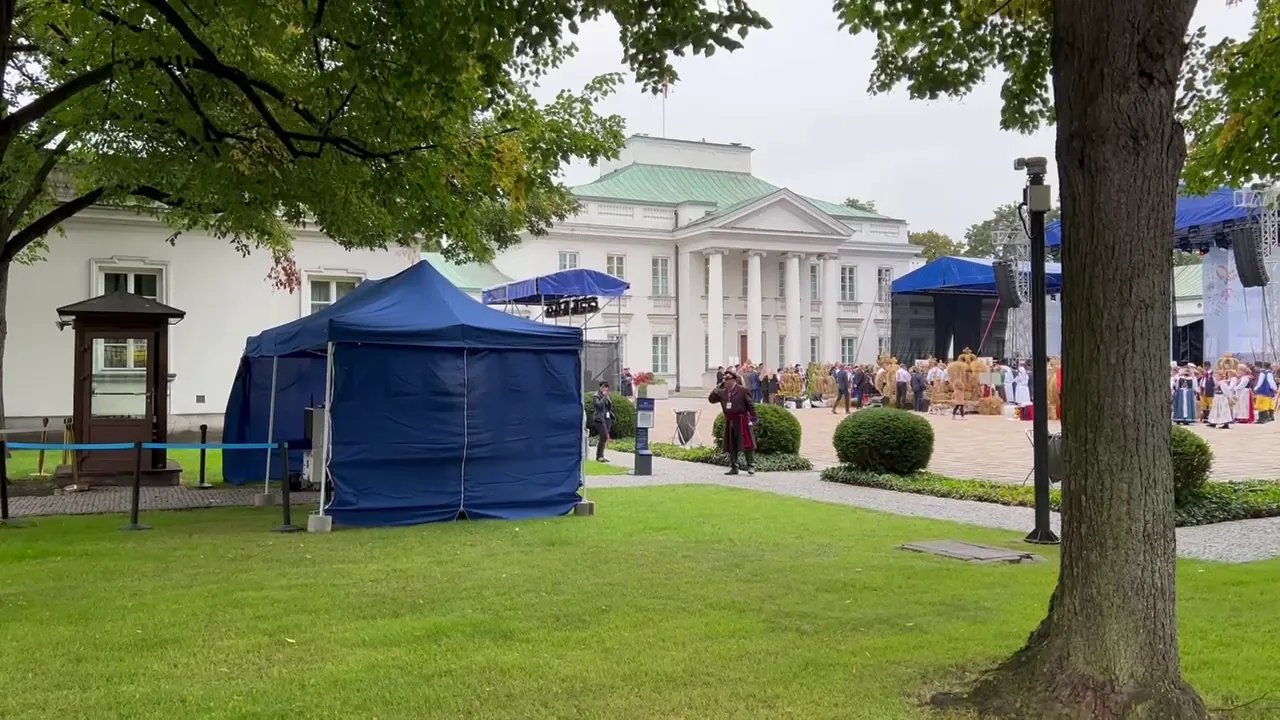
Belweder Palace during a public event. The temporary tents and staging partly hide its neoclassical façade.
Belweder — royal grounds and modern statehood
State residence / usually viewed from outsideHistoric building, adapted
Standing beside Łazienki, Belweder links the age of royal estates with nineteenth-century Russian rule and independent Poland. Its present neoclassical form dates from the early nineteenth century; it later became closely associated with Józef Piłsudski and Poland's presidents. The building still serves state functions, so do not assume that visitors can enter.
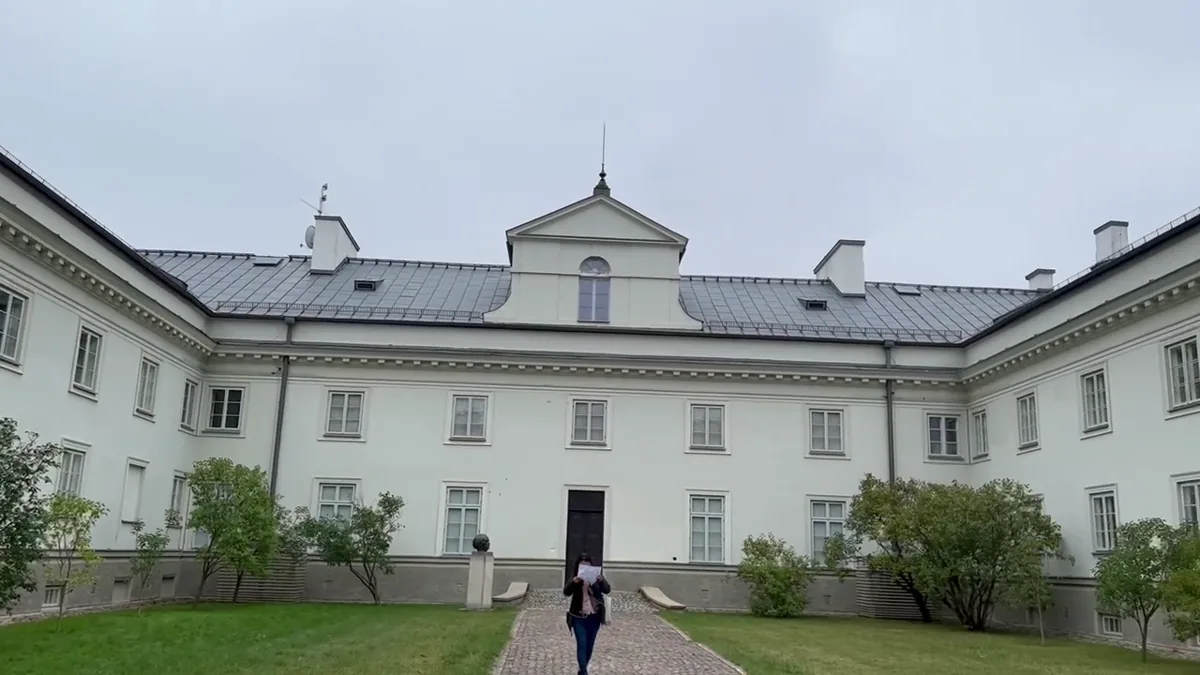
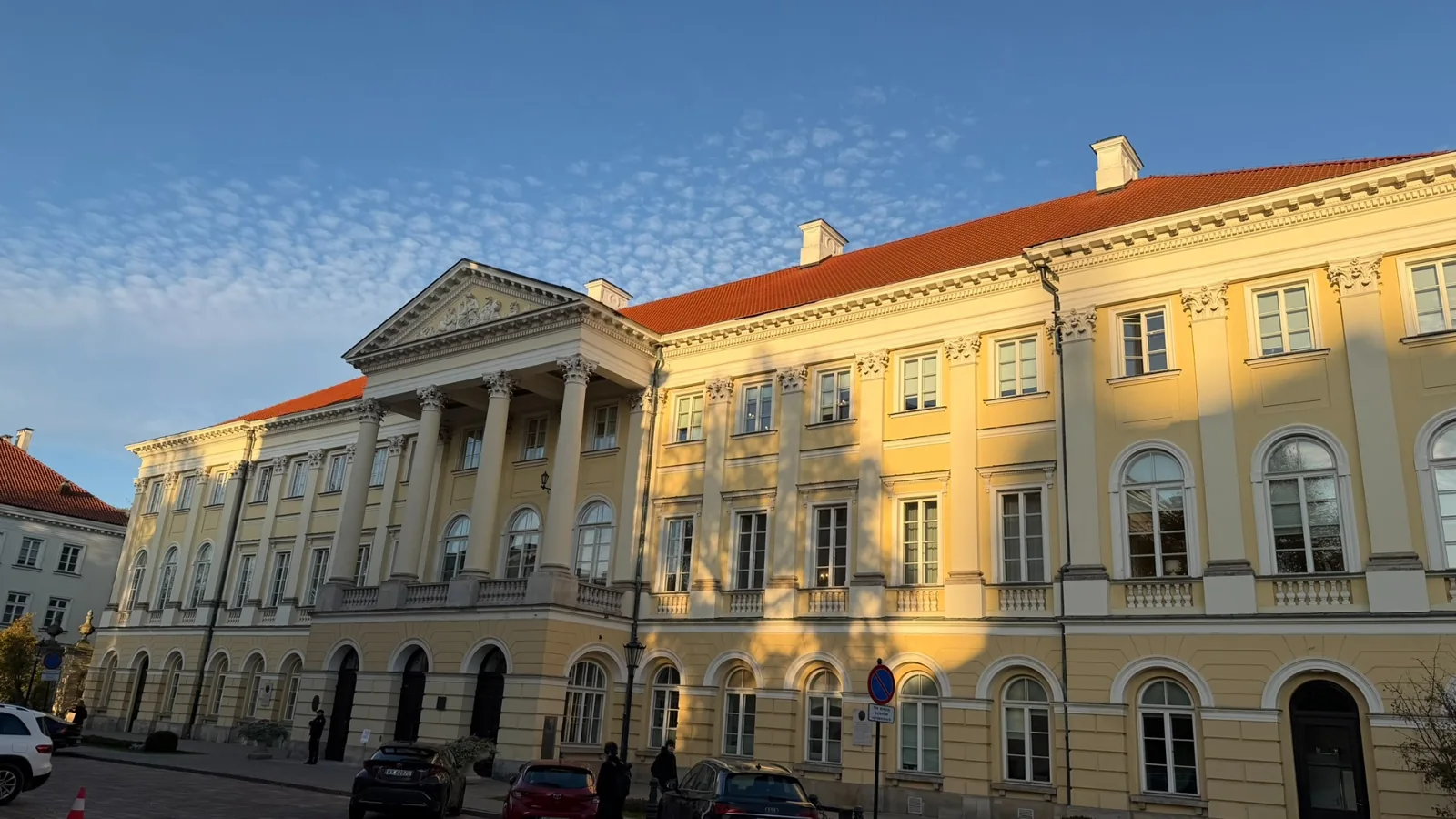
Kazimierzowski Palace on the University of Warsaw campus — a former royal residence now used by the university.
Kazimierzowski Palace — a royal home becomes a university
University campus / check building accessRebuilt and adapted
Once part of the Vasa kings' riverside residence, the palace later served education and now forms part of the University of Warsaw. It is a fine example of a royal building acquiring an entirely different public purpose. For the surrounding streets and other historic university buildings, see our Central Warsaw guide.
1939–1944 and beyond
The palaces Warsaw lost — and chose to bring back
In 1944, destruction was not only an accidental consequence of battle. German forces deliberately demolished major monuments, including the Royal Castle and Saxon Palace. Their absence altered the city’s skyline and its sense of continuity. Reconstruction would later become both a technical challenge and an argument about national memory: what should return, what could be recreated accurately and what must remain visible as loss?
Saxon Palace, Brühl Palace and the fragment that survived
Memorial / siteLost; project in progress
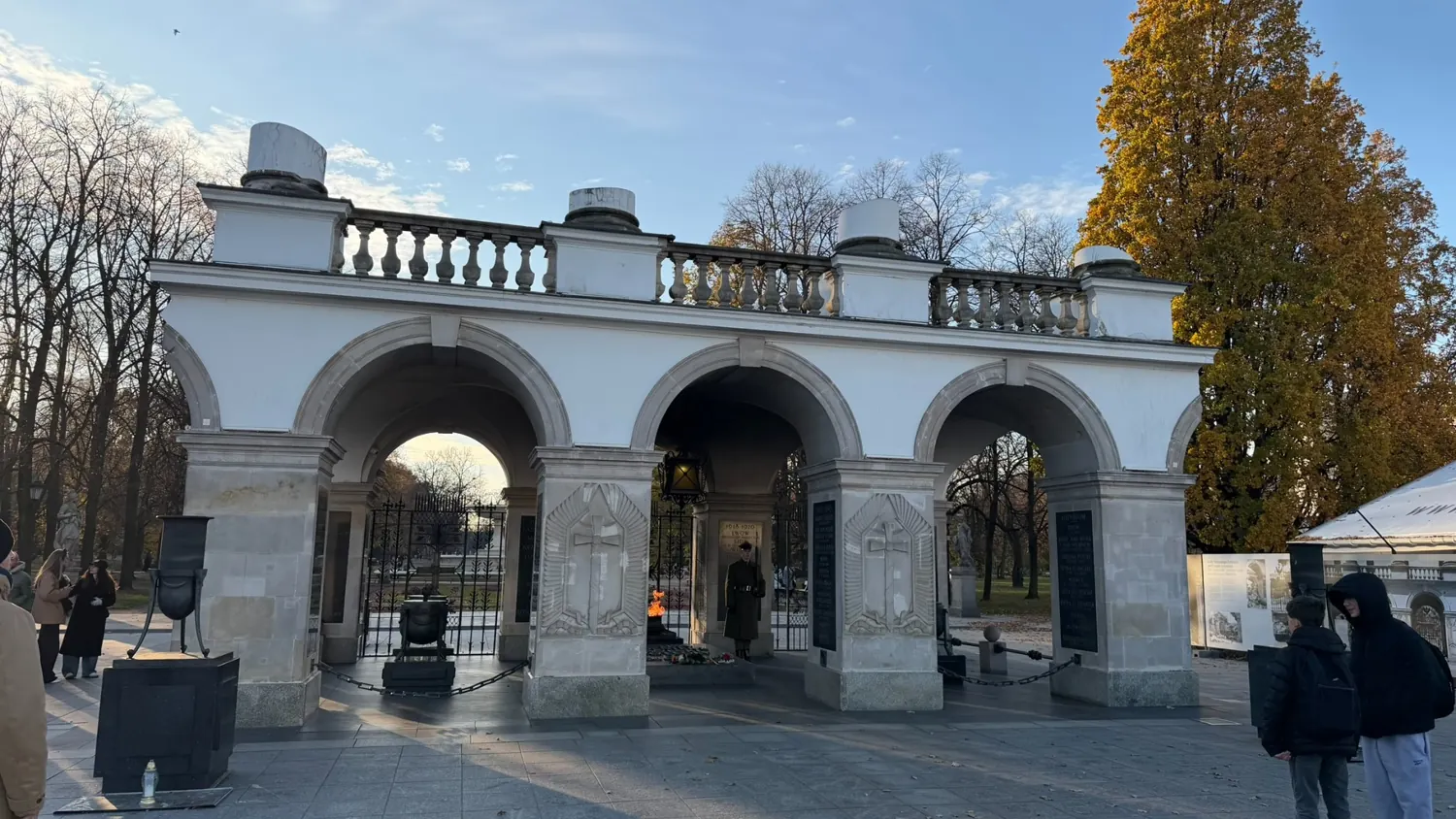
The Saxon Palace helped form the great Saxon Axis. By the interwar period its long nineteenth-century colonnade framed the Tomb of the Unknown Soldier, established in 1925. The palace was demolished by German forces in December 1944; only the damaged section around the tomb survived. Its continued presence is both a national memorial and an unmistakable trace of what was lost.
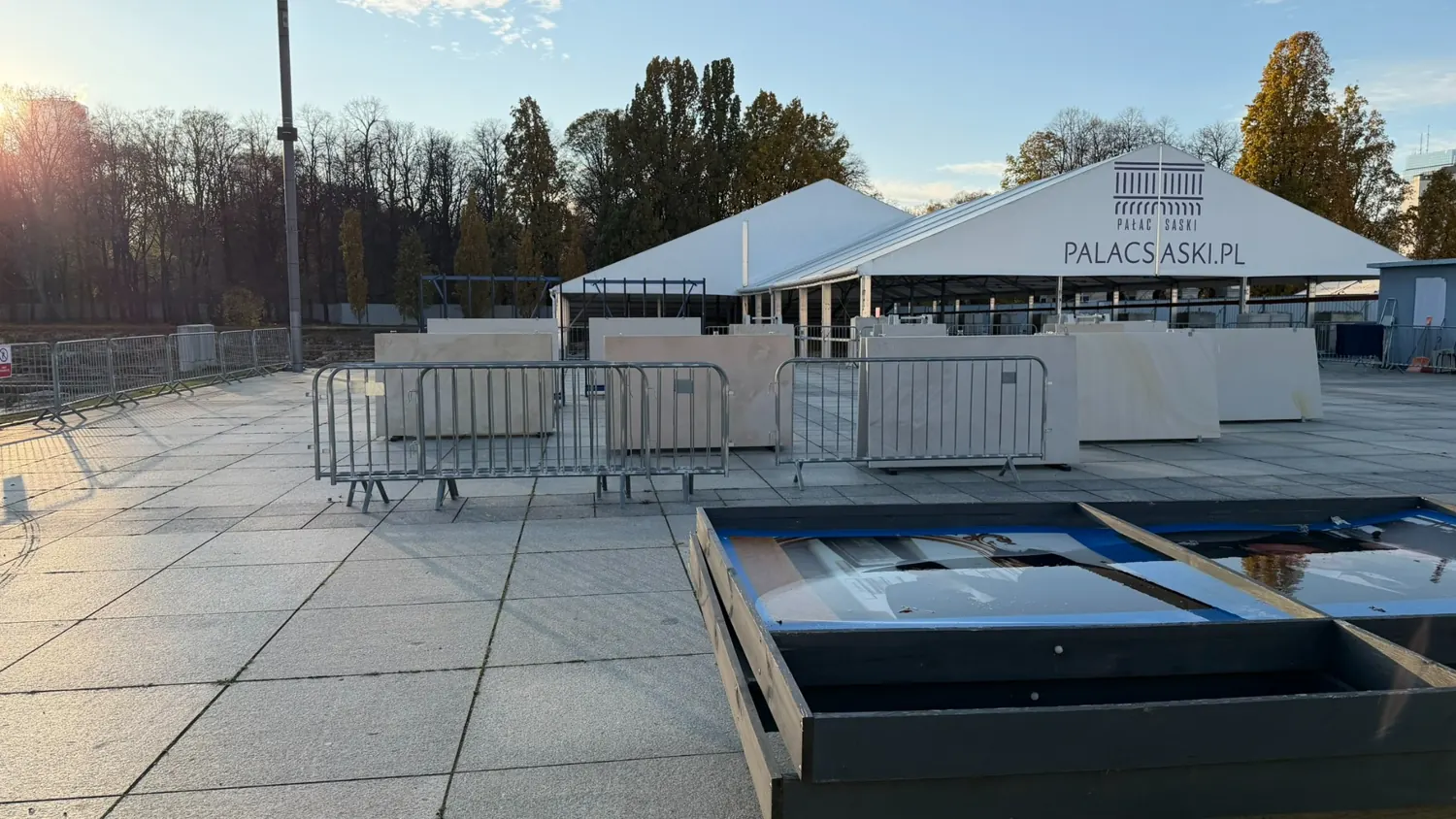
Nearby stood Brühl Palace, another major building destroyed in December 1944. They should be understood together as part of the former ceremonial and governmental setting around today’s Piłsudski Square. The ongoing Saxon Palace programme is a reconstruction project with archaeology, planning and preparatory work; visitors should not mistake the current site for a completed palace.
Your best experience today is to see the Tomb, look across the square and study on-site historical interpretation. The photographs below record the site in November 2026; historical exhibition photographs remain research references and are not republished here. Official Saxon Palace project ↗.
The surviving arcade fragment is the most powerful physical reminder of the destroyed Saxon Palace.The Saxon Palace project site in November 2026: reconstruction is an ongoing undertaking, not yet a palace visitors can tour.
Reconstruction is not the same as survival. The Royal Castle’s return required salvaged fragments, paintings, photographs, researchers, craftspeople and substantial public fundraising. Ujazdowski’s standing walls were actually demolished after the war. Sapieha Palace was recreated. Each tells a different story about what postwar Warsaw chose — or was able — to recover.
The city grows outward
Palaces beyond the central streets
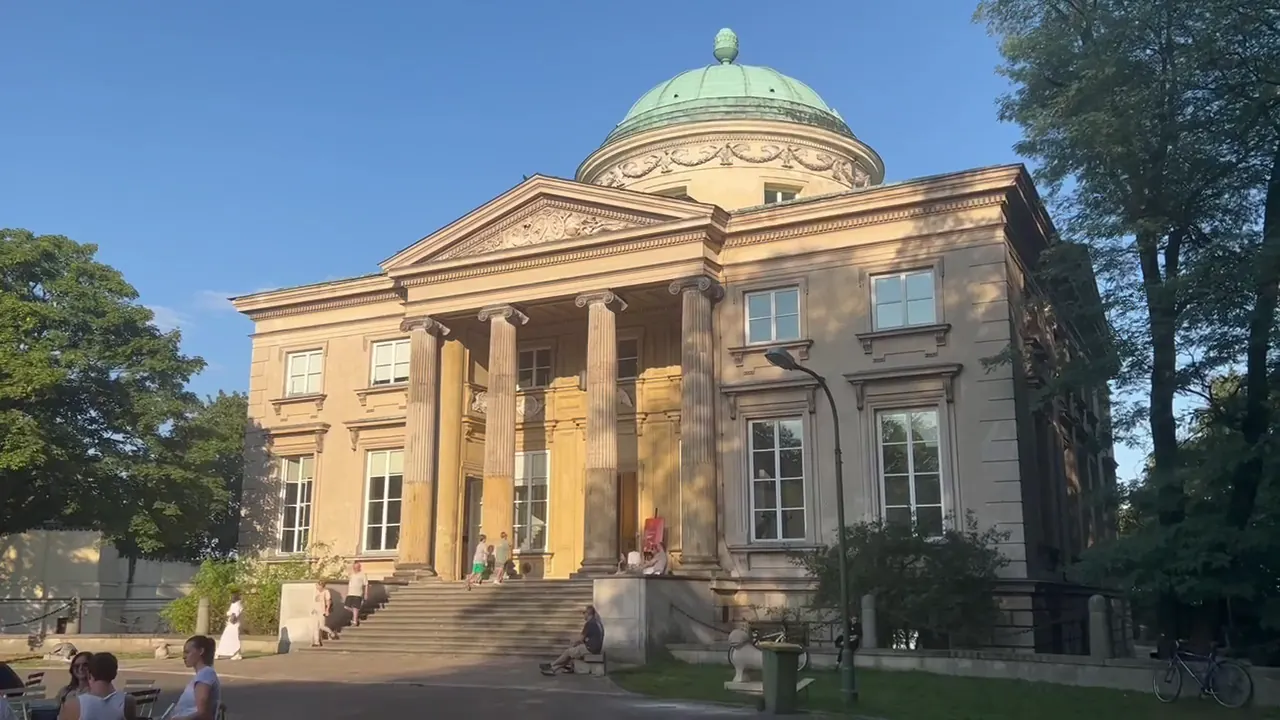
The small neoclassical palace and its distinct domed roof.
Królikarnia — a palace among sculpture
Museum / groundsRebuilt after wartime damage
On Mokotów’s escarpment, Królikarnia connects a former aristocratic landscape with the present-day sculpture museum and gardens. Check exhibition access rather than assuming every interior is permanently open.
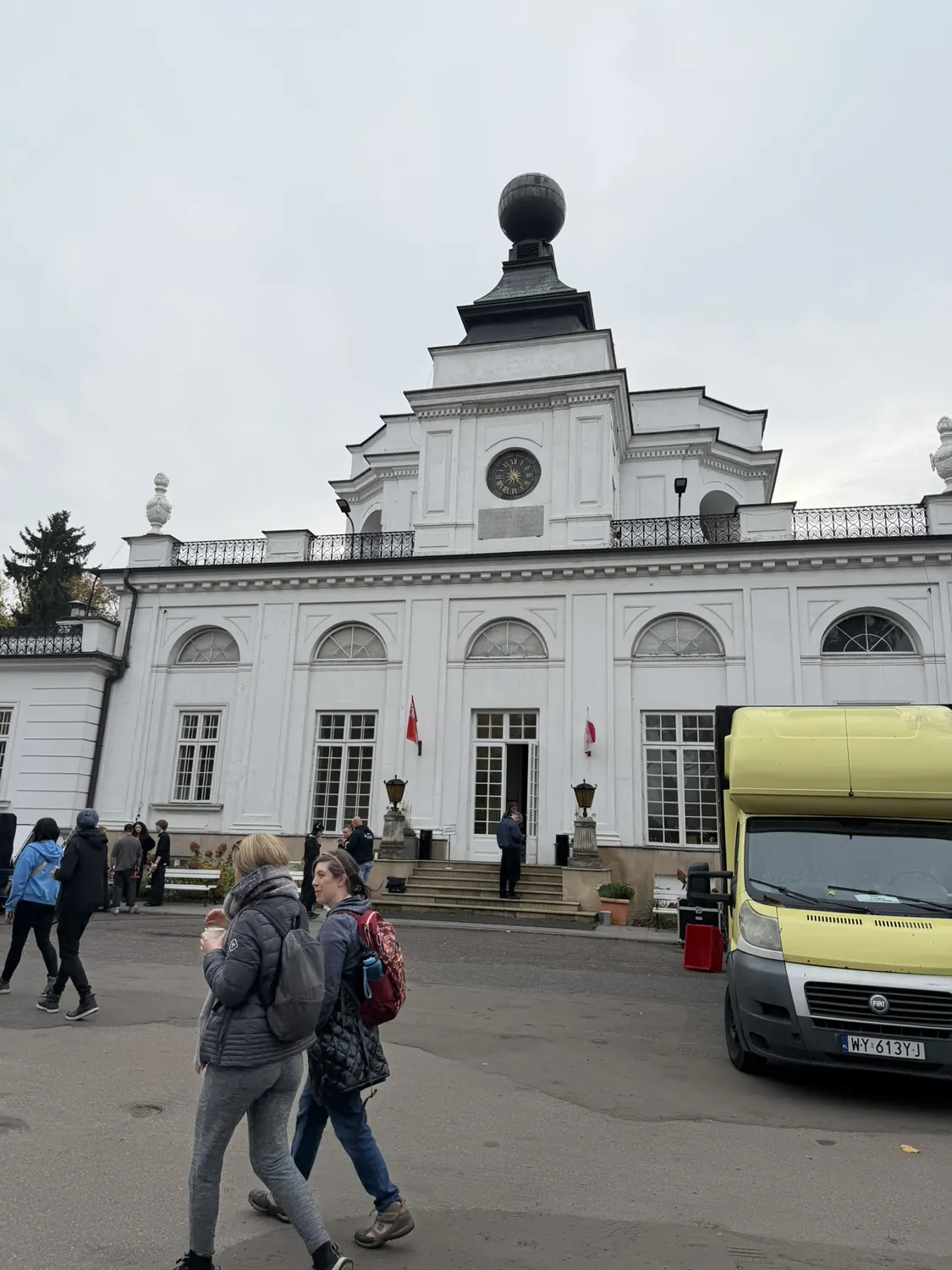
The clock-topped entrance building at the Jabłonna estate.
Jabłonna — a palace excursion
Excursion / estateHistoric complex, altered
North of Warsaw, the Poniatowski-linked estate is a worthwhile extension of the palace story. It is not in Warsaw proper: plan it as a separate excursion, not a stop on a city-centre walking tour.
Natolin and Szustra Palace offer further southern stories, although present-day access varies and parts of Natolin are not a conventional drop-in attraction. These are excellent future additions when visiting arrangements and original photographs are confirmed.
Choose your experience
Which Warsaw palaces can you actually visit?
There are two different questions: is the building historically surviving or rebuilt, and can visitors enter? Here is a quick planning guide. Check official operators for current tickets, exhibitions, opening days and accessibility before travelling.
Site
Visitor experience
Historic status
Best reason to go
Royal Castle
Museum interiors
Rebuilt
Royal rooms, parliamentary history and reconstruction
Wilanów Palace
Museum and gardens
Substantial historic fabric
Baroque royal estate and art
Łazienki
Park and museum buildings
Mixed survival / restoration
Landscape and Enlightenment architecture
Ujazdowski Castle
Art centre and surroundings
1970s reconstruction
Extraordinary change of purpose
Belweder Palace
Exterior views; state functions
Historic building, adapted
From royal estate to seat of state power
Krasiński Palace
Library / exhibitions; check access
Postwar reconstruction
Grand Baroque architecture and collections
Presidential and Potocki palaces
Street views; events sometimes possible
Historic, altered
Palaces of political and cultural power
Saxon Palace site
Memorial and external interpretation
Destroyed; project underway
Tomb of the Unknown Soldier and lost architecture
Jabłonna
Separate excursion; check access
Historic estate
Poniatowski family connections
Find them on the city
Palaces on the map
Filter the map by museum, exterior or lost site. Each pin opens a short visitor note and, where possible, a jump to its article entry. Jabłonna is included as an optional trip outside the city.
If the interactive map cannot load, use the visitor comparison table and walking clusters below.
1. Royal Castle and the Royal Route
Start at the Royal Castle and Tin-Roofed Palace, then follow Krakowskie Przedmieście towards Potocki Palace, the Presidential Palace and the university. Allow a couple of hours for exteriors; add much more for museum interiors.
2. The Saxon Axis and Plac Bankowy
Begin at the Tomb of the Unknown Soldier, explore the Saxon Garden and reconstruction interpretation, then continue towards Lubomirski Palace and Plac Bankowy. This route is particularly strong for lost-and-rebuilt Warsaw.
3. New Town and Krasiński
Pair Krasiński Palace and its gardens with Sapieha Palace on Zakroczymska. This adds a quieter aristocratic side of Warsaw beyond the Royal Route.
4. Ujazdów and southern estates
Visit Ujazdowski Castle and continue into Łazienki using our detailed park guide. Królikarnia and Wilanów make a second southern outing by public transport rather than one long central walk.
Original photographs and video stills: Brit in Poland archive, including images supplied in November 2026. Historical Artbox exhibition photographs have been used for research reference only, not republished on this page.