Brit in Poland
Art · ritual · memory · sound

Inside the
Church

Polish church interiors can be austere, intimate or overwhelming. Altars, organs, painted ceilings, stained glass, chapels and memorials are not random decoration: together they organise worship, movement, memory and meaning.

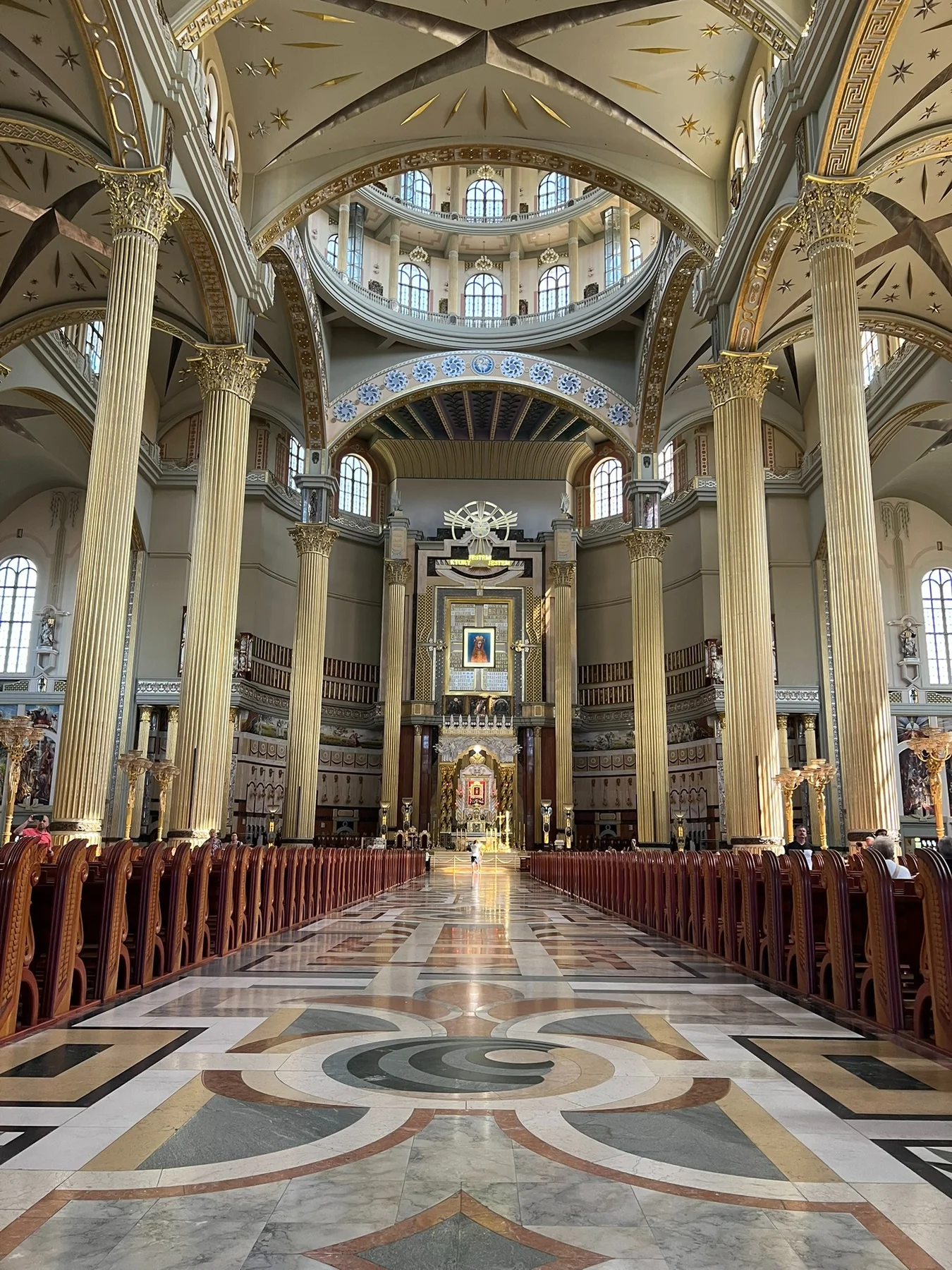
Grand interior of the Basilica of Our Lady of Licheń, viewed along the nave toward the sanctuary.
Licheń Stary. A monumental modern interior makes the basic hierarchy easy to see: nave, sanctuary, altar, vertical space and a long visual axis drawing the eye forward.

Before looking at individual objects, stand near the entrance and take in the whole interior. In many Catholic churches, architecture deliberately directs attention toward the prezbiterium — the sanctuary or chancel — while the main body where the congregation gathers is the nawa, the nave.

Side aisles, chapels, galleries and screens may complicate that basic arrangement. A vast basilica and a tiny wooden church can organise worship around similar functions while creating completely different experiences.

The first rule: church interiors can look radically different while performing many of the same functions.

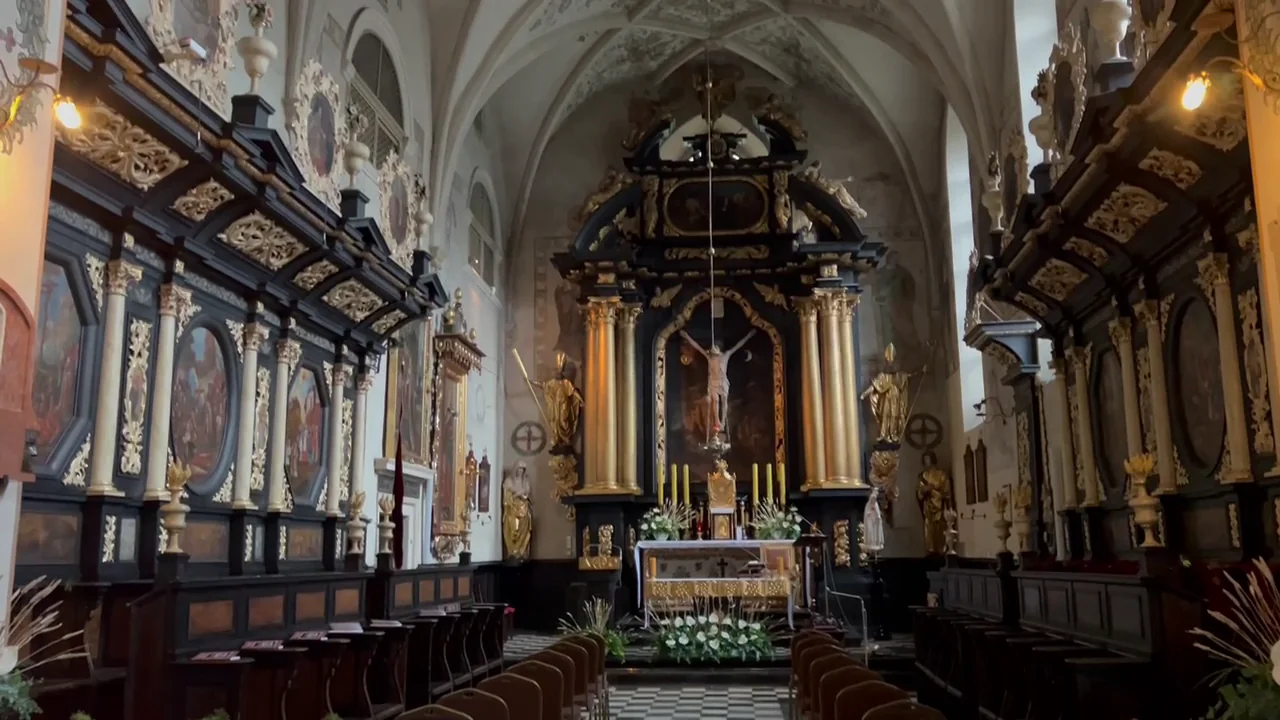
The ołtarz — altar is the table around which the Eucharist is celebrated and the central liturgical focus of the Catholic sanctuary.

Behind or above it may rise a nastawa ołtarzowa — an altarpiece or retable — filled with sculpture, paintings, saints and architectural decoration. Historic churches may also contain several ołtarze boczne, side altars devoted to particular saints or devotions.

The distinction matters because what visitors casually call “the altar” may actually be several separate objects working together.

The monumental Veit Stoss altarpiece inside St Mary’s Basilica in Kraków.
St Mary’s Basilica, Kraków. The late-Gothic Veit Stoss altarpiece turns theology and biblical narrative into monumental sculpture.
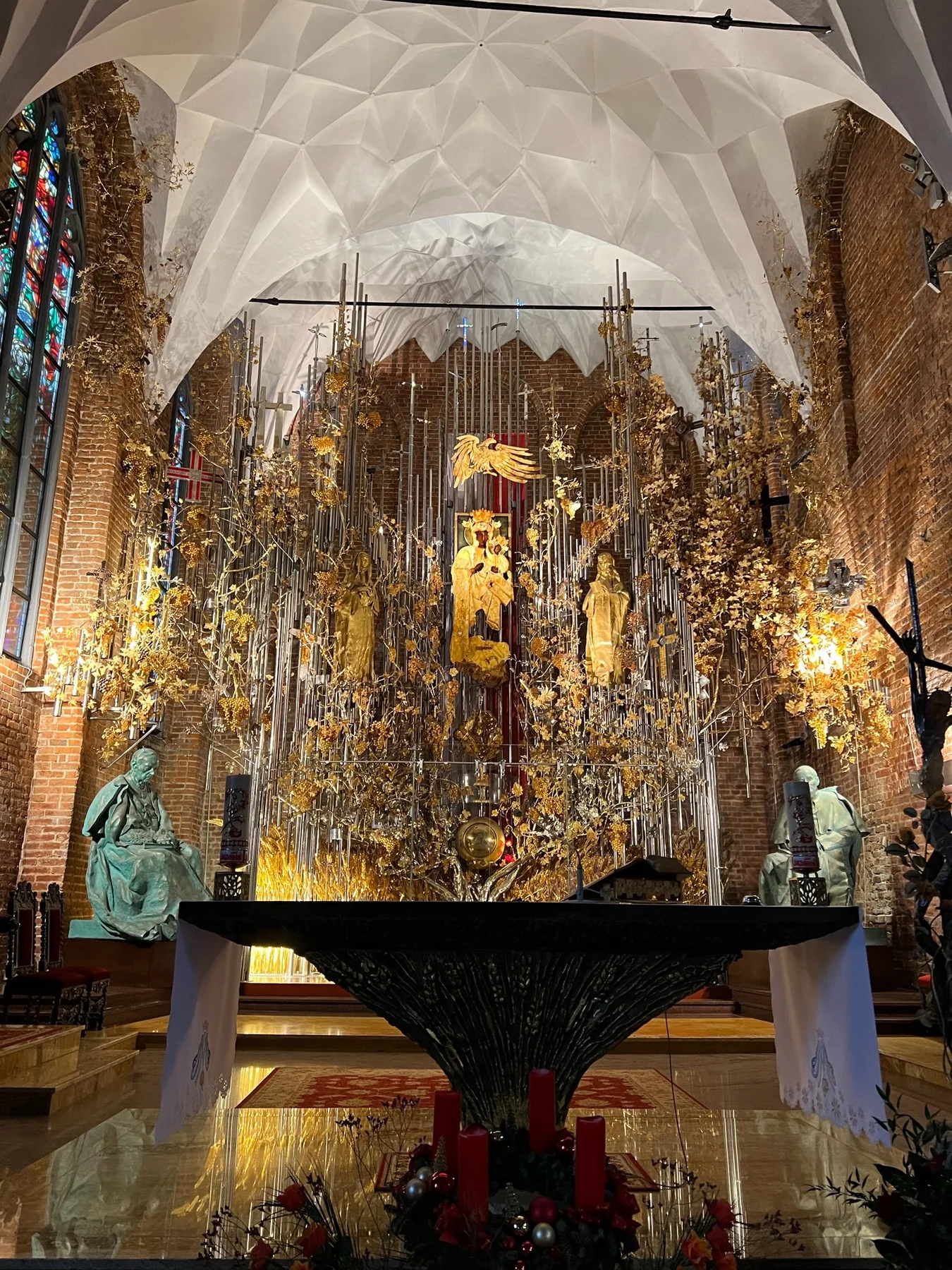
The modern amber altar inside St Bridget’s Basilica in Gdańsk.
St Bridget’s, Gdańsk. The extraordinary amber altar is deliberately exceptional: proof that sacred interiors continue to acquire new artistic layers.
Old building, new layer

Church interiors are not frozen museums.

Some fittings survive for centuries; others are replaced, restored or newly commissioned. A medieval church may contain Baroque furniture, 19th-century stained glass and a contemporary devotional work — all at once.

The tabernakulum — tabernacle is the secure place where the consecrated Eucharist is reserved. Depending on the church and period, it may form part of a historic high altar, stand elsewhere in the sanctuary or occupy a separate Blessed Sacrament chapel.

A sanctuary lamp traditionally indicates the presence of the reserved Eucharist. What may initially look like another decorative cabinet is therefore one of the most important liturgical objects in the building.

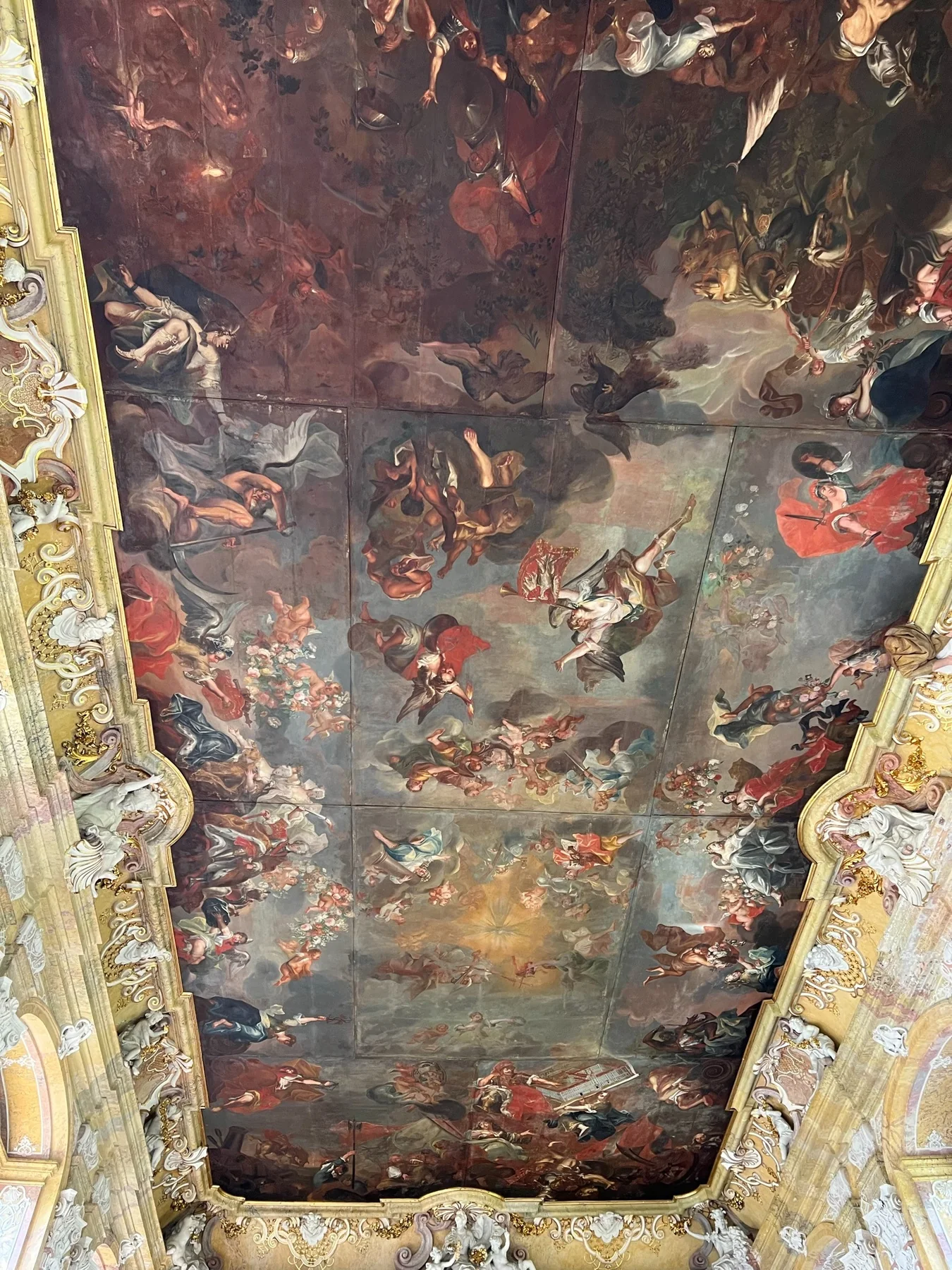
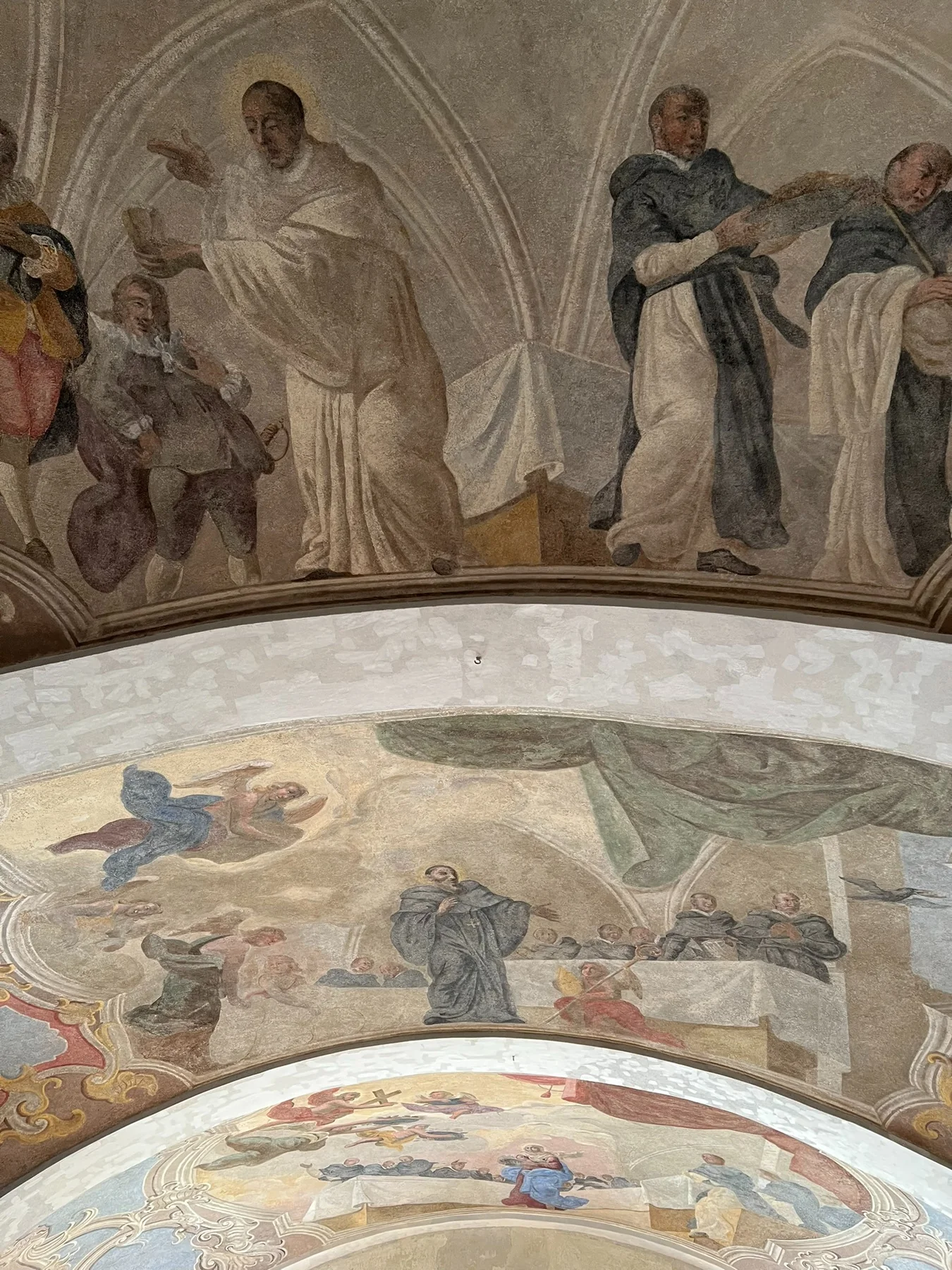
Polish churches frequently use the word polichromia for multicoloured painted decoration applied to walls, vaults and other architectural surfaces. It can include ornamental patterns, saints, biblical scenes or entire narrative programmes.

Paint is often renewed, uncovered, reconstructed or restored. So the useful question is not simply “how old is this painting?” but “when was this particular layer created?”

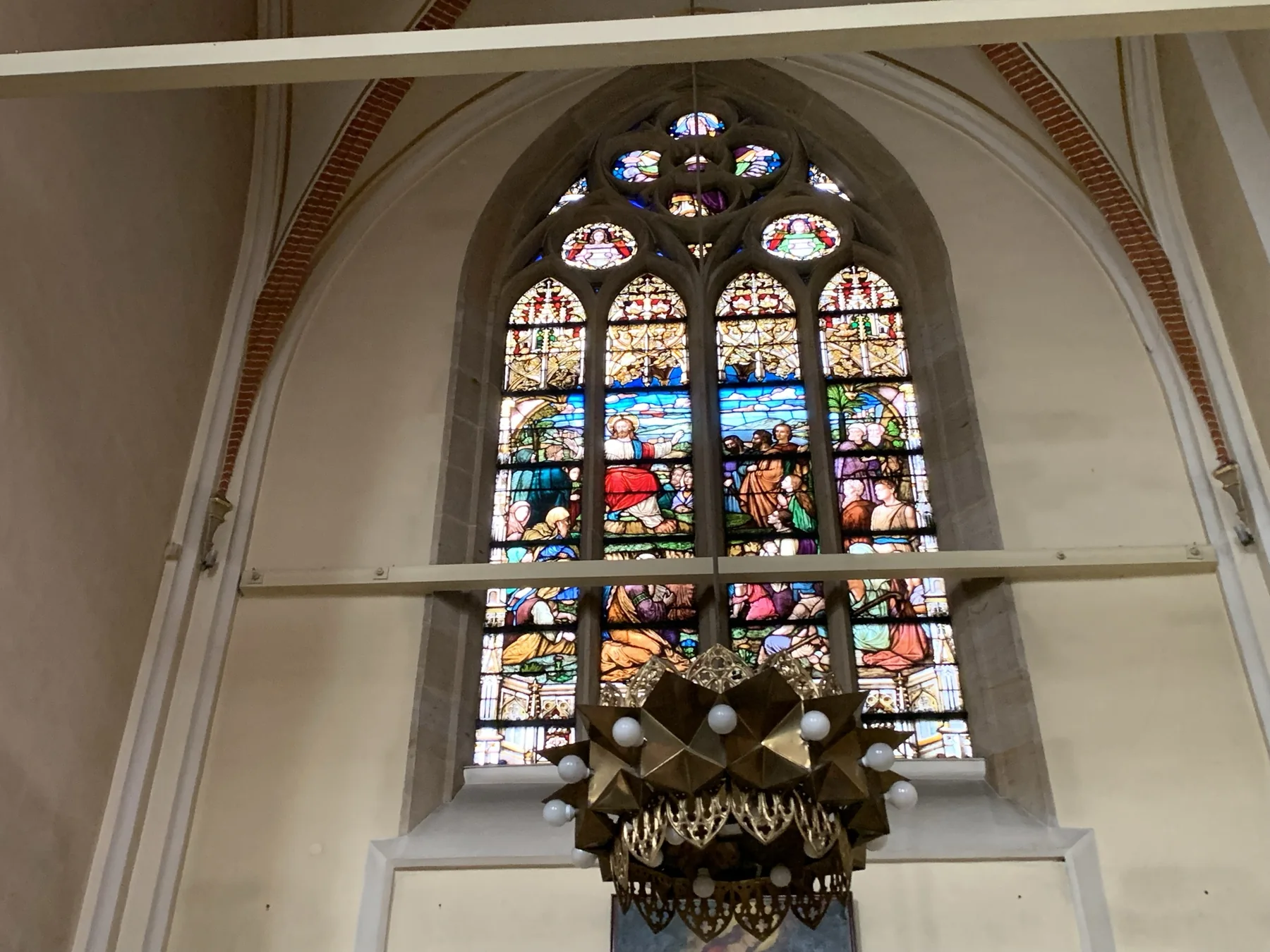
Stained glass set within the architecture of a church interior in Katowice.
Katowice. Witraż is designed to be seen with light passing through it — image, colour and architecture working together.

Witraż — stained glass does more than fill a window. It colours daylight and makes the appearance of an interior change with weather and time.

Windows may tell biblical stories, depict saints and donors, carry symbols or present entirely modern themes. Photography can record the image, but never quite reproduces the changing light for which it was designed.

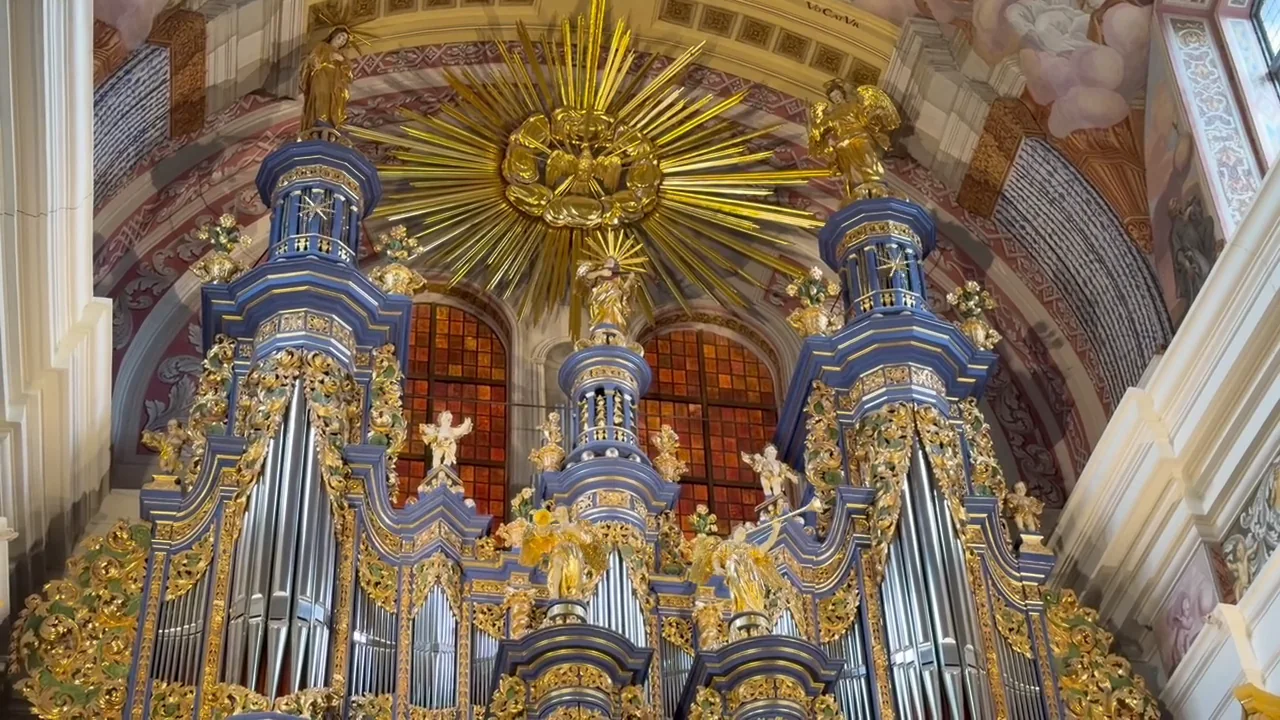
Stone vaults, timber walls, galleries and enormous naves all change the way speech and music travel. The most visible musical instrument is often the organy — organ.

An organ can be music, engineering, sculpture and architecture at the same time. Its case may be designed as carefully as an altar, filling an entire gallery with carved figures, pipes and gilding.

Dzwony — bells usually occupy towers rather than the nave, but they belong to the same sacred soundscape: calling people to worship, marking funerals, feast days and major events.

The richly decorated pipe organ at the sanctuary of Święta Lipka.
Święta Lipka. The organ is not hidden machinery: it is one of the great visual and musical components of this Baroque sanctuary.
ambona

Pulpit / ambo

Historic pulpits raised the preacher so that the congregation could see and hear. In modern Catholic liturgy, the ambo is the fixed place for proclamation of Scripture. Some historic pulpits still serve that function; elsewhere they survive as historic fittings while a separate modern ambo is used.
chrzcielnica

Baptismal font

The font holds water for baptism. In parish churches it can be a particularly important object — and may be much older than the decoration surrounding it.

konfesjonał

Confessional

The carved wooden booths often found along Catholic church walls provide space for the sacrament of reconciliation. Their form is another example of ritual shaping furniture and architecture.

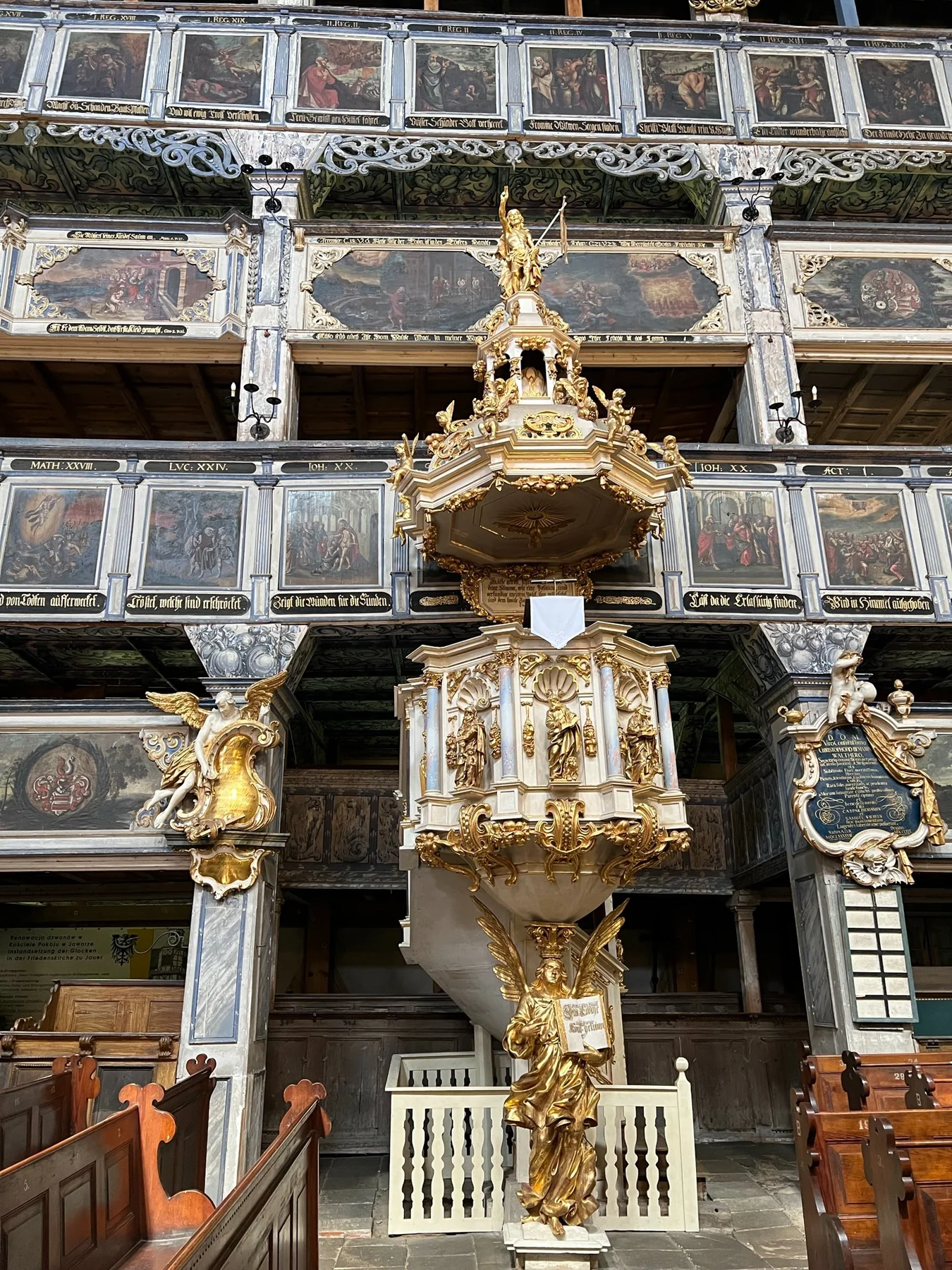
Painted galleries and pulpit inside the Lutheran Church of Peace in Jawor.
Church of Peace, Jawor. Protestant priorities could shape interiors differently: preaching, visibility and congregational participation helped create this extraordinary world of galleries, painted panels and pulpit.

Large churches often contain smaller chapels opening from the nave or surrounding the sanctuary. A chapel may be connected to a saint, devotion, family, tomb, relic or particular historical purpose.

Because chapels were frequently added later, one building can hold several architectural periods side by side. The exterior may say “Gothic cathedral”; one chapel may say “Renaissance”; the next may say “Baroque.”

Historic church interiors were teaching spaces as well as places of worship. Paintings, sculpture and stained glass communicated biblical stories, saints’ lives and theological ideas regardless of literacy.

Attributes help identify figures: Peter may carry keys; Paul a sword; a bishop may wear a mitre and carry a crozier; a martyr may hold an object associated with death or legend.

Once you learn these clues, a room full of apparently anonymous statues begins to turn into a cast of identifiable characters.

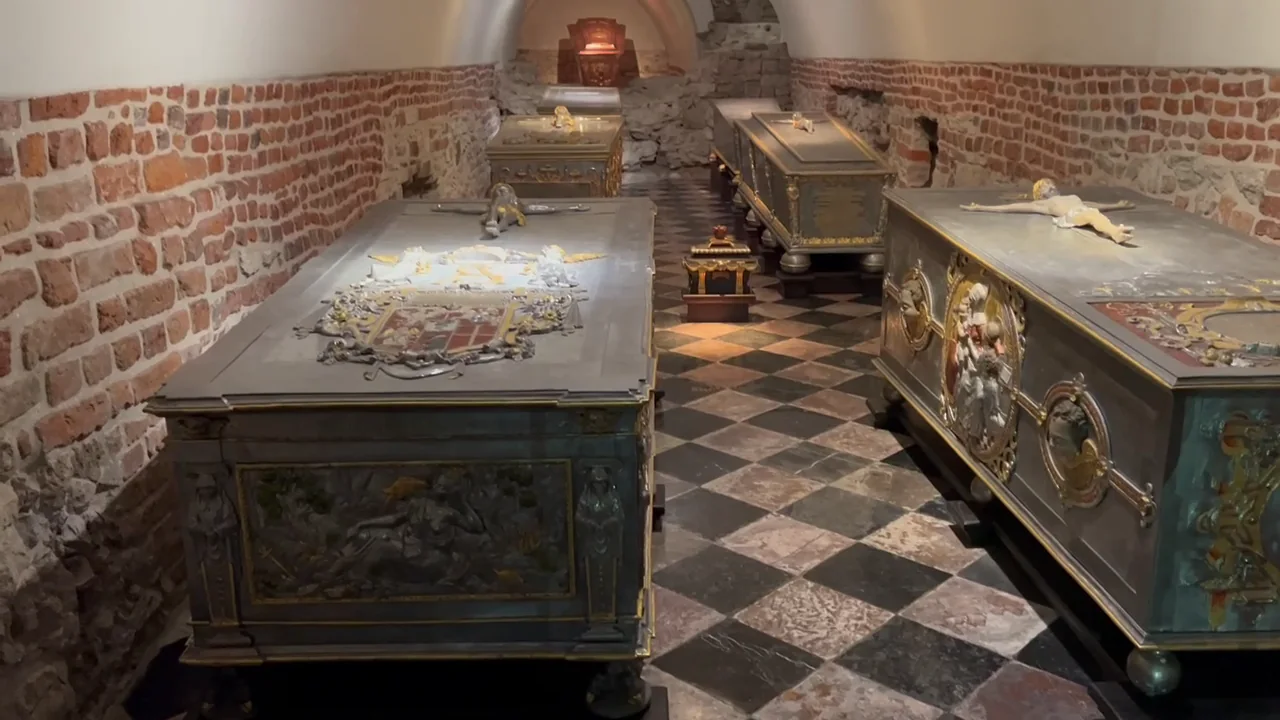
Sarcophagi and burial monuments in the crypts beneath Wawel Cathedral.
Wawel Cathedral crypts. Burial turns the church into a landscape of dynastic and national memory as well as worship.

Look for nagrobki — tomb monuments; epitafia — epitaphs and memorials; krypty — crypts; and sarkofagi — sarcophagi.

They may commemorate bishops, rulers, nobles, clergy, patrons or nationally important figures. At Wawel, the religious building and the national memory of Poland become inseparable.

Relics and reliquaries add another kind of physical memory. That story becomes especially important when we reach pilgrimage and sanctuaries.

Famous Polish churches can create the impression that sacred interiors are defined by marble, gold and monumental scale. They are not.

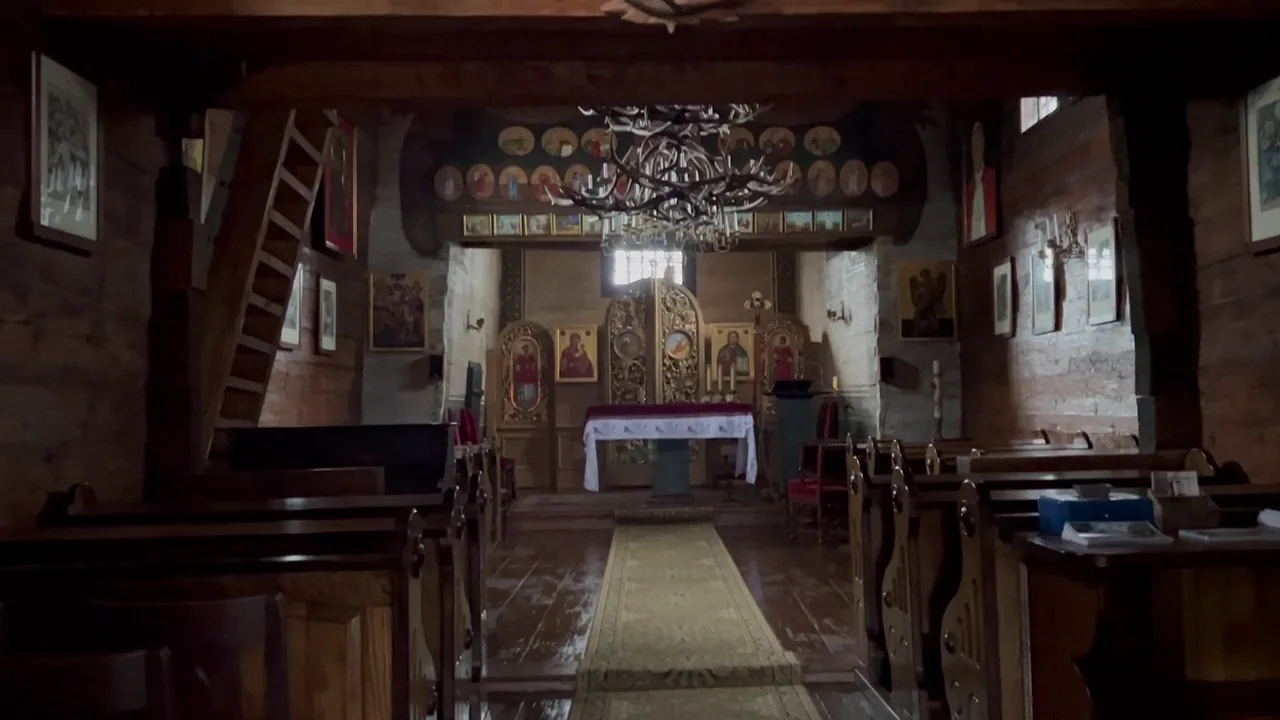
A wooden interior creates a different experience through timber walls, smaller proportions and closeness between congregation and sanctuary. Material character can be just as memorable as wealth.

And Catholic interiors are not a template for every Christian tradition. Orthodox and Greek Catholic churches organise sacred space differently, most visibly through the iconostasis. Protestant interiors developed their own priorities and histories. Those traditions deserve their own chapters.

A small wooden church interior at Lutowiska, with timber walls, pews and sanctuary.
Lutowiska. A modest wooden interior offers a useful counterweight to Poland’s monumental Baroque and modern basilicas.
ołtarzaltar
nastawa ołtarzowaaltarpiece / retable
tabernakulumtabernacle
prezbiteriumsanctuary / chancel
nawanave
ambonapulpit / ambo
organyorgan
dzwonbell
witrażstained glass
polichromiapainted architectural decoration
chrzcielnicabaptismal font
konfesjonałconfessional
relikwiarzreliquary
kryptacrypt
epitafiumepitaph / memorial
01Where is your eye directed?
02Which parts are later additions?
03What is painted above you?
04Where does the light enter?
05Can you find the organ?
06Is there an old pulpit?
07Which saints can you recognise?
08Are there side chapels?
09Who is remembered here?
10Does inside match outside?
Then listen.

A church interior is not simply a collection of beautiful objects. It is a designed environment of worship, memory, image, sound and movement.

Go deeper

Read the building — inside and out.

This page explains what happens once you cross the threshold. The connected chapters show how the building, institution and wider sacred landscape fit together.

← Back to Sacred Places & Religious Heritage