
The carving made in one night
A prisoner awaiting execution in Kętrzyn, so the story goes, saw the Virgin Mary in a dream. She instructed him to carve her image. At dawn he presented a figure of Mary and the Child so remarkable that he was set free. On the road towards Reszel he placed it in a linden tree. People came to pray, and stories of healing began to gather around it.
It is an extraordinary beginning — but a beginning preserved in legend, not in a surviving medieval court record. The earliest identified written account is Michael Ciaritius’s text from 1626. Even the earliest date of the shrine is debated.
Pilgrims before the chronicle
The existence of pilgrimage at Święta Lipka is documented by the fifteenth century. A chapel stood around the tree, and the sacred landscape lay near the border between Warmia and Prussia. Scholars have questioned whether the figure described in the tale could actually date to the fourteenth century: its artistic type became widespread later.
We can tell the story without pretending we possess a contemporary document from 1300. The devotion has a real history even when the prisoner's dramatic experience cannot be independently verified.
A border of competing faiths
The Reformation transformed the region. After 1525 the shrine was on Protestant Prussian territory close to Catholic Warmia. Historical accounts describe the destruction of the chapel and its image, the felling of the linden and even a gallows placed at the site. Yet the pilgrimage tradition survived.
The story of Święta Lipka is thus as much about a contested borderland as about a single miraculous object. Religion, rulers and local identity all contributed to what became possible on this patch of ground.
The Baroque return
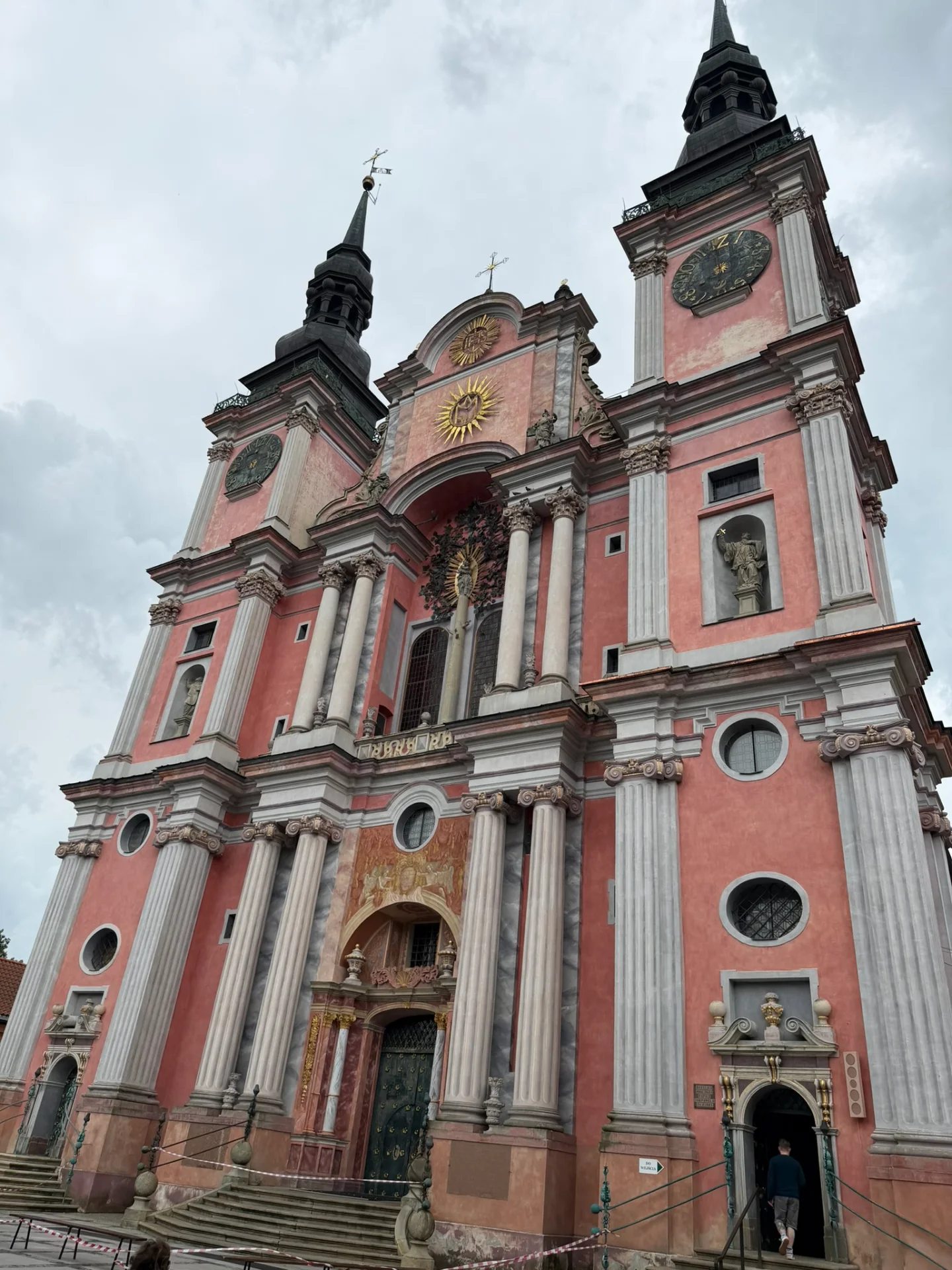
In the early seventeenth century Stefan Sadorski secured the site for renewed Catholic worship, and Jesuits from nearby Reszel became closely involved. The foundation stone for the present church was laid in 1687; the building was consecrated in 1693. Cloisters, richly painted interiors and a celebrated organ with moving figures followed.
This is one of the most visually remarkable religious interiors in northern Poland, and a perfect place for architectural photography to complement the founding narrative.
The linden remains in memory
The original carved figure and tree are no longer there, but the legend remains embedded in the identity of the sanctuary. A column recalls the linden, while visitors can see the Baroque church and its organ.
The shrine’s endurance across Reformation, Prussian rule, war and Poland’s post-1945 borders is its well-documented wonder of continuity. The prisoner’s vision is part of the story, explicitly as tradition.