
Warsaw Insurgents Cemetery: The City That Was Buried
A memorial to more than 104,000 people — most of them civilians — and the long struggle to remember their names.
Begin the story ↓Some cemeteries tell a city’s story through famous names. This one begins with the absence of names. Across Wola, collective graves and memorial walls hold the remains of Warsaw’s residents who died during the 1944 uprising and the atrocities that accompanied its suppression.
I photographed the great mound, the rows of graves and the restrained new Memorial Chamber. Each speaks differently about what happened here — and about how Poland has chosen to remember it.
The city’s dead returned after the fighting
By the time the Warsaw Uprising ended in October 1944, entire neighbourhoods had been devastated. During the fighting and the German suppression of the uprising, civilians were murdered in mass executions, buildings were burned and bodies left beneath the ruins. Wola suffered some of the worst massacres in early August.
In the autumn of 1945, Warsaw began the overwhelming work of recovering, identifying and reburying its dead. The Warsaw Insurgents Cemetery (Cmentarz Powstańców Warszawy) was opened on 29 November 1945. More than 104,000 people are buried here, according to the Museum of Warsaw. Crucially, these were not only armed insurgents: the majority were civilian victims.
Unlike the military graves at Powązki, much of the story here cannot be told through the lives of individually identified soldiers. It is a history of families, neighbours and whole streets, many of whose names were lost.
Fifty thousand lives beneath one monument
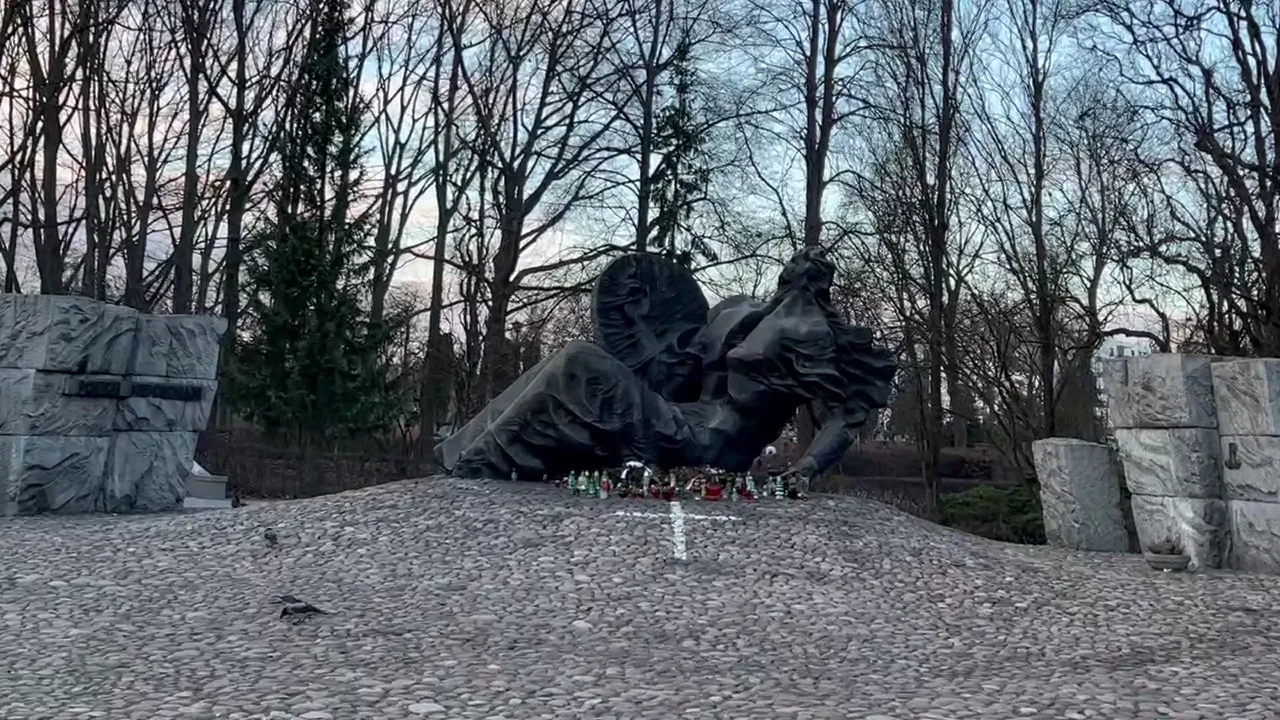
At the heart of the grounds stands a mound containing the cremated remains of approximately 50,000 people killed during the uprising and its suppression. The German occupiers burned bodies across the destroyed city. After the war, ashes and remains were brought here from sites of mass death.
On the mound, the sculpture Polegli–Niepokonani (“Fallen–Unconquered”), unveiled in 1973 and created by Gustaw Zemła, shows a wounded fighter making a final stand with a shield. The figure is monumental, but it rises above the ashes of civilians as well as combatants. That tension — personal bravery amid catastrophic loss — is part of the place’s meaning.
When civilians became the targets
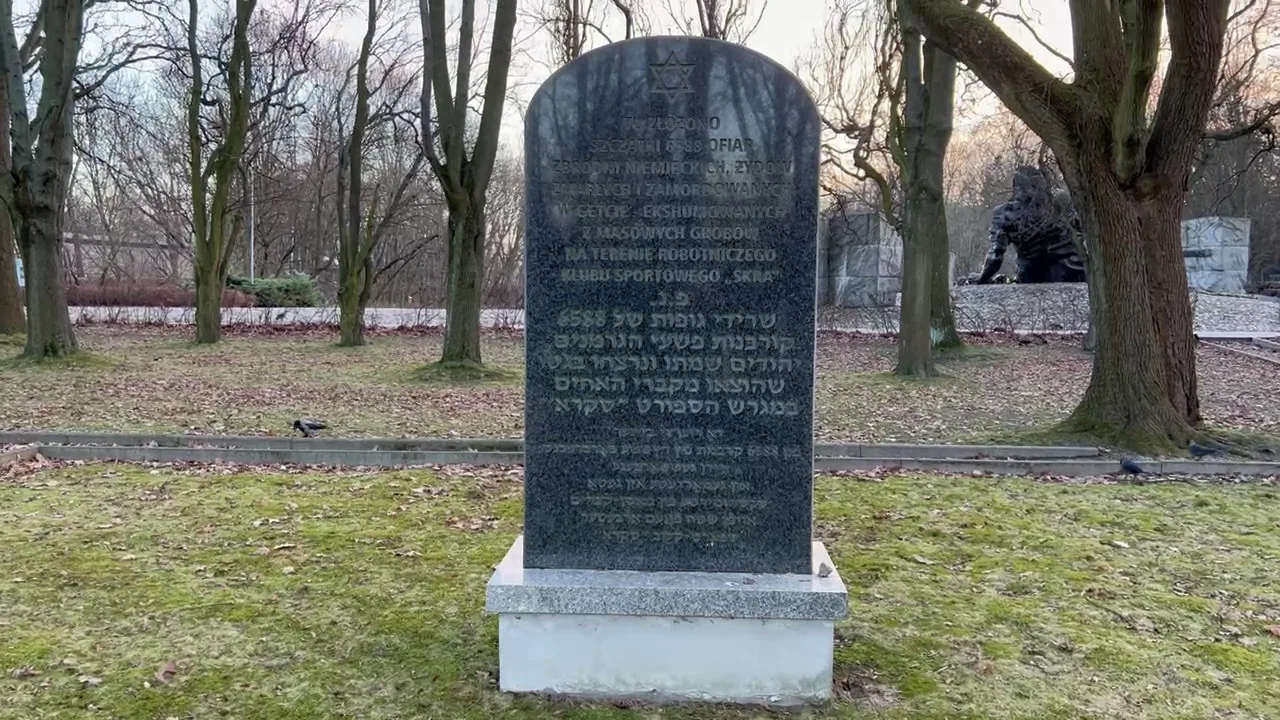
The cemetery cannot be separated from the Wola Massacre. In the first days of August 1944, German forces and collaborating units killed tens of thousands of Wola’s residents during operations intended to crush the uprising and terrorise the city. Hospitals, homes and places of refuge were not spared.
Many victims were burned after the killings, making later identification extraordinarily difficult. It is why memorials here speak so often in collective terms: the missing, the unnamed, the people of a street or district rather than a single soldier with a recorded military biography.
Our Wola and Mirów guide follows other physical traces of these events, including churches and memorials scattered through the district. This cemetery is where many of those individual stories converge.
A burial ground whose story was obscured
The original plan envisaged a much larger national place of remembrance, but that vision was not realised. Under communist administration, the site was reshaped. According to the Museum of Warsaw, the cemetery’s area was substantially reduced, earlier grave markers were removed and a standardised arrangement of collective graves appeared.
Official wording emphasised those who died fighting fascism without clearly naming the 1944 Warsaw Uprising and its Home Army context. The dead were not forgotten by their families, but their public history was politically constrained. Remembering them now also means understanding the years in which their commemoration was contested.
The individual lives behind the numbers
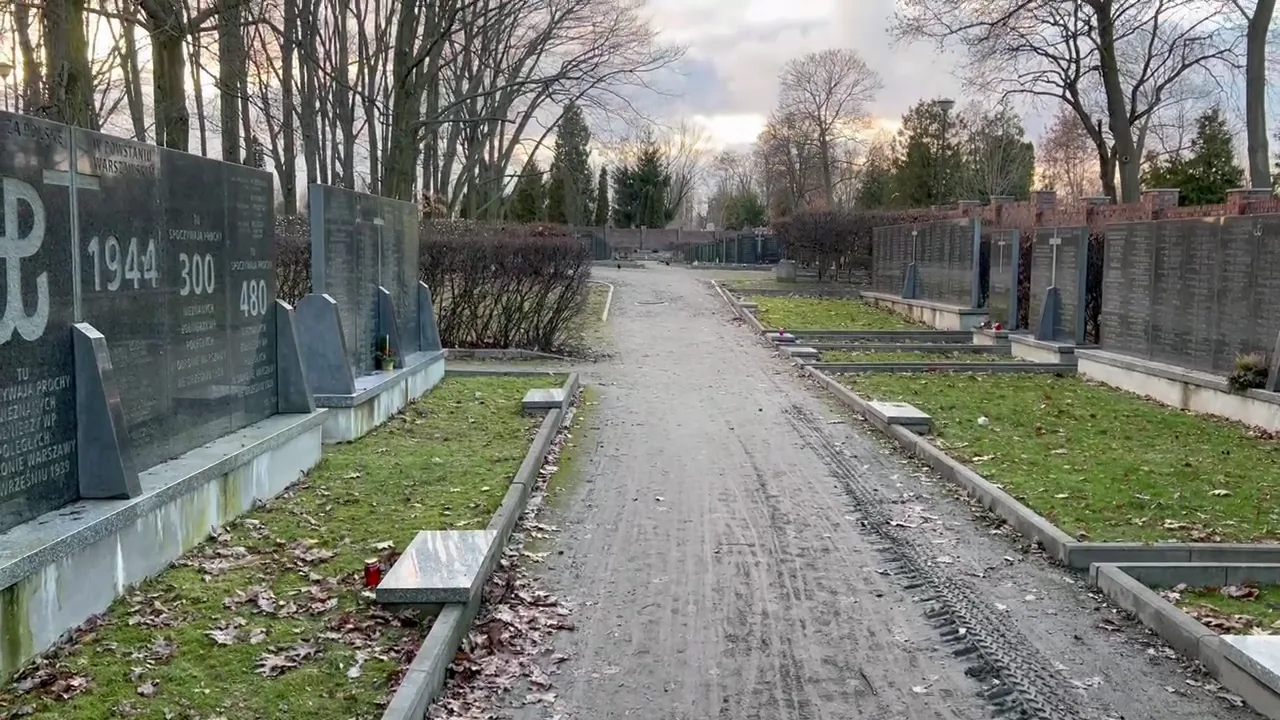
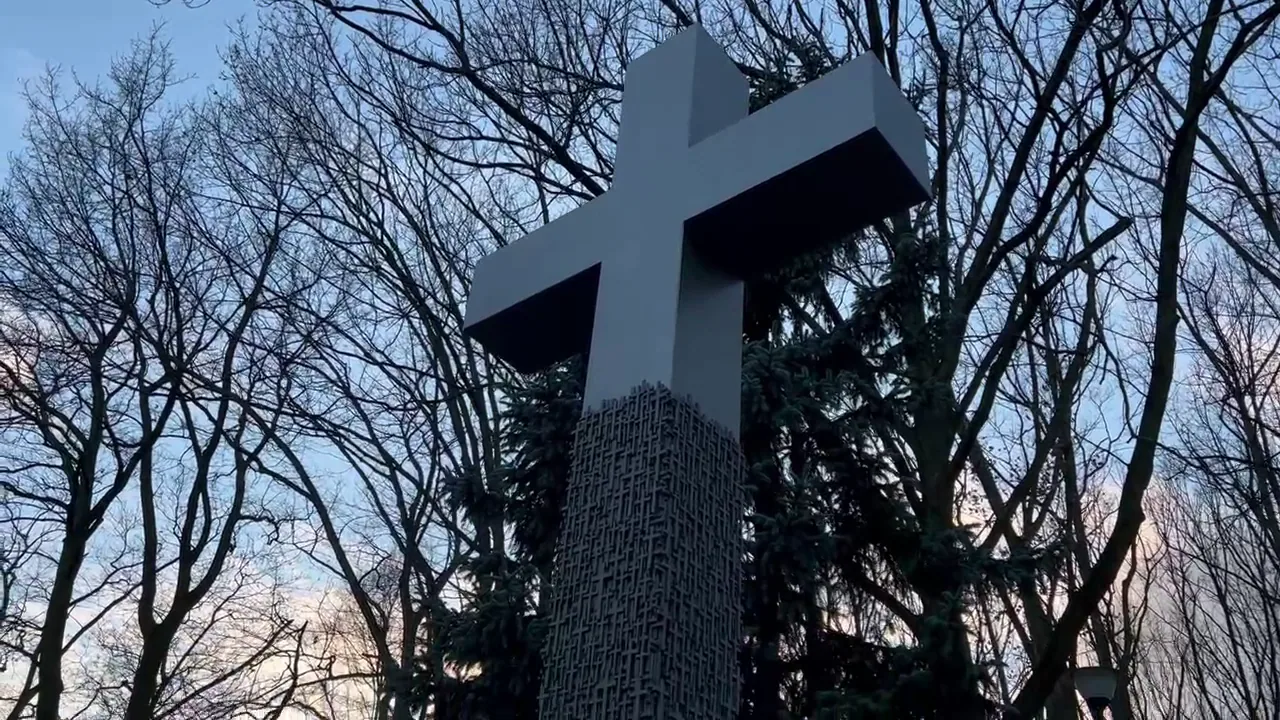
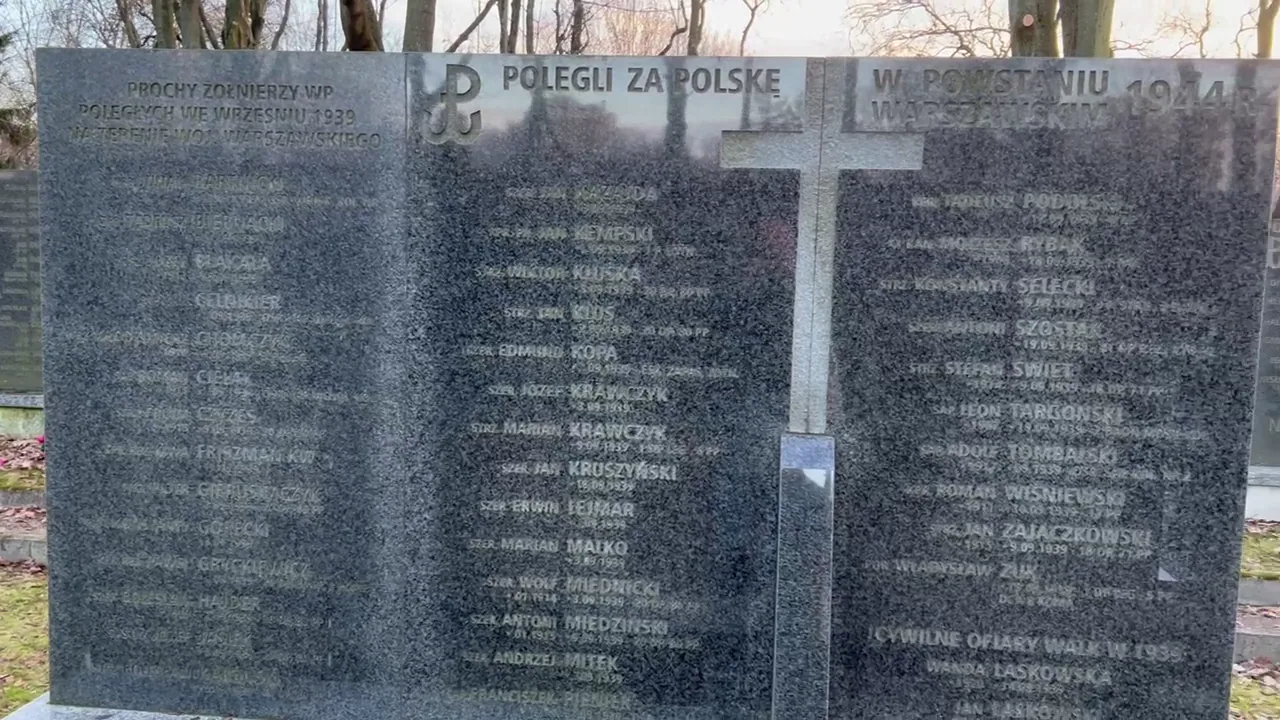
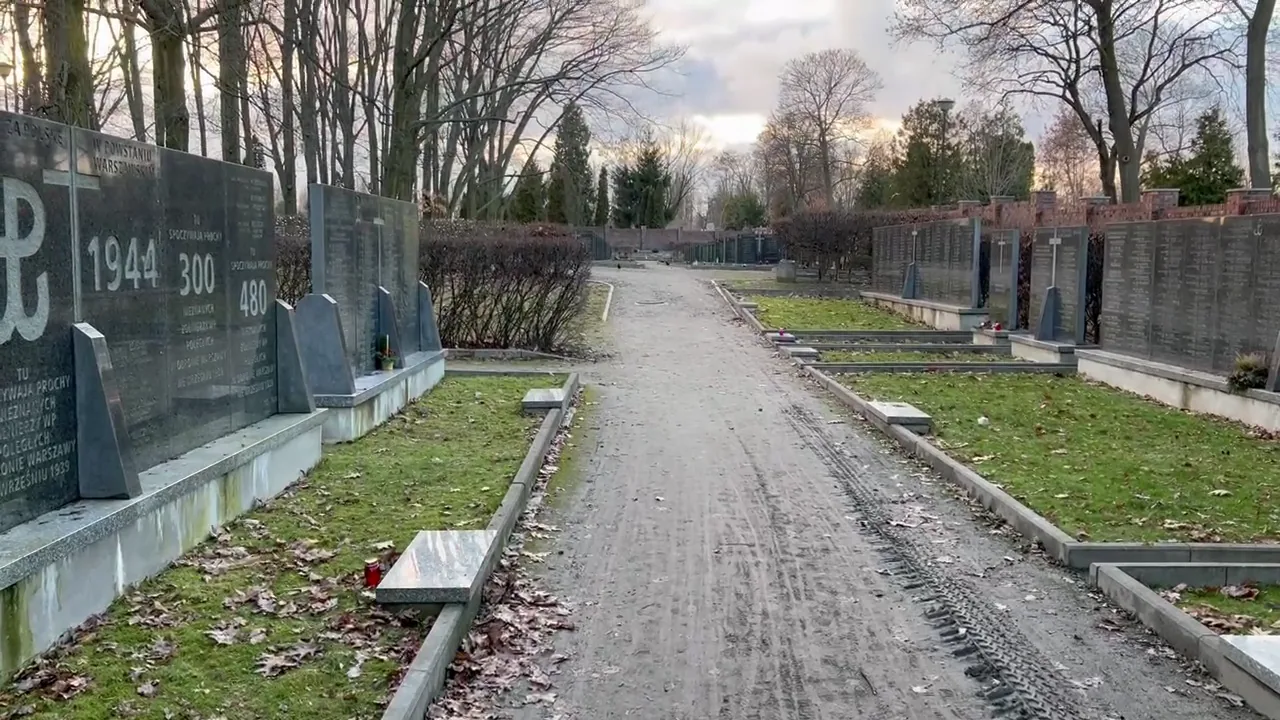
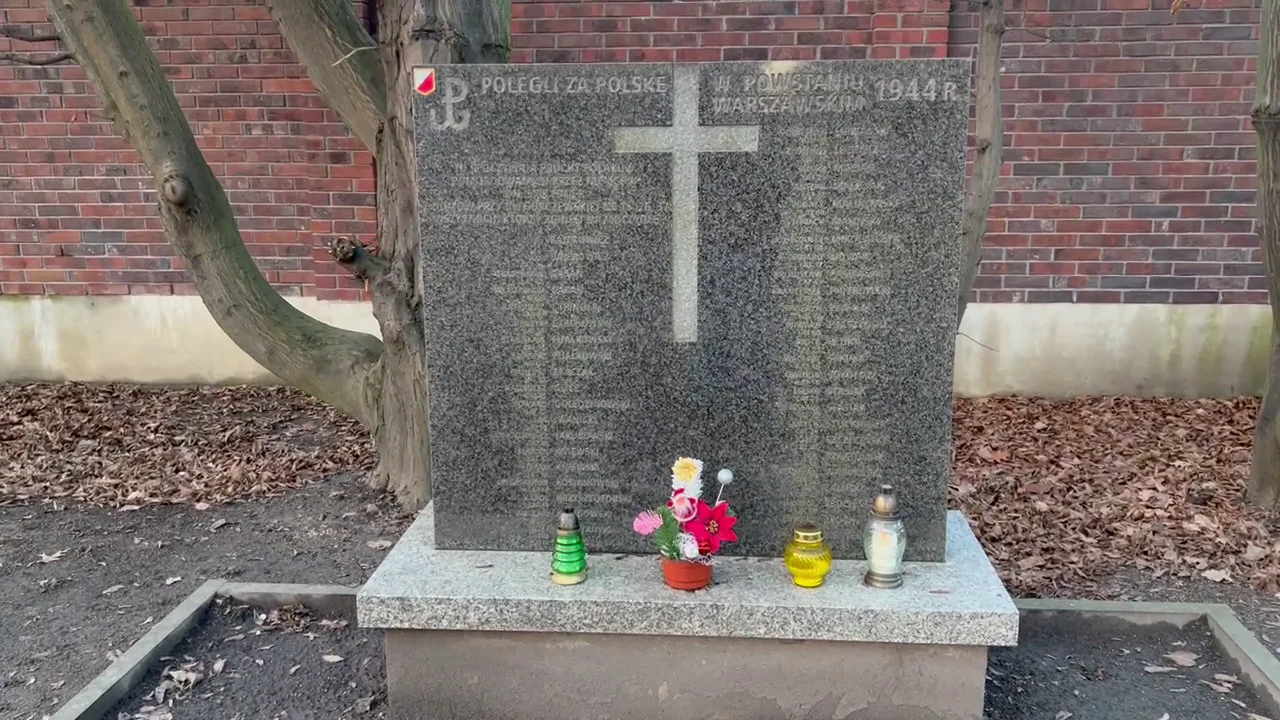
Walk along the rows and it becomes impossible to view the cemetery as a single monument. Gravestones and tablets identify some of those interred, often alongside groups whose remains were recovered from the same location. Others still have no known name.
The Wall of Memory beside the Memorial Chamber restores individual identities to the story. Its thousands of names represent a continuing effort to record victims rather than leave them as a single terrible number. The unknown deserve the same dignity as those whose names survived.
A place to listen as well as look
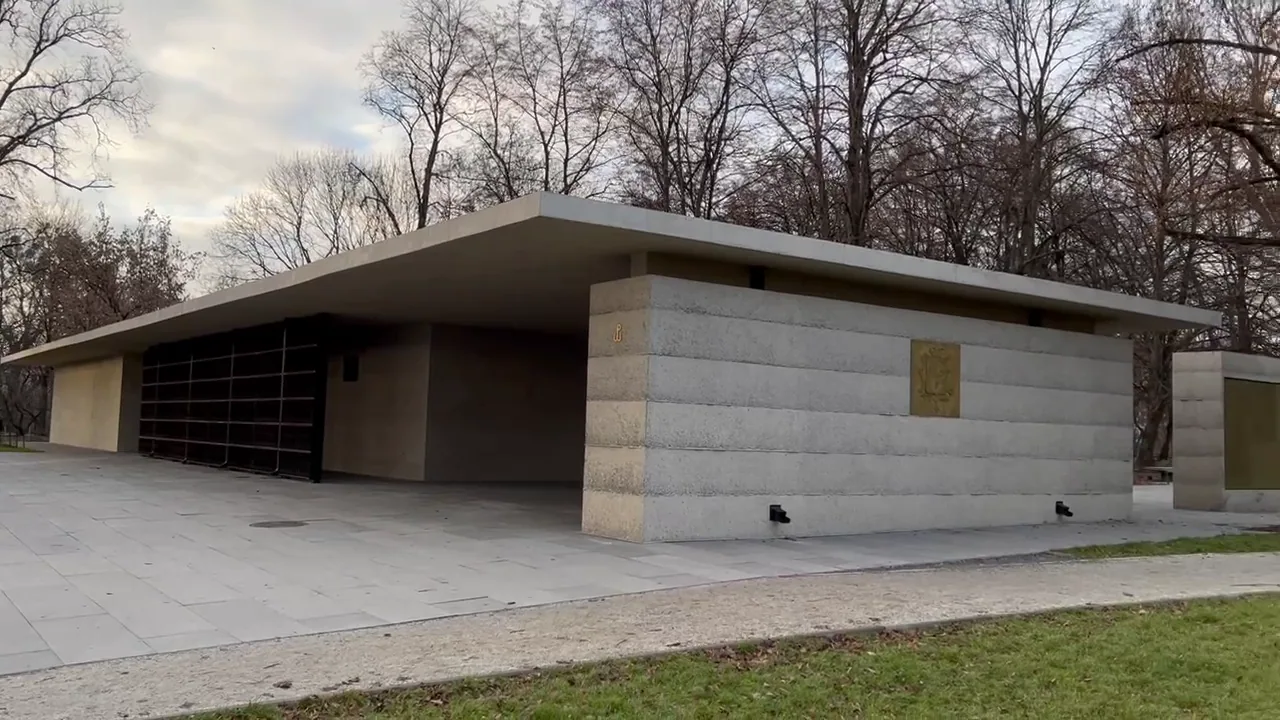
The Izba Pamięci (Memorial Chamber), opened in 2022 and operated by the Museum of Warsaw, gives visitors historical context that the graves alone cannot provide. The exhibition presents the cemetery’s history and the devastating experiences of Warsaw’s civilian population in 1944.
At its heart is Krzysztof Wodiczko’s Voices of Memory, an audiovisual installation built around witness accounts and the memories of relatives. The project was championed by Warsaw Uprising veteran Wanda Traczyk-Stawska, whose determination helped make this centre of remembrance possible.
The architecture is intentionally restrained. After the visual weight of the mound and rows of graves, the Chamber offers a different way to encounter the same history: listening to individual voices.
What this cemetery asks of Warsaw today
On 1 August, as Warsaw remembers the start of the uprising, commemorations take place at Military Powązki and later here in Wola. The two sites belong together but do not tell identical stories. Military Powązki foregrounds many named soldiers and resistance formations; the Insurgents Cemetery confronts visitors with the scale of civilian loss.
What moved me here was the contrast between the ordered paths and what they represent. The grounds may look calm now, but beneath them lie fragments of a city destroyed in a matter of weeks. It is a reminder that the history of an uprising includes not only fighters and tactics but also what happened to everyone else.
How to explore with care
Where: ul. Wolska 174/176, Wola, Warsaw. This is a memorial burial ground, not a general park; allow time to walk the cemetery and visit the adjoining Memorial Chamber separately.
Suggested route: begin with the graves and memorial markers, approach the mound and Polegli–Niepokonani, then visit the Wall of Memory and Memorial Chamber for deeper interpretation. Keep pathways clear and be considerate of families, visitors and ceremonies.
Before travelling: check current Memorial Chamber opening hours, tickets and accessibility on the official Museum of Warsaw website ↗. The outdoor cemetery and indoor exhibition may have different access arrangements.
Remember the people, not only the event
As you leave, the ordinary streets of Wola seem strangely close to this immense burial ground. That is perhaps the hardest thing to grasp: all these lives belonged to a living city, with homes, jobs, schools, families and plans.
Continue to our Warsaw Cemeteries & Memorials hub, explore Wola, or discover the different military history at Military Powązki.
Museum of Warsaw: the cemetery’s history ↗ · About the Memorial Chamber ↗