
Military Powązki: a century of courage and contested memory
Young insurgents, the Katyn dead, clandestine graves and the complicated story of twentieth-century Poland.
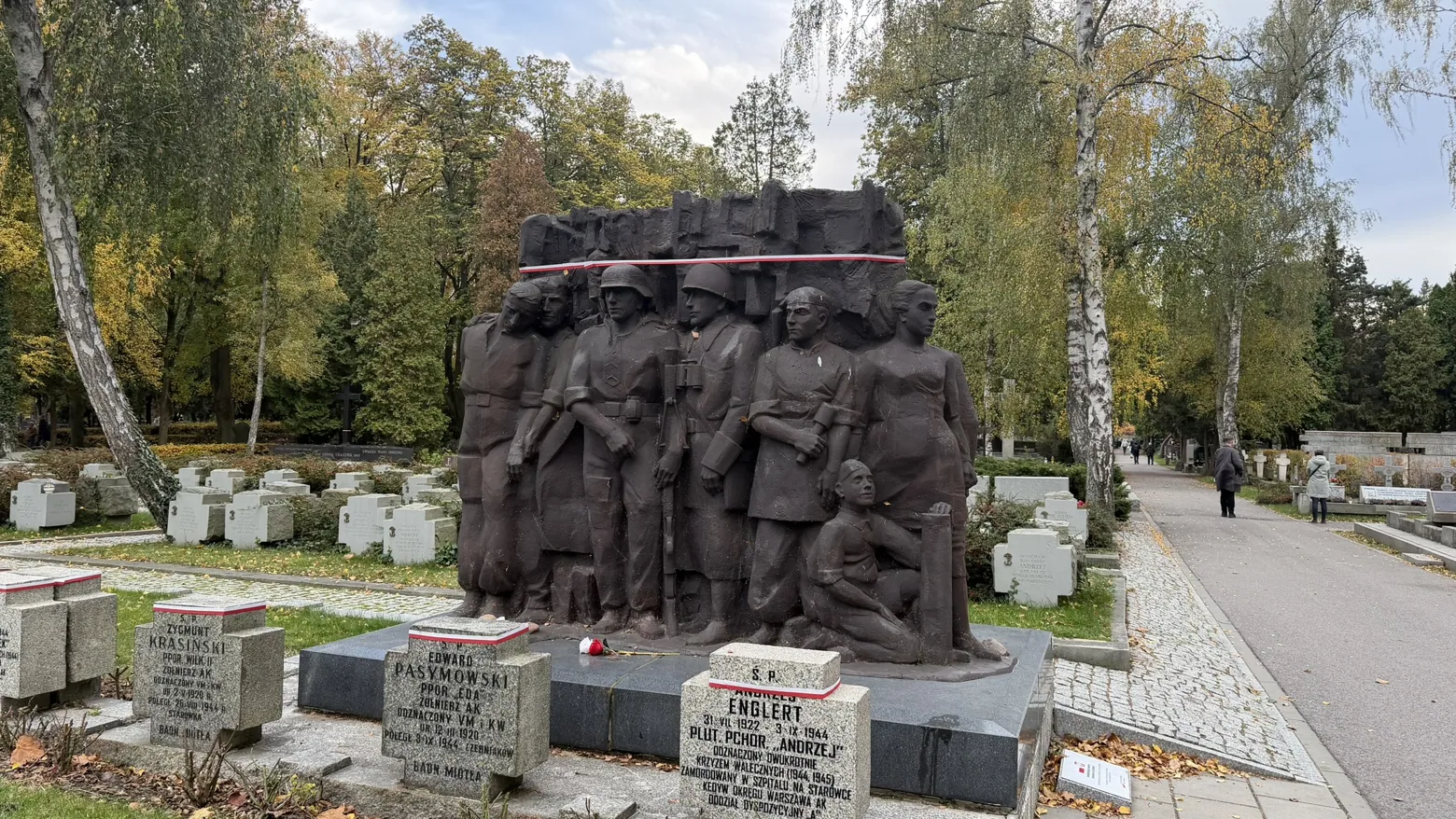
Begin the story ↓Military Powązki is more than a national pantheon. Its graves trace the dramatic changes in Poland's twentieth century, from the years of partition through independence, Nazi occupation and communist rule. The cemetery contains soldiers, resistance fighters, artists, political leaders and people killed by the state that later ruled the country.
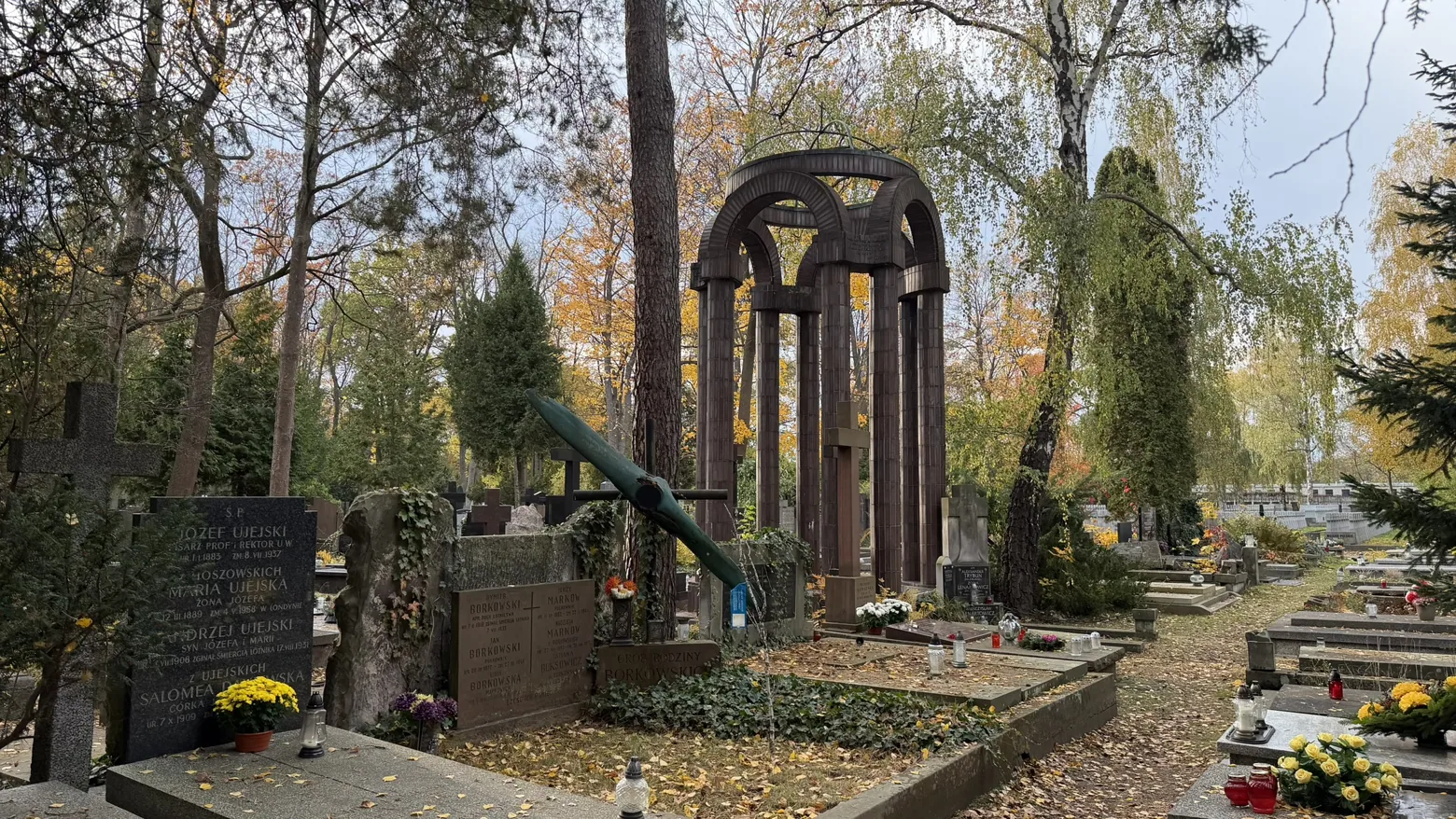
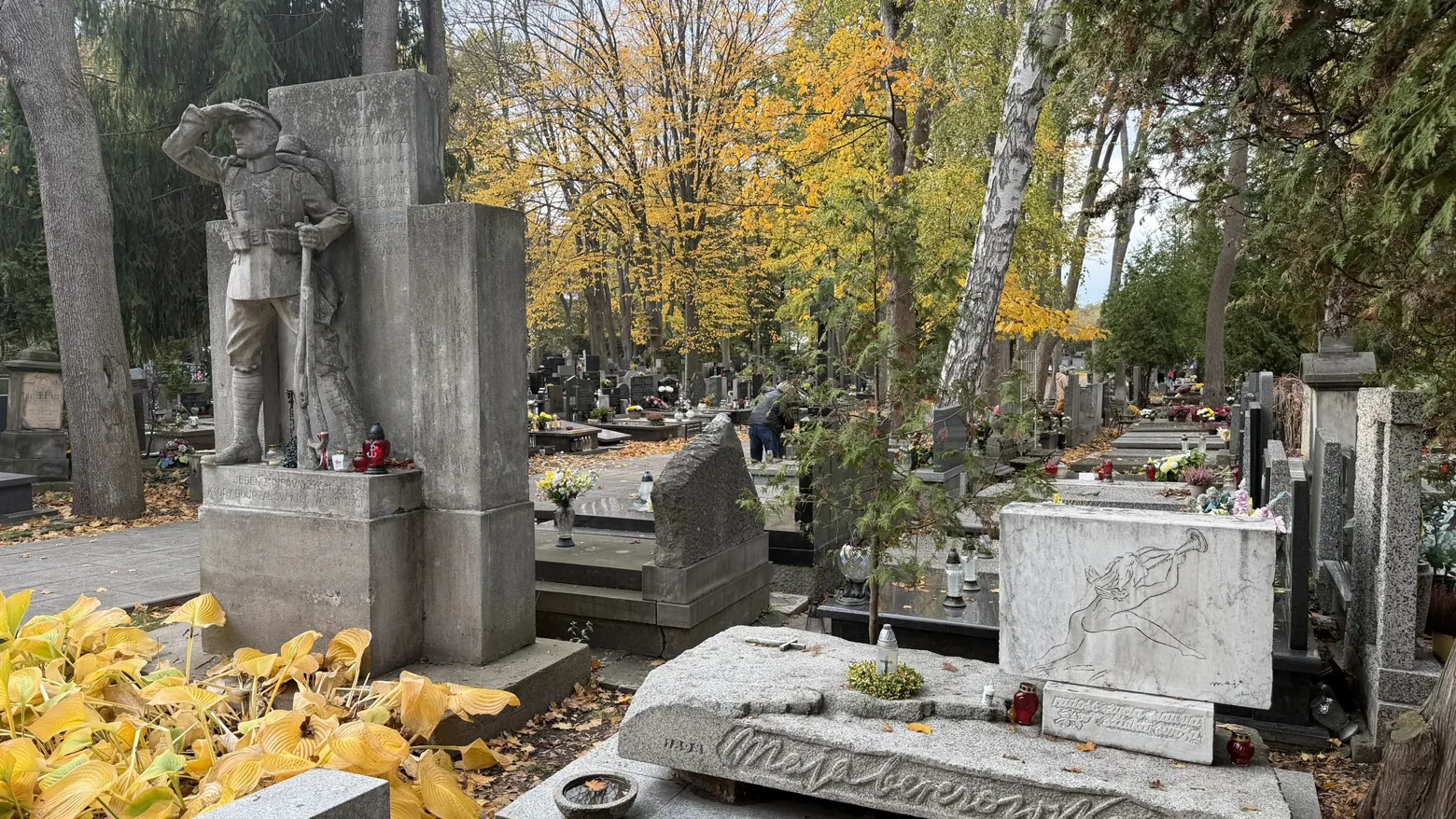
Walking its avenues, I was struck by how quickly one memorial gives way to another with a radically different meaning. Some mark public acts of courage; others tell of the dead who were deliberately hidden. You do not have to agree with every chapter of Poland's history to recognise that all of them belong in the account.
From imperial garrison to national cemetery
Established in 1912 under the Russian imperial authorities, this burial ground began as a cemetery associated with the Warsaw garrison. After Poland regained independence in 1918, it became a central place to bury and commemorate those who had fought for the country.
The landscape grew into a record of successive national struggles: the Polish–Soviet War, September 1939, the underground resistance, the Warsaw Uprising and the years after the war. Even the cemetery's name reflects that history: during the communist period it was known as a communal cemetery before the Military Powązki name was restored in 1998.
Gloria Victis: a place Warsaw gathers
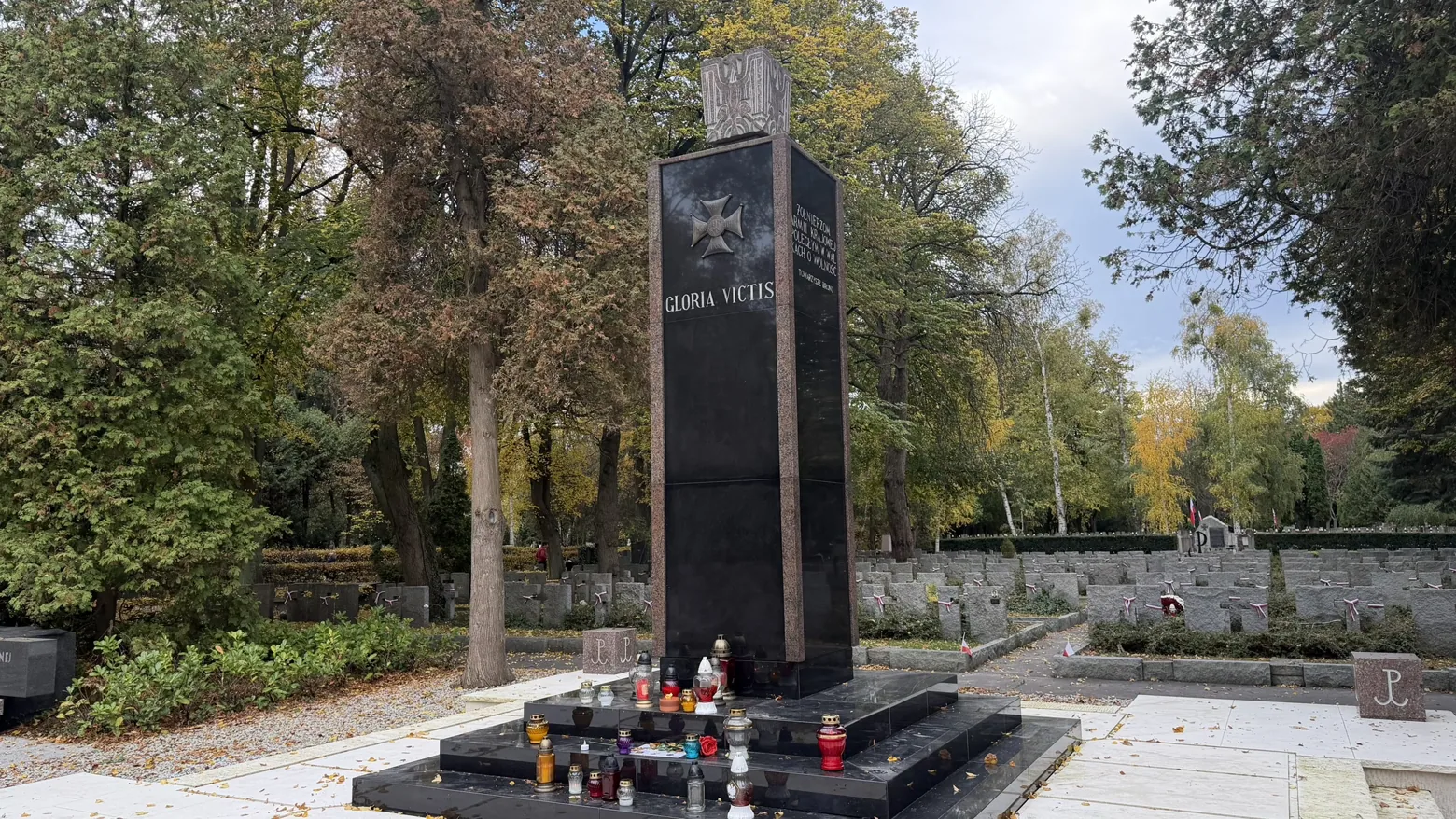
At 5 p.m. on 1 August each year, Warsaw stops to remember the opening of the 1944 Uprising. One of the central ceremonies takes place at Gloria Victis, the obelisk unveiled on 1 August 1946. Designed by insurgent and liaison Helena Kłosowicz, it has long been a place where families, veterans and Varsovians honour the fallen.
Even under communist rule, when official commemorations were restricted or discouraged, people gathered here. The graves surrounding the monument make the cost of the fighting far more immediate than a date in a history book. For the broader wartime story, see our Wola guide and Cemeteries & Memorials hub.
The scouts of Zośka and Parasol
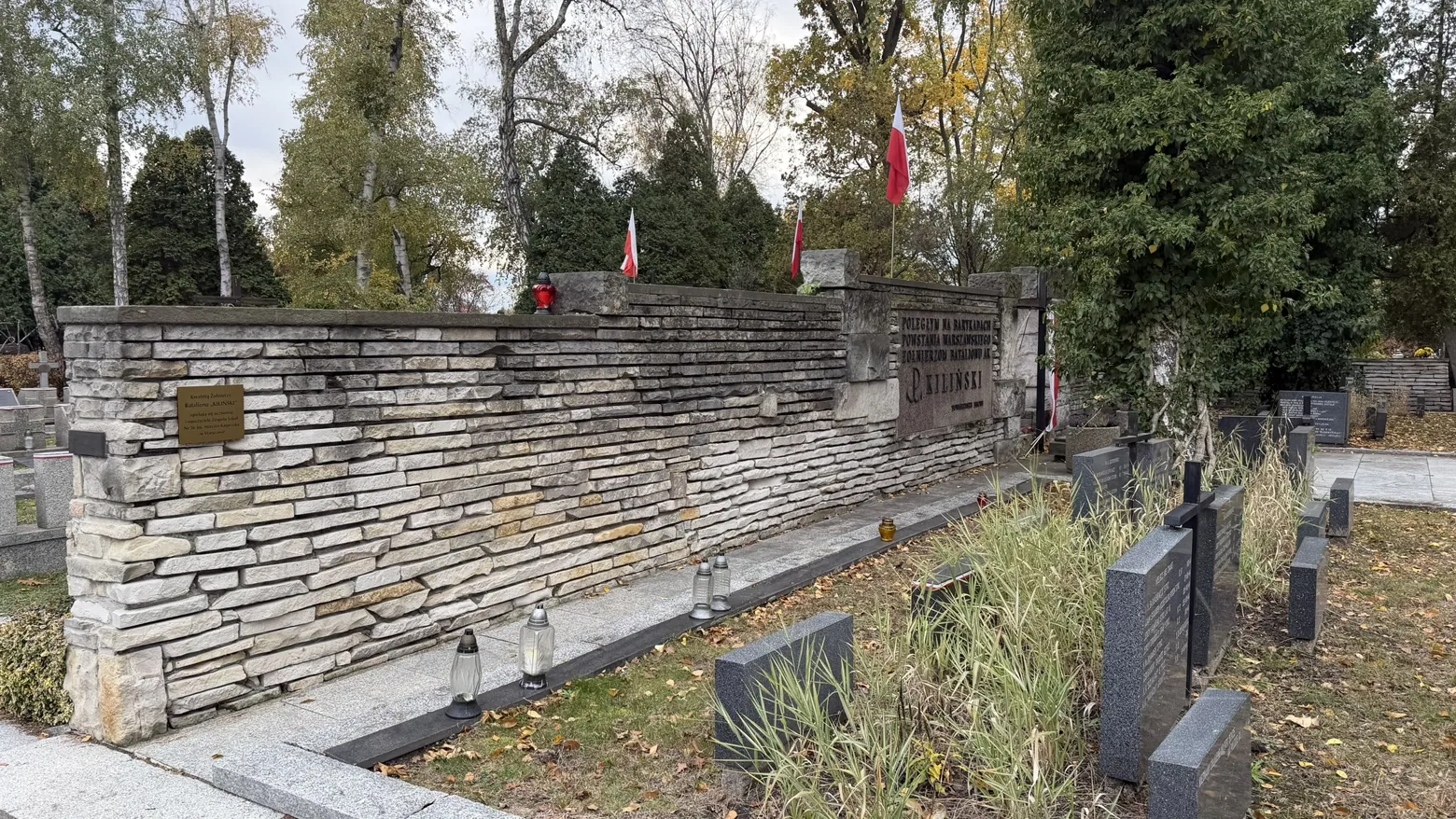
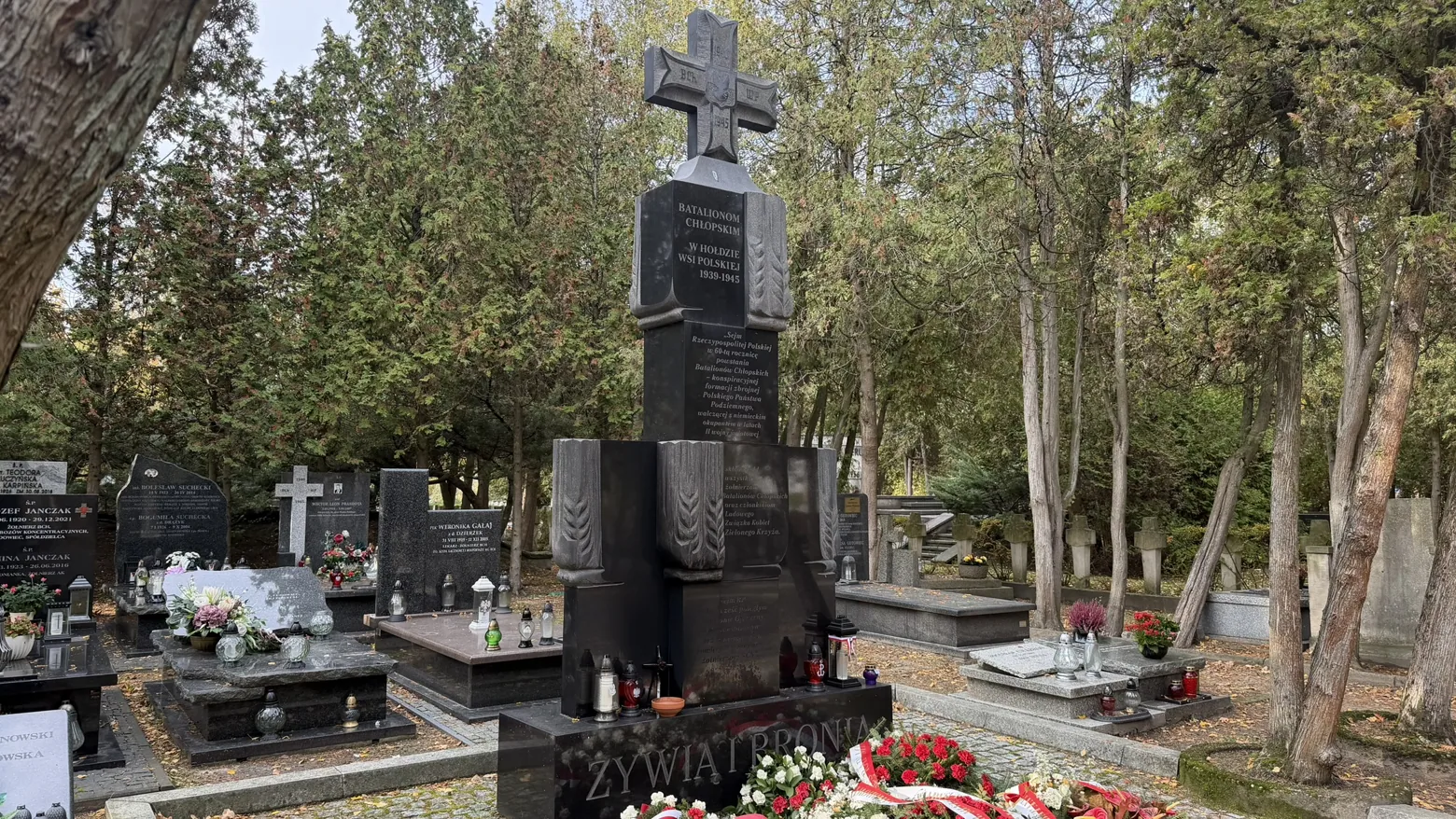
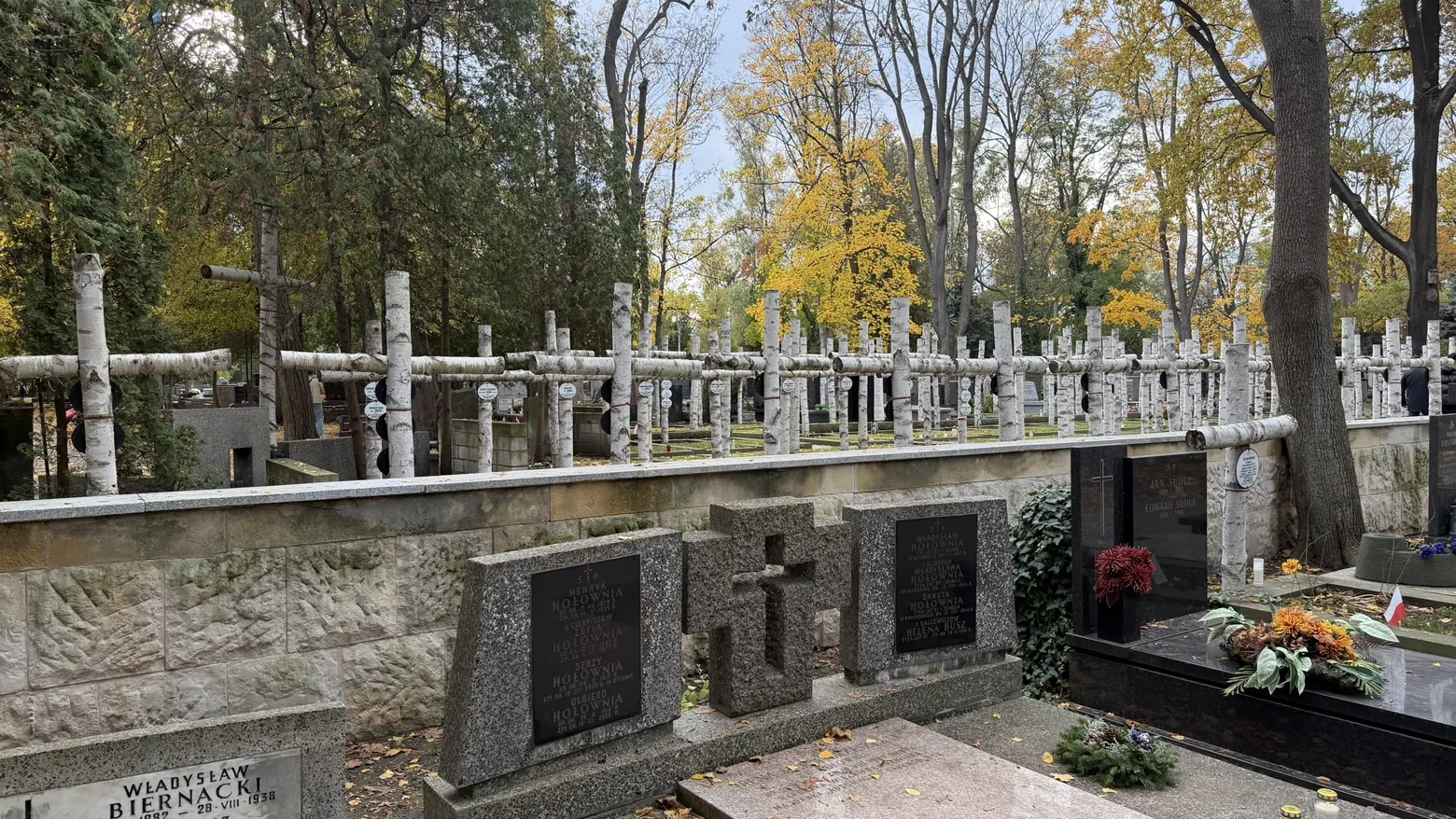
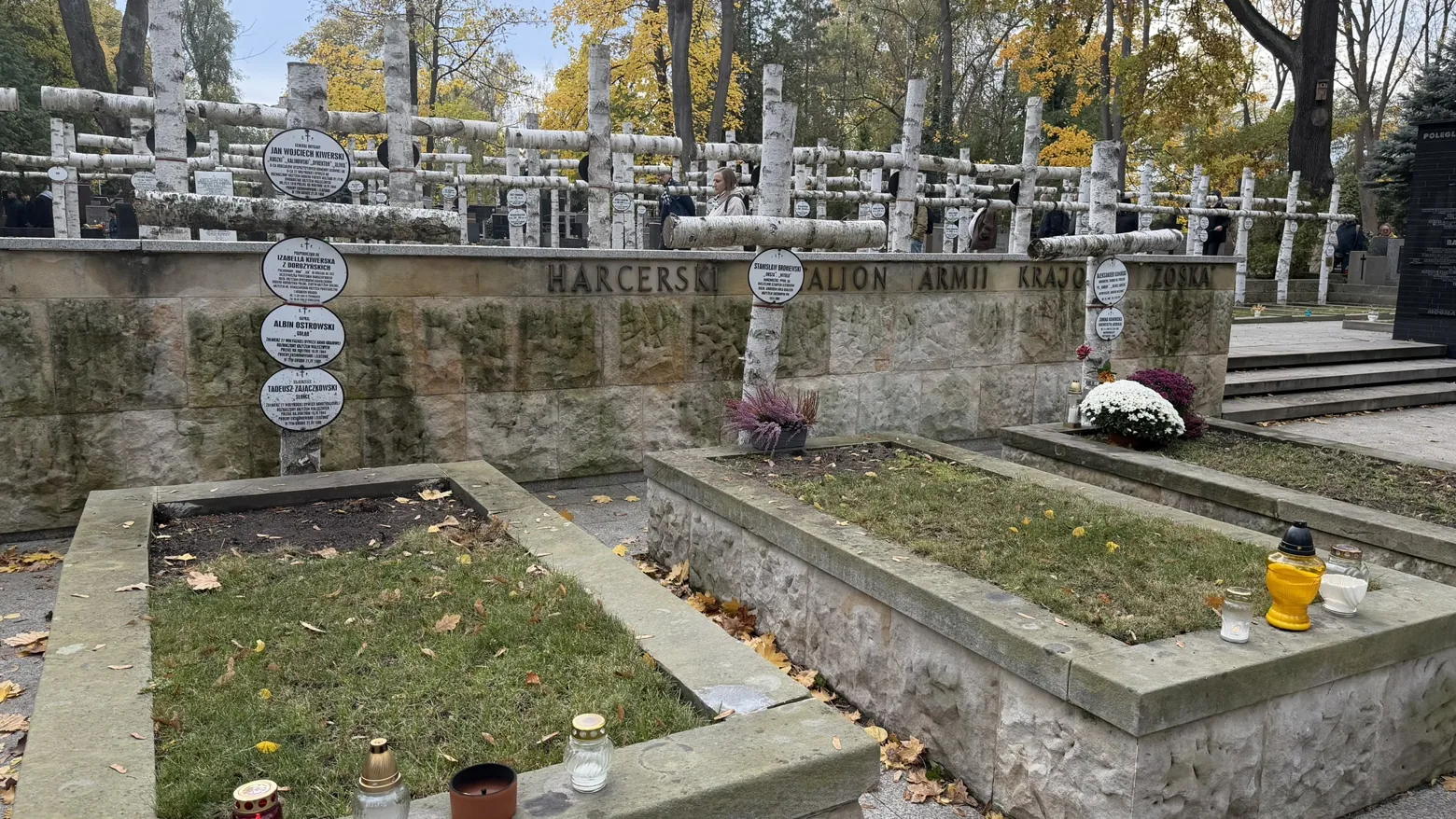
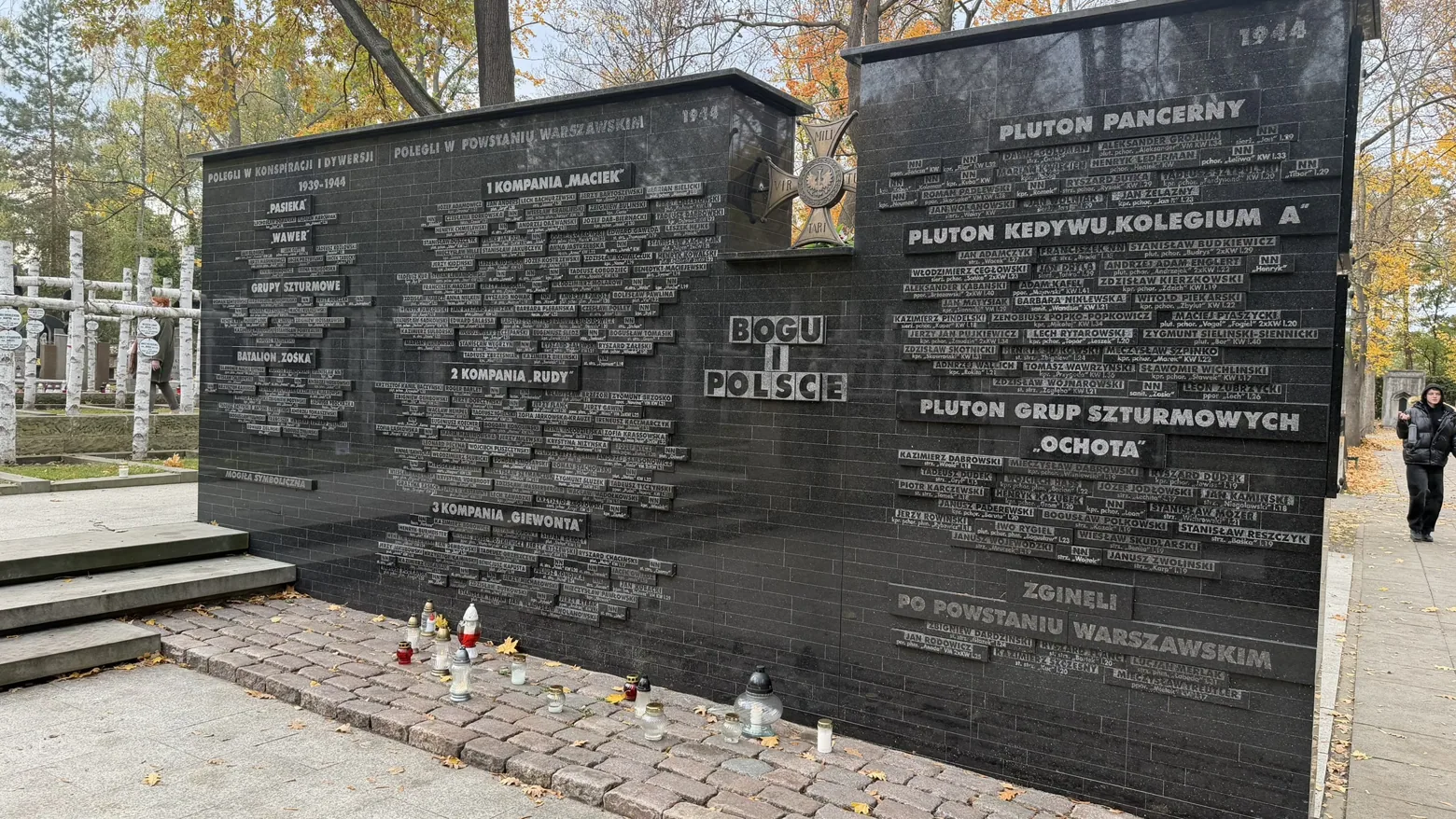
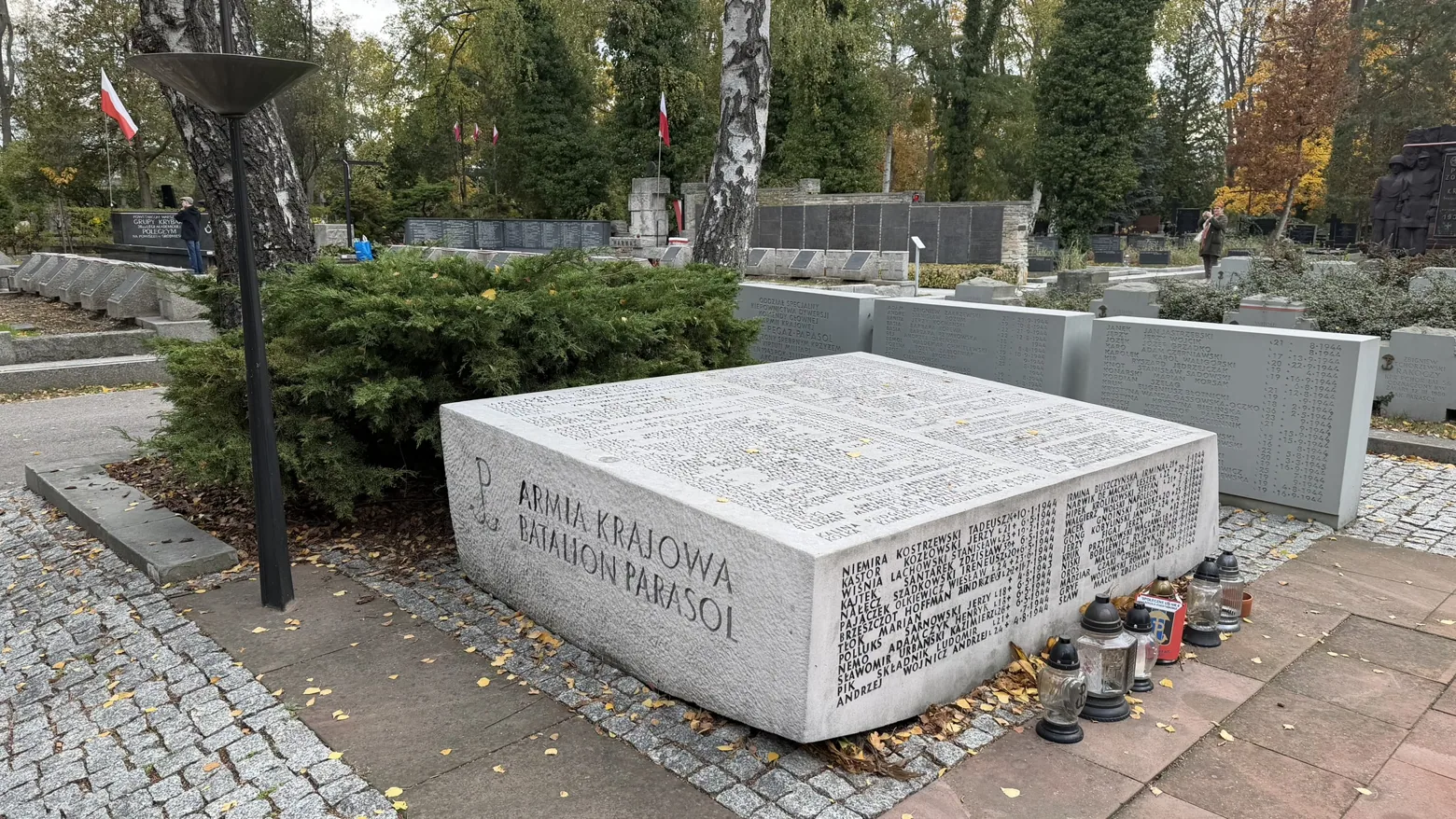
Among the most moving destinations are the burial plots of the Home Army's Zośka and Parasol battalions. Many were young people shaped by the clandestine scouting movement, the Szare Szeregi (Grey Ranks). Their wartime service combined resistance, sabotage and, in 1944, open combat.
The names Tadeusz Zawadzki “Zośka”, Jan Bytnar “Rudy” and Maciej Aleksy Dawidowski “Alek” have become inseparable from the story of wartime youth and the rescue operation at the Arsenal. Another part of the cemetery commemorates the Parasol fighters. The white crosses and closely spaced graves convey the terrible youth of many of the dead.
Look closer: the birch crosses of Zośka, its inscribed memorial wall and the pale Parasol memorial give each battalion a distinct place in the landscape.
Baczyński and Gajcy: poetry cut short
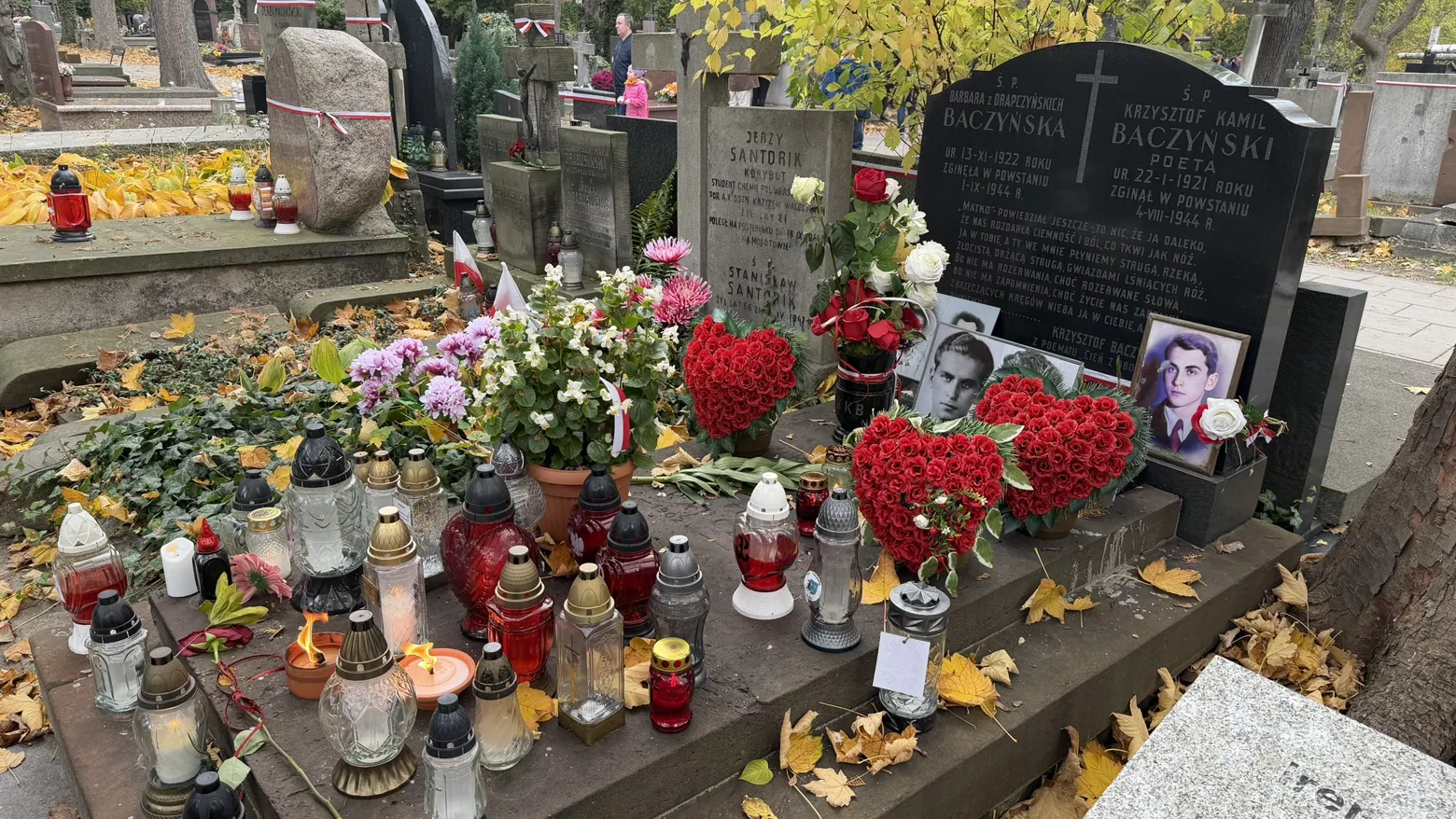
One of Poland's best-known wartime poets, Krzysztof Kamil Baczyński was killed in August 1944, aged just 23. His wife Barbara also died during the Uprising. Their short lives have become symbols of the generation whose education, creative promise and futures were consumed by war.
Baczyński served in the Home Army, including the Parasol battalion. His poetry sits beside the soldiers' graves as a reminder that these young people were students, writers, friends and partners before they became names on memorials.
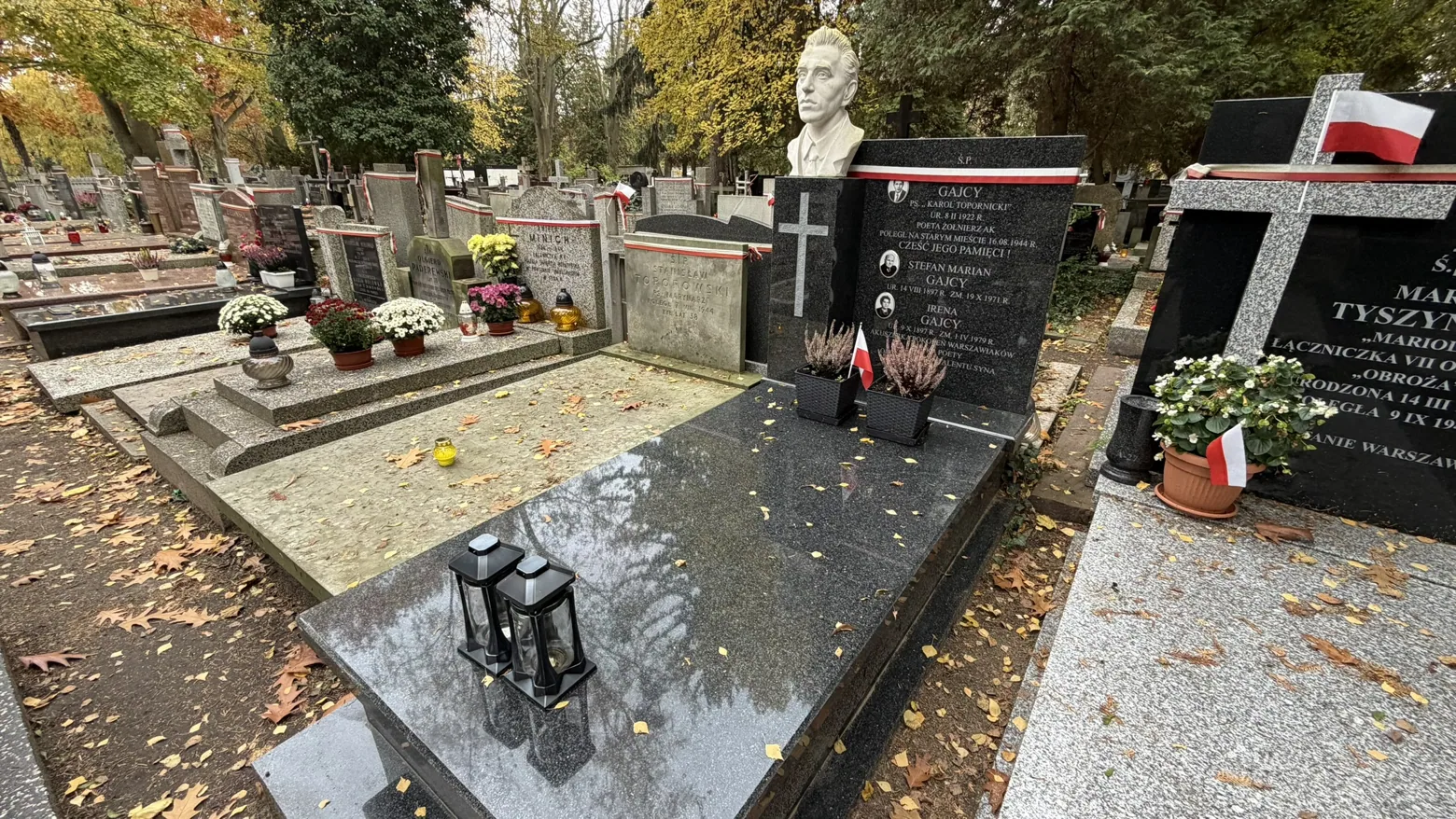
Tadeusz Gajcy
Another young poet killed during the Warsaw Uprising, Tadeusz Gajcy is remembered here with a portrait bust above his family grave. His headstone identifies him as a poet and Home Army soldier, bringing the literary and military strands of his life together.
Stanisław Sosabowski and service beyond Warsaw
General Stanisław Sosabowski, the Polish airborne commander associated with Operation Market Garden, is buried in his family grave here. His inscription appears alongside that of his son, Stanisław Janusz Sosabowski: two distinct men whose names should not be confused.
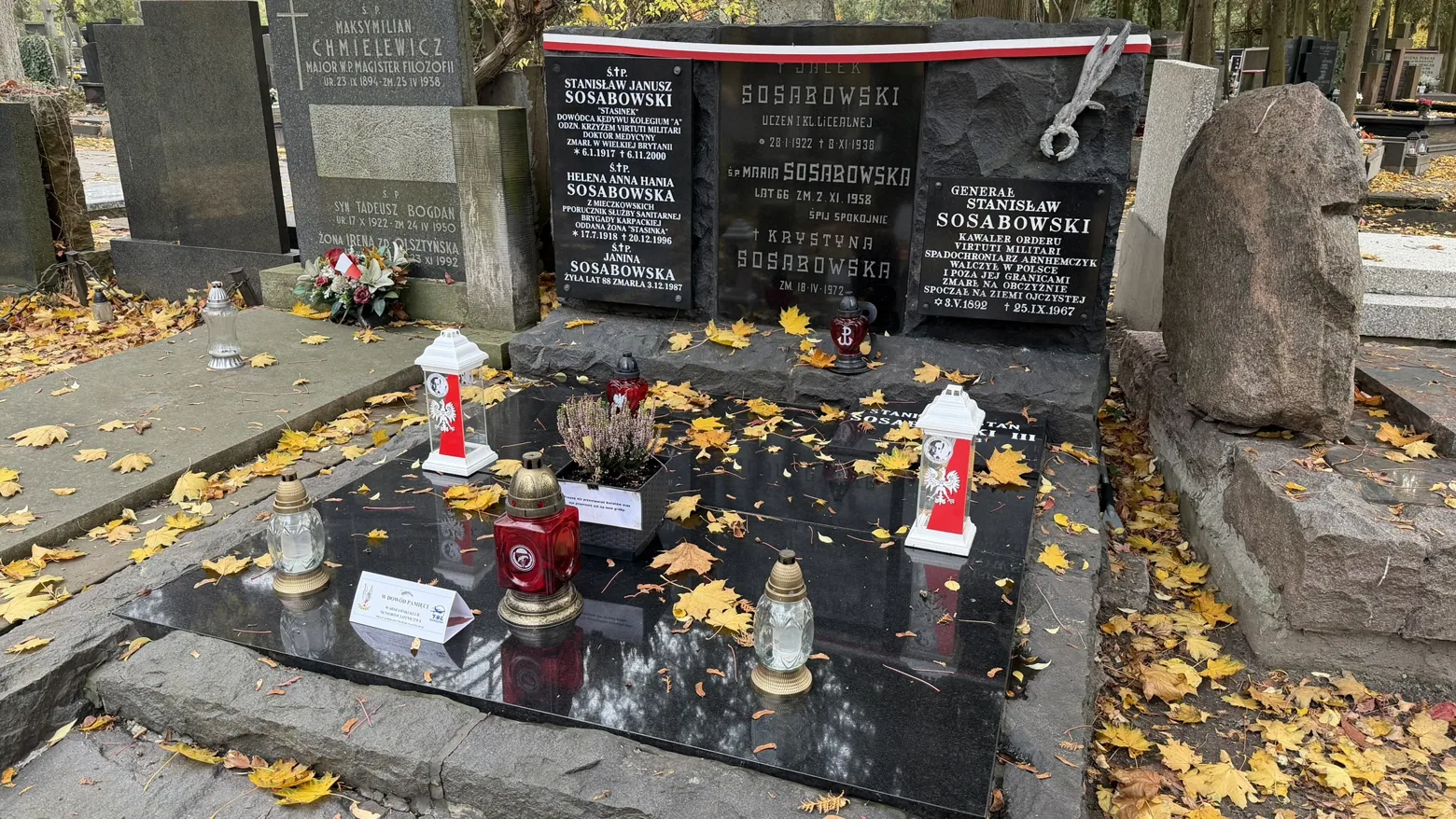
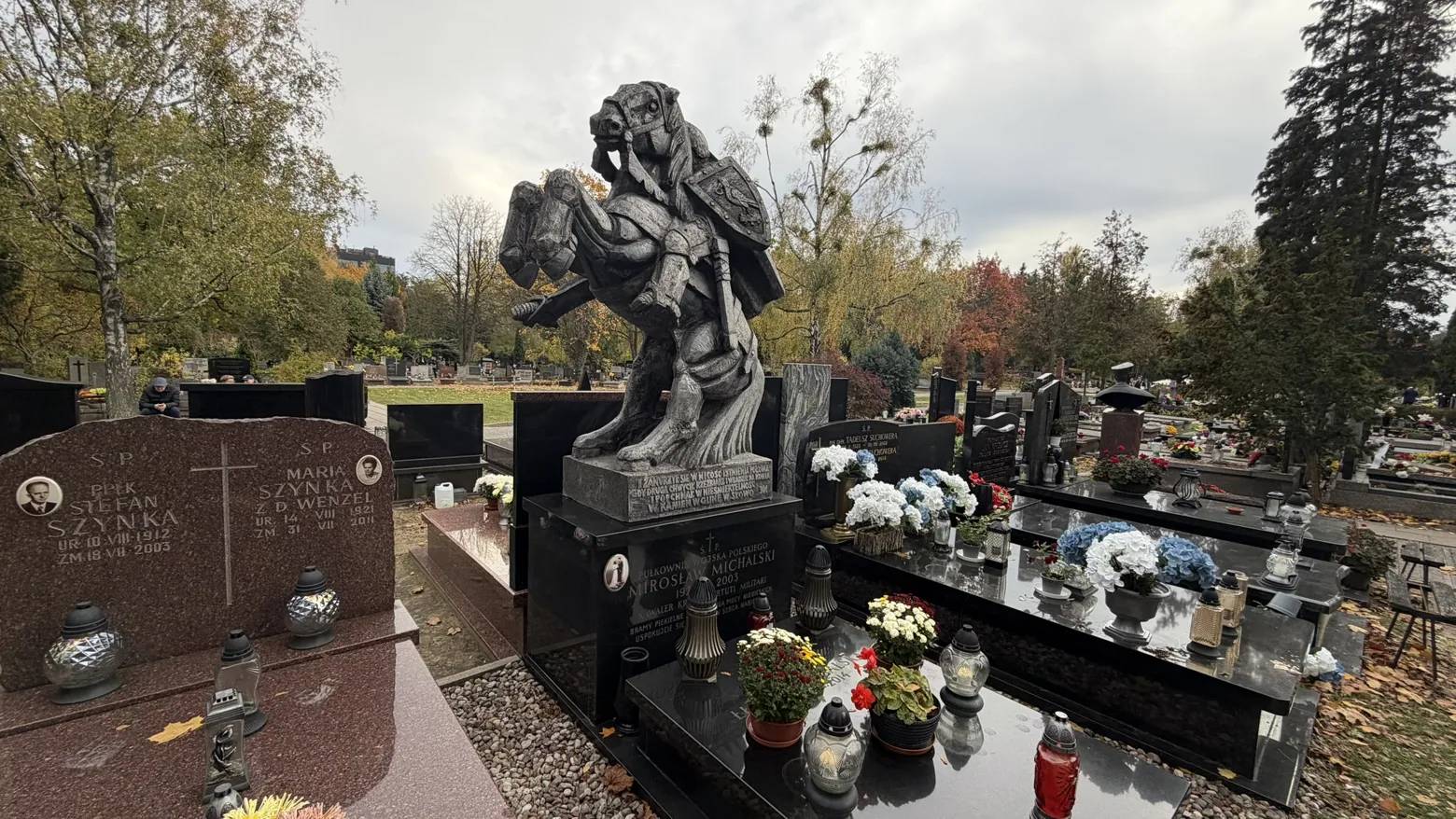
Nearby photographs also reveal how military service is expressed through sculpture, including the equestrian monument on Colonel Mirosław Michalski’s grave.
Katyń: a crime concealed for decades
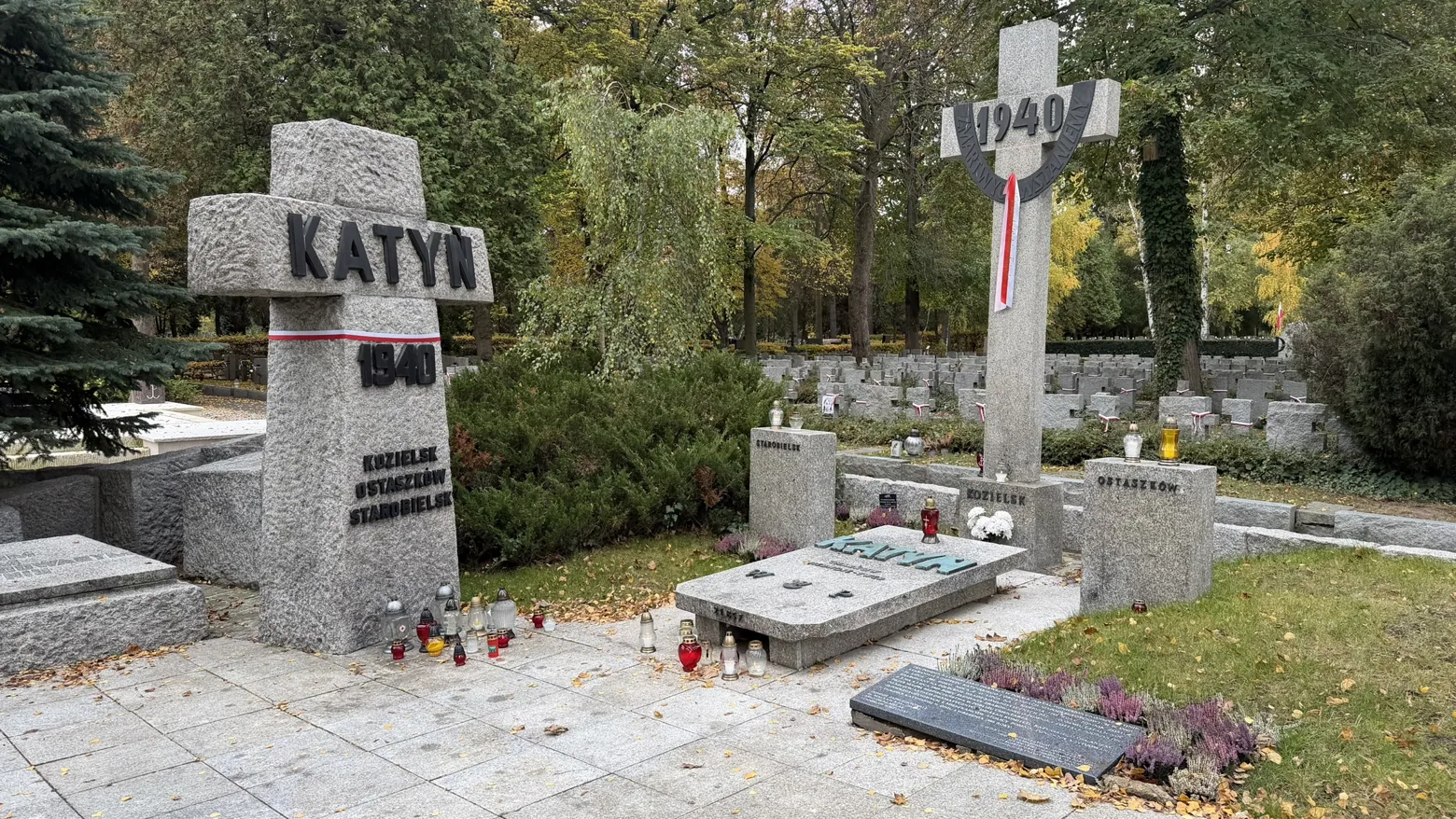
The cemetery also remembers victims of the Soviet NKVD's 1940 massacre of Polish officers and members of the country's intelligentsia, conventionally known as the Katyń massacre. For decades, the communist authorities promoted a false account of responsibility. Public acknowledgement of the Soviet role became a milestone in reclaiming historical truth.
The memorial area often called Dolina Katyńska brings together crosses, names and inscriptions that invite visitors to consider not only the murders but the long struggle over their memory. These are memorials to victims whose remains are generally buried elsewhere, not necessarily graves at Powązki.
Łączka: the names they tried to erase
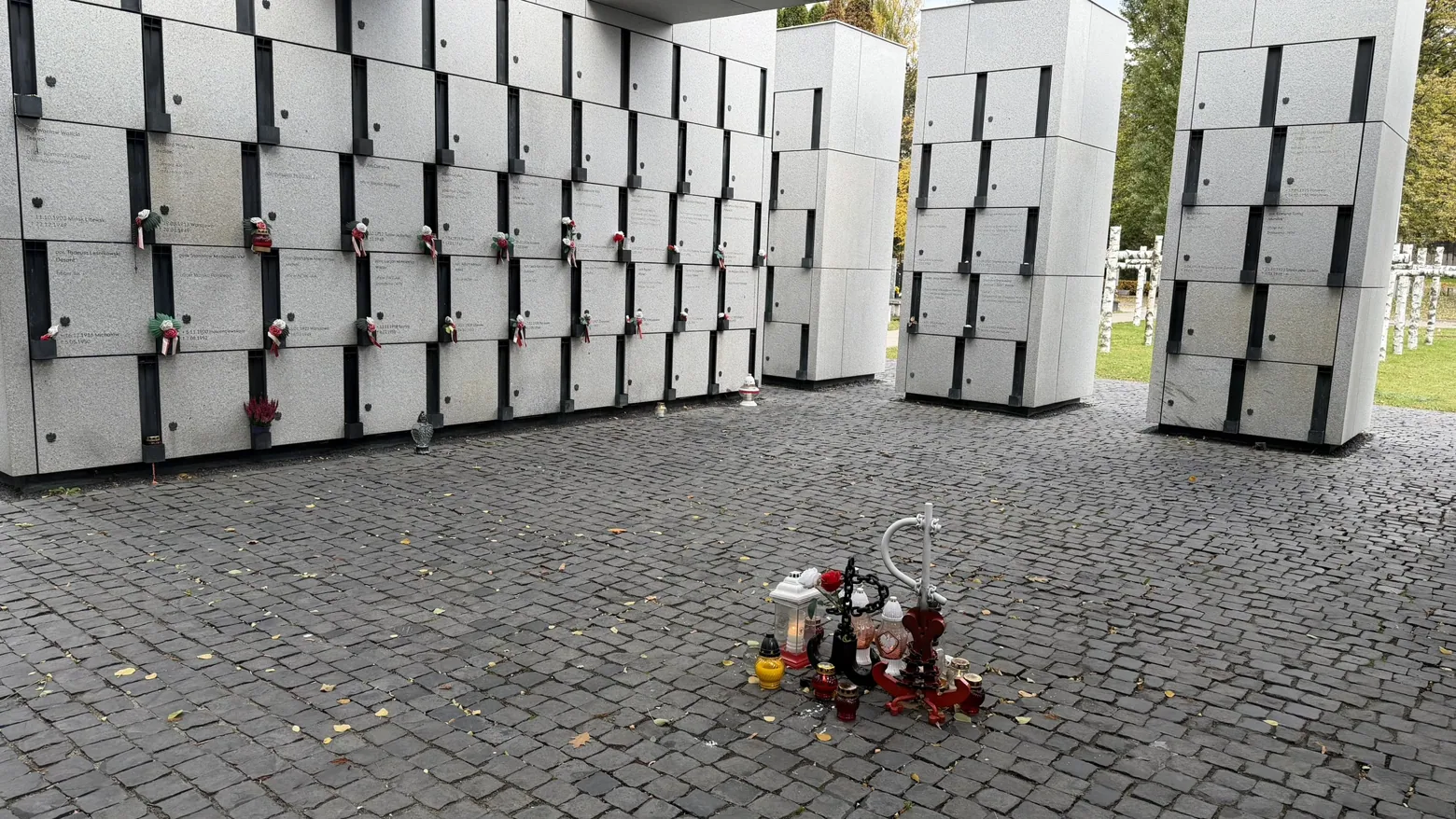
At the northern end of the cemetery, Kwatera Ł, commonly called Łączka, carries an especially difficult post-war story. From the late 1940s, bodies of people executed by the communist security apparatus, including prisoners from the Mokotów prison, were buried in concealed graves. Families were often denied reliable information about where their relatives lay.
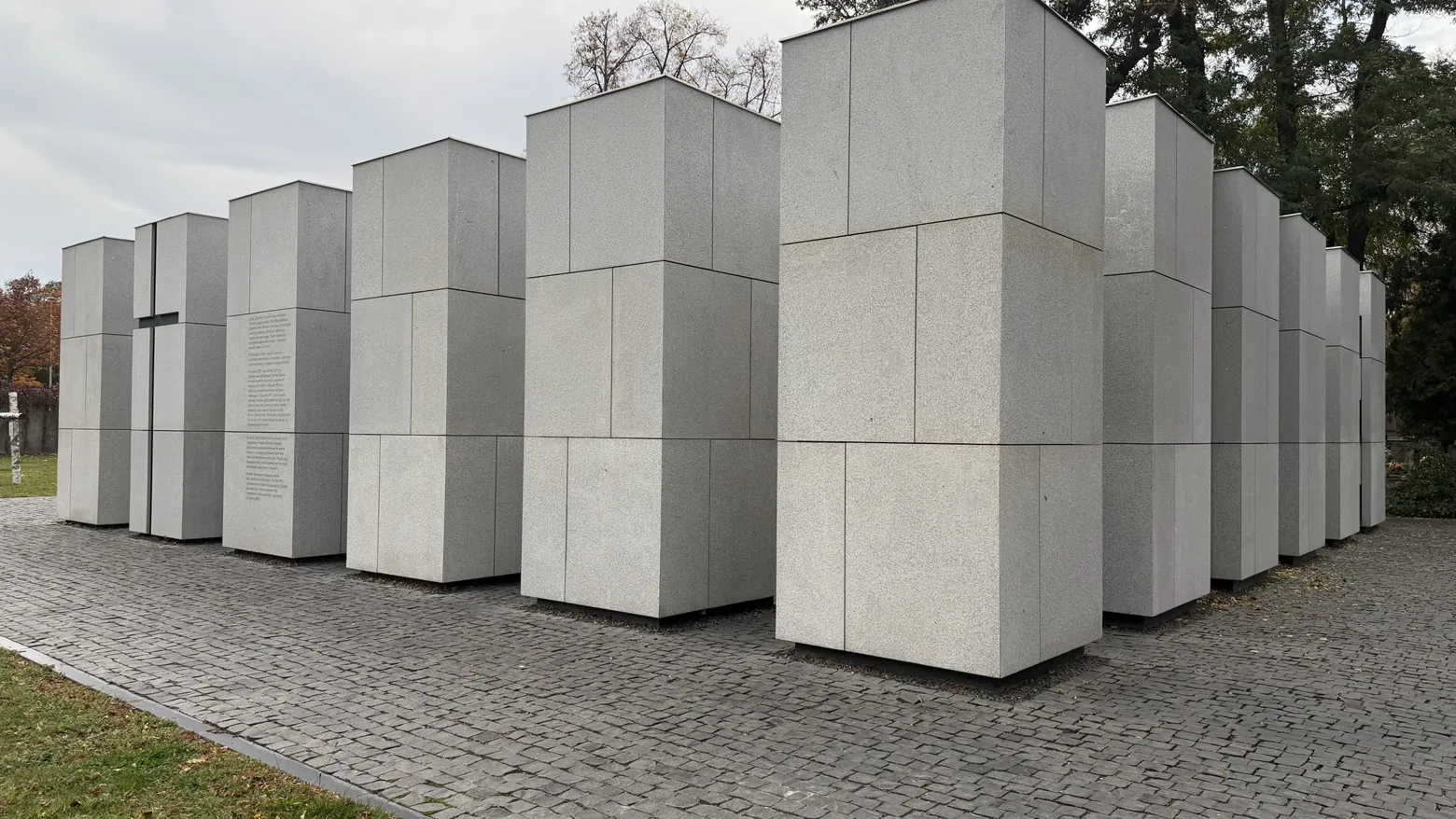
Decades later, archaeological investigations, exhumations and DNA identification work led by Poland's Institute of National Remembrance helped restore names and biographies to many of the victims. The striking white forms of the Panteon–Mauzoleum Wyklętych-Niezłomnych create a modern space for reflection on persecution and recovery of memory.
Care is needed with the term “Cursed Soldiers”: it is prominent in Polish remembrance culture but covers a diverse post-war underground whose actions and reputations are not uniform. The cemetery itself is a place to confront that complexity rather than flatten it.
Two Polands sharing the same avenues
Military Powązki also contains the graves of leaders of communist Poland, among them Bolesław Bierut and Władysław Gomułka. Their presence so near the burial places of victims of communist repression gives this cemetery a difficult but important tension.
There is no need to pretend these histories carry the same moral weight. What matters is understanding why different governments chose whom to honour publicly, whose graves could be marked, and whose families were left without answers.
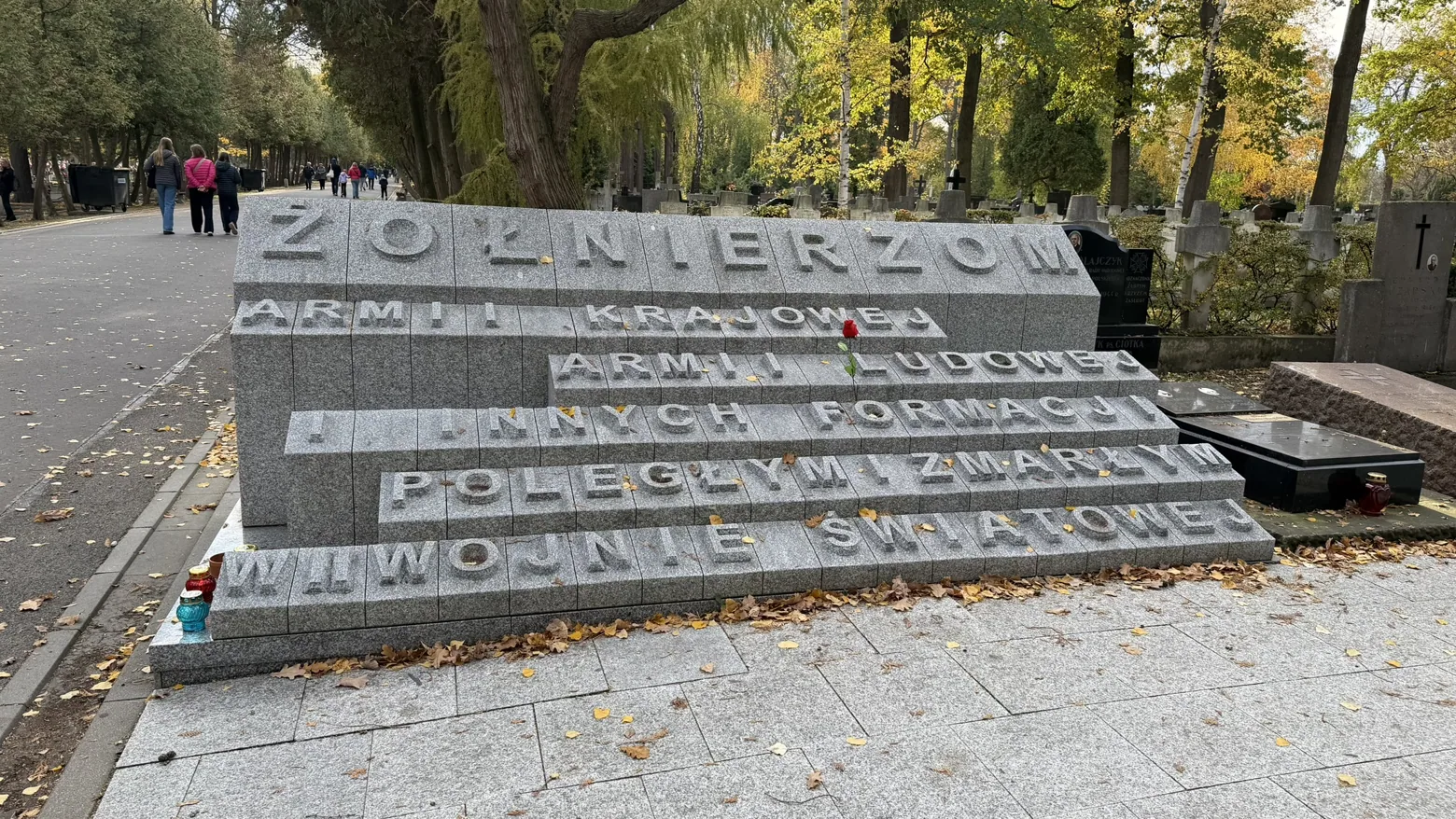
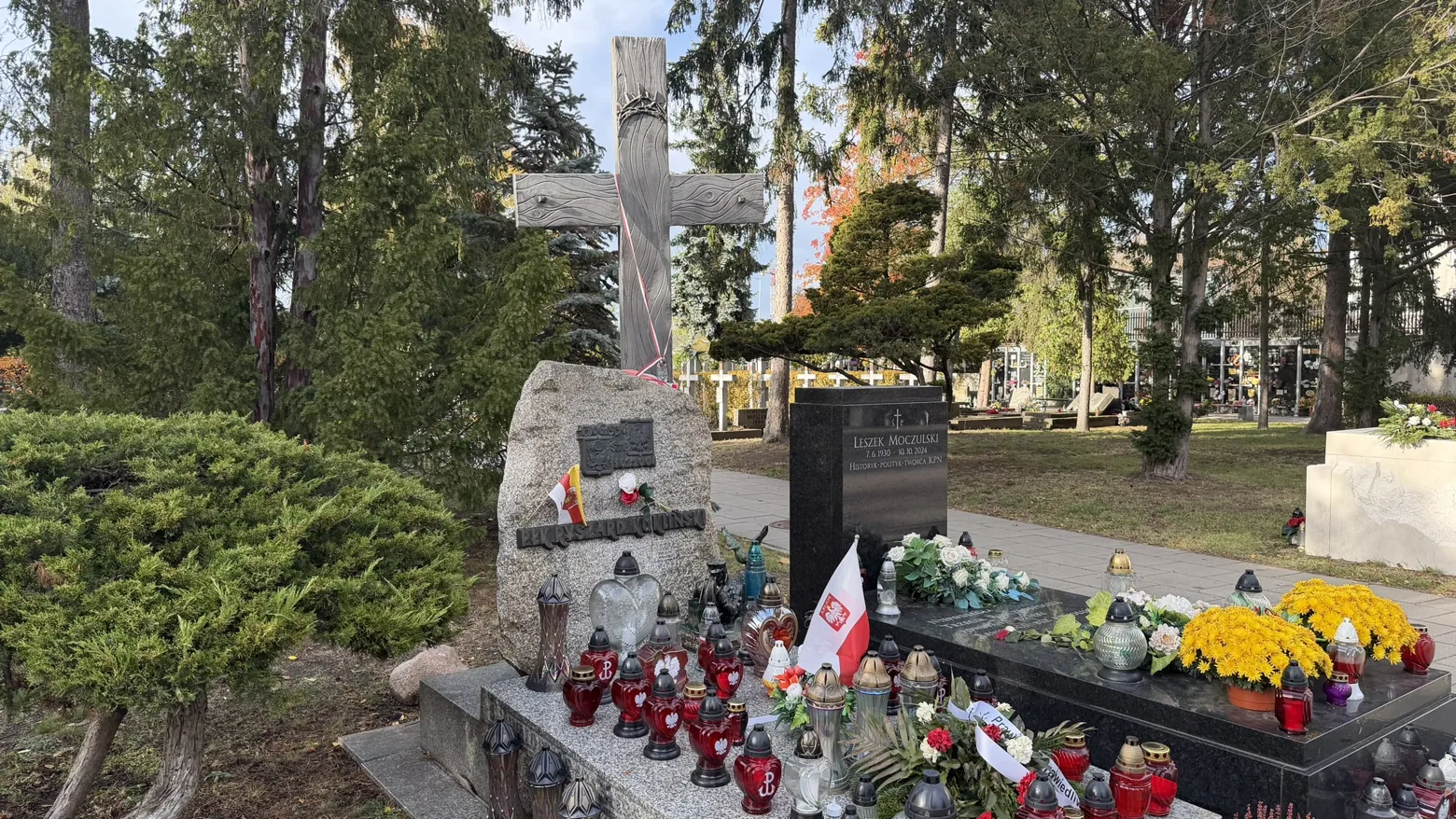
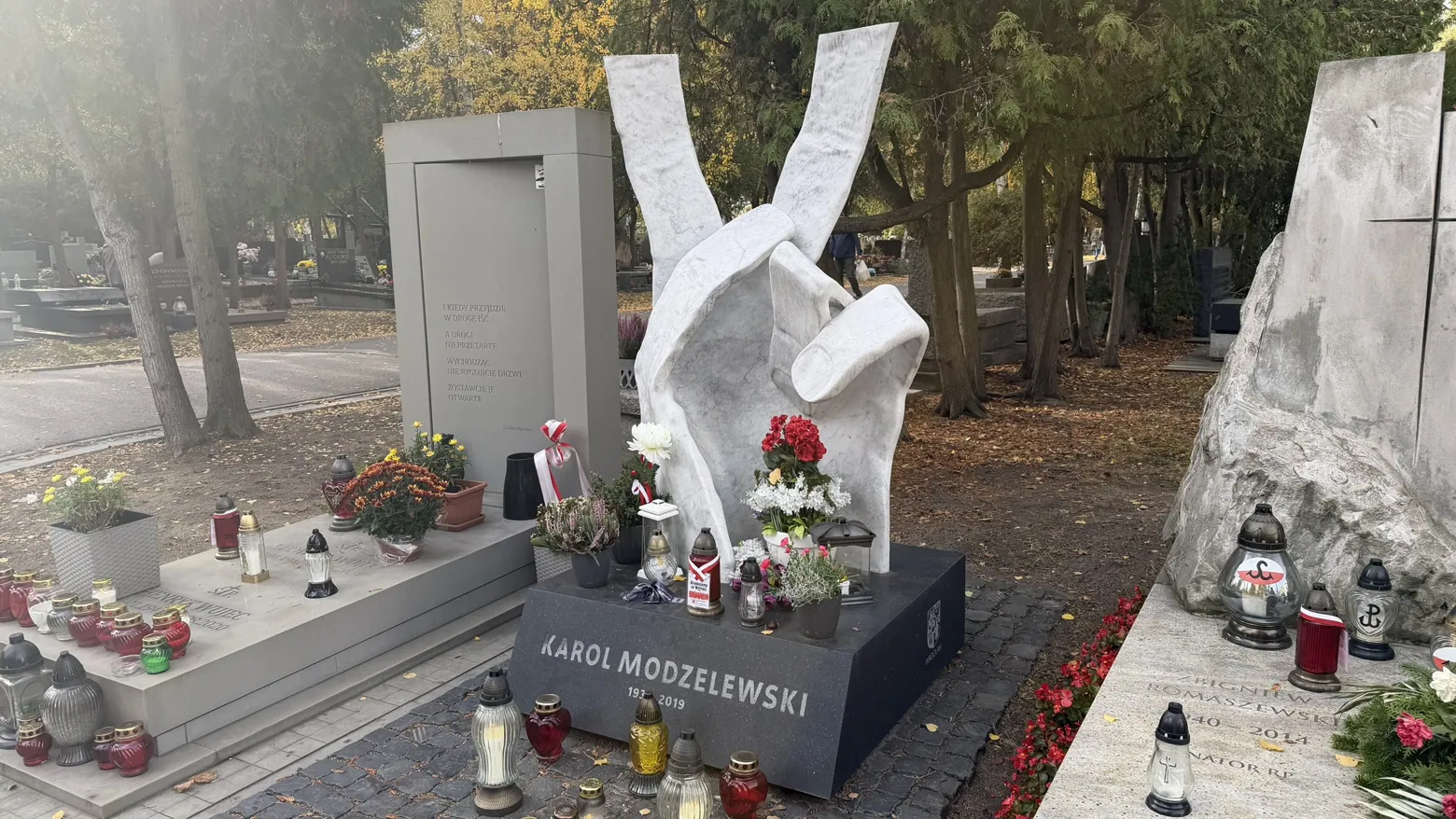
The photographs below show a memorial that names different wartime formations, followed by the graves of Ryszard Kukliński, Leszek Moczulski and Karol Modzelewski. Together, they show how collective remembrance and individual lives occupy the same avenues.
Writers, musicians and public lives
Despite its name, Military Powązki is also a place to encounter Poland’s cultural life, democratic opposition and achievements in medicine. Individual graves give those wider stories a human scale.
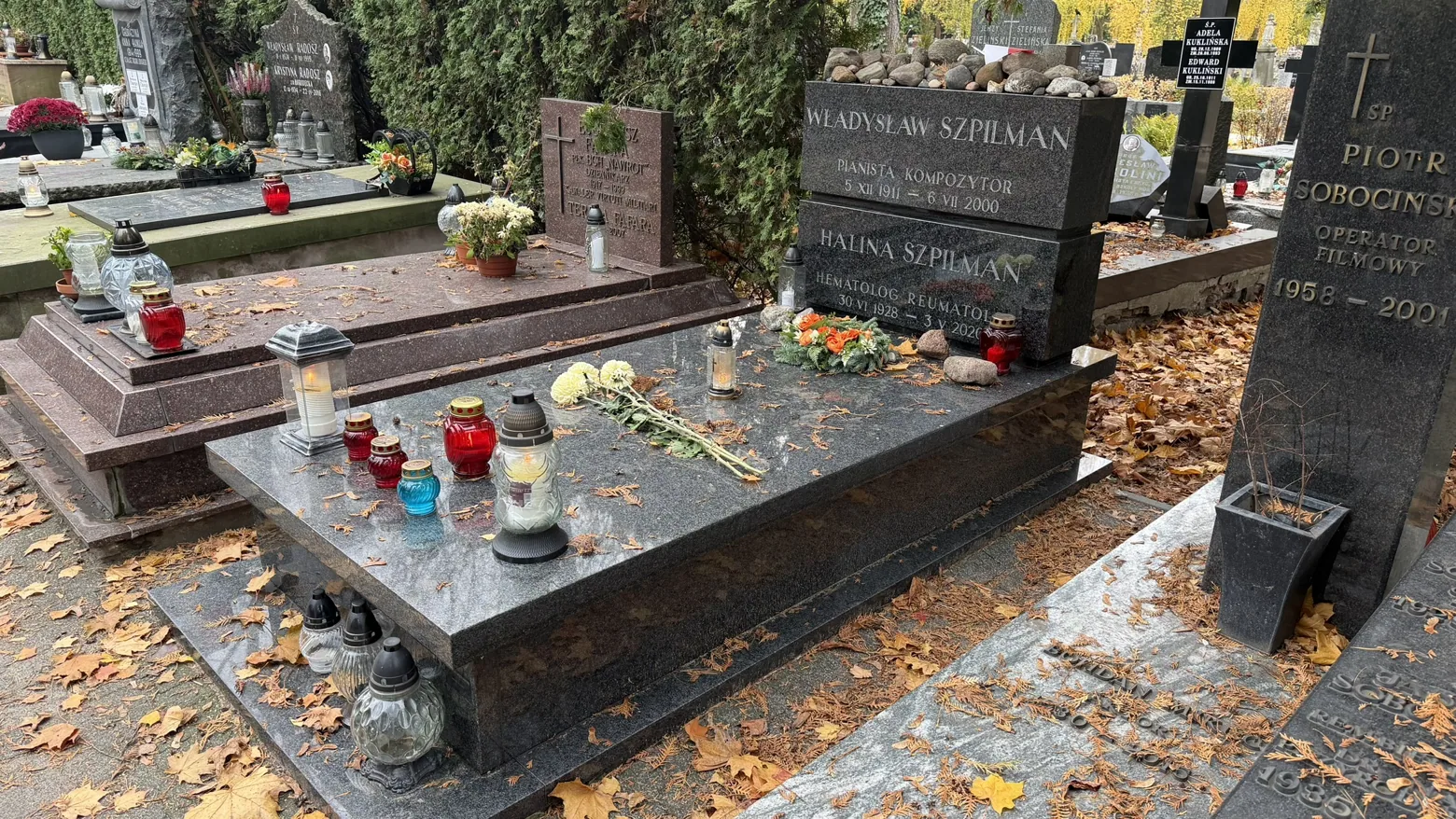
Władysław Szpilman
The pianist and Holocaust survivor whose life inspired The Pianist lies here with his wife Halina. The inscription identifies his work as both pianist and composer.
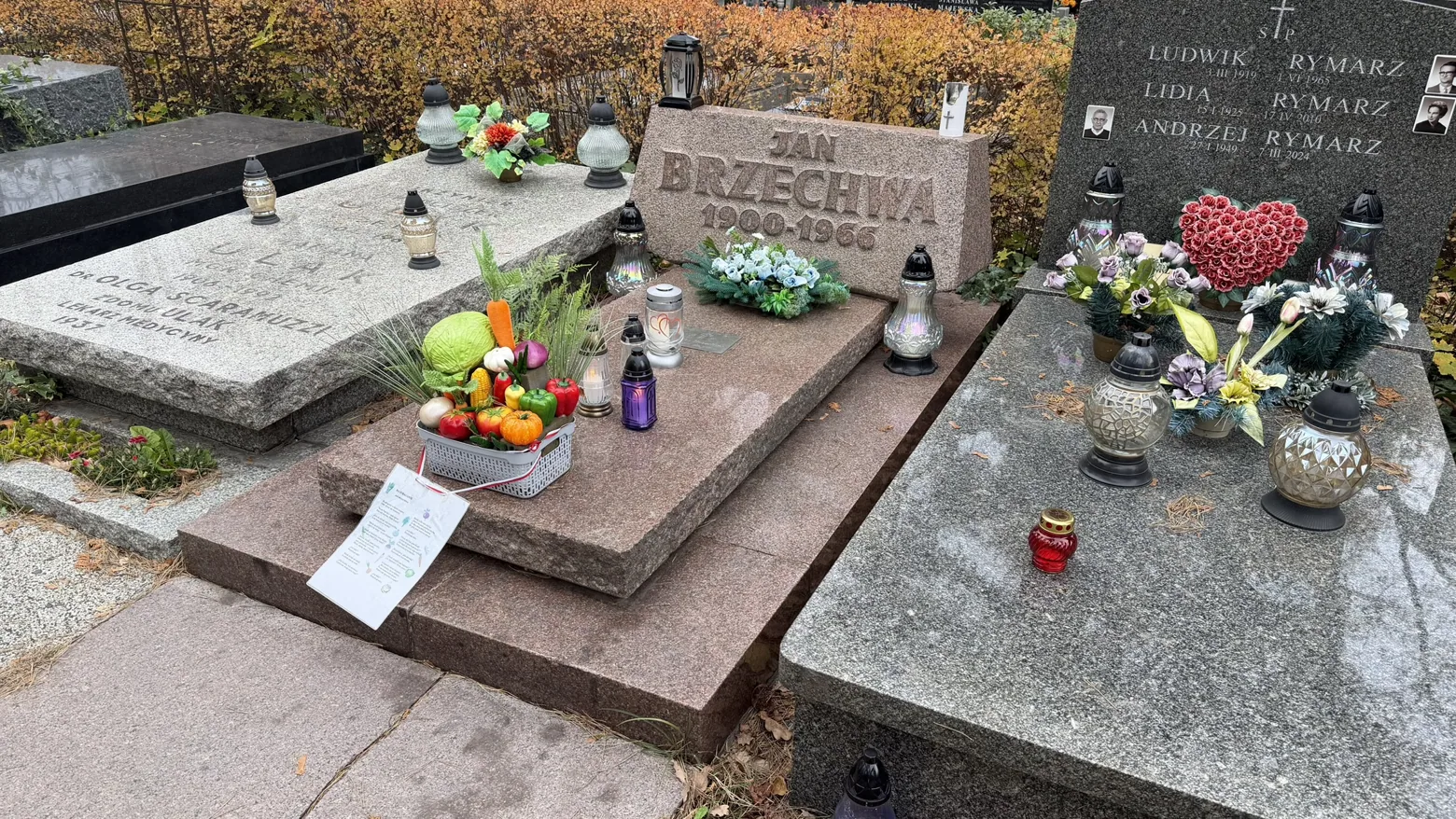
Jan Brzechwa
The beloved children’s poet represents a very different part of Poland’s literary memory from the young wartime poets.
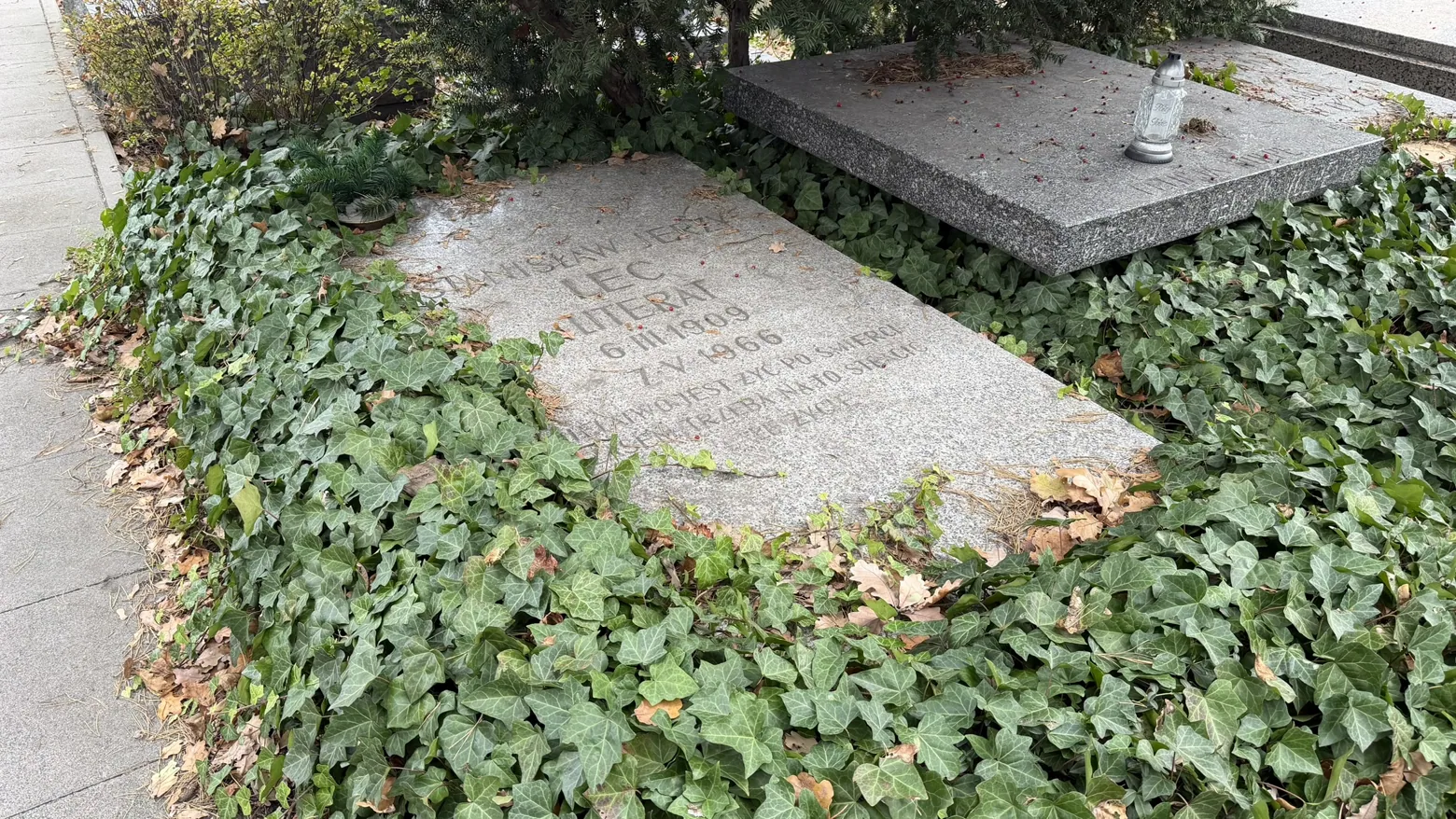
Stanisław Jerzy Lec
The simple, ivy-framed stone names the writer Stanisław Jerzy Lec. It offers a quiet contrast to the more elaborate monuments nearby.
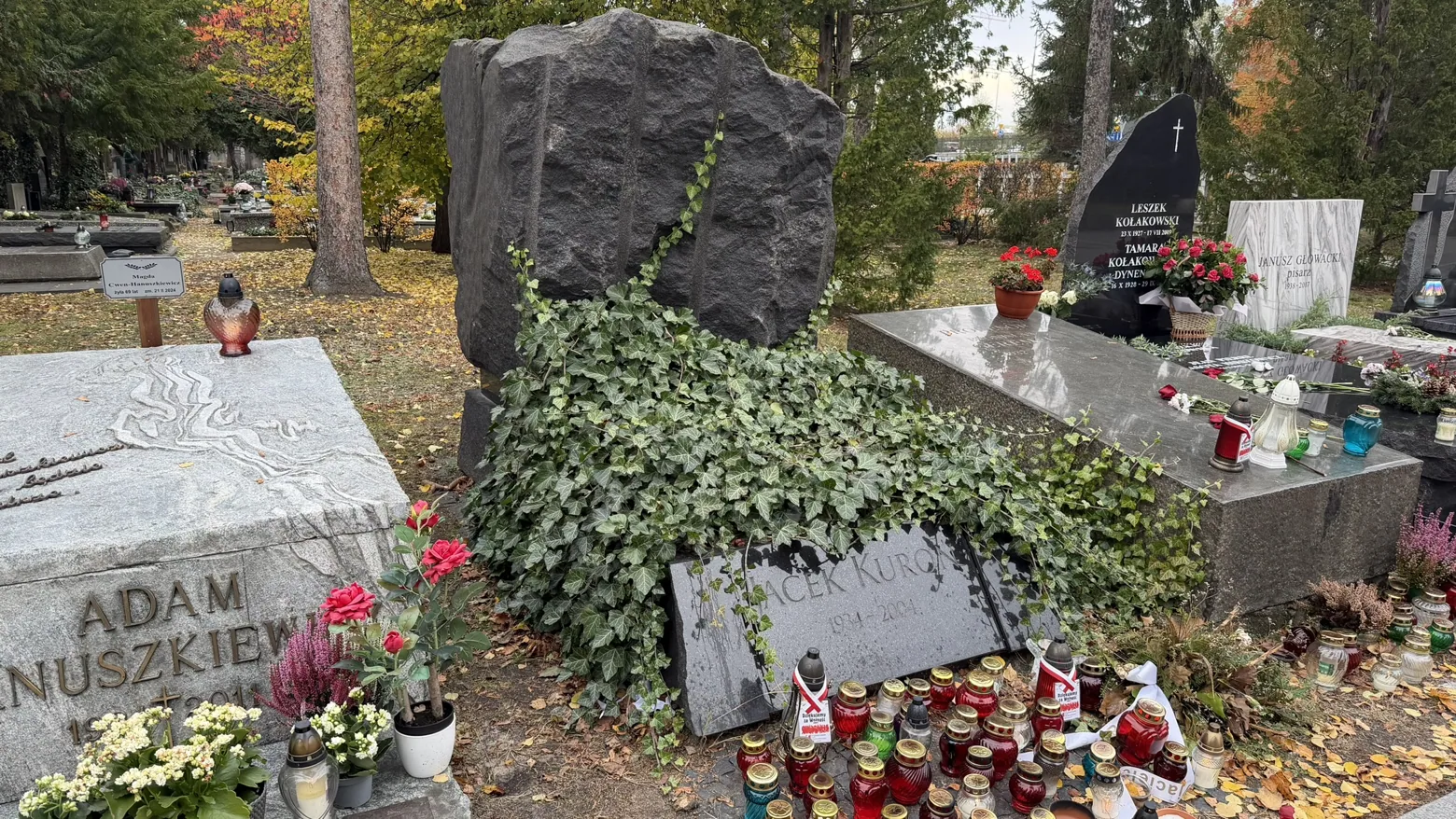
Jacek Kuroń
A leading democratic opposition figure and later government minister, Jacek Kuroń is remembered beneath a rough stone and trailing ivy. The neighbouring grave of theatre director Adam Hanuszkiewicz is also visible.
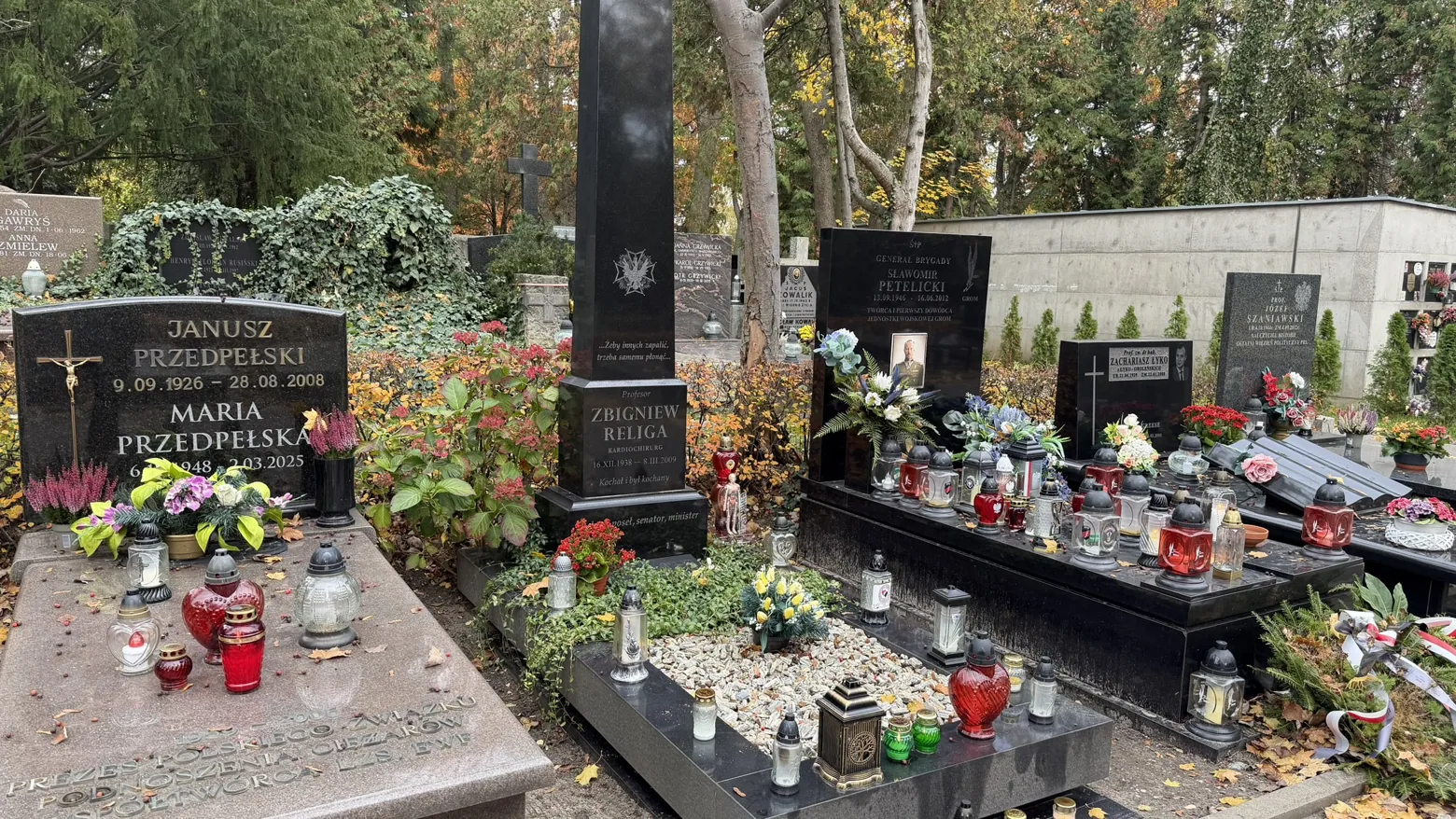
Zbigniew Religa
The pioneering cardiac surgeon is remembered by a tall black monument. His headstone explicitly names his profession: kardiochirurg.
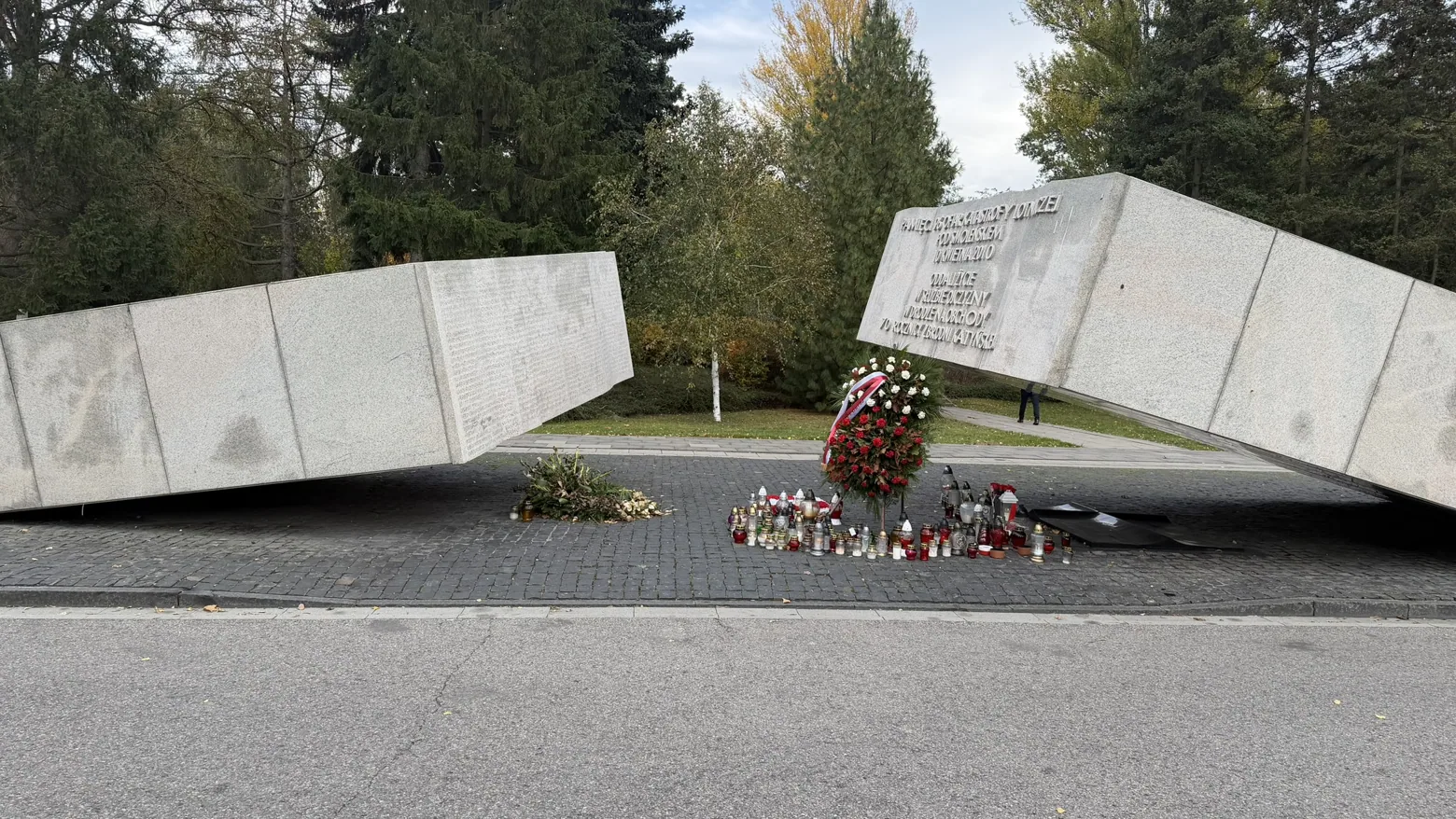
The Smolensk memorial
The two pale, separated stone forms commemorate the 96 victims of the air disaster at Smolensk on 10 April 2010. This is a separate memorial from the white blocks of Łączka, with a different history and purpose.
Exploring Military Powązki respectfully
Military Powązki lies at ul. Powązkowska 43/45, separate from the older Catholic cemetery at number 14. Allow at least a couple of hours for the principal memorials, or longer if you are following several individual stories. The grounds are active: keep funeral services unobstructed, follow cemetery rules and take care when photographing mourners.
A rewarding historical route could connect the Zośka and Parasol plots, the memorial to Baczyński, Gloria Victis, the Katyń memorial, and finally Łączka. This is a thematic sequence rather than verified turn-by-turn navigation; check the official cemetery plan on arrival.
For grave searching: use Warsaw’s municipal burial map rather than relying on directions copied into travel articles. Also see Old Powązki for a very different cemetery experience, and the main cemetery guide and map.
A cemetery that asks difficult questions
The remarkable thing about Military Powązki is not that everyone remembered here fits neatly into one national story. They do not. It is that successive generations have continued to come here — to mourn, to honour, to question and to recover histories that were once suppressed.
← Return to Warsaw Cemeteries & Memorials