
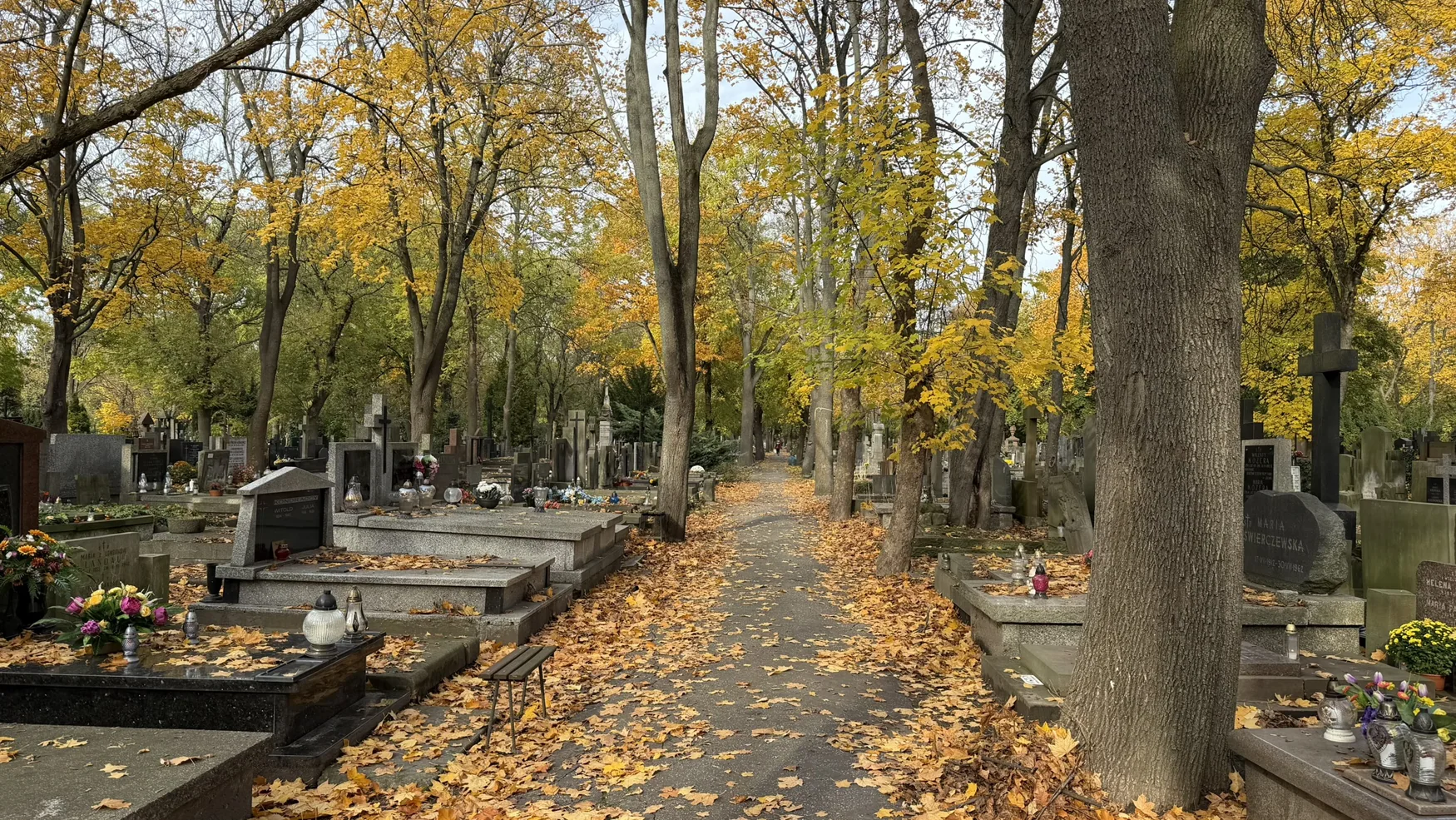
Old Powązki: the Warsaw that survived
More than two centuries of art, music, literature and memory beneath the trees of Poland’s capital.
Begin the story ↓Warsaw rebuilt its Old Town after the devastation of 1944. But elsewhere, much of the old city was still standing — in stone, among the graves of its residents. Stare Powązki is one of the few places where visitors can walk directly into centuries of Warsaw history without first having to imagine what was lost.
It is also a working cemetery. Families still come to tend graves, light candles and remember their relatives. The artistry is remarkable, but the place matters because the names on the stones belonged to real people — some famous, most not. On my own walk I found myself stopping just as often for an unfamiliar sculpted angel as for a celebrated writer.
A burial ground beyond the city
When Old Powązki was established on 4 November 1790, its position beyond the crowded streets of Warsaw was part of the point. Burials in and around churches had long been customary, but growing concern for sanitation encouraged cities to establish cemeteries farther from their centres. The Szymanowski family donated the land, and on 20 May 1792 the new cemetery was solemnly consecrated.
It began at roughly 2.6 hectares. Today it covers about 43 hectares, crossed by avenues that form a quiet maze of trees, memorial chapels and gravestones. Warsaw grew around it, turning what was once an outlying burial ground into a vast historical landscape within the modern city.
The cemetery’s own historical account names Marianna Kołodziejska, buried in February 1792, as its first burial. That date falls before the formal consecration, a reminder that the site’s early history was not one single ceremonial moment. Over the nineteenth century, expanding avenues absorbed the lives of successive Warsaw generations.
St Charles Borromeo and the catacombs
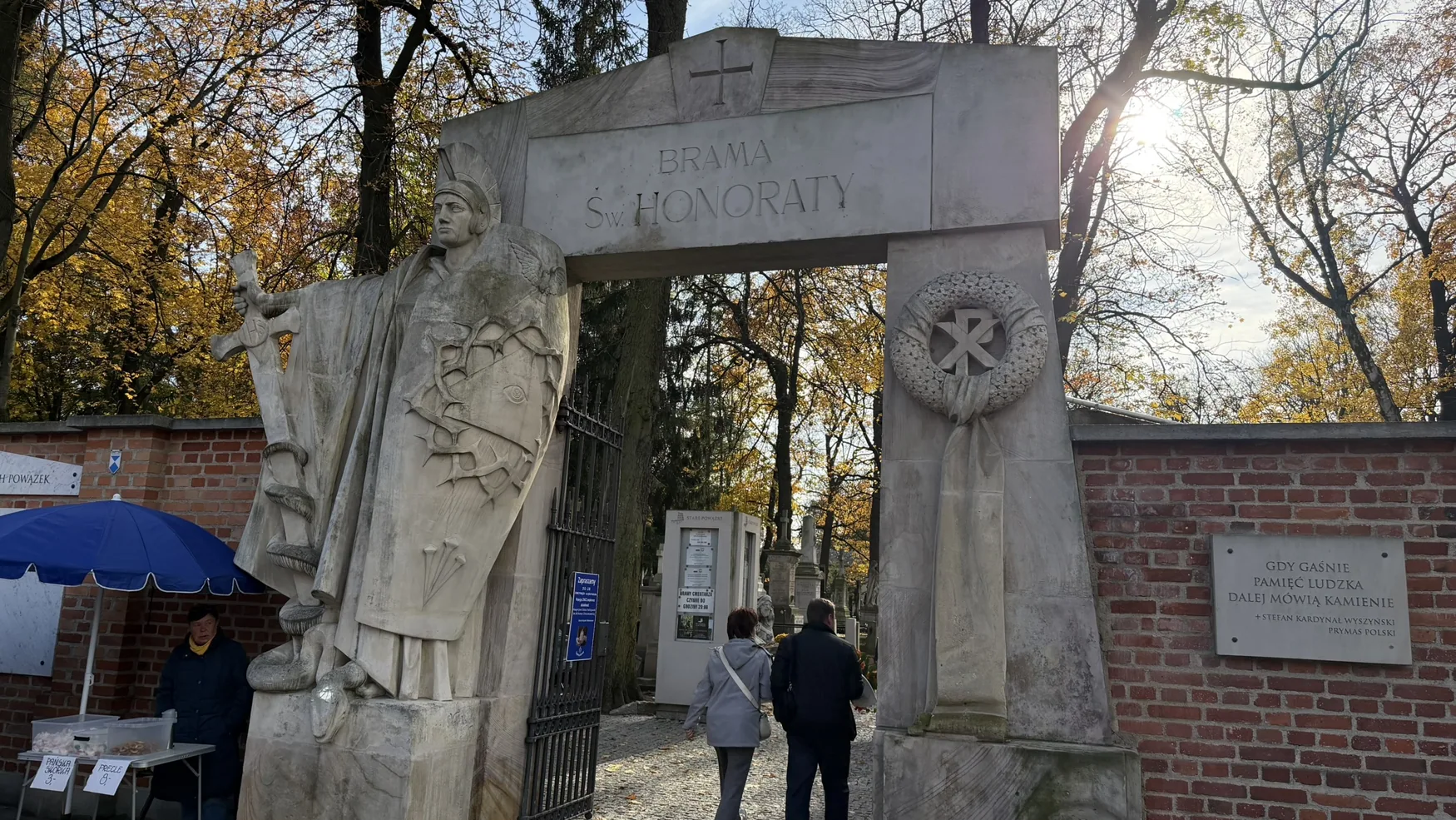
Near the entrance stands the Church of St Charles Borromeo, originally designed by the royal architect Dominik Merlini. The church you see today reflects later expansion and rebuilding, but its origins belong to the cemetery’s foundation. This is not the similarly named St Charles Borromeo church on Chłodna Street, elsewhere in Wola.
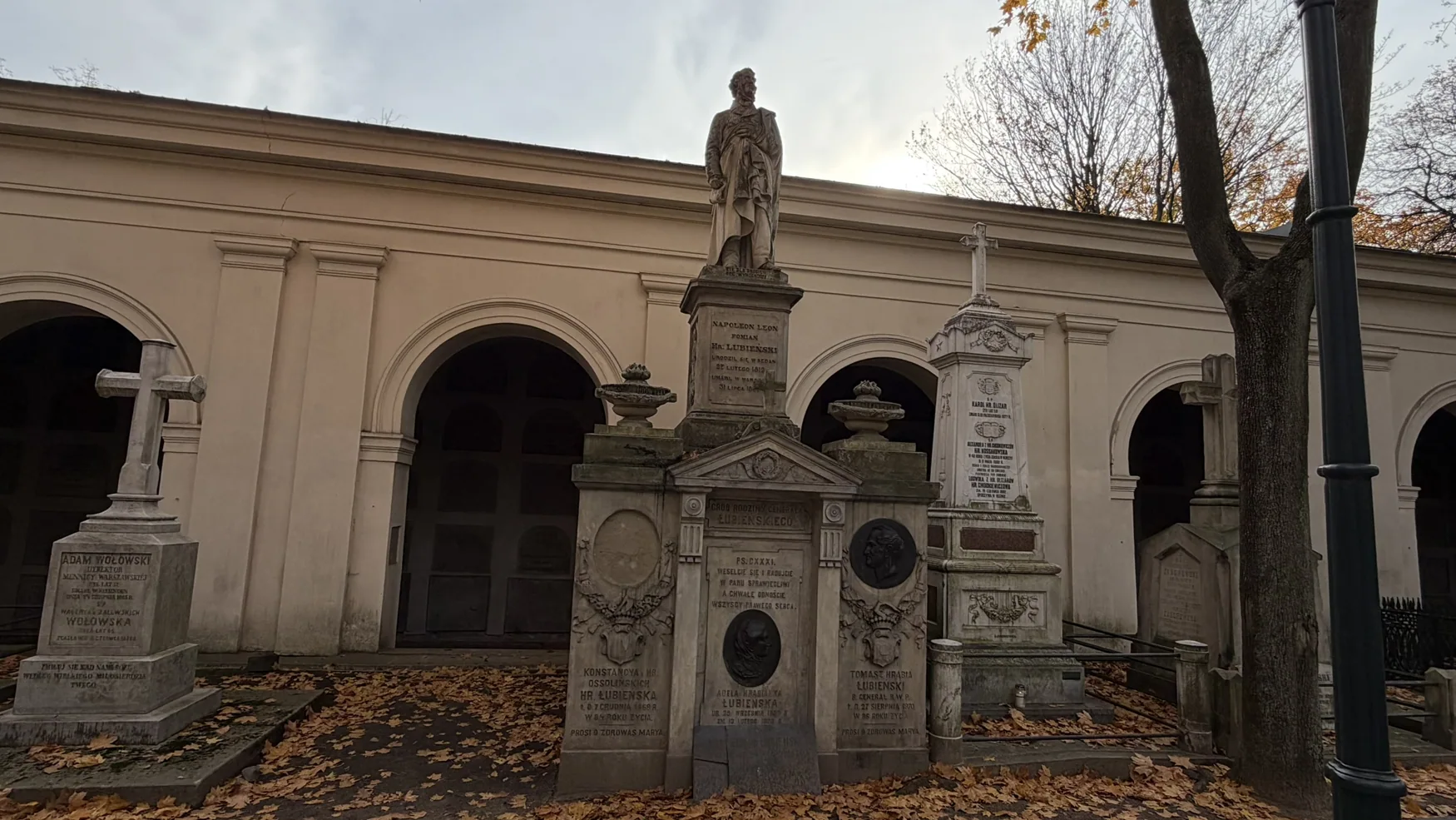
Nearby, the historic catacombs provide a link to the earliest plan for the cemetery. Their niches and memorials helped create a setting for distinguished burials long before the modern Avenue of Merit took shape. The contrast between ordered architecture and the surrounding jumble of family monuments is part of what makes this corner so compelling.
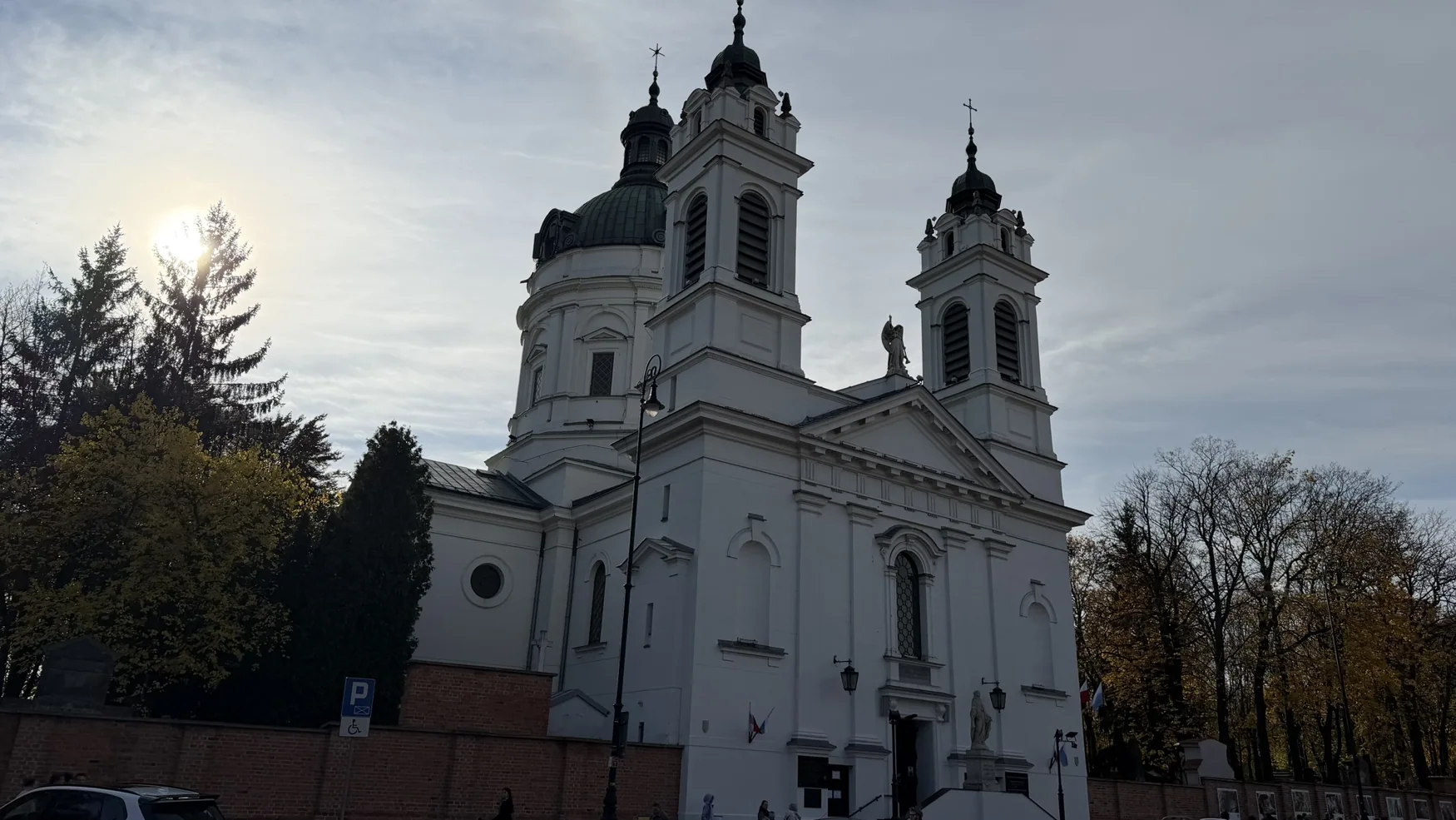
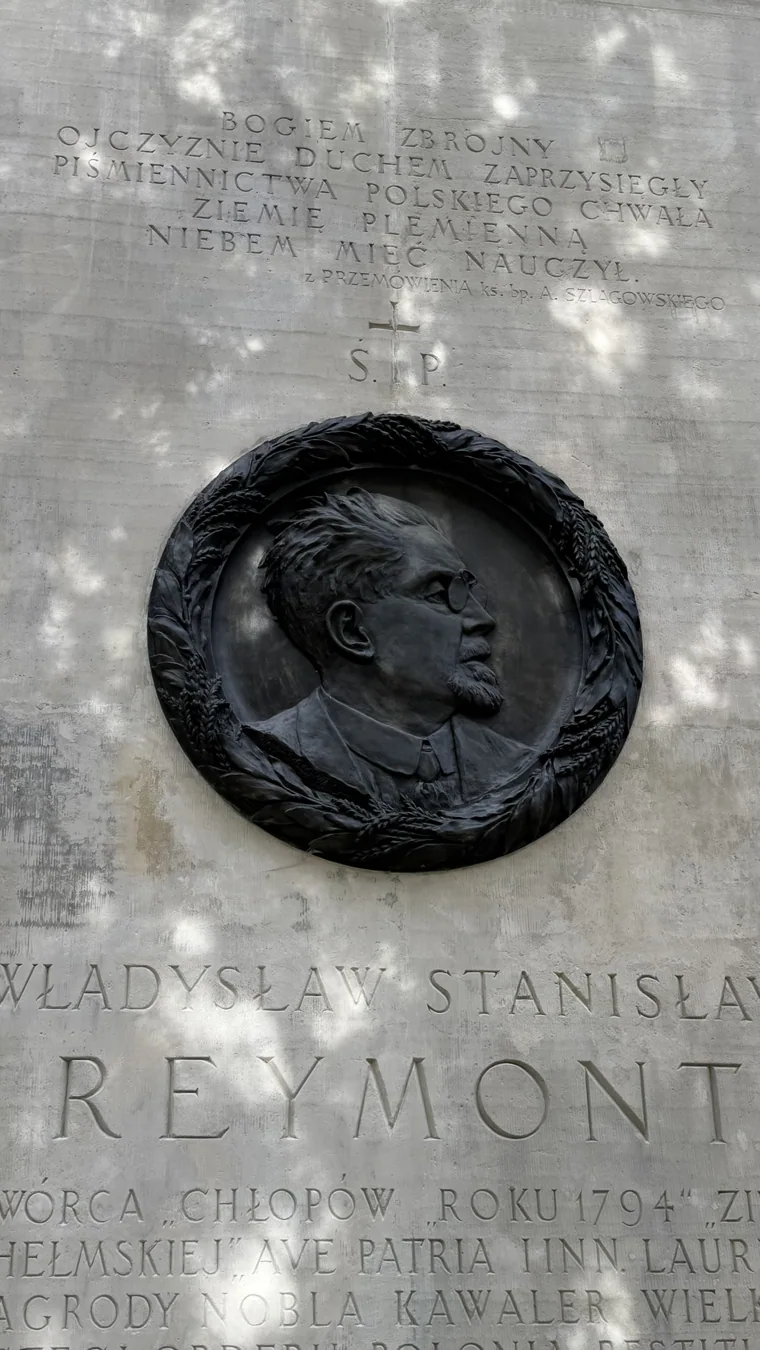
In 1925 the Avenue of Merit (Aleja Zasłużonych) was created behind the catacombs. Its beginning is associated with the funeral of Nobel Prize-winning novelist Władysław Reymont. From that point the avenue became a nationally important place of remembrance for writers, musicians, performers and other public figures.
An open-air museum of funerary sculpture
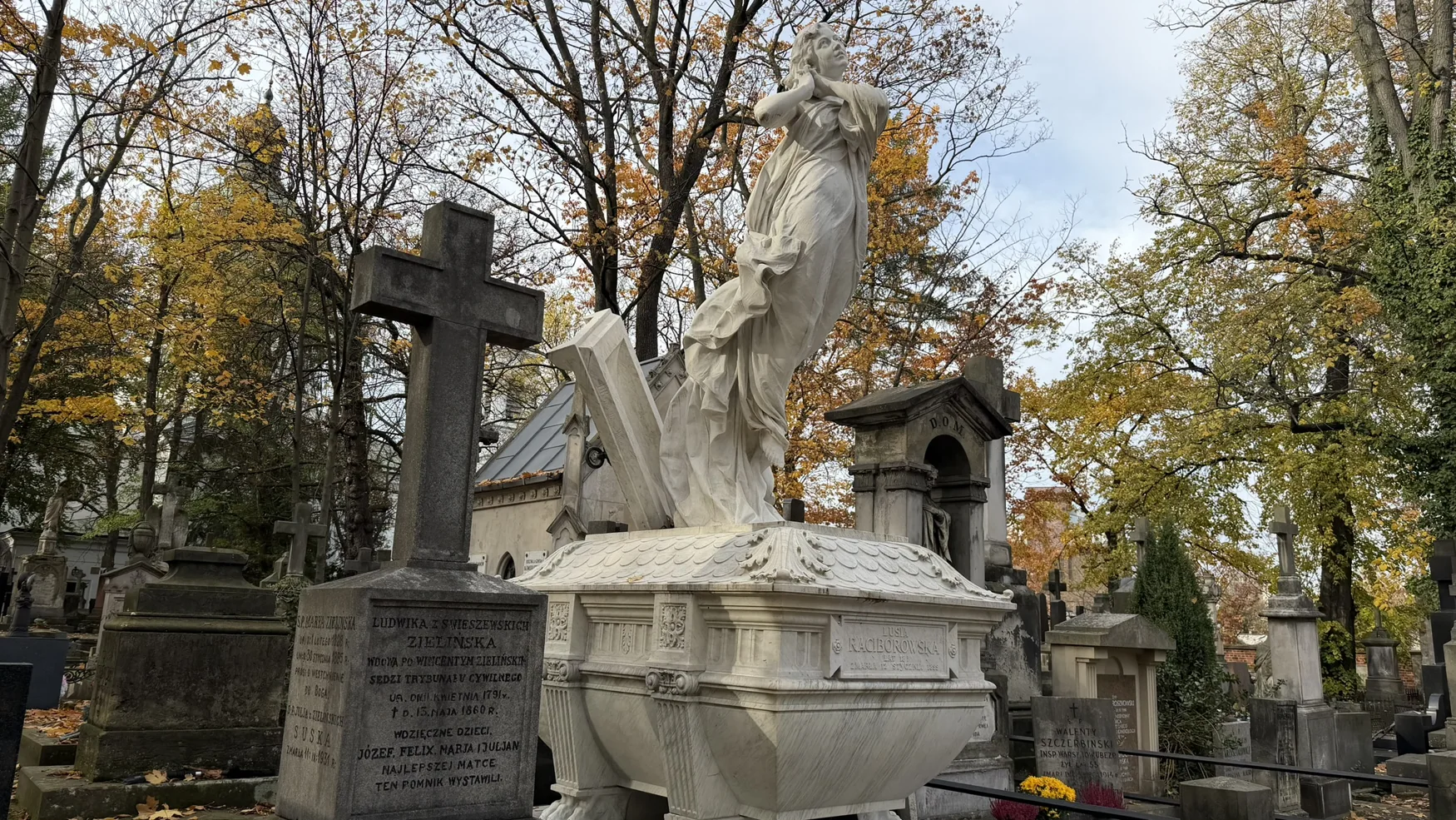
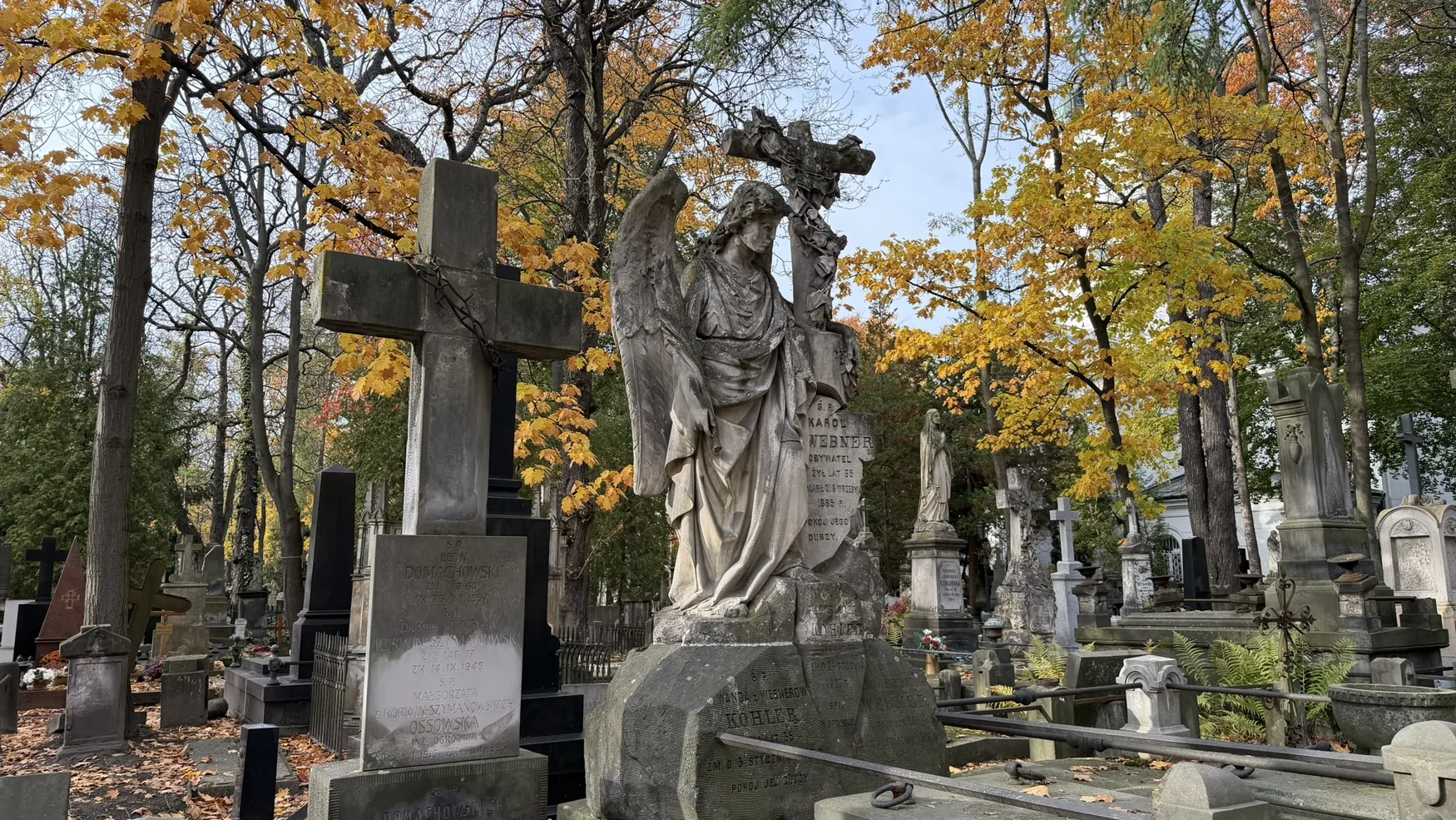
You do not need to recognise a single name to find something remarkable here. Old Powązki contains angels bending over tombs, weeping figures, carved foliage, crosses and sculptural portraits. Styles change from restrained classical forms to Gothic Revival ornament, expressive nineteenth-century mourning figures and later modern monuments.
A broken column might evoke a life interrupted; a wreath can suggest remembrance; a figure with bowed head conveys grief without needing an inscription translated. Such motifs are traditions rather than a strict visual dictionary — the meanings of particular monuments depend on their makers and families.
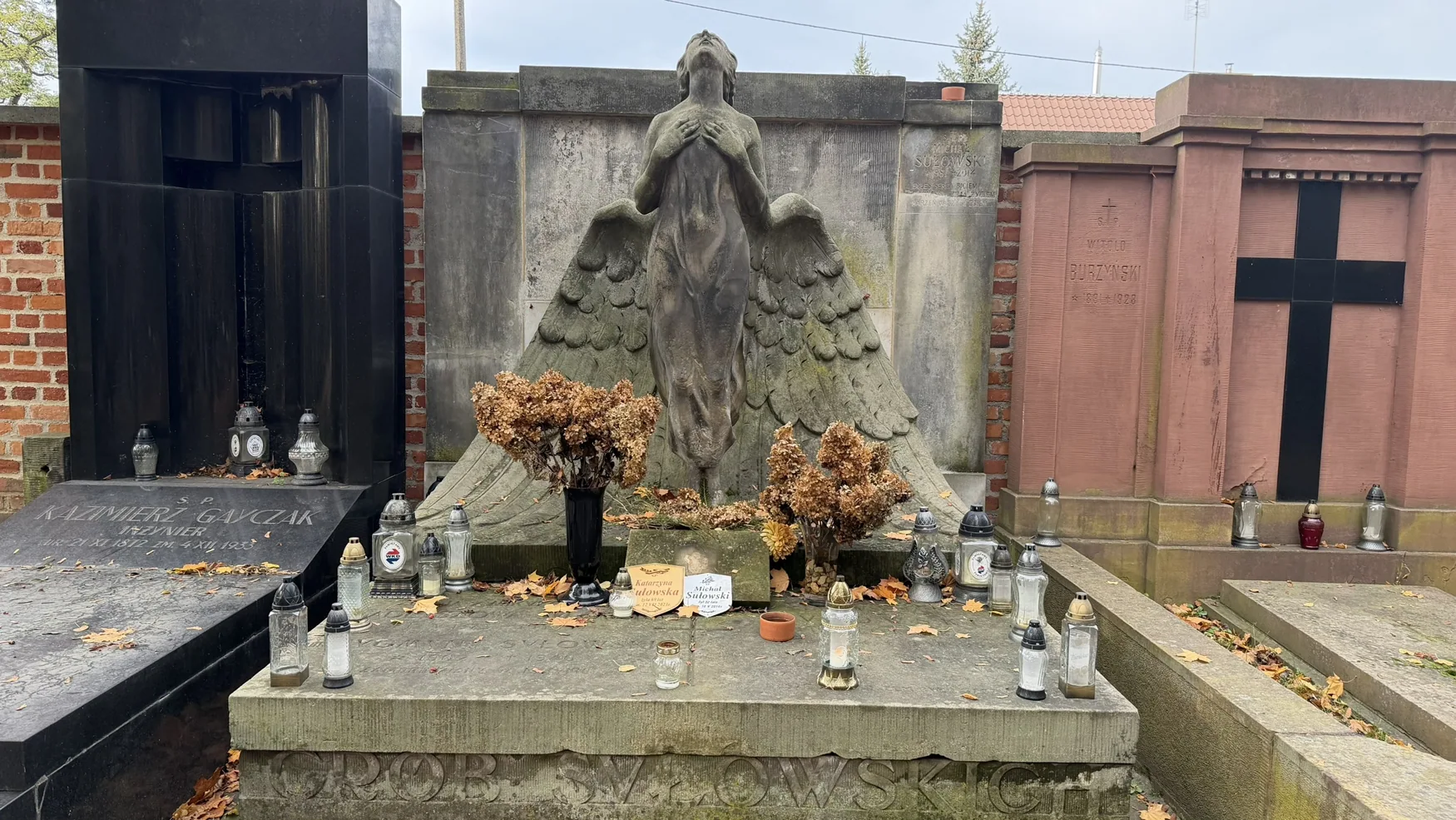
The sweeping, upturned wings in this photograph belong to the Sułowski family tomb (quarter 61, by the Tatarska Street wall). The sculptor was Stanisław Jackowski, whose work gives the angel an almost weightless sense of movement. Among those buried here is electrical engineer Tadeusz Sułowski (1875–1952), associated with the development of Polish electrification and radio. I made a point of seeking out this monument during my visit — and the stonework is even more striking up close.
Do not rush straight to the best-known tombs. Look down the quieter side avenues, where small memorial details are sometimes more moving than the grandest mausoleums.
Writers, musicians, and familiar voices
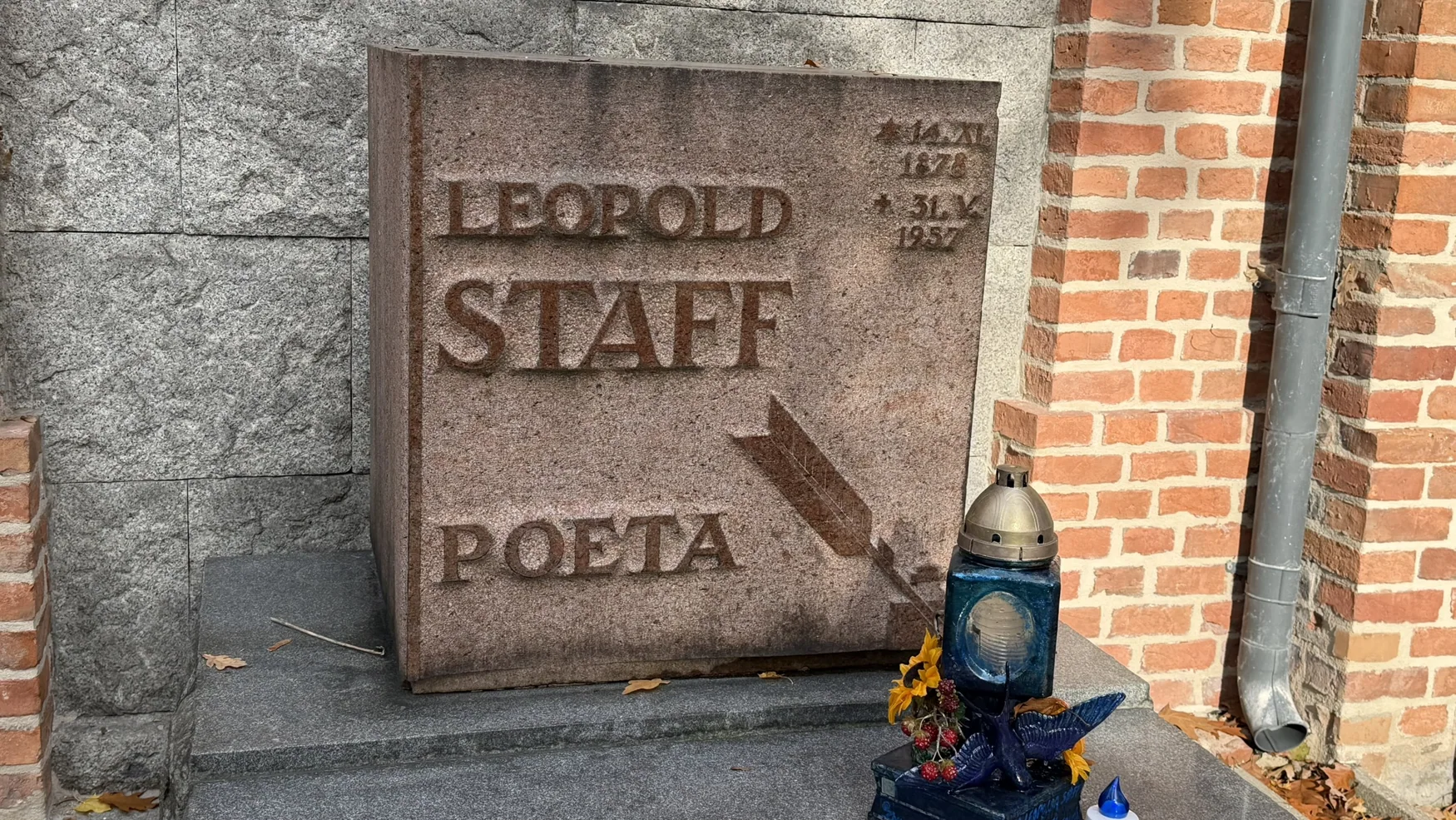
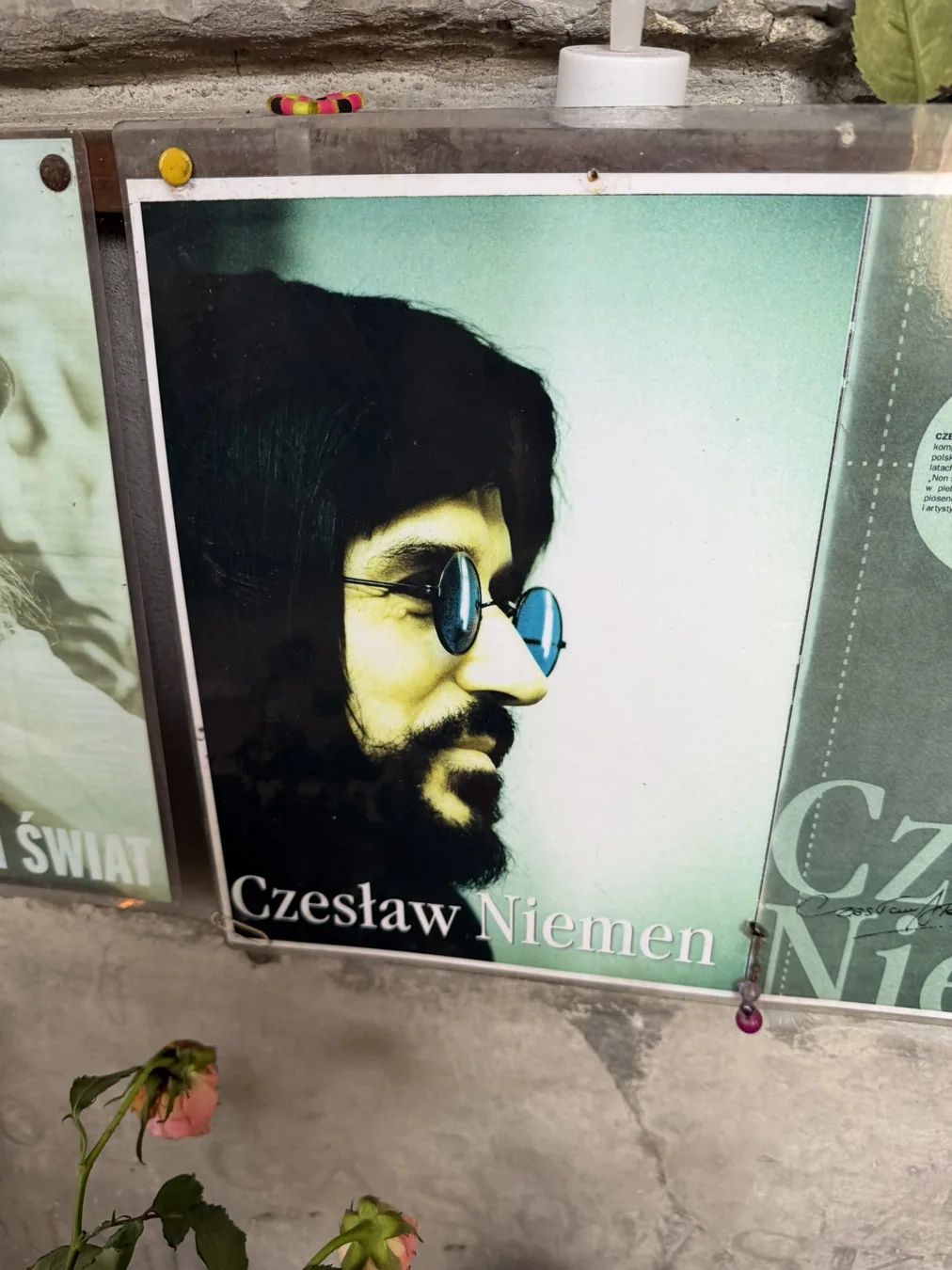
Old Powązki can be read as a cultural history of Poland. Władysław Reymont, awarded the Nobel Prize in Literature for The Peasants, is central to the Avenue of Merit’s story. The poet Leopold Staff represents another literary generation, while singer and songwriter Czesław Niemen brings the journey into the twentieth century.
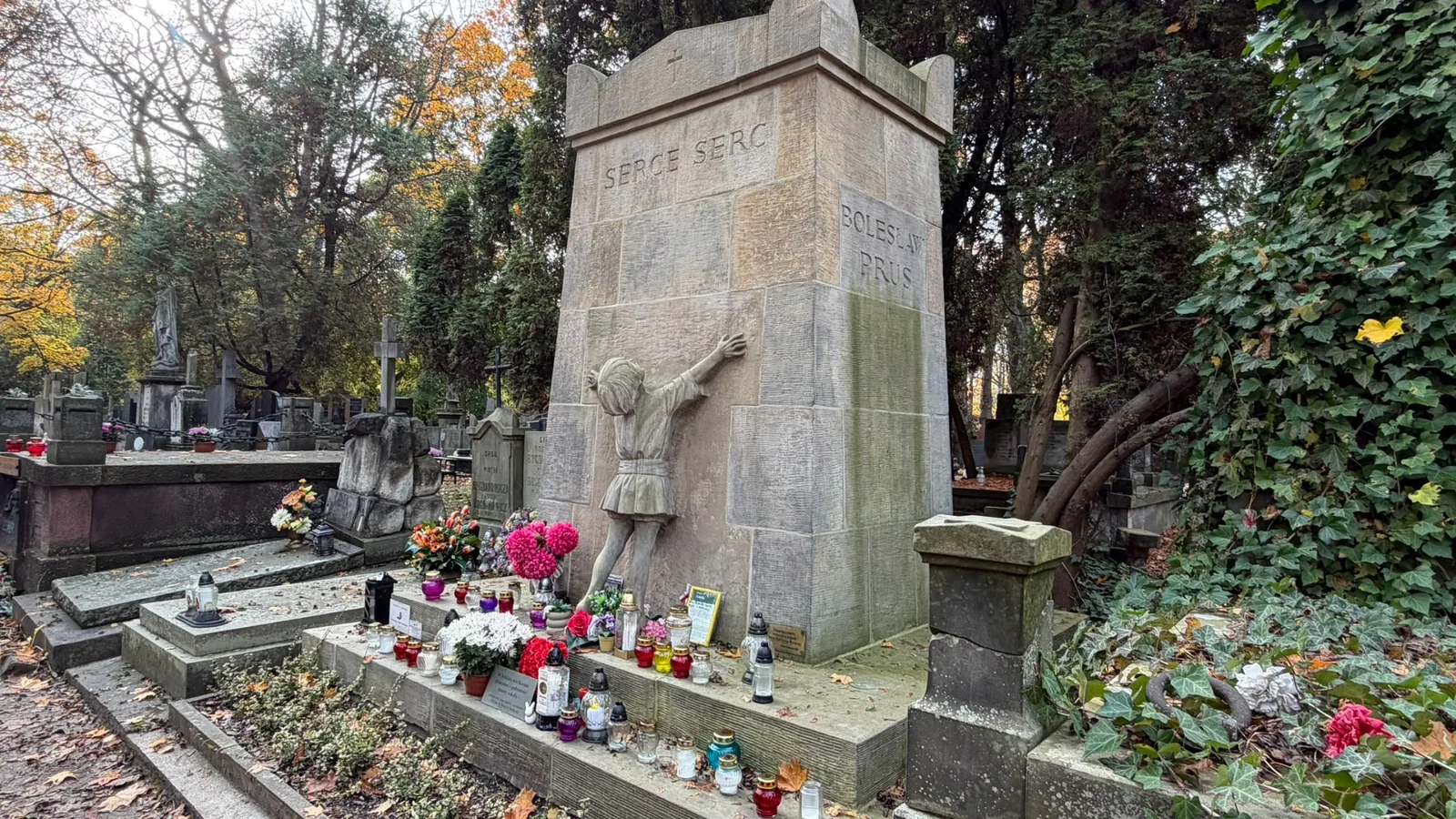
Another distinctive memorial belongs to Bolesław Prus (1847–1912), the novelist and journalist whose real name was Aleksander Głowacki. His grave in quarter 209 features a child leaning against a stone sarcophagus, beneath the inscription Serce serc (“Heart of hearts”). The monument, created by Stanisław Jackowski in 1914, is a remarkable connection to the angel on the Sułowski family tomb: two very different works by the same sculptor. Prus is an especially fitting figure to encounter in Warsaw, the city he chronicled so closely in his writing.
Elsewhere, figures such as composer Stanisław Moniuszko, violinist Henryk Wieniawski, writers Bolesław Leśmian and Maria Dąbrowska, and stage performers have their places in the cemetery’s wider landscape. This is not an exhaustive list, nor should it be a treasure hunt that reduces the cemetery to famous names. Their memorials are entry points into longer stories.
Some monuments are symbolic rather than places containing a person’s remains. That is another reason we avoid publishing unverified grave coordinates. If you are trying to locate someone, consult the cemetery’s official grave-finding database rather than relying on directions copied from a travel article.
What the cemetery witnessed
Old Powązki survived much of the destruction inflicted on Warsaw, but it did not escape the war. The cemetery authorities report that around one fifth of its gravestones were destroyed; the church suffered damage, and cemetery records burned during the Warsaw Uprising. Graves and vaults were used as hiding places and for storing weapons during the occupation.
This history changes the way the old stones look. Some monuments remain reminders of Warsaw before the war; others speak to repair, absence and interrupted records. The same cemetery that commemorates artists also holds memories of national uprisings, occupation and underground resistance.
Old Powązki is distinct from Military Powązki. The nearby military cemetery has its own history of soldiers, the 1944 uprising, the Gloria Victis monument and victims of communist repression. For the broader geography of these sites, explore our Warsaw Cemeteries guide and map.
When the avenues fill with light
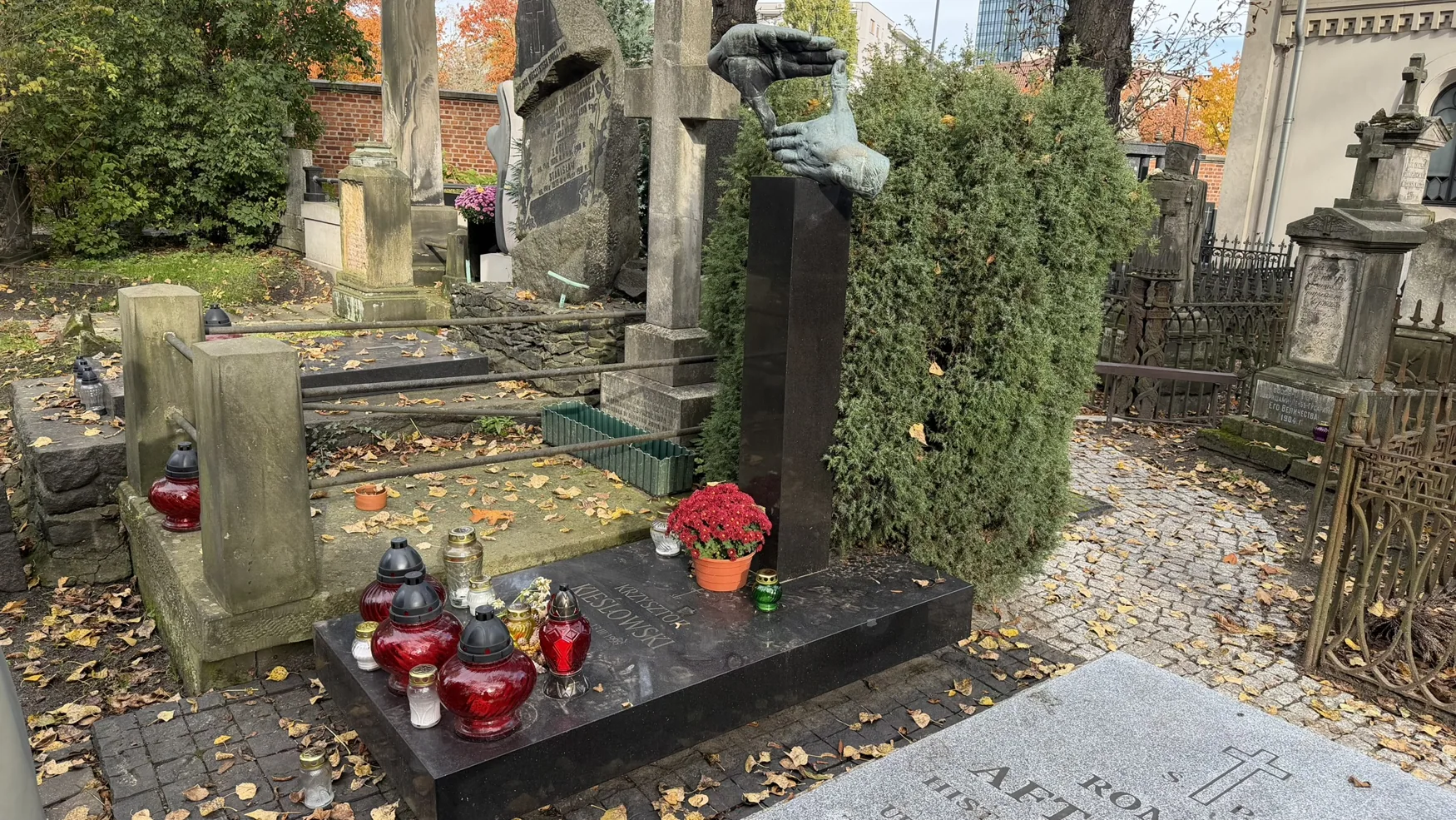
On 1 November, All Saints’ Day (Wszystkich Świętych), cemeteries across Poland glow with candles and fill with people visiting family graves. Old Powązki is particularly remarkable at this time: a place usually associated with quiet reflection becomes part of a shared citywide ritual of memory.
The annual kwesta — a charitable collection at the cemetery gates — was championed by music critic Jerzy Waldorff and has helped restore historic tombs and chapels for decades. It is more than seasonal fundraising: the collection connects the care of Warsaw’s physical heritage with the living people who return to remember it. The 2026 edition is the 52nd annual collection; check the foundation’s notices for dates and volunteering details.
If you visit around All Saints’ Day, expect crowds, temporary traffic changes and families tending graves. Come to observe respectfully, not to treat mourners as a spectacle.
How to explore Old Powązki
Where: Powązkowska 14, Warsaw. The cemetery is free to explore independently during opening hours, and the main grounds are extensive. Allow at least 90 minutes for an introduction; two to three hours is more comfortable if you enjoy architecture and historical detail.
Hours: The cemetery’s educational site lists summer gates as 07:00–20:00 and winter gates as 07:00–18:00. The parish website currently lists 07:00–20:00 year-round, so confirm the applicable hours directly before visiting, particularly on holidays.
Getting around: Carry a cemetery map or use the official digital tools. There are many similar-looking paths, uneven surfaces and old paving. You may encounter funerals and people tending family graves; give them space. Photographs of architecture and sculpture are useful, but avoid photographing mourners without permission.
Helpful resources: Official cemetery history · Visitor information and educational walks · Grave search.
Keep exploring: Warsaw’s Cemeteries & Memorials · Wola city guide · Sacred Warsaw.
Warsaw remembered, one life at a time
Old Powązki is not simply an archive of prominent names or a gallery of stone angels. It is a fragment of the city that survived its greatest catastrophe — and a place where remembrance is still part of everyday life. The most rewarding visit is one that gives both the famous and the unfamiliar their moment.
← Return to the Warsaw Cemeteries guide