Łużowa Góra
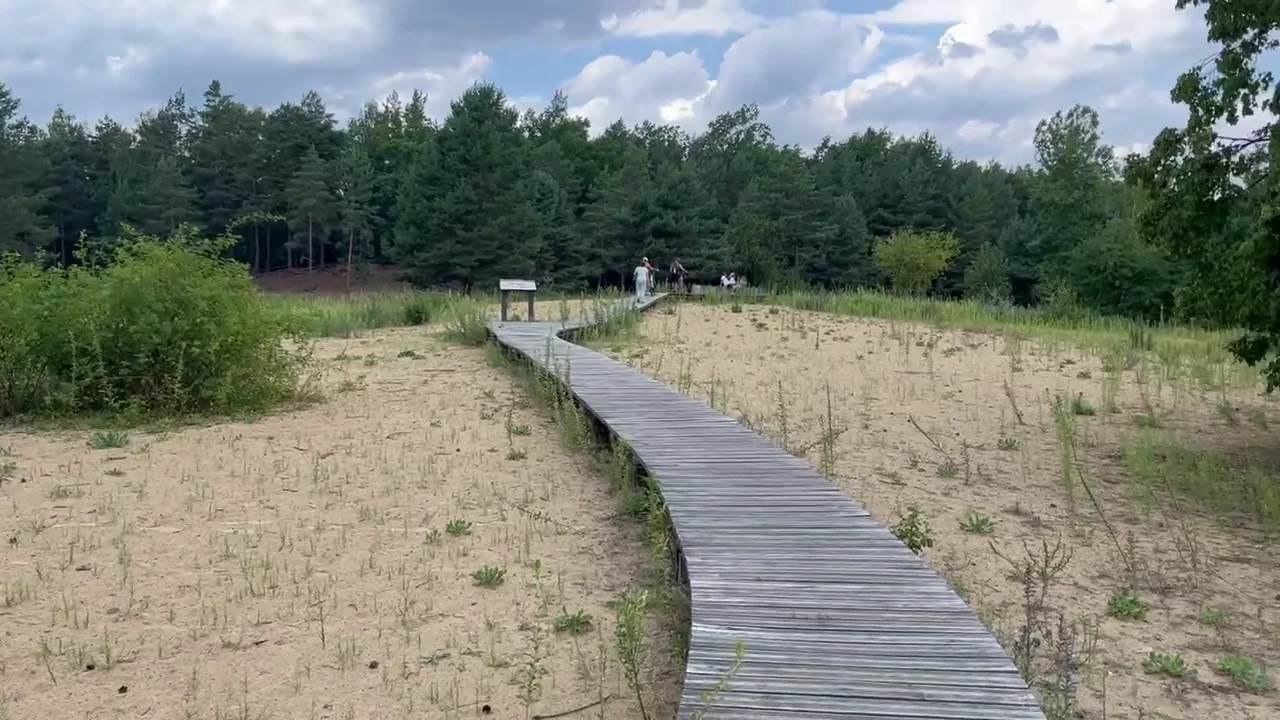
A short educational walk through restored dunes with Cold War and bat-conservation history. Expect steps and sandy ground.

Warsaw City Guide · Nature, hiking & history
Ancient-looking forests, inland dunes, hidden wetlands and extraordinary stories on Warsaw’s doorstep.
Explore the guide ↓Just beyond Warsaw’s northwestern suburbs lies a landscape that feels far removed from the Polish capital. Tall pine forests stretch across sandy ridges, wetlands shelter wildlife, and quiet paths wind between dunes formed thousands of years ago.
Established in 1959, Kampinos National Park protects one of the greatest natural landscapes on Warsaw’s doorstep. Yet its beauty is only part of the story. The trees also shelter memorials to victims of German occupation, while a secret Cold War command installation has become a refuge for hibernating bats.
Visitor orientation
National park · Strictly protected area (keep to marked routes) · Park educational trails · Wetland · 3 A ringed pin also belongs to a second group
Numbered places are independent locations, not a route. The green lines are the national park’s own educational trails, drawn from OpenStreetMap; for all other walks, follow the marked trails on the ground and the national park’s trail information ↗. Keep to marked routes: much of the park is strictly protected.
Nature & landscape
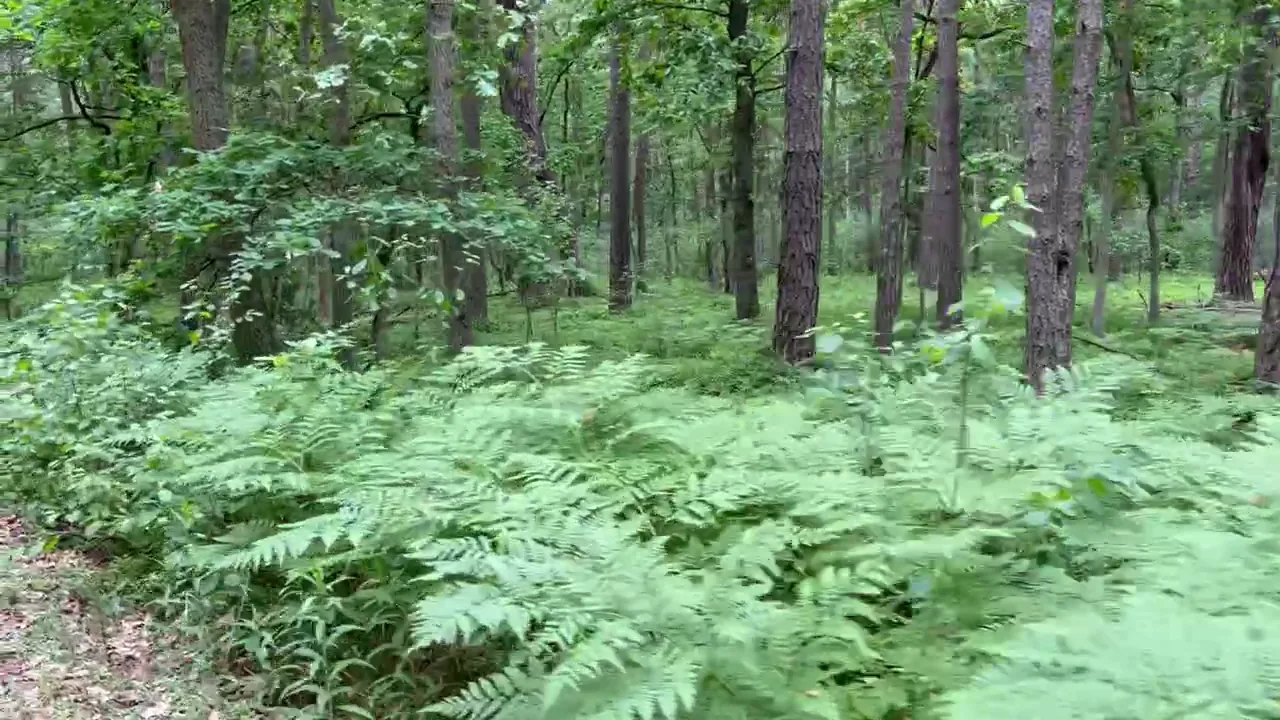
During and after the last glaciation, river systems helped shape the broad Vistula valley and deposited extensive layers of sand. Wind moved the exposed sediment into belts of inland dunes. Many are now stabilised by forests, but sandy slopes remain visible on the trails.
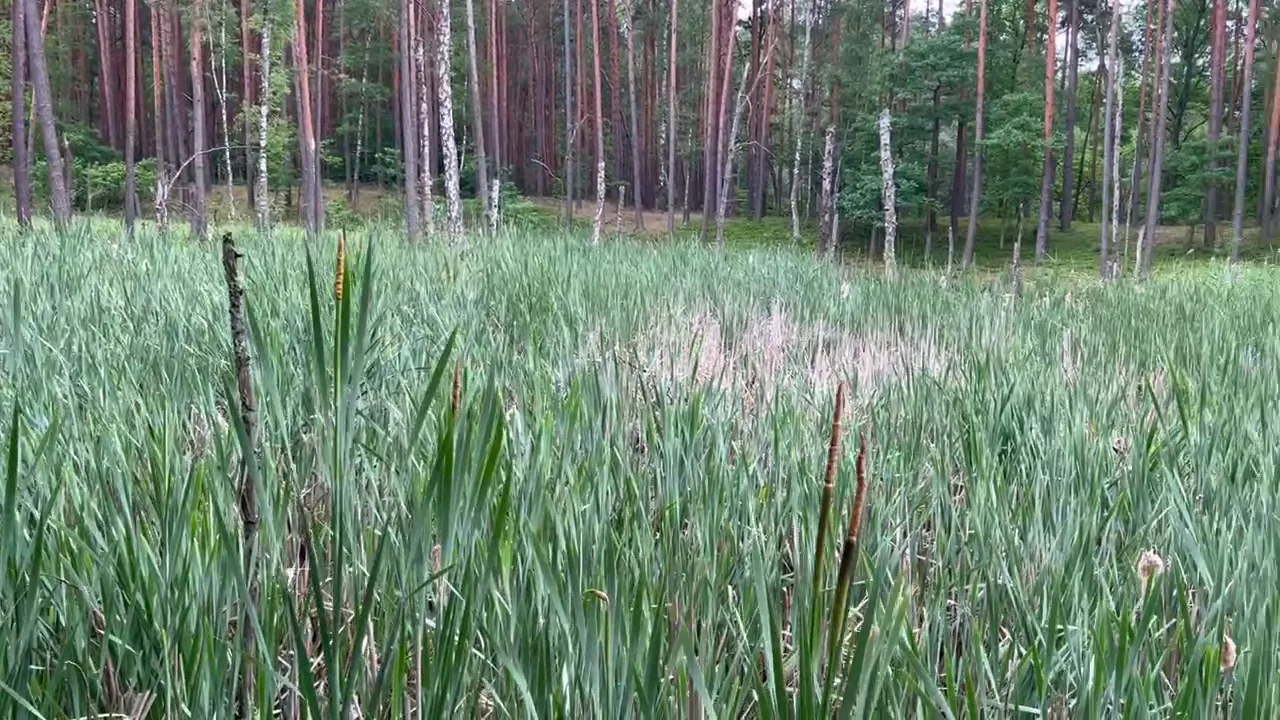
Between the dunes lie lower, wetter areas: marshes, peatlands and damp woodland supporting plants and animals quite different from those on the dry ridges. Walking across soft sand is deceptively tiring, even where the hills are modest.
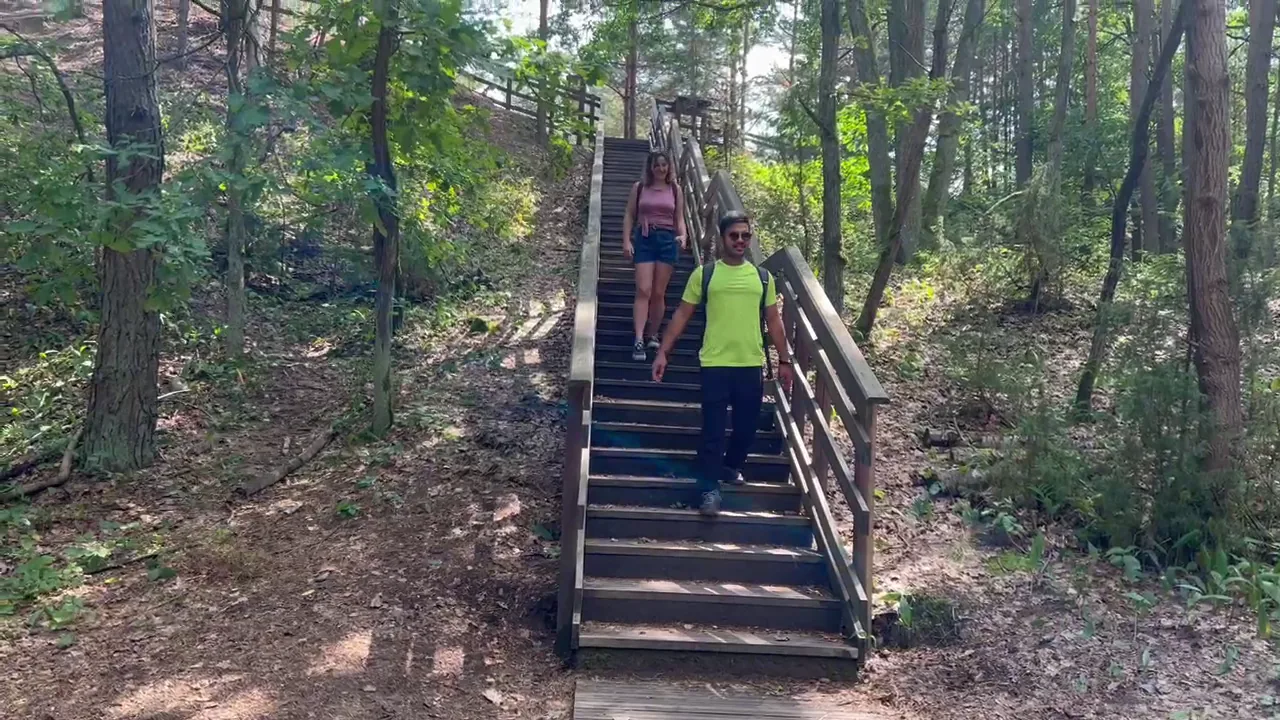
Historical drainage altered the forest’s water system. Conservation work now seeks to hold water in the landscape and restore damaged habitats. Kampinos is not a museum of untouched wilderness; it is a living environment being actively cared for.
Nature & wildlife
The park supports elk (łoś, called moose in North America), deer, wild boar, foxes, birds, amphibians and an abundance of smaller wildlife. The European elk appears on the park emblem. Reintroduction began in 1951, before Kampinos became a national park.
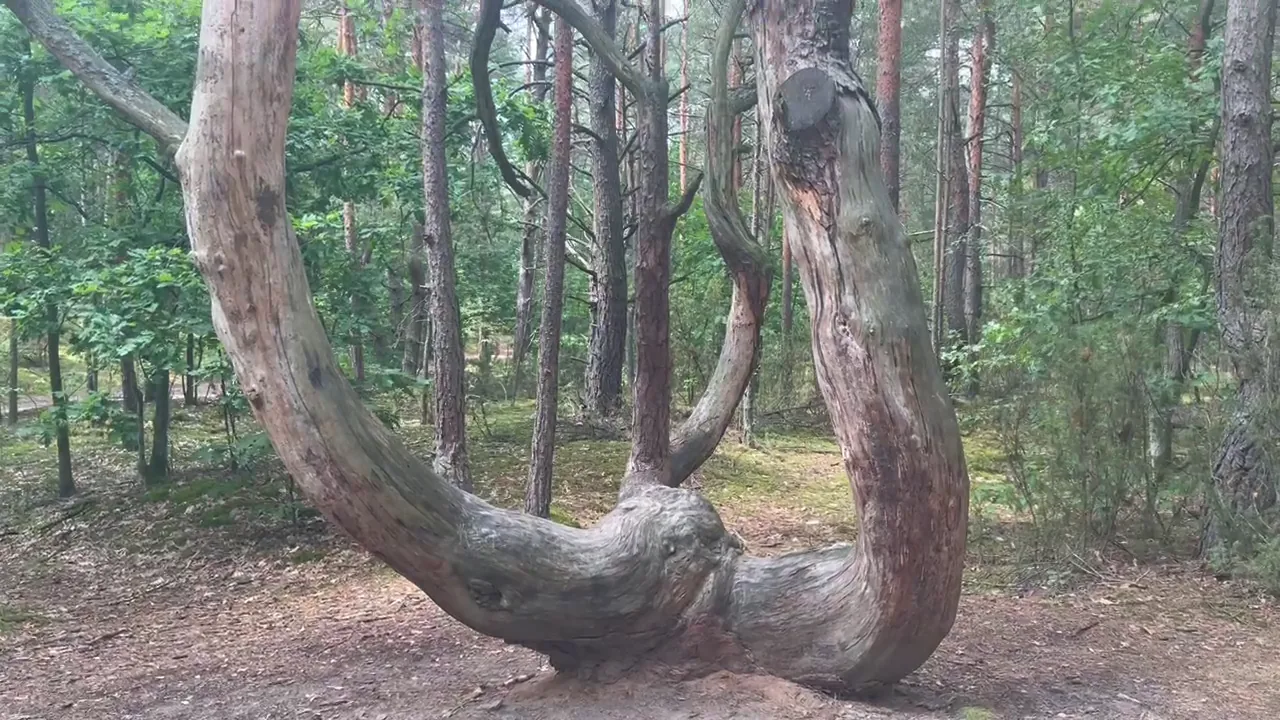
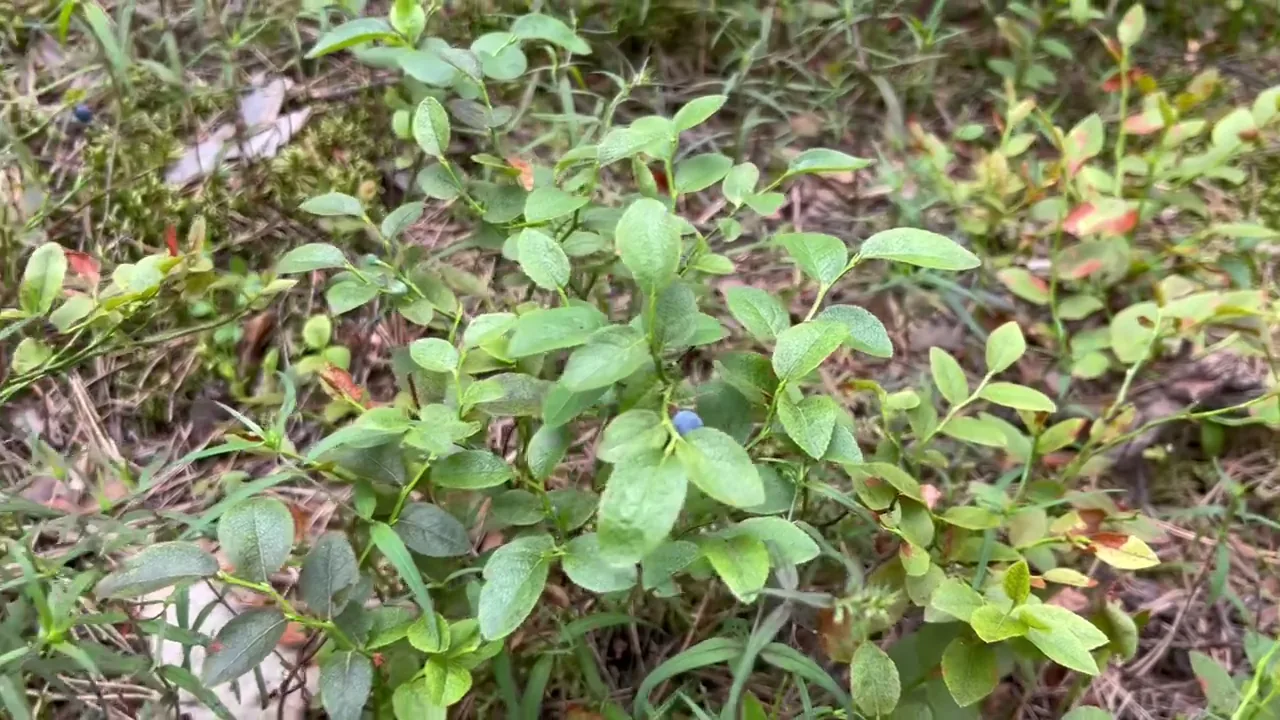
Don’t expect a wildlife safari. Most large mammals are shy, and sightings cannot be guaranteed. A rustle in the undergrowth, birdsong, a track in the sand or a patch of bilberries may be a more typical encounter.
Among the most interesting protected inhabitants are the bats, whose winter survival has given a former military installation a remarkable second life.
Cold War & conservation
Hidden in the forest at Łużowa Góra is the history of Complex 7215, a secret reserve command facility planned for Warsaw Pact leadership during a major conflict, including the possibility of nuclear war. Construction began in the 1960s, continued for more than two decades, and never fulfilled its intended operational role.
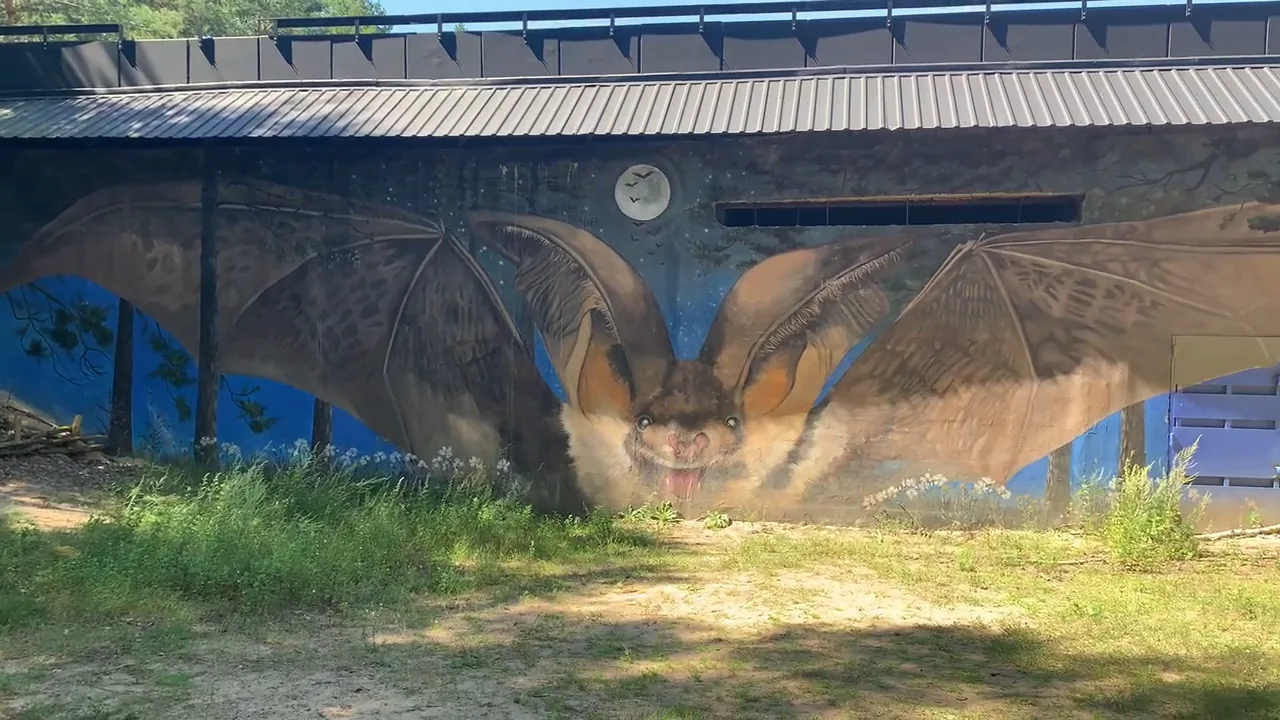
After the Cold War, the surviving installation was transferred to the national park. In 2017 above-ground structures were removed, parts of the sandy habitat were restored, and a surviving underground space was adapted to provide a winter hibernation refuge for bats.
The approximately 2 km educational route passes through the restored dune landscape, with sandy ground, steps and a boardwalk. It is not suitable for all mobility needs or pushchairs. The protected underground hibernation area is not open to visitors.
The Łuże dunes also carry memories of the Second World War: executions took place elsewhere in this forest landscape during German occupation. Different periods of history are layered onto the same ground.
Occupation & remembrance
It is affecting to encounter a war memorial on an otherwise peaceful forest walk. During the Second World War, parts of Kampinos became places of resistance, execution and clandestine burial. The best-known of these sites is Palmiry.
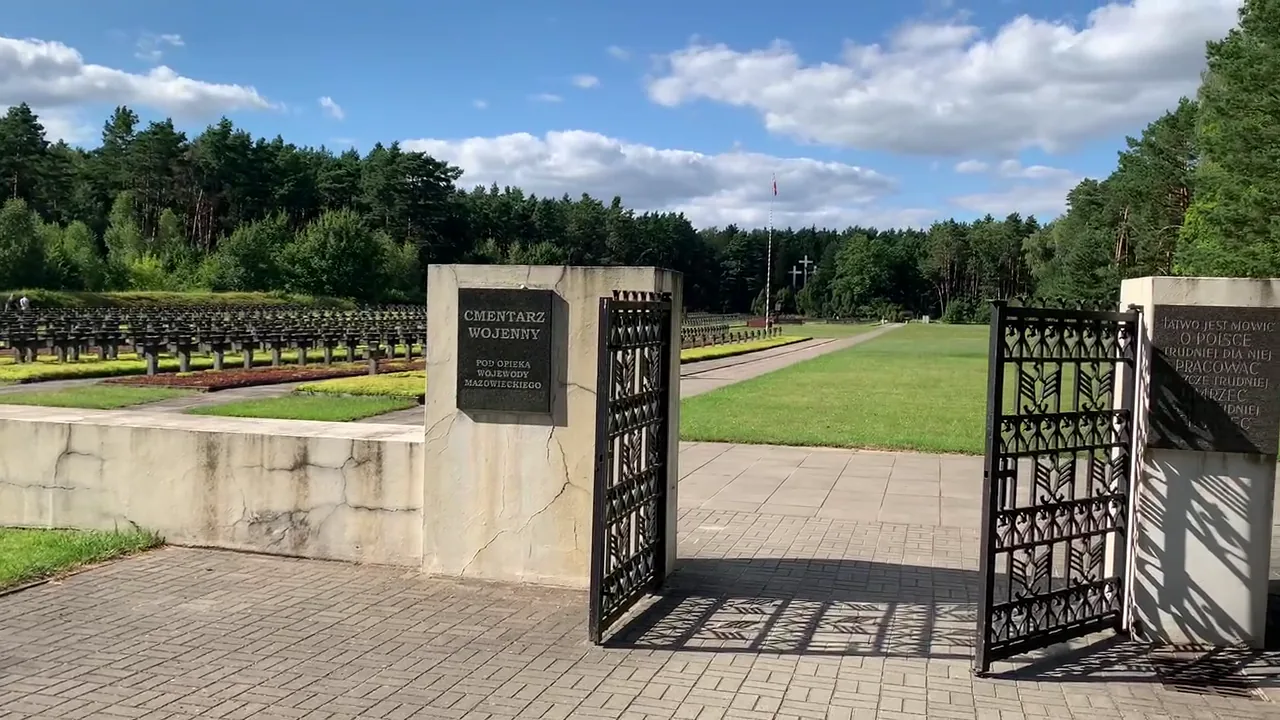
Before September 1939 the Palmiry area contained Polish Army ammunition depots. Under German occupation, the secluded forest became a killing ground. Prisoners — many brought from Warsaw’s Pawiak prison — were transported out of public sight, murdered and buried in concealed mass graves.
Between December 1939 and July 1941, German forces carried out 21 documented mass executions near Palmiry, murdering more than 1,700 people. The victims included political prisoners, Polish and Jewish civilians, intellectuals, clergy and members of the emerging resistance.
The largest Palmiry execution took place over these two days, when more than 360 prisoners were murdered, including 82 women. Exact totals differ between historical accounts. Among those killed were Olympic champion Janusz Kusociński — who had volunteered in the defence of Warsaw in 1939 — former Sejm Marshal Maciej Rataj, and socialist politician Mieczysław Niedziałkowski. Their stories are a window into a much larger loss of individual lives.
The perpetrators tried to disguise the burial places, but forestry workers and others familiar with the area preserved knowledge of suspicious activity. After the war, exhumations recovered remains and personal possessions, helping identify some of the victims.
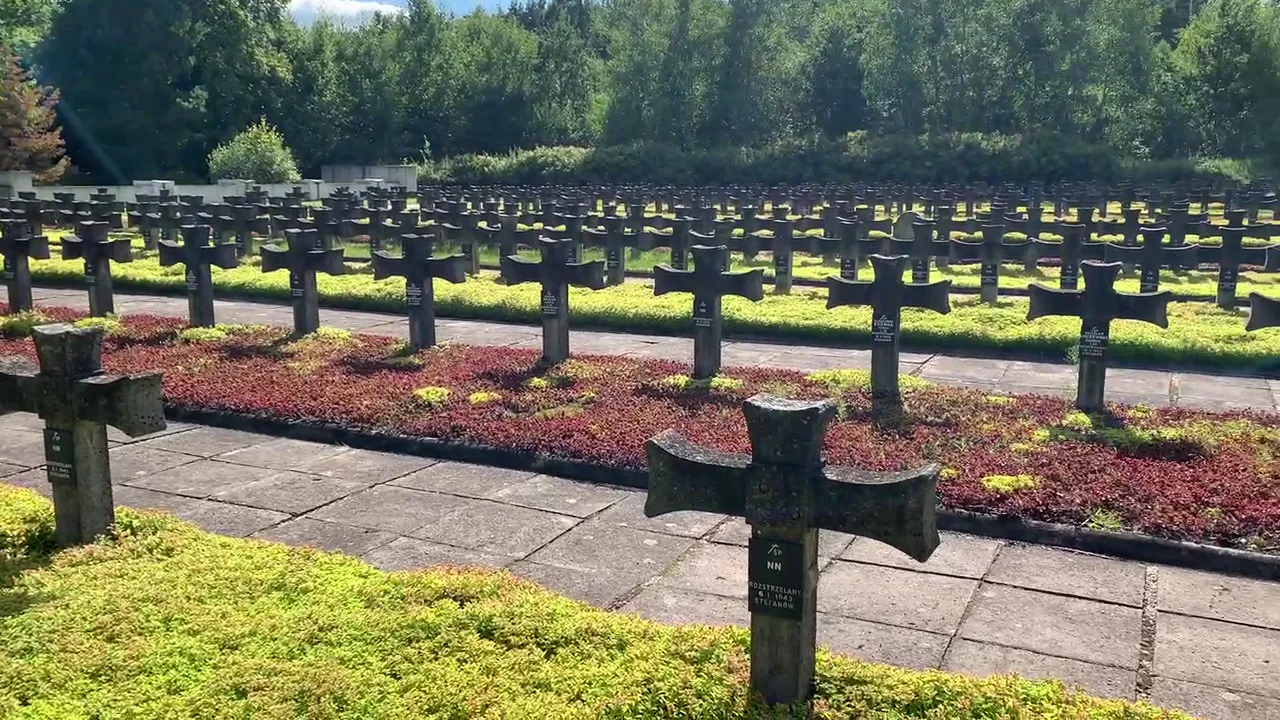
The cemetery-mausoleum, established in 1948, contains the remains of 2,115 victims recovered from sites in the Kampinos Forest and the nearby Chojnów woods. This is why the number buried here is higher than the documented Palmiry execution toll. Killings also occurred elsewhere in the forest, including near Wólka Węglowa, Laski and the Łuże dunes, continuing at other sites into 1943.
History & visitor information
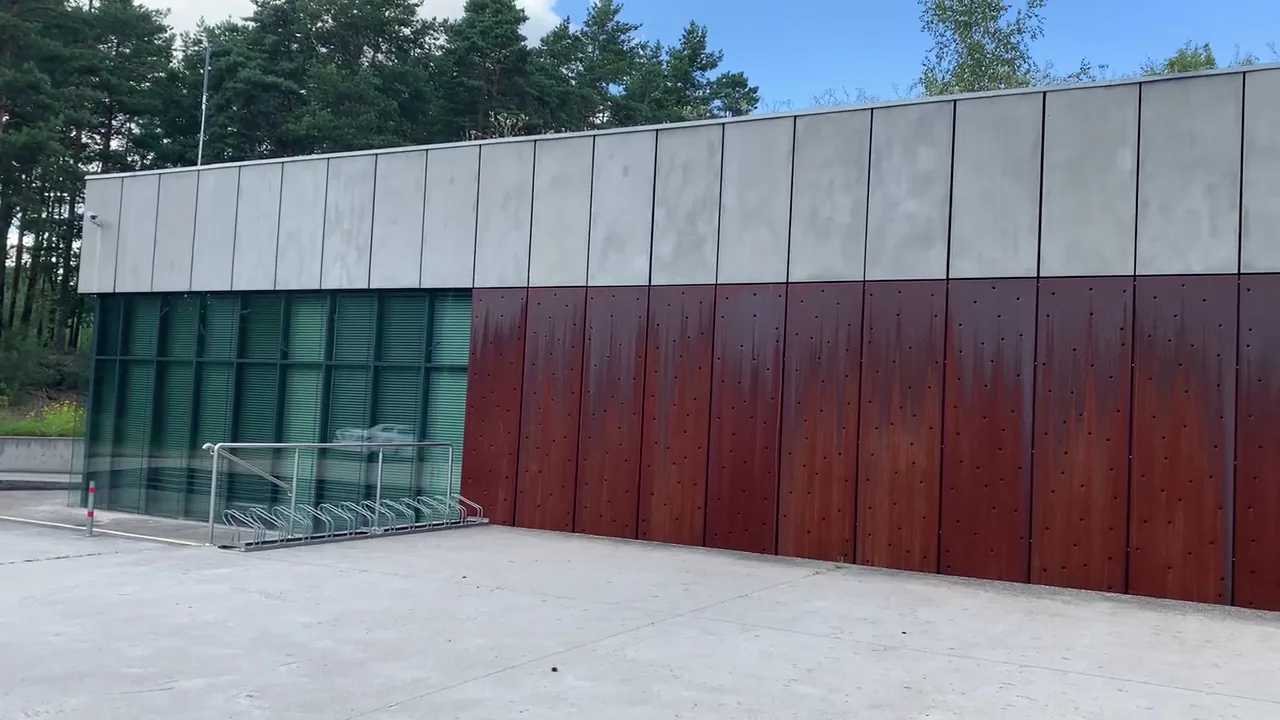
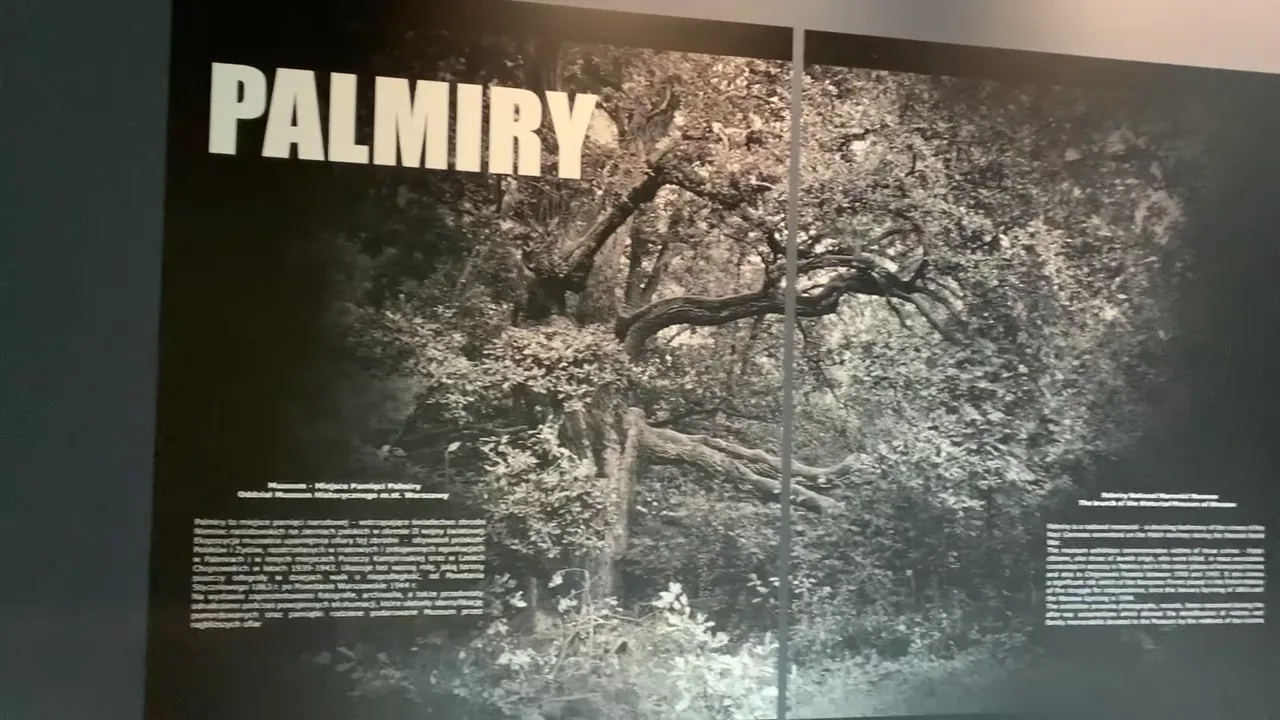
The Palmiry Memorial Museum (Muzeum – Miejsce Pamięci Palmiry), a branch of the Museum of Warsaw, stands beside the cemetery. Its exhibition uses historical photographs, correspondence, personal objects and material recovered during exhumations to tell the victims’ stories.
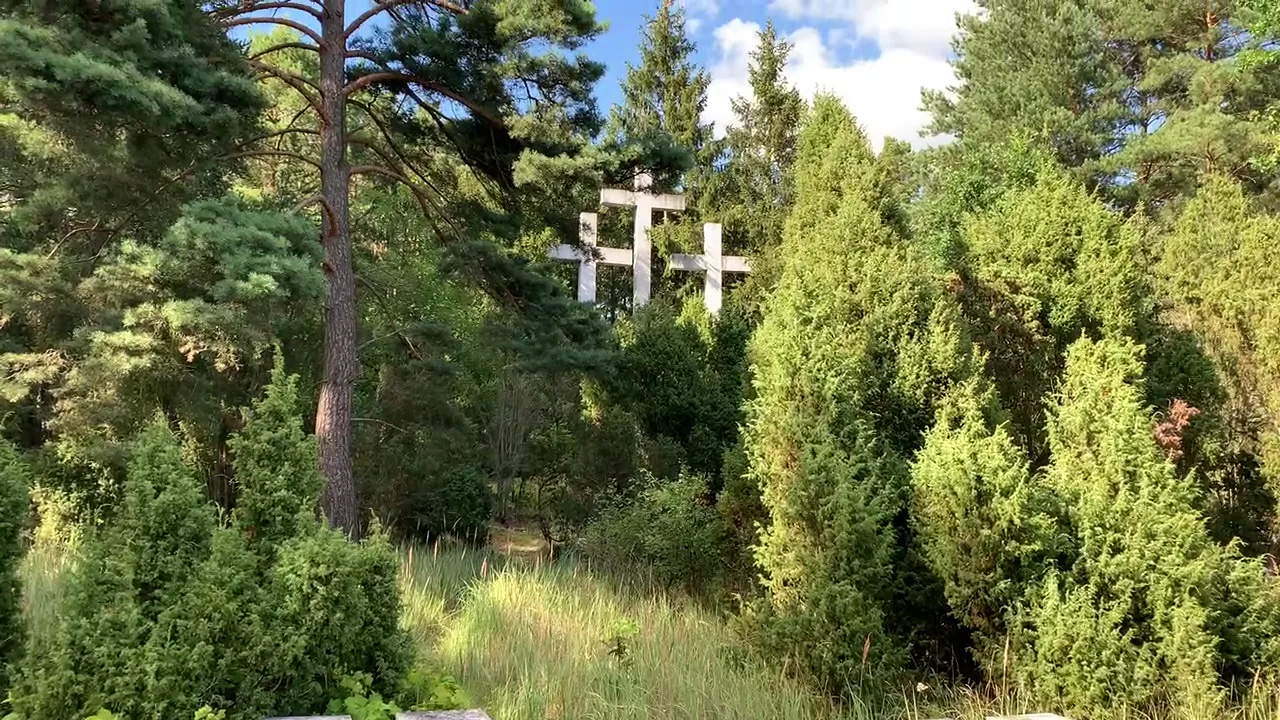
Outside, the cemetery’s ordered rows of graves and three monumental crosses form a quiet memorial landscape.
Address: Droga Palmirska 1, Czosnów
Seasonal opening hours (check before visiting): Tuesday–Sunday 10:00–18:00 from 1 April to 1 November; 09:00–16:00 from 2 November to 31 March. Closed Mondays, with possible holiday exceptions.
Published ticket prices at time of writing: 5 zł standard, 3 zł reduced, 10 zł family. The national park itself is free to enter.
The Warsaw Uprising
Alongside the terrible history of occupation terror, Kampinos provided shelter and operating space for the Polish underground. During the Warsaw Uprising of 1944, the Home Army formation known as Grupa Kampinos brought together local units and soldiers who reached the forest from elsewhere.
At its peak the force numbered approximately 2,700–3,000 soldiers, although estimates vary. For a time, insurgents controlled significant areas in the eastern and central forest, associated with the name Niepodległa Rzeczpospolita Kampinoska — the Independent Republic of Kampinos.
Their actions tied down German forces and attempted to support the struggle in Warsaw. The human cost was heavy. Soldiers died in battle, civilians suffered reprisals and communities endured occupation violence.
For another historical stop, the Granica visitor area includes educational facilities and a war cemetery associated with the Kampinos resistance story.
Choose your day out
With more than 360 km of marked walking trails and around 200 km of cycling routes, Kampinos offers everything from short educational outings to long days in the forest. Deep sand, wet patches and occasional steep dune slopes can make distances harder than they look on paper.
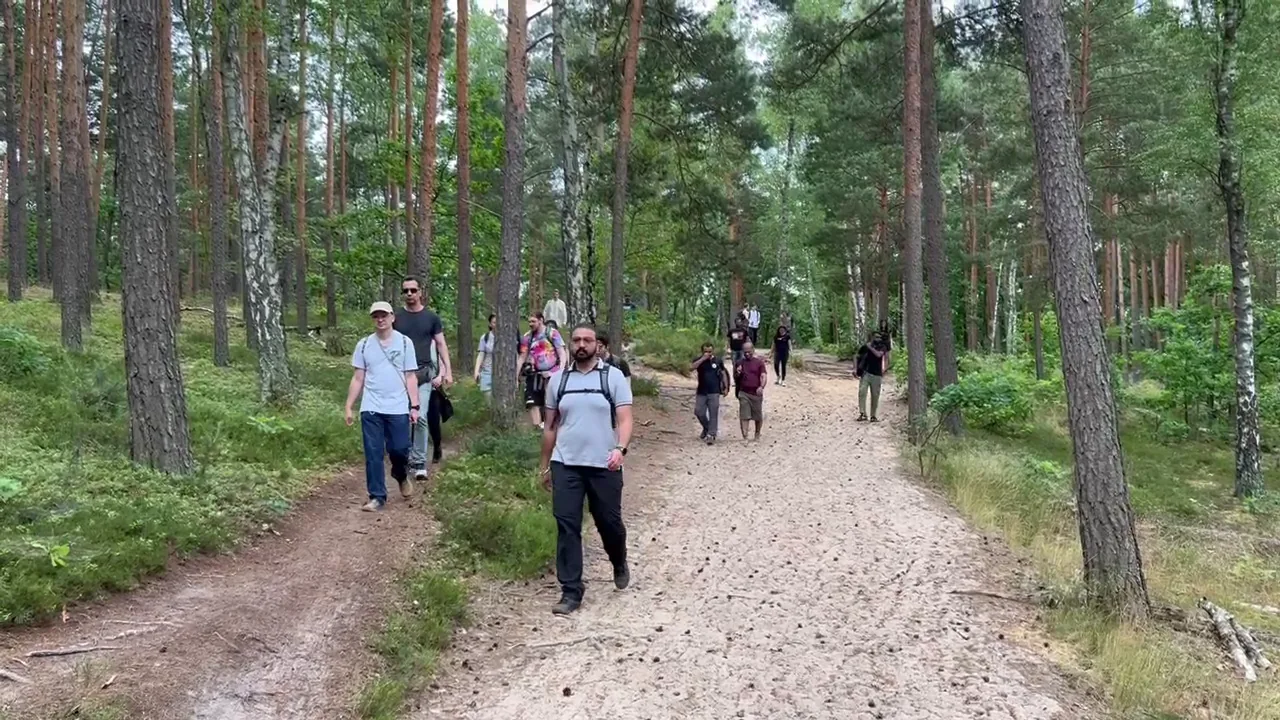
A short educational walk through restored dunes with Cold War and bat-conservation history. Expect steps and sandy ground.
Visit the museum and cemetery, then choose a separate marked walk through nearby woodland.
Useful eastern starting points for Warsaw visitors, with a choice of forest paths.
Educational and museum facilities, historic woodland features and resistance history.
A starting area for longer walks in the western forest.
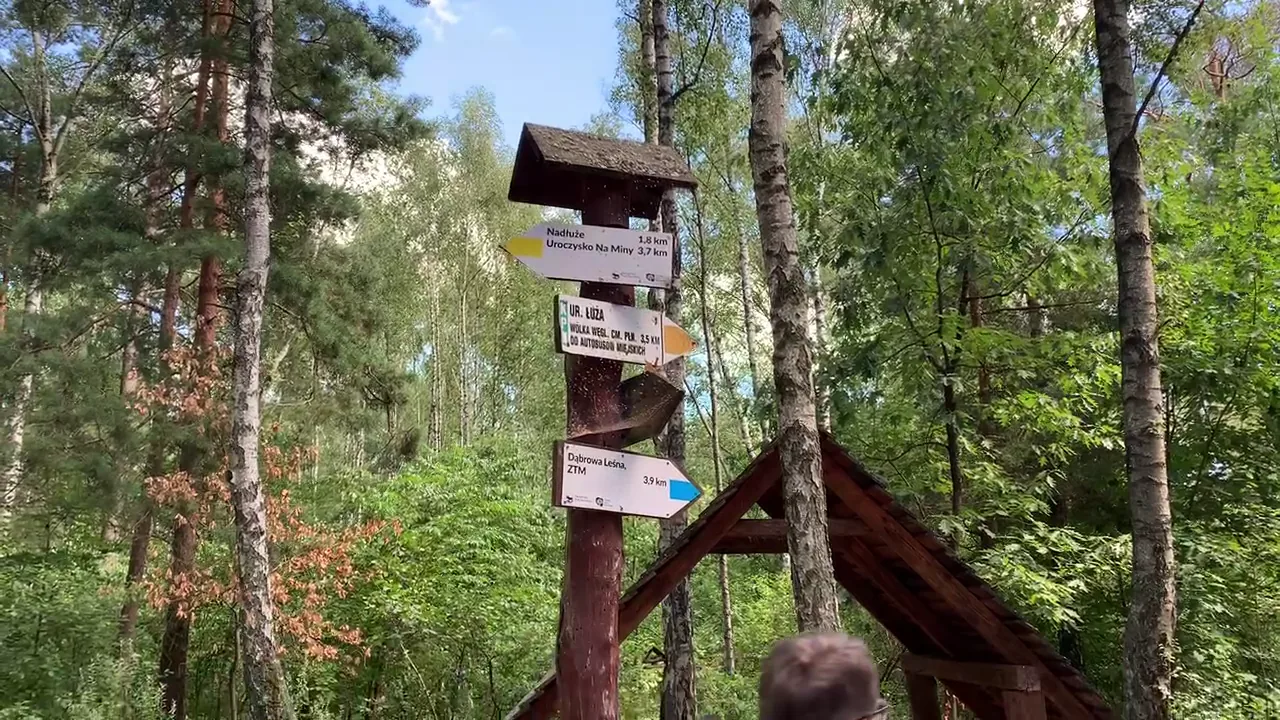
These are separate access areas, not stages of one continuous route. For cycling, stay on permitted paths; deep sand makes some sections difficult, especially on narrow tyres.
Plan your visit
Eastern entrances around Truskaw, Izabelin and Dąbrowa Leśna are often the simplest to approach from Warsaw by public transport. For more remote areas, a car may be convenient. Check current ZTM connections and return times rather than relying on an old bus number.
General entry to the national park is free. Museums, organised activities and some car parks may charge separately.
Spring has new growth and sometimes muddy paths; summer offers long days but mosquitoes and heat; autumn brings colour and cooler walking; winter means shorter daylight and changing conditions.
Water, food, good walking shoes, a charged phone and a reliable trail map. In warmer months consider tick and insect protection. Ticks in Mazovia can transmit Lyme disease and tick-borne encephalitis (TBE).
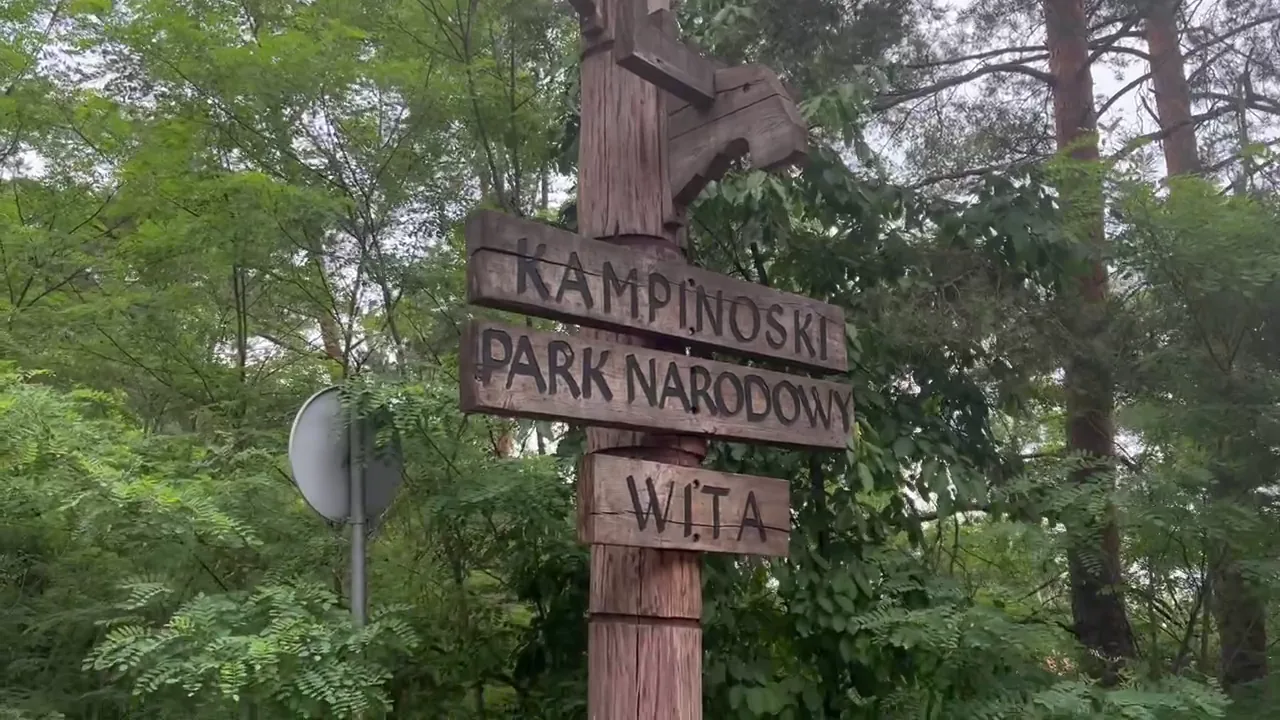
Stay on designated routes, respect wildlife, and obey restrictions on fires, cycling and protected areas. Do not enter closed military structures or bat hibernation spaces. Consult the national park’s official information before setting off ↗.
Kampinos is a landscape shaped by nature, scarred by history and still changing today. Its sandy dunes and wetland forests reveal thousands of years of natural history. At Palmiry, the trees preserve memories of people murdered under German occupation. At Łużowa Góra, a command facility built in anticipation of nuclear conflict now protects hibernating bats.
It is far more than a pleasant woodland walk. Just beyond Warsaw’s suburbs, the forest has plenty left to tell.