Orthodox
Orthodox Christians belong to the Orthodox Church and worship within Eastern Christian liturgical traditions.

Cerkwie, iconostases, wooden Carpathian traditions and communities whose histories cross borders, denominations, displacement and return.
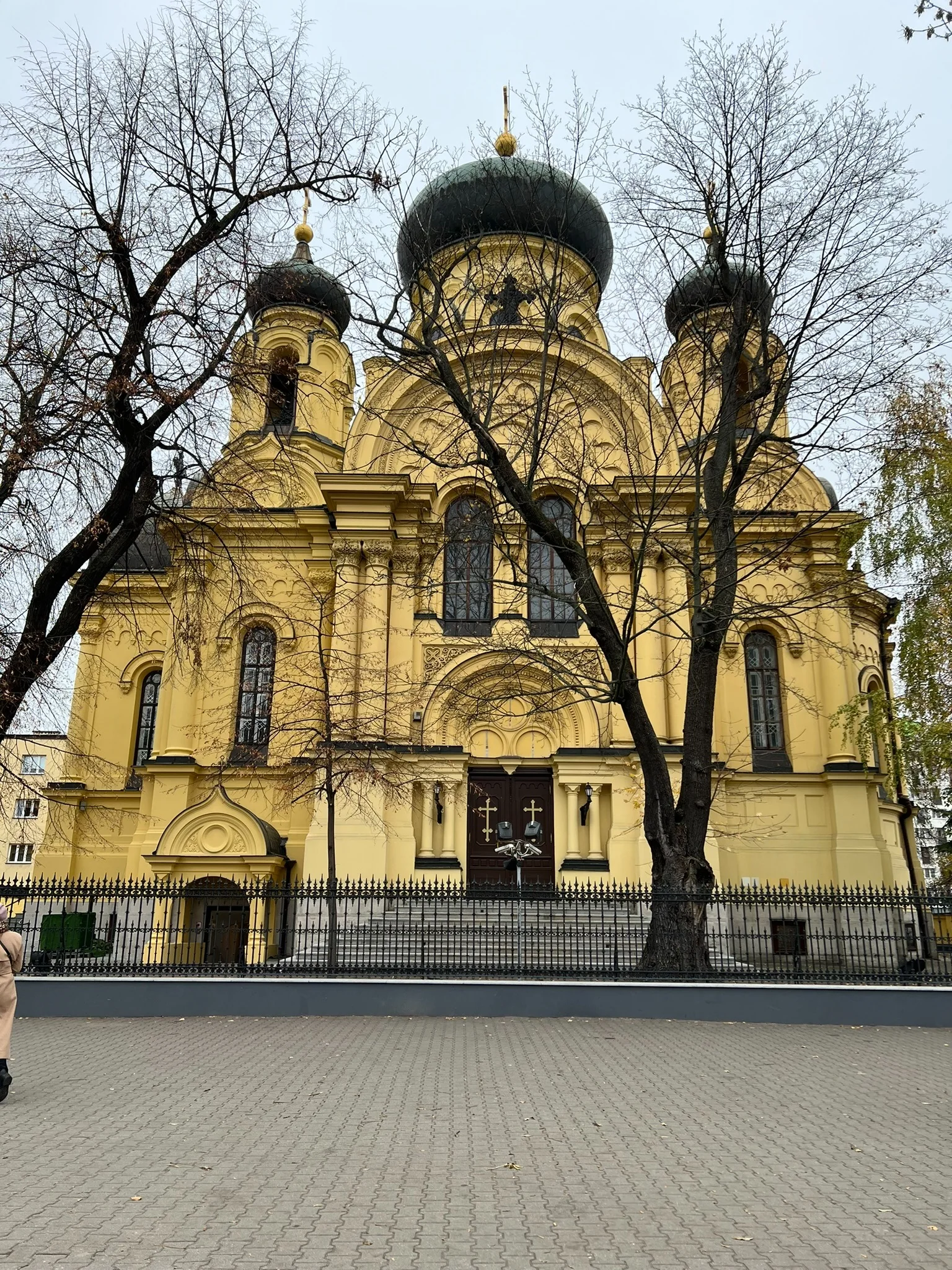
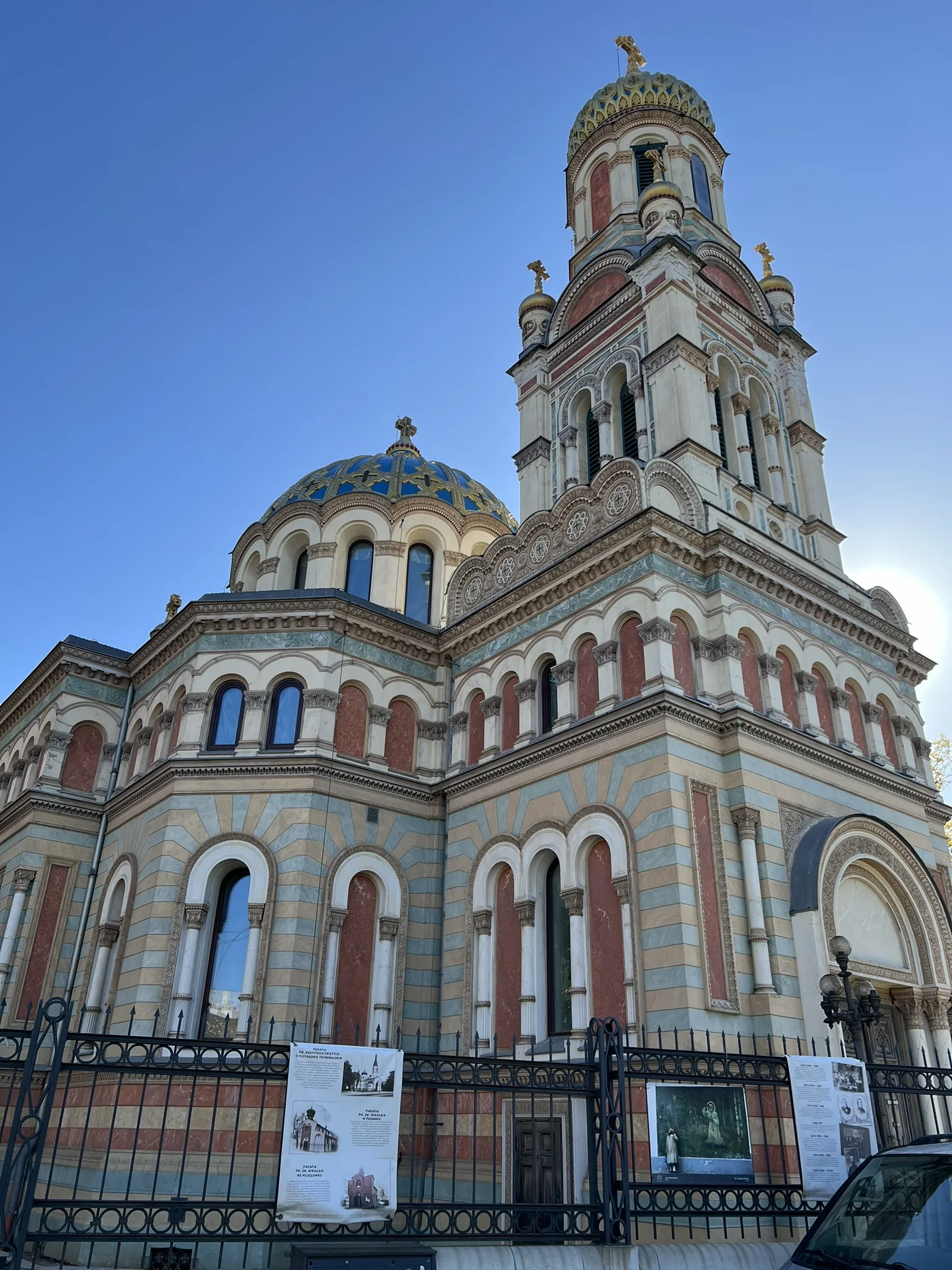
Across eastern and southeastern Poland — and in communities far beyond those regions — another Christian landscape appears: cerkwie, domes, iconostases, wooden towers, cemetery crosses and Byzantine liturgical traditions.
Some churches are Orthodox. Others are Greek Catholic. From the outside they may look strikingly similar.
Architecture alone does not always tell you which tradition a church belongs to.
In everyday Polish, cerkiew is the normal word for an Eastern Christian church building, especially Orthodox or Greek Catholic. Kościół is more commonly used for Western Christian churches, particularly Roman Catholic ones.
The word is useful because it signals a different liturgical and architectural tradition. But it does not, by itself, tell you whether the church is Orthodox or Greek Catholic.
Orthodox Christians belong to the Orthodox Church and worship within Eastern Christian liturgical traditions.
Greek Catholics preserve an Eastern, predominantly Byzantine liturgical tradition while remaining in communion with Rome.
Icons, iconostases, domes, chanting and similar layouts can occur in both traditions. A beautiful wooden cerkiew cannot be classified reliably from shape alone.
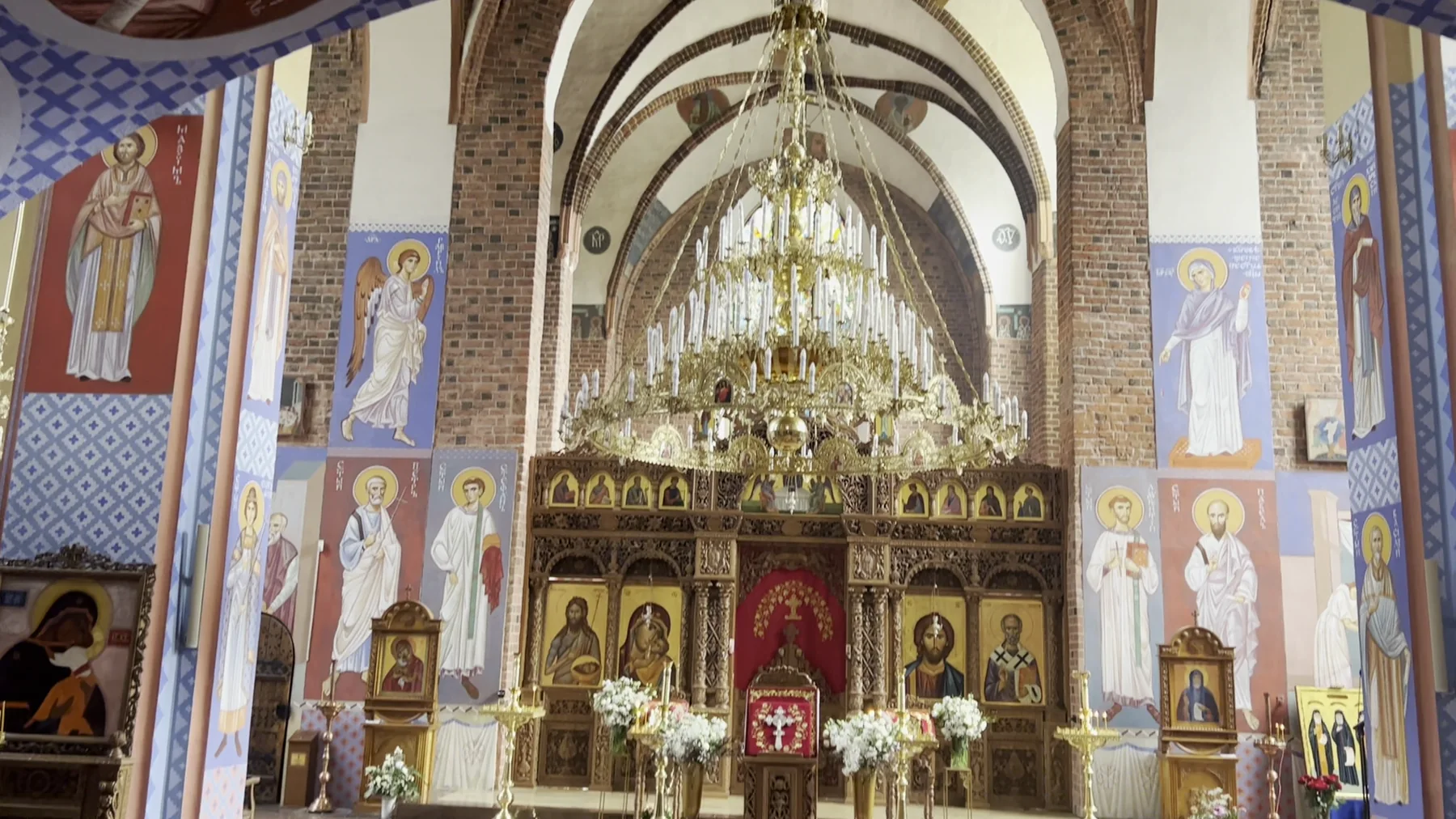
The ikonostas — iconostasis separates the sanctuary from the nave while organising the visual theology of the church. Its icons follow established patterns rather than being placed simply for decoration.
The central doors are the Carskie Wrota / Królewskie Wrota — Royal Doors, opening toward the sanctuary and altar. Other doors and rows of icons form part of the same liturgical system.
Within Eastern Christian tradition, an ikona — icon belongs to worship and prayer rather than functioning only as decorative art. Icons may depict Christ, the Mother of God, saints, feast days and biblical scenes, and their arrangement follows religious conventions.
For a visitor, learning even a little of this visual language changes the interior. A screen of anonymous gold images becomes an ordered sacred world.
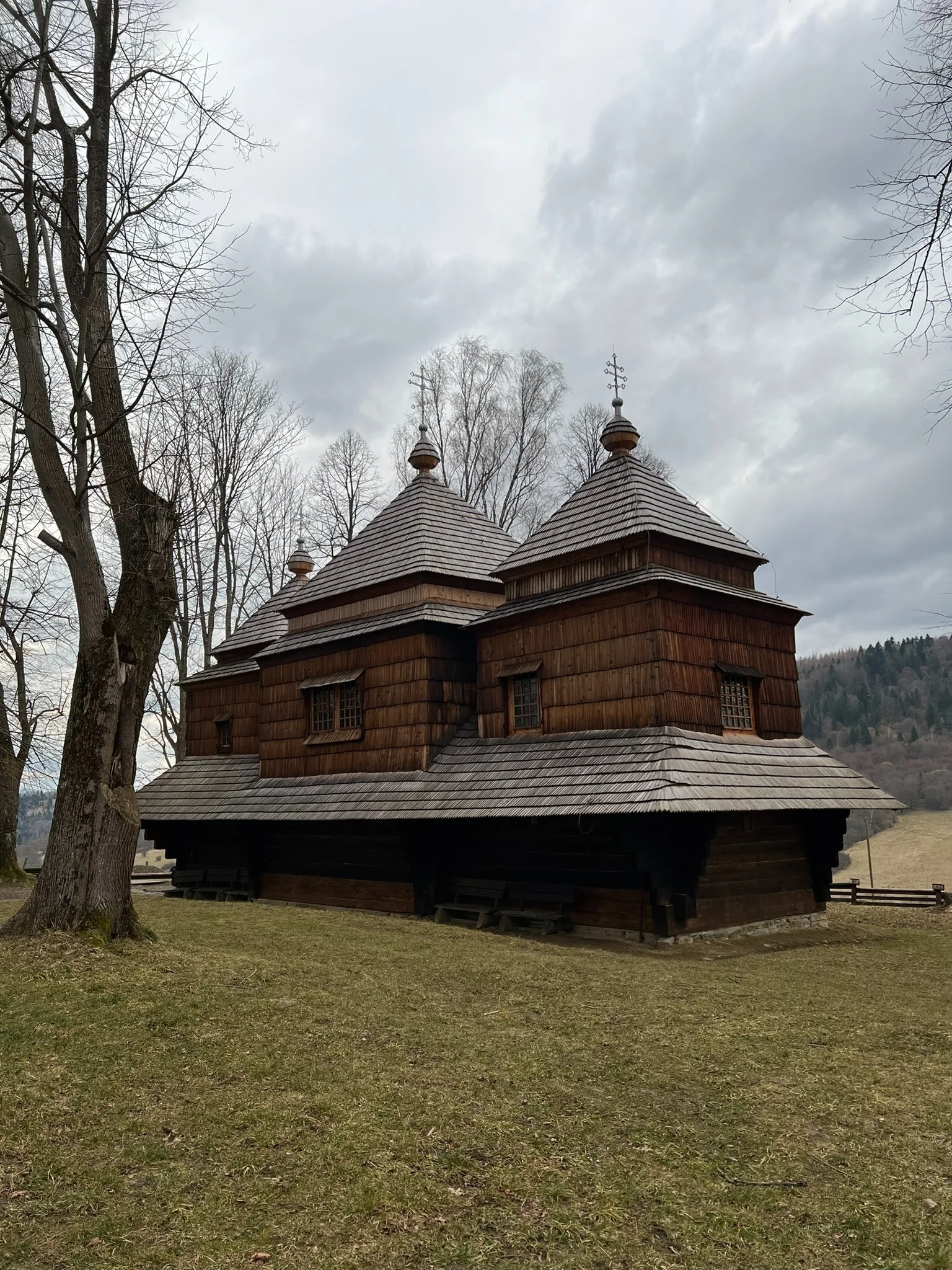
Many historic wooden cerkwie organise entrance, nave and sanctuary as three principal spaces, sometimes clearly reflected in the exterior massing.
Highly visible, but variable by region and period. They are not a universal test of denomination.
Carpathian communities developed sophisticated log-built churches with towers, steep roofs and domed forms.
A dzwonnica may be attached or stand separately, especially in historic wooden complexes.
The sacred site often extends beyond the walls through graves, crosses, trees and enclosure.
Lemko, Boyko, Halych and other traditions developed distinct architectural languages rather than one universal eastern style.
Sixteen wooden tserkvas in Poland and Ukraine are inscribed by UNESCO; eight stand in modern Poland: Brunary Wyżne, Chotyniec, Kwiatoń, Owczary, Powroźnik, Radruż, Smolnik and Turzańsk.
They were created by both Orthodox and Greek Catholic communities and preserve several regional forms. Their variety is the point: there is no single “Carpathian cerkiew.”
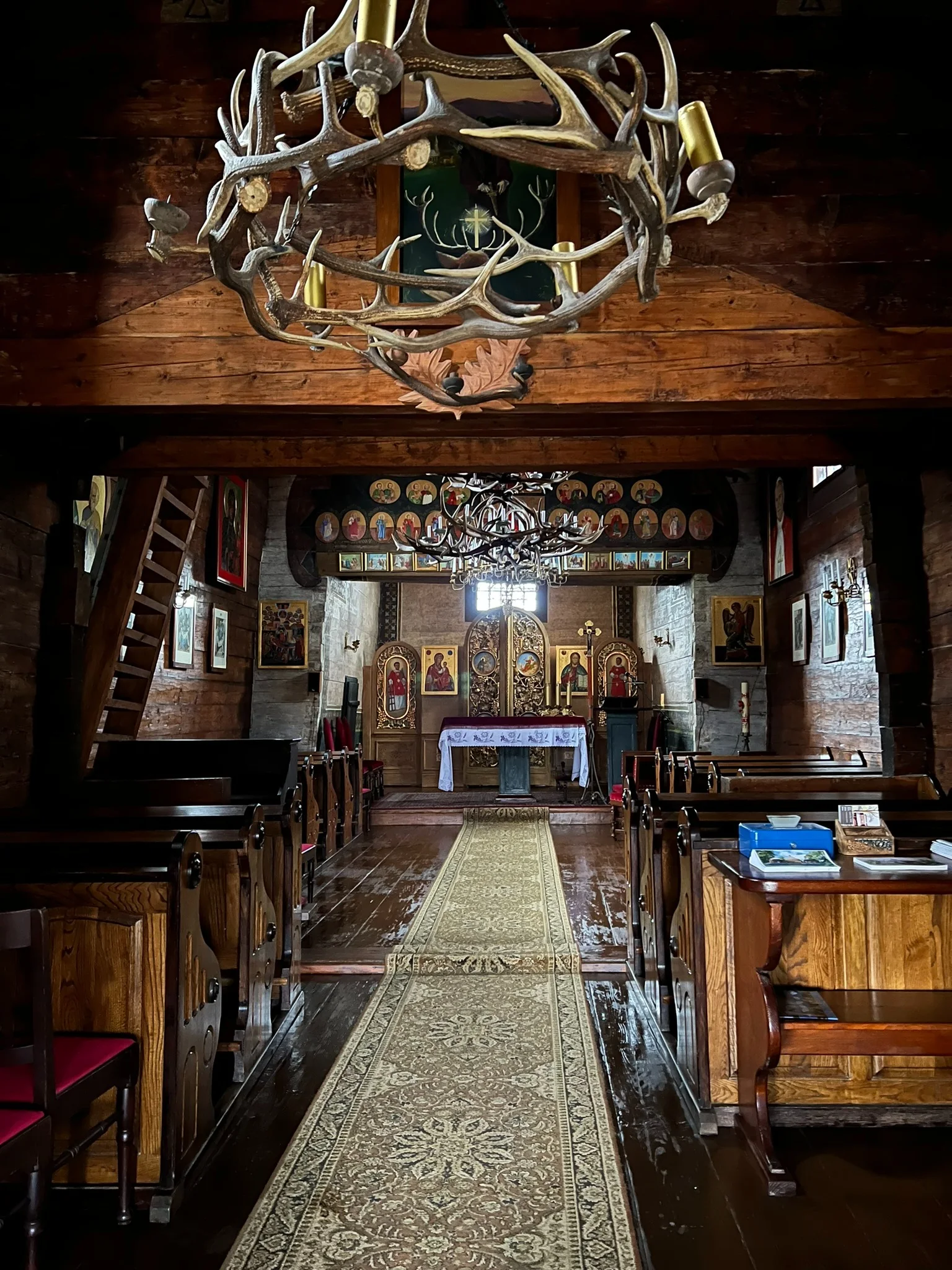
Podlasie remains one of the most important regions for contemporary Orthodox Christianity in Poland. Churches, cemeteries, feast days and parish life belong to living communities, not only to heritage tourism.
Podkarpacie, the Bieszczady and the wider Carpathian borderlands preserve deep Greek Catholic and Orthodox histories tied to Lemko, Ukrainian and other communities.
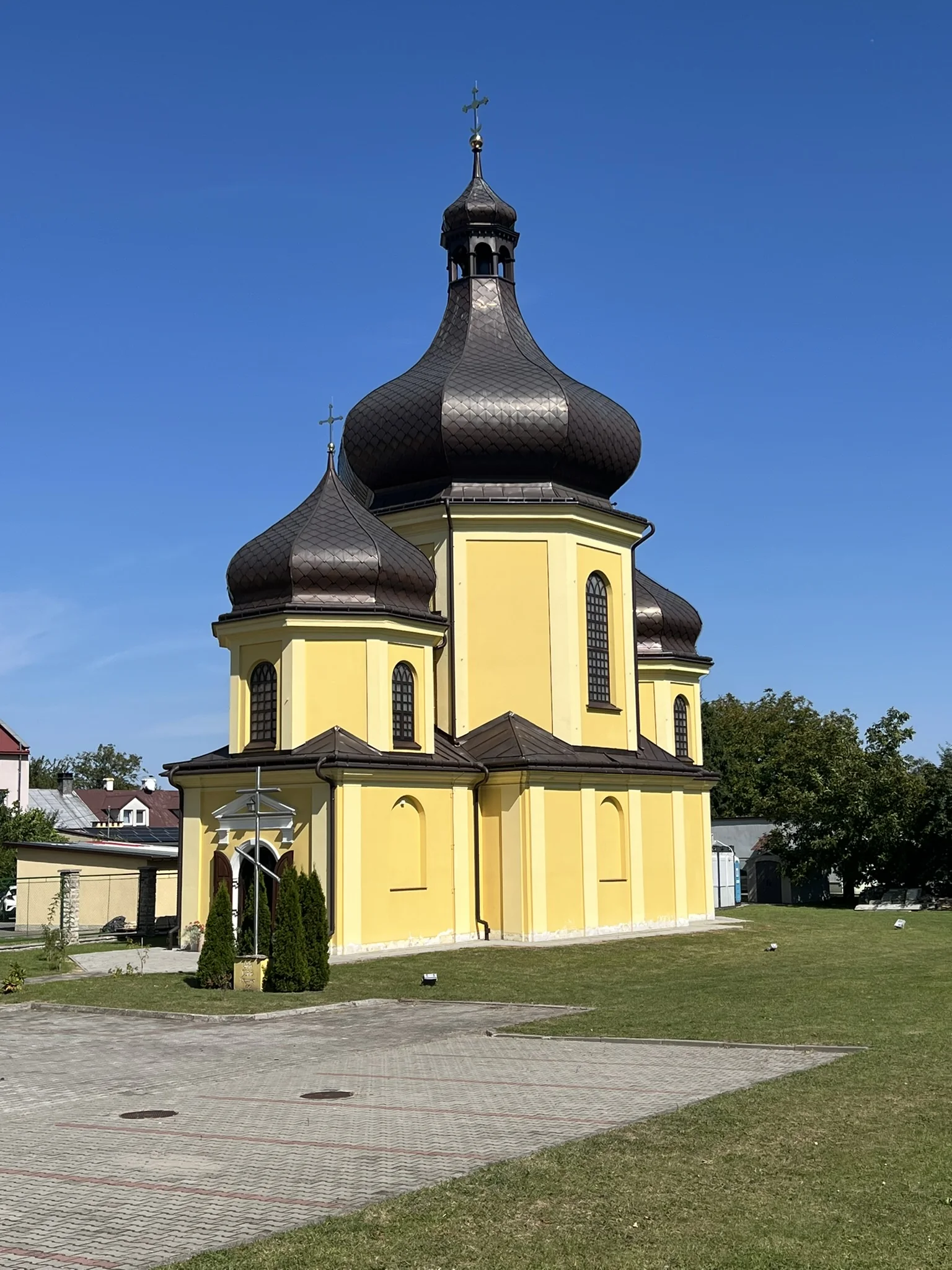
Between 1944 and 1946, large numbers of Ukrainians and Lemkos were transferred from southeastern Poland to Soviet Ukraine. In 1947, Operation Vistula — Akcja “Wisła” forcibly resettled more than 140,000 Ukrainians and Lemkos to Poland’s northern and western territories.
The effect on sacred geography was profound. Cerkwie could lose the communities that built and maintained them even while the buildings themselves survived.
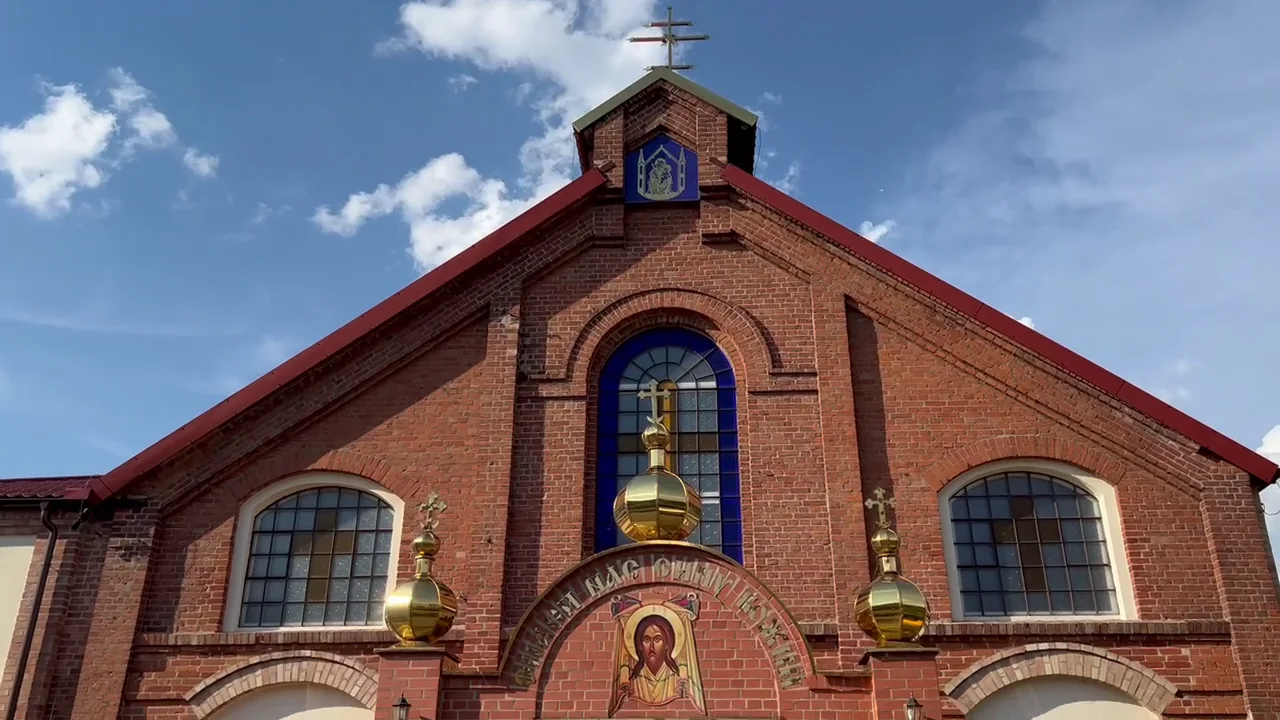
The Polish Orthodox Church developed its modern autocephalous form in the interwar period. After 1945, Poland’s borders shifted west, leaving much of the former Orthodox population outside the new state.
At the same time, forced resettlement dispersed Ukrainians and Lemkos across northern and western Poland. Greek Catholic religious life survived under heavy communist restrictions and re-emerged more openly after 1989.
The result is a religious map in which old buildings, new parishes and displaced communities do not always occupy the same regions.
Some historic cerkwie are museums. Some preserve the memory of communities who no longer live nearby. Many others remain active churches.
People still attend liturgy, light candles, celebrate feast days, baptise children, bury relatives and sustain parish communities. Treating every wooden cerkiew as a picturesque relic erases that continuity.
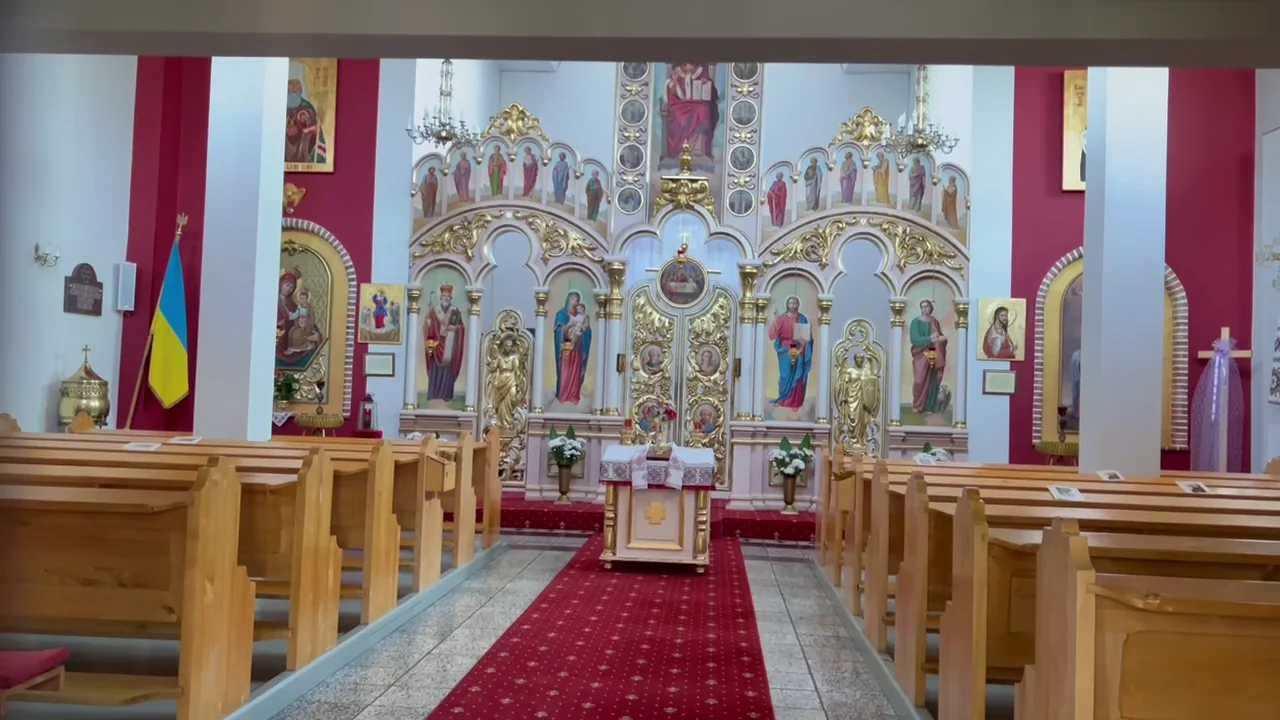
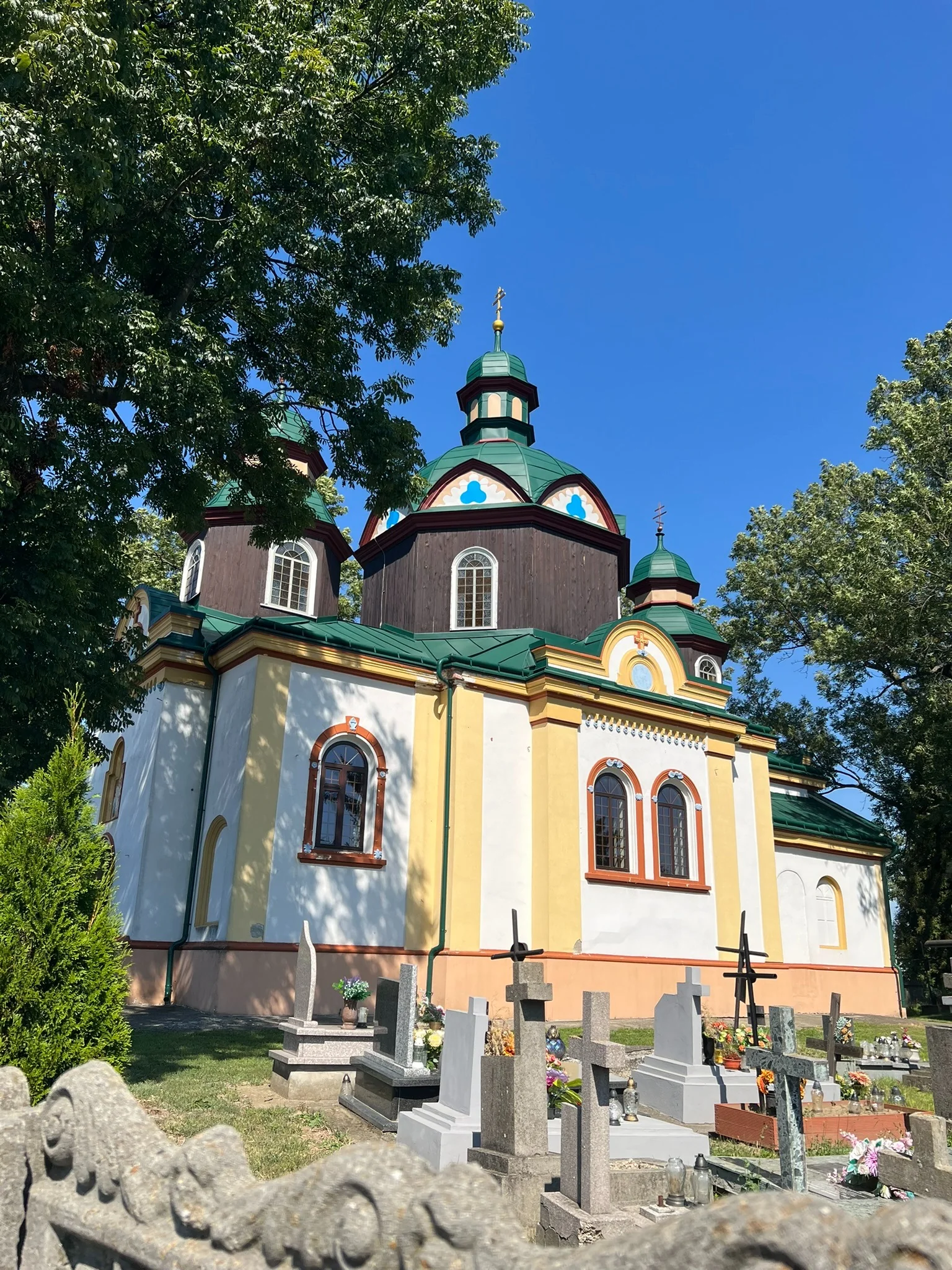
Historic churchyards may contain distinctive crosses, inscriptions and family graves. Some are carefully maintained; others survive in abandoned villages or among forest growth.
A cemetery can preserve evidence of a community even when the church has changed denomination. The building may tell you who worships there now. The graves may tell you who lived there before.
Do not assume appearance gives the answer.
Look for its rows, doors and central axis.
Which regional tradition might it belong to?
Count volumes, domes and cupolas rather than searching for one “Orthodox” shape.
Attached to the church or standing separately?
The founding community may no longer live nearby.
Current denomination and historic denomination may differ.
Churchyard crosses and graves can preserve another layer of memory.
Once you separate architecture from denomination — and the building from the history of its community — the landscape becomes much easier to read.
Eastern Christian sacred heritage connects architecture to living worship, regional identity and some of the most consequential population movements of the 20th century.