
This records an observable tradition and its consequences.
Learn About Poland›Religion & Belief›Sacred Places & Religious Heritage›Pilgrimage, Sanctuaries & Sacred Routes
Devotion · movement · landscape · memory
Pilgrimage,
Sanctuaries &
Sacred Routes
Why do some places draw pilgrims for generations — and why can the journey itself become part of the devotion? Follow sanctuaries, calvaries, revered images and sacred routes across Poland.
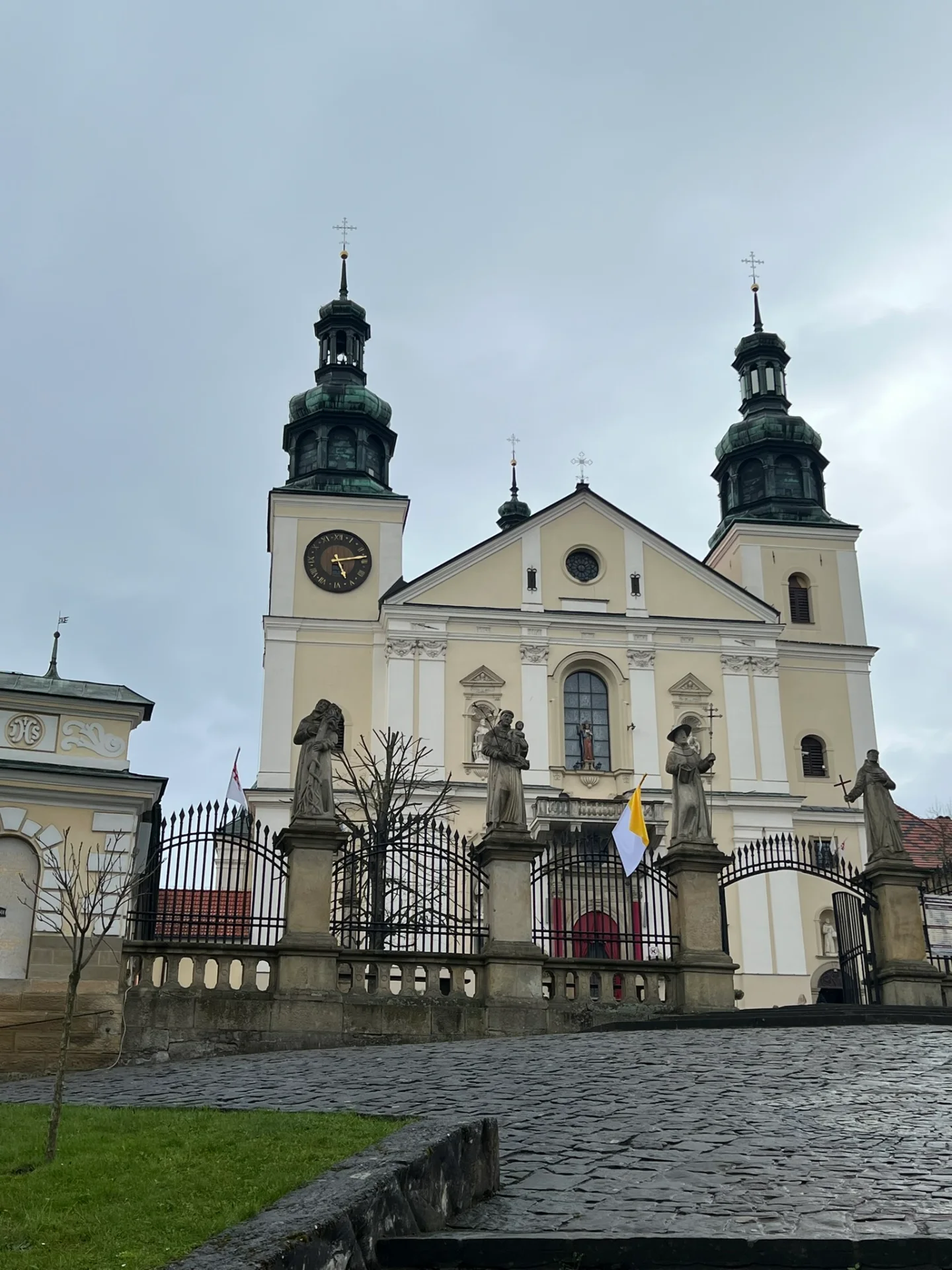
A person leaves ordinary surroundings and travels toward a place connected with prayer, devotion, memory or sacred meaning. The journey may be thanksgiving, petition, penance, remembrance or simply time set aside for reflection.
That is why pilgrimage takes many forms in Poland: a walk to a local sanctuary, a multi-day journey to Jasna Góra, a route through a calvary landscape, or a long-distance trail connected with a saint.
The destination matters. But so can the journey itself.
In Polish Catholic usage, a sanktuarium is more than the sacred area around an altar. It is a church or other sacred place associated with a particular devotion and attracting pilgrims for a special religious reason.
Formal sanctuary status is recognised by church authority, although popular devotional language can sometimes be looser. A sanctuary may become important because of a saint, relic, revered image, apparition tradition, reported miracle, historic event or distinctive sacred landscape.
The building alone does not make the sanctuary.The devotion does.
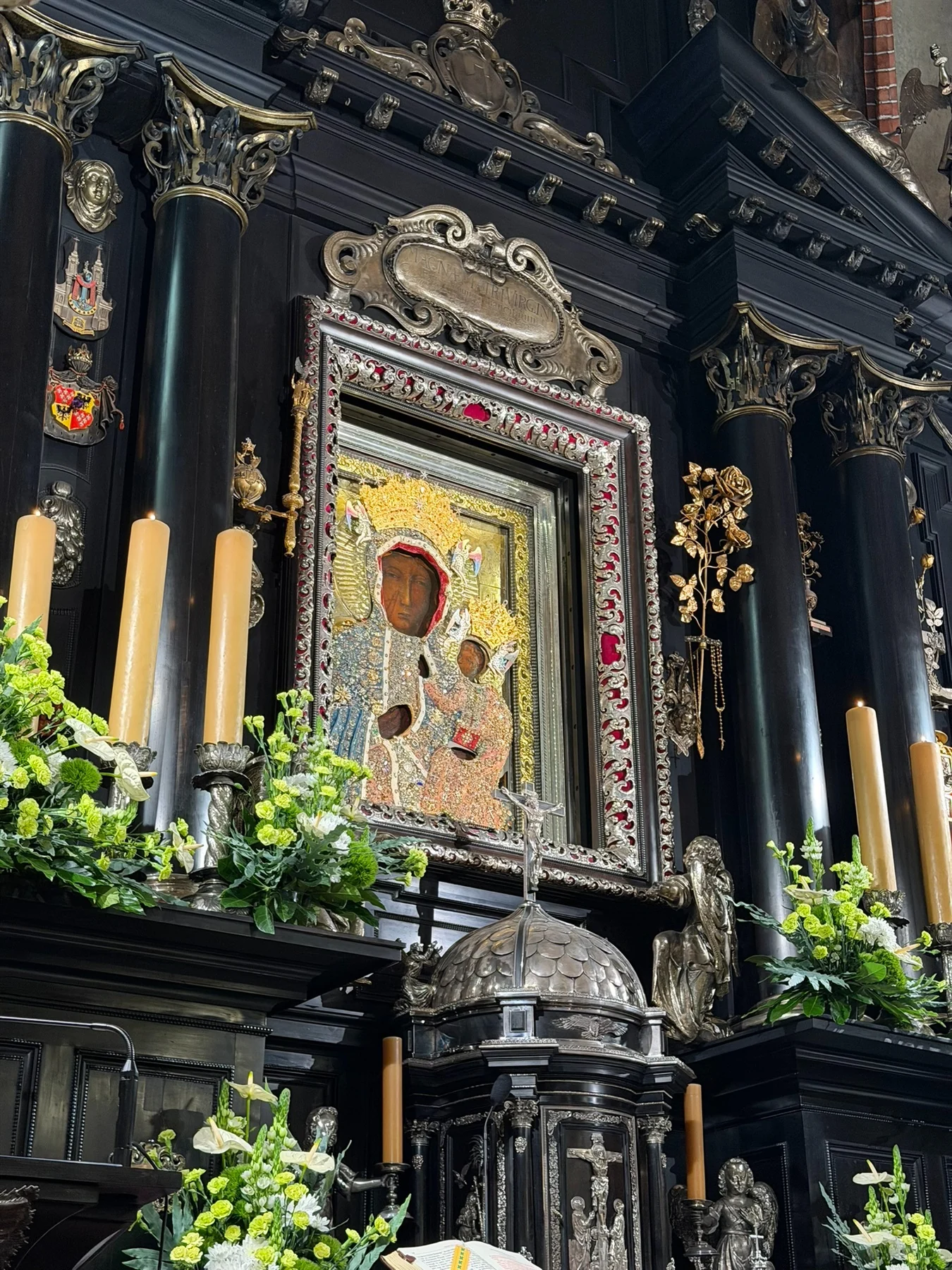
A pilgrimage destination usually has a story attached to it. Sometimes that story centres on a saint, image or relic. Sometimes on an event believed by the faithful to have been miraculous. Sometimes the landscape itself becomes part of the devotion.
The important distinction is between documenting a tradition and independently verifying its supernatural claim.
This accepts a religious claim as fact. On this site, such claims are attributed to the tradition that preserves them.
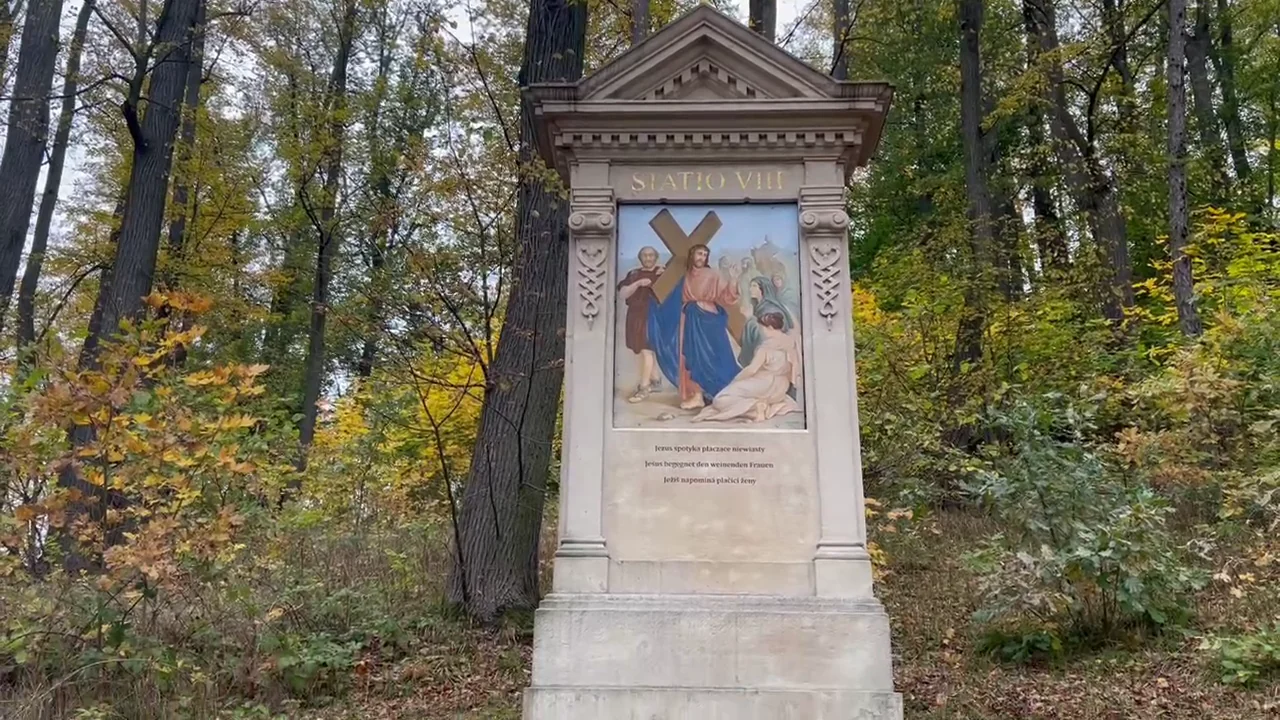
A kalwaria creates a sacred route within one devotional landscape. Instead of visiting one church and stopping there, pilgrims move between chapels, stations and symbolic locations, commonly recreating events from the Passion of Christ and sometimes Marian themes.
A pilgrimage route may cross a region or country. A calvary compresses that journey into a landscape designed for prayer.
A pilgrimage route connects sacred places across distance.A calvary creates a sacred route within one place.
The historic landscape at Kalwaria Zebrzydowska contains roughly 42 churches and chapels spread across several kilometres of hills and paths. The exact count and distance vary slightly depending on how shared stations are treated.
The Dróżki Pana Jezusa — Paths of Jesus — follow Passion themes. The Dróżki Matki Bożej — Paths of the Mother of God — centre on Marian themes of suffering, death and assumption. Some stations overlap.
Here, the act of walking from place to place is not merely a way of reaching the devotion. The walking is part of the devotion.
John Paul II
A personal landscape of prayer
Karol Wojtyła later recalled repeatedly walking these paths, particularly the Marian routes, from his youth through his years as priest and bishop. The site therefore connects formal pilgrimage tradition with a well-documented personal practice.
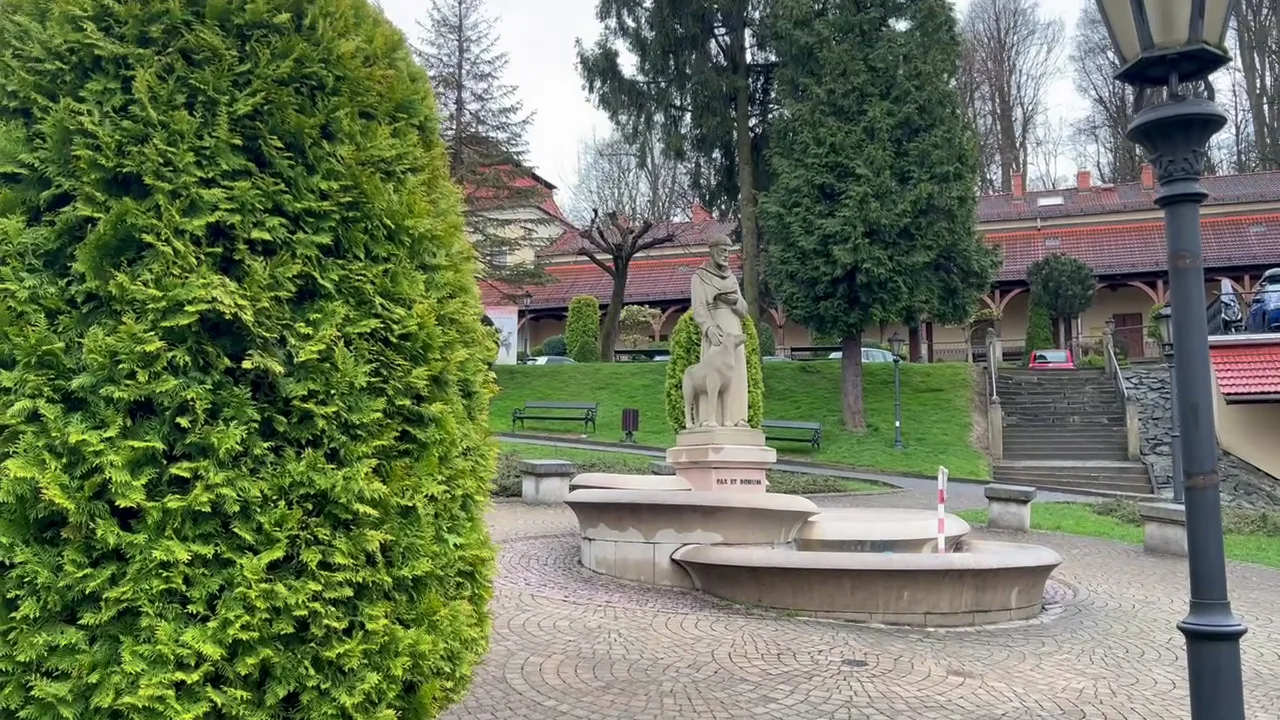
Revered “miraculous” image
An image venerated by the faithful and associated with a tradition of special grace, answered prayer or reported miracles. The historical fact is the growth of the devotion; supernatural claims remain attributed to the religious tradition.
Relic and reliquary
Relics create a physical connection with a saint or sacred person. Reliquaries preserve or display them and can themselves become major works of art.
Votive offering
Objects left in petition, thanksgiving or fulfilment of a vow — plaques, jewellery, rosaries, medals, crutches, images and more. A votive wall can become an archive of private devotion.
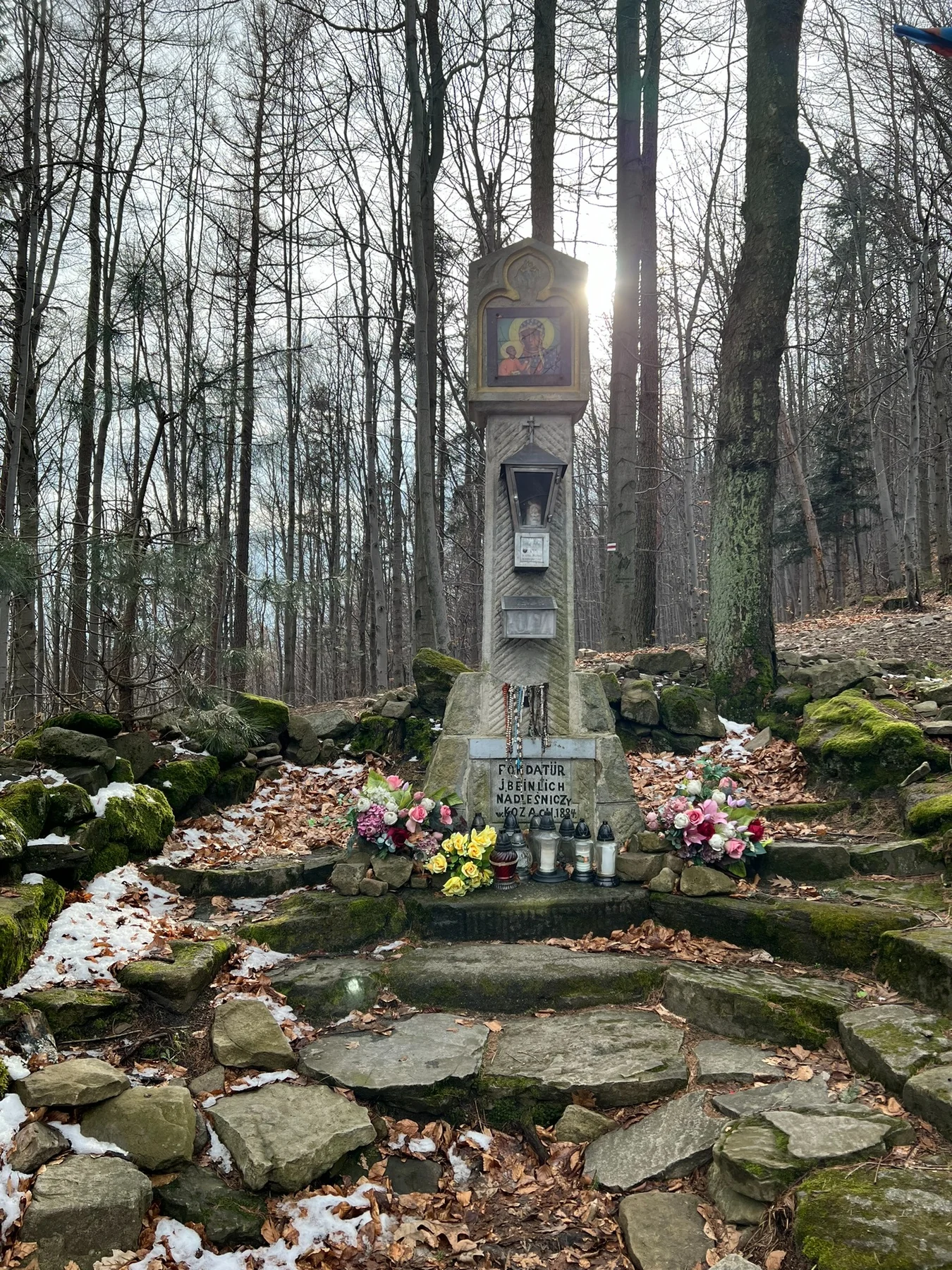
Theologically, an odpust is an indulgence — the remission of temporal punishment associated with sins already forgiven.
In ordinary Polish usage, the same word can also refer to the major annual celebration of a parish or sanctuary, often connected with its patronal feast.
Special MassesProcessionsVisiting pilgrimsDevotional practicesStalls and sweetsA fair-like social atmosphere
The sacred and social elements can sit side by side — one reason there is no perfect one-word English translation.
Poland has a strong tradition of organised group pilgrimage, especially toward major Catholic centres. Walking groups may travel under parish or diocesan banners, with singing, communal prayer, rest points and overnight accommodation organised along the route.
But this is not universal. Many pilgrimages are local, small, private or undertaken individually. The large walking pilgrimage is one important Polish pattern, not the definition of pilgrimage itself.
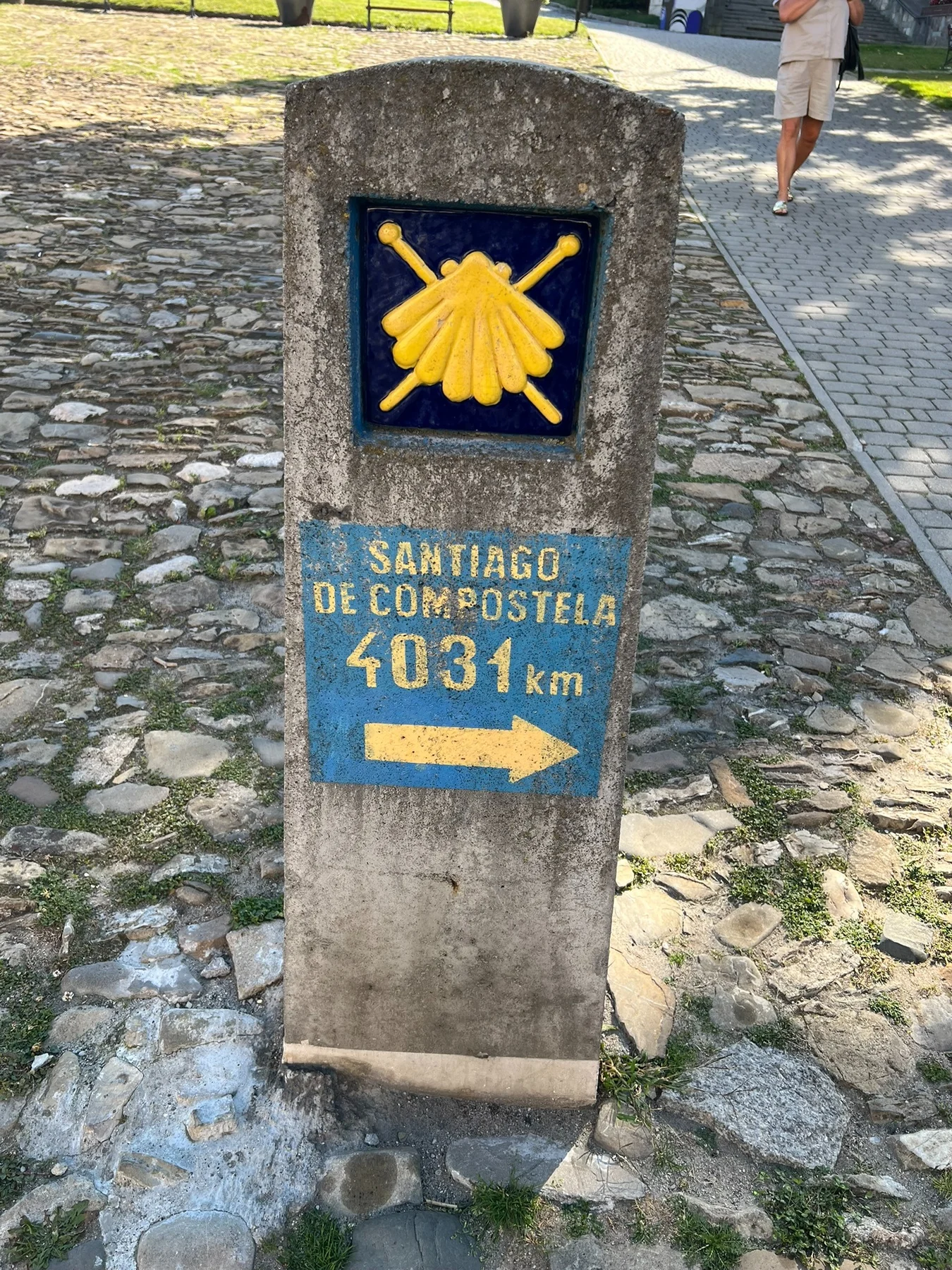
Droga św. Jakuba — the Way of St James
Poland forms part of the wider European Camino network leading ultimately toward Santiago de Compostela. The modern marked Polish system began developing in the mid-2000s and now extends for thousands of kilometres.
Many sections use historic roads, churches of St James, pilgrimage sites and plausible older corridors — but they should not be described as a continuously marked medieval network. Much of what exists today is revival, reconstruction and modern waymarking inspired by historic pilgrimage traditions.
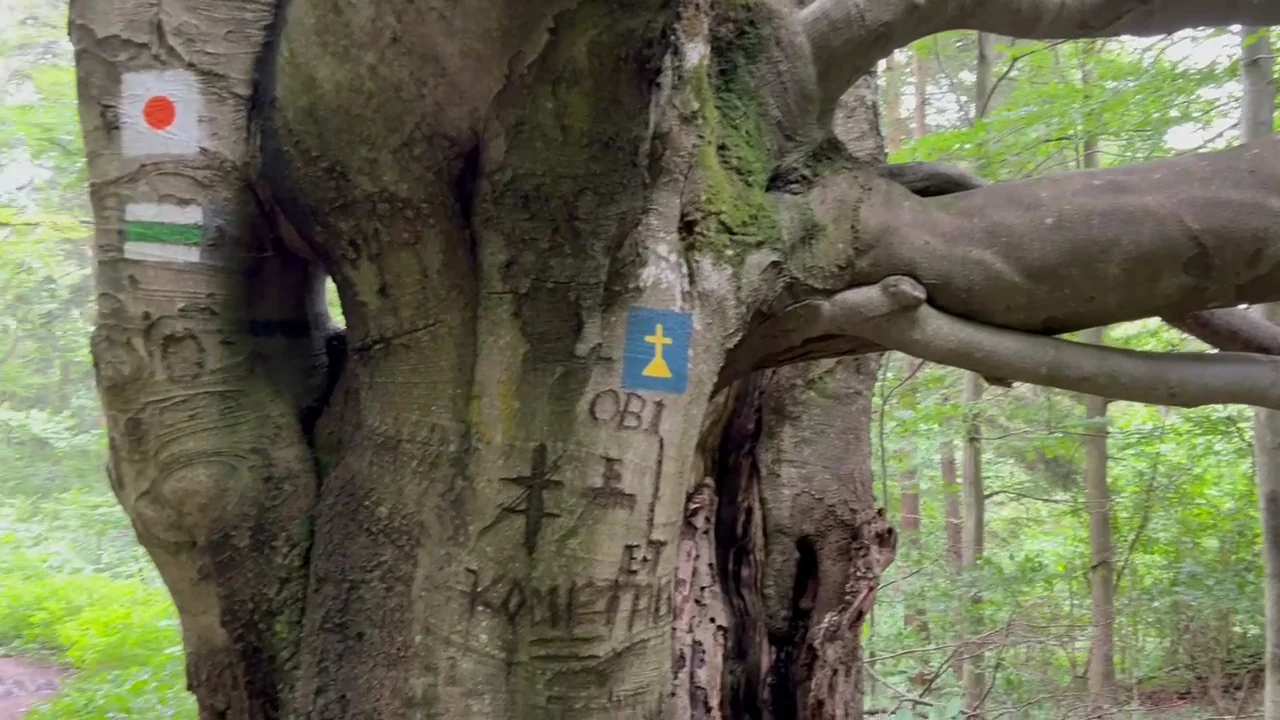
A marker in an ordinary landscape
Long routes become real through small signs: shells, arrows, painted symbols and waymarks sharing trees and paths with ordinary hiking routes. Sacred geography can be surprisingly understated.
Papal Trails — Szlaki Papieskie
Routes associated with Karol Wojtyła and John Paul II commemorate landscapes through which he walked, travelled or ministered. They can carry devotional meaning while remaining modern routes of memory.
Saint trails need their own histories
Poland contains many routes named after saints. Some are old, some regional, some modern tourism initiatives and some genuine pilgrimage traditions. The age of the saint does not prove the age of the route.
Pilgrim or tourist?
One traveller may pray; another may hike, study architecture or follow family history. The religious significance of the route does not require every visitor to share the same motivation.
fall out of usechange with bordersdisappear with communitiesbe revivedbe reconstructedbe newly marked
A modern route may preserve fragments of older traditions without reproducing an exact medieval road. Likewise, an old sanctuary may acquire completely new pilgrimage patterns as transport, population and devotional practice change.
Saint, relic, image, apparition, event or landscape?
Do pilgrims arrive here — or move through it?
What private stories survive in the offerings?
Does the site transform on a particular feast?
You may be inside a calvary landscape.
Do not assume saint and trail are the same age.
Separate the documented devotion from the supernatural claim.
Sanctuaries are centres of geography as well as belief.
Once you ask these questions, an impressive church becomes part of a much larger landscape of movement, memory and devotion.
Go deeper
Understand the devotion — then follow the route.
The Religion section explains why these places and journeys matter. Discovery can later organise the routes themselves: stages, distances, maps, practical access and nearby heritage.