
Warsaw’s Protestant Cemeteries: Two Traditions, One City
Lutheran and Reformed Warsaw — the architects, chocolate makers, writers and families remembered along two neighbouring cemetery paths.
Begin the story ↓I've walked Warsaw's streets for years, yet these two cemeteries still gave me a different perspective on the city. Just beyond the familiar stories of Catholic churches and royal monuments are generations of people who helped make the Warsaw we recognise today.
Rather than taking them as separate stops, I think they make more sense together: two Protestant traditions sharing a corner of Wola, each with its own character and extraordinary names.
Two traditions beyond the old city
On the western side of Warsaw, two neighbouring burial grounds preserve a history rarely covered by the usual royal-route itinerary. The Evangelical-Augsburg (Lutheran) cemetery on Młynarska Street and the Evangelical-Reformed cemetery on Żytnia Street were both established in 1792, when Warsaw’s burial places were increasingly moved beyond the densely built-up centre.
They belong to separate Protestant traditions, but they tell a connected story. Families who built businesses, drew the city, composed its culture and gave it new institutions rest here. Both sites suffered during wars and uprisings; both still serve living communities. Walking between the two, the scale changes, but the idea does not: Warsaw has always been shaped by more than one denomination.
An architect’s landscape of memory
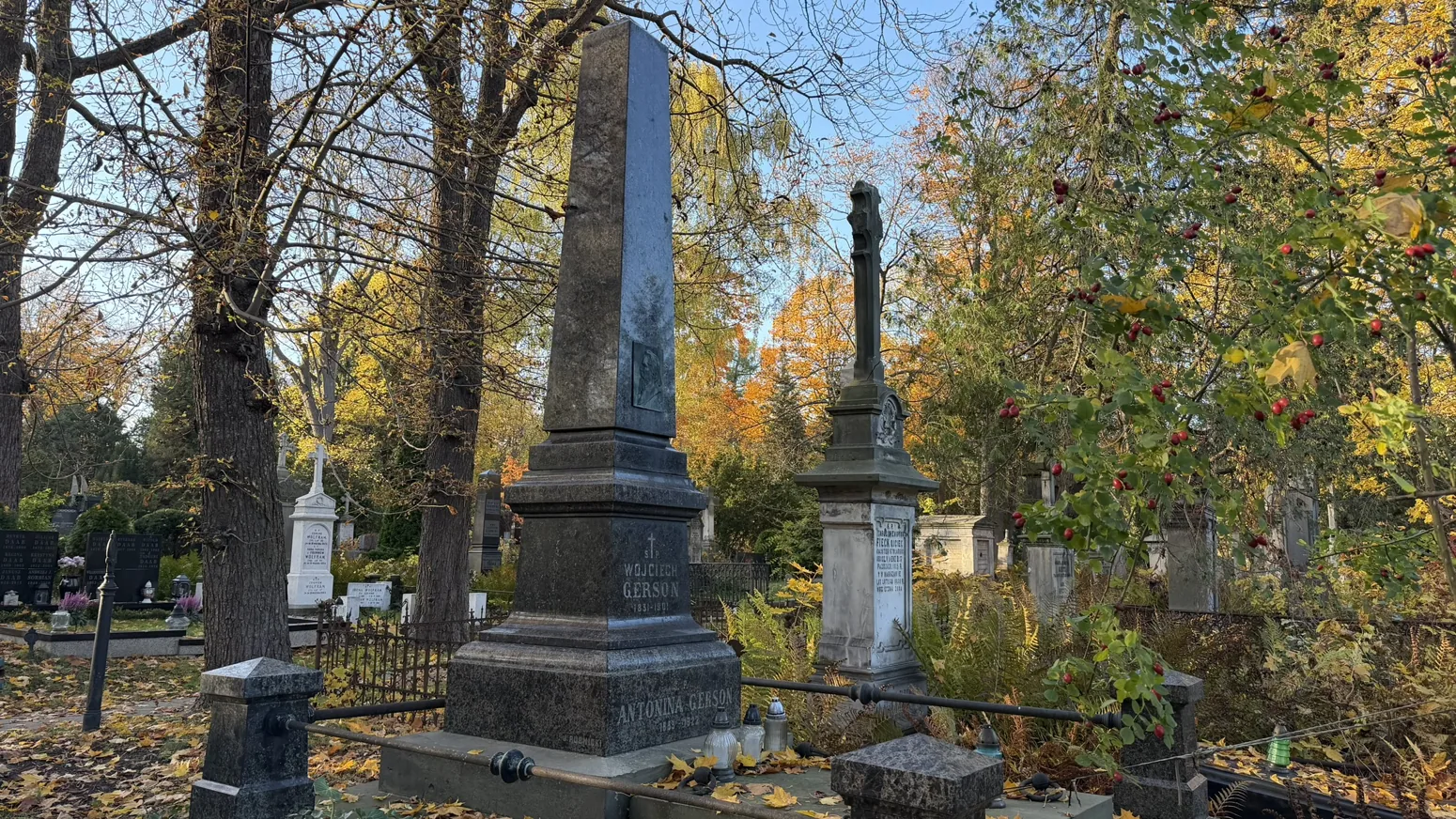
The Lutheran cemetery — Cmentarz Ewangelicko-Augsburski — was laid out by Szymon Bogumił Zug, the architect also associated with Warsaw’s Holy Trinity Lutheran Church. In 1792 an orderly burial landscape arose here, later filled with richly varied stonework. It is more than a collection of separate graves: avenues, walls and family plots were part of a deliberate plan.
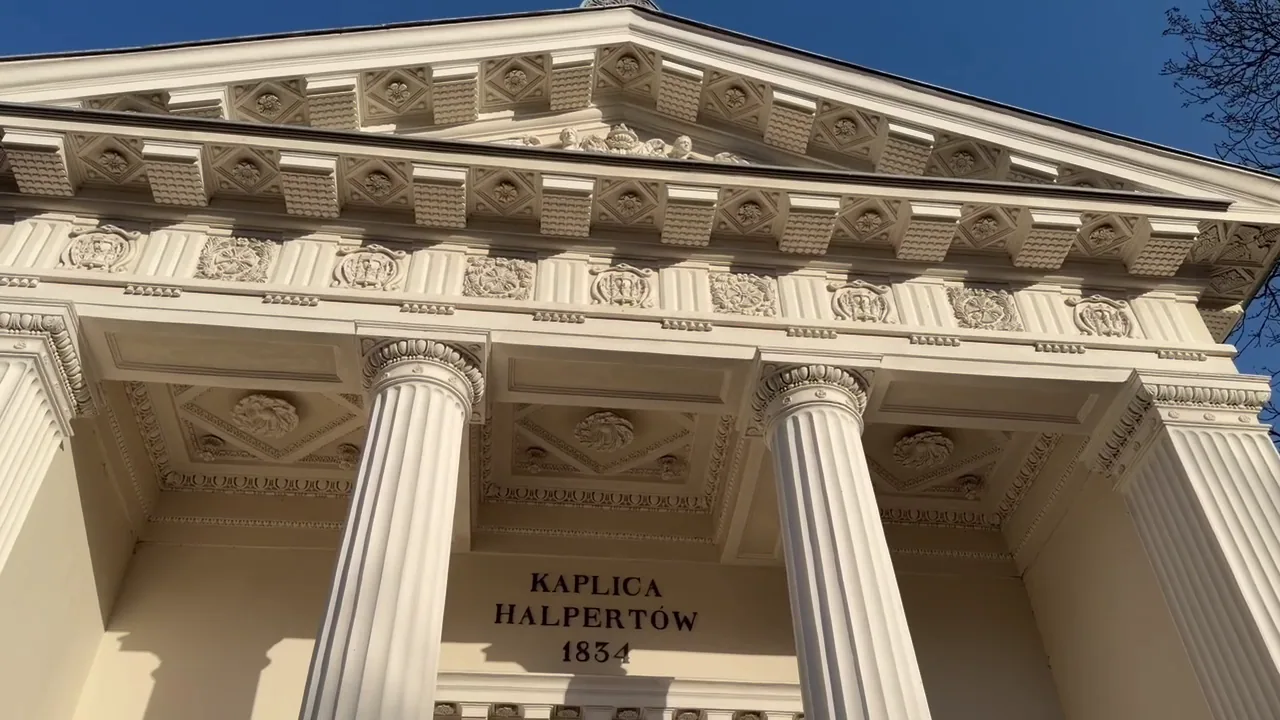
Among its most striking buildings is the Halpert family funeral chapel, built in the 1830s and serving the wider Lutheran community. Its classical forms stand among stone crosses, memorial statues and elaborate family tombs. Your photograph captures its grand portico and inscription — a reminder that funerary architecture was itself one of the arts of nineteenth-century Warsaw.
Chocolate, dictionaries, art and enterprise
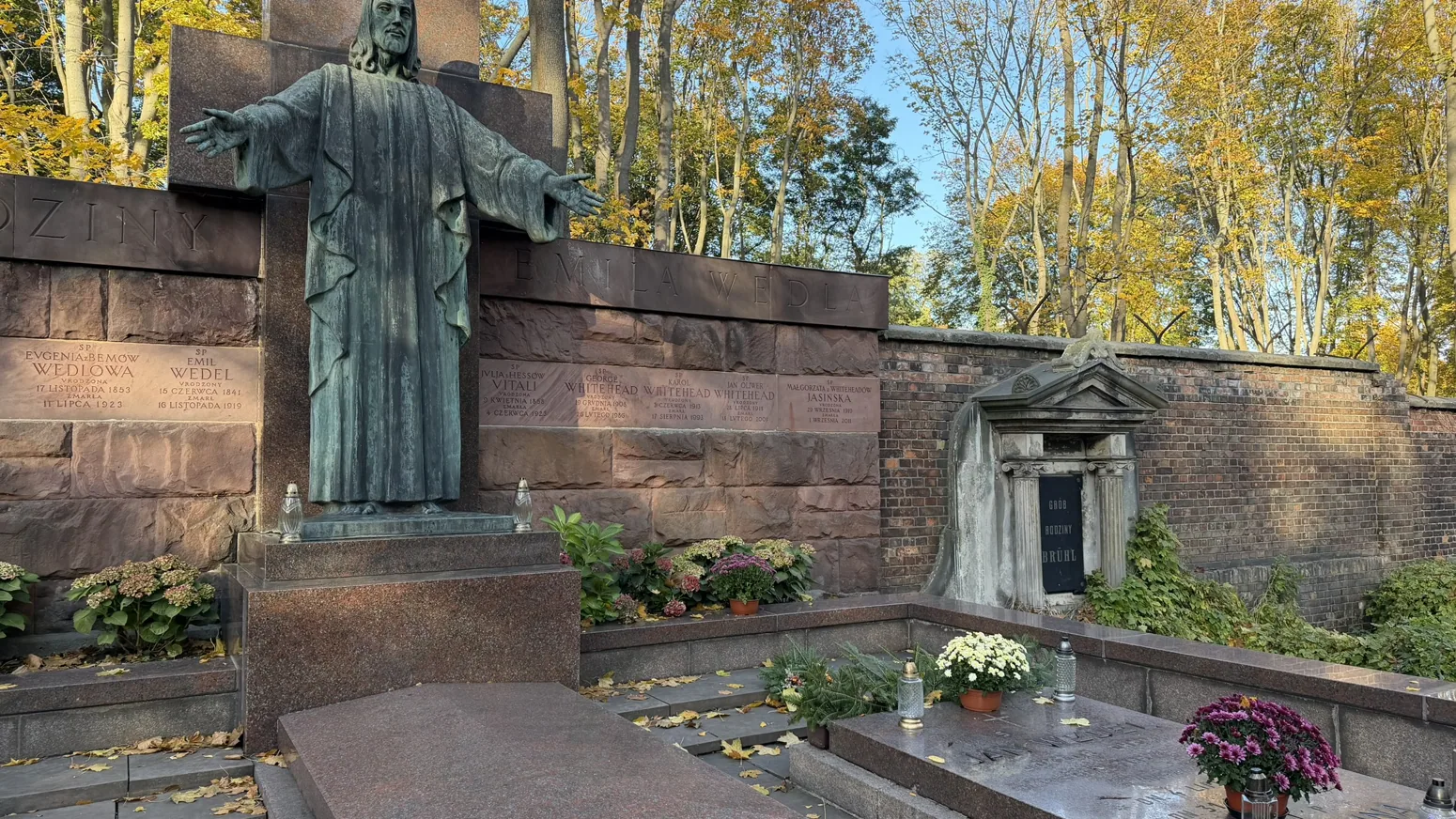
It would be easy to know the surname Wedel from chocolate alone. Yet the family story also belongs to Warsaw’s Protestant history: Karol Ernest Wedel, who established the business that became a city institution, is buried here. The cemetery also holds Samuel Bogumił Linde, whose Polish dictionary was a landmark of scholarship, and painter Wojciech Gerson, who helped shape Polish visual culture.
Architects, craftspeople, educators and industrialists appear alongside these familiar names. This is one of the reasons the cemetery deserves more than a rapid visit: its graves reveal how people outside the city's dominant religious tradition contributed to its everyday growth. Our photographs of anonymous monuments illustrate the cemetery, rather than claiming to show the named individuals’ exact graves without inscription-level confirmation.
A quieter Reformed Warsaw
The neighbouring Evangelical-Reformed cemetery — Cmentarz Ewangelicko-Reformowany — dates to the same foundation year, 1792, but belongs to the Calvinist tradition. Its smaller grounds have a different rhythm: stone walls, intimate plots and family chapels among old trees.
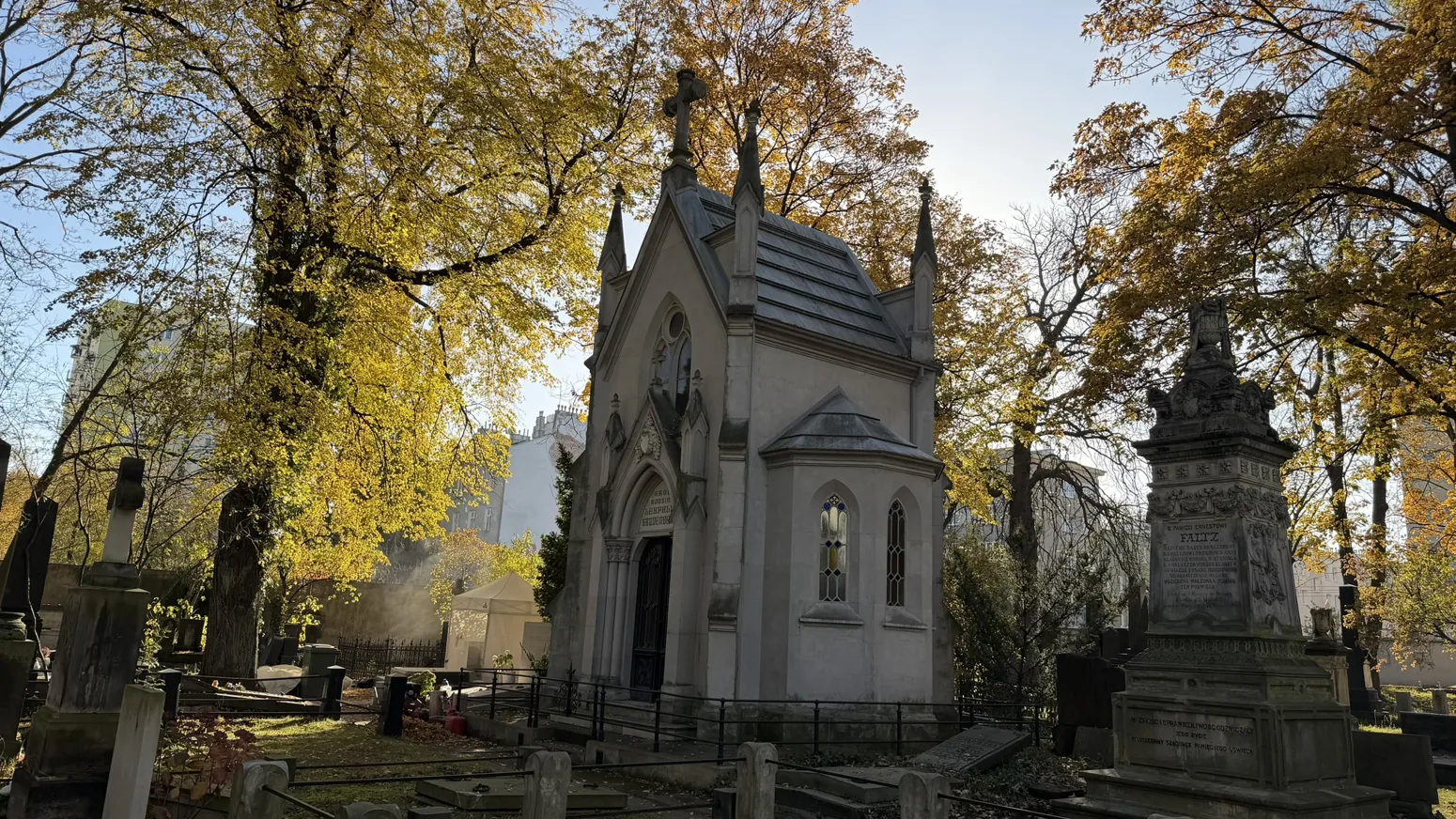
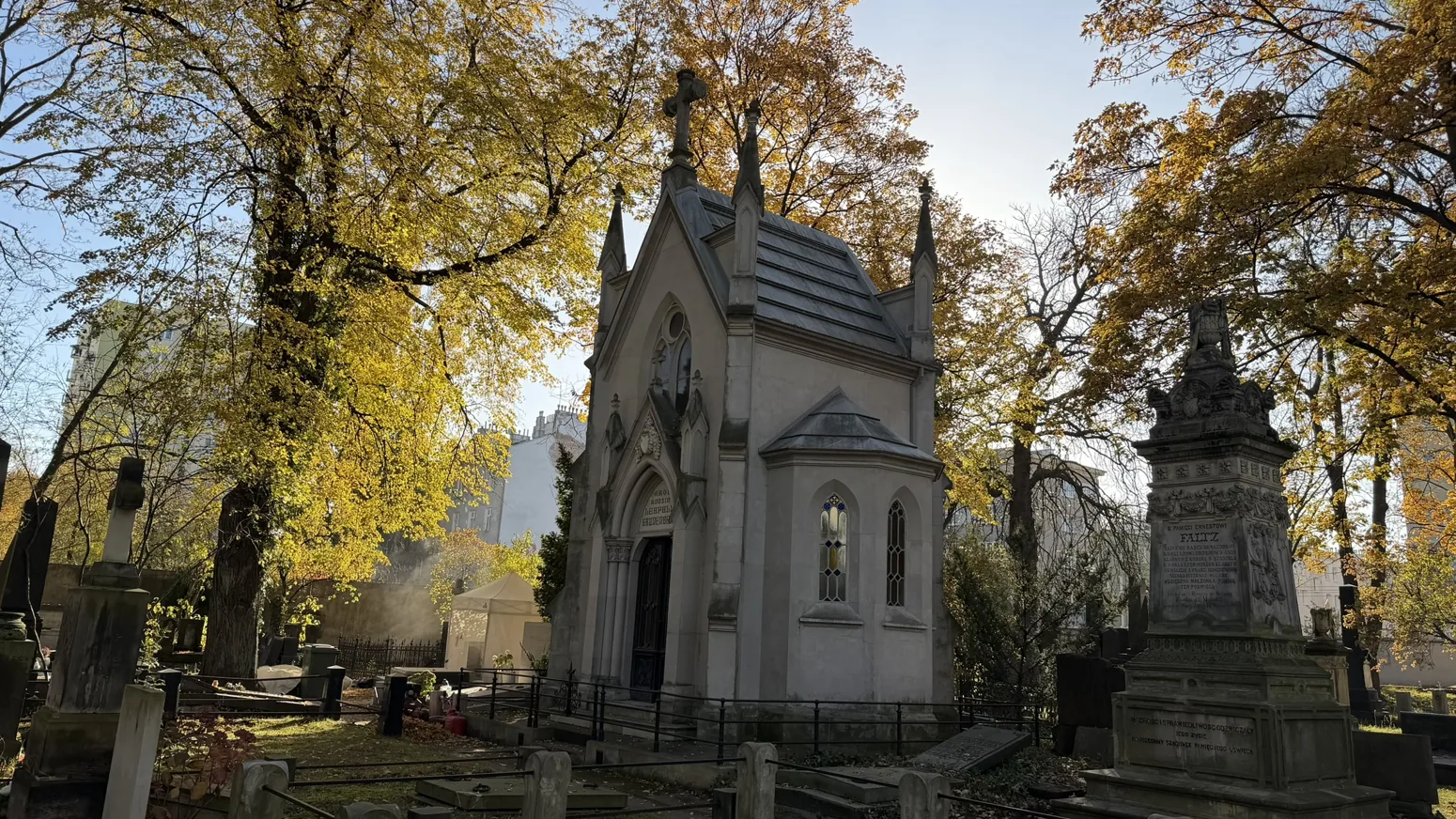
The Gothic Revival Kronenberg family mausoleum is among the cemetery’s best-known architectural landmarks. This was not a poor backwater of the city but a resting place for many people involved in Warsaw's finance, commerce and civic life. The cemetery has also received people from other Protestant communities and people without a religious affiliation.
Famous lives in the Reformed cemetery
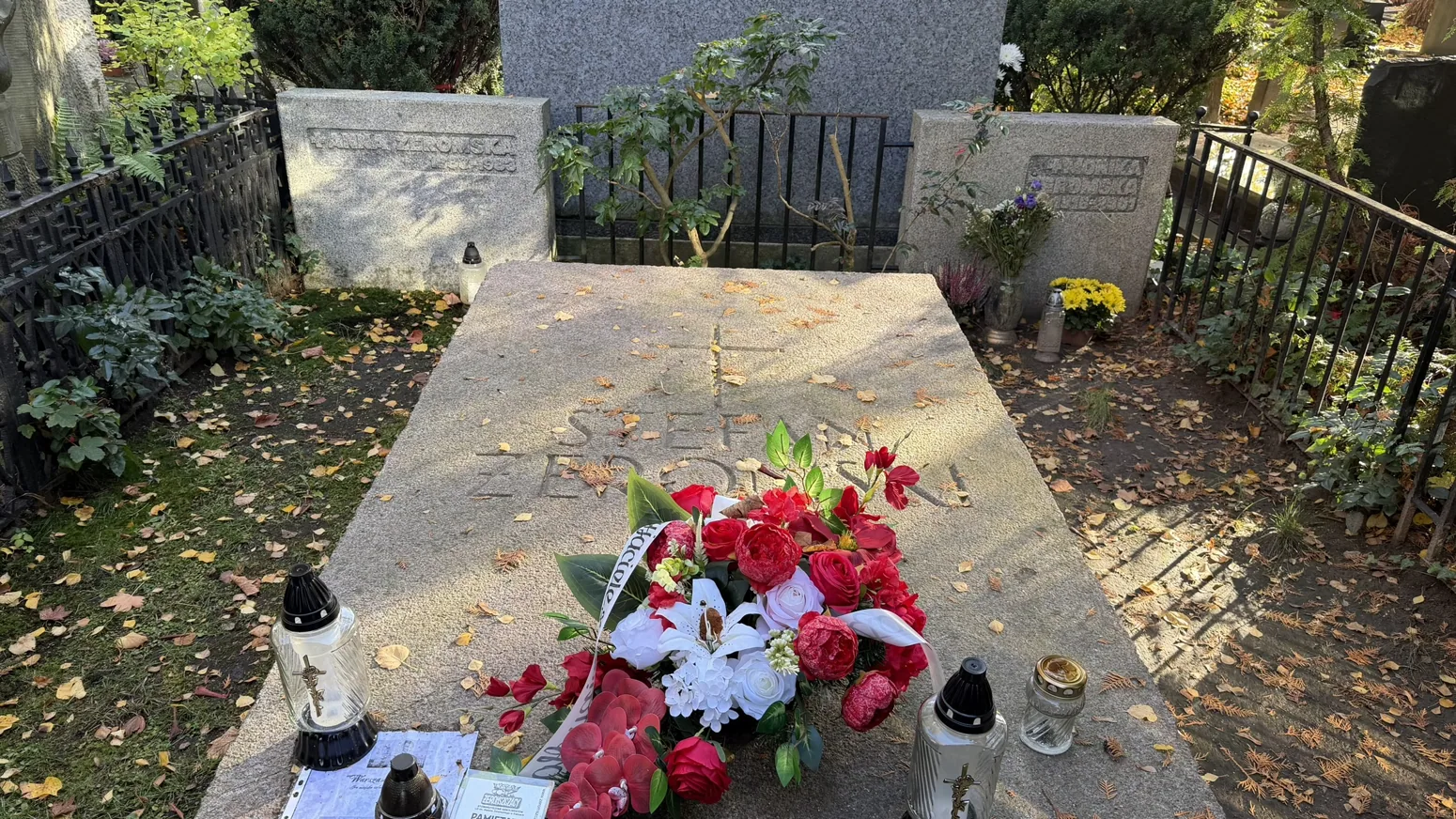
Several of Warsaw’s remarkable cultural lives end here. Stefan Żeromski, author of Przedwiośnie, is buried in the Reformed cemetery, as are singer Anna German and entertainer and writer Jeremi Przybora. Their presence makes the cemetery part of the city’s literary and musical geography, not only its religious history.
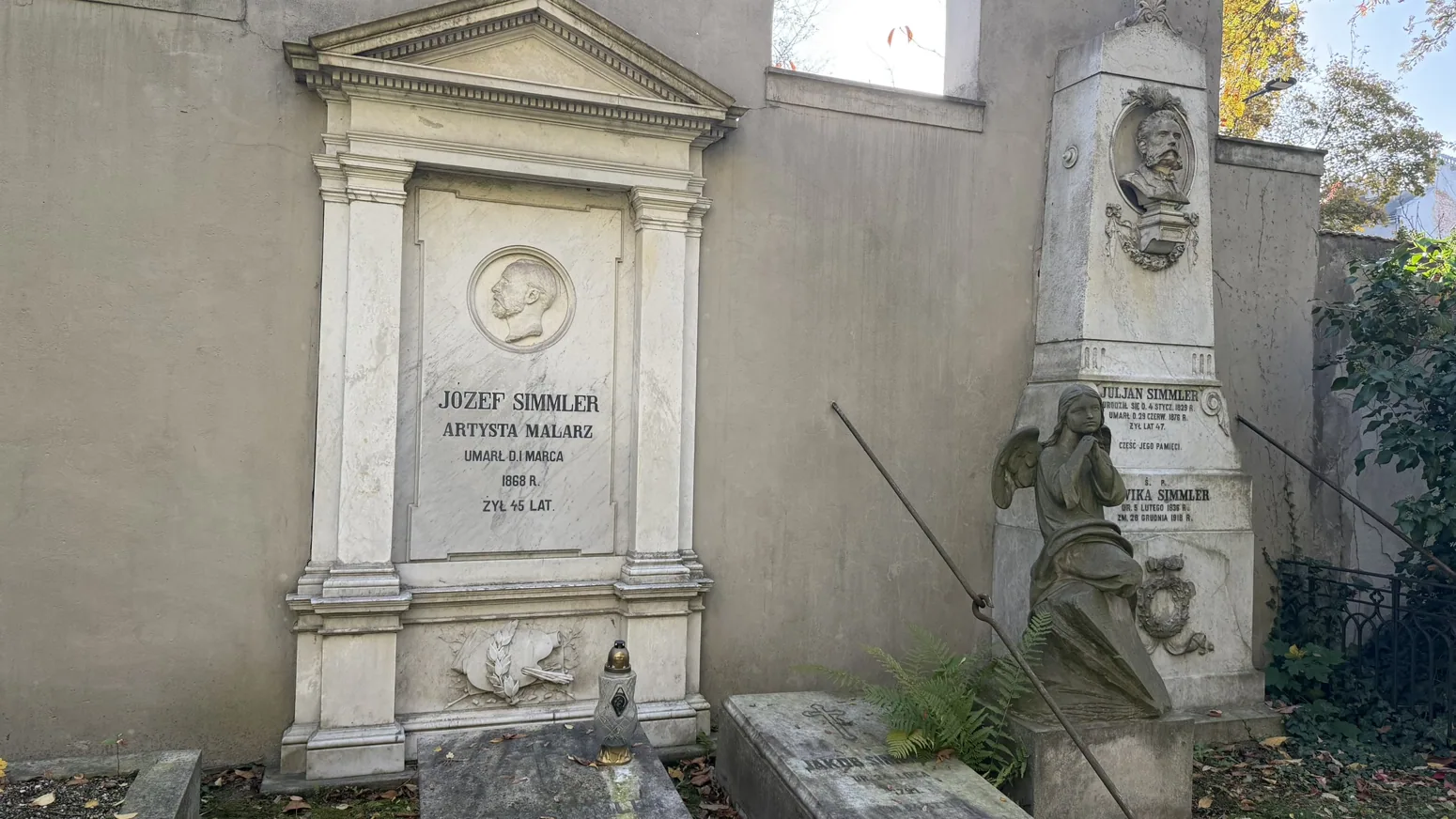
There are other stories: early Warsaw photographer Karol Beyer, industrial and artistic families, and people whose names are less immediately recognisable. In our accompanying images, inscriptions are identified only where they can actually be read; the photographs are primarily a record of this atmospheric place.
When cemeteries became battlegrounds
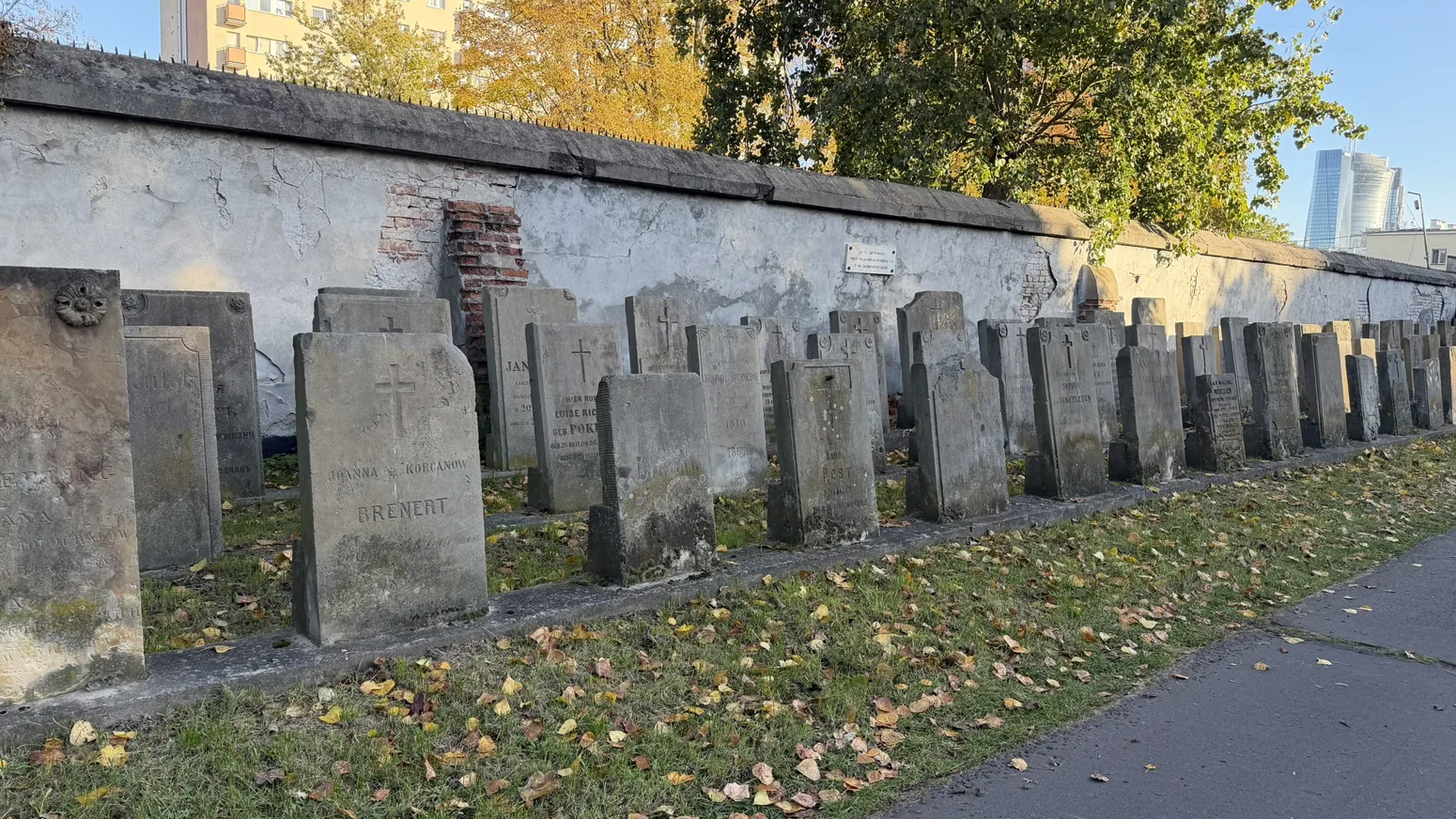
Both Protestant cemeteries have felt Warsaw’s repeated uprisings and wars. Fighting affected the area in 1794 and 1831, and the Warsaw Uprising of 1944 brought especially severe destruction. Memorial stones were damaged, structures lost, and records destroyed. In the Lutheran cemetery, displaced monuments and fragments are preserved in a lapidarium near the wall.
These are not simply picturesque ruins. The condition of an inscription or the missing details of a grave can reflect a very real break in a family's documentary history. To understand that loss in the wider city, continue through our Wola guide and our Warsaw Insurgents Cemetery deep dive.
Different beliefs, shared gestures
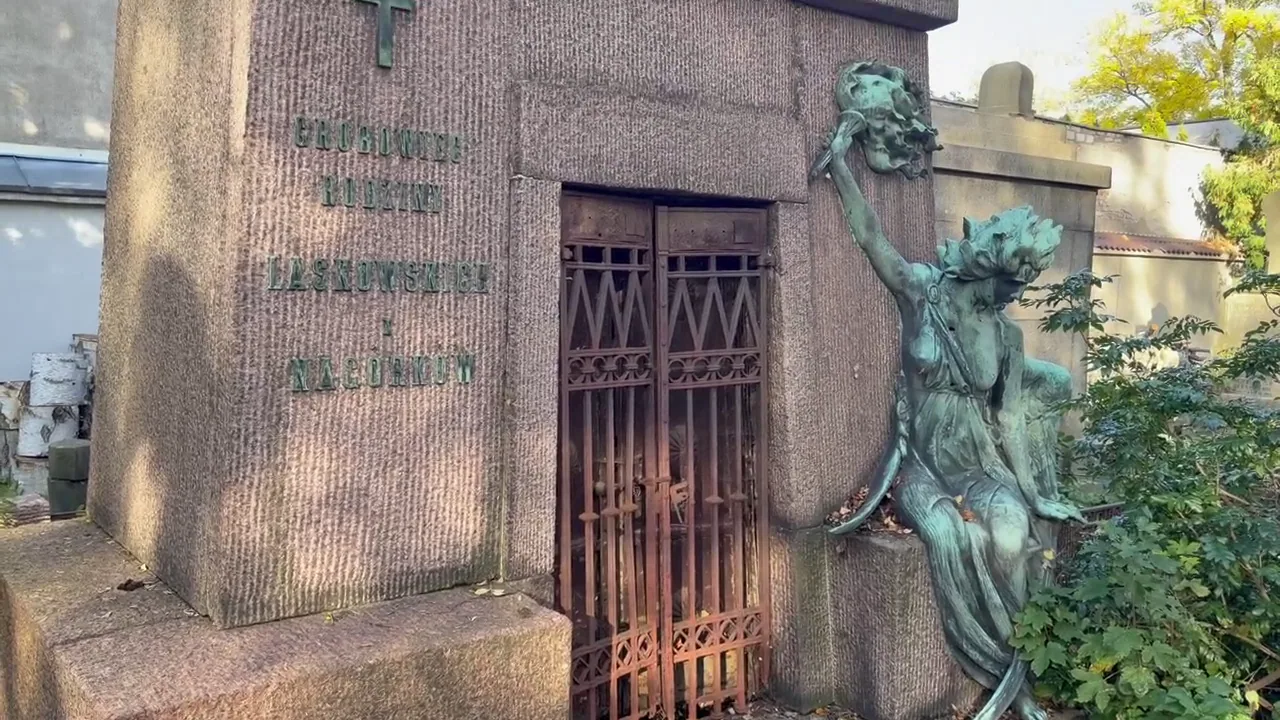
Religious differences matter, but they do not always announce themselves through a dramatic change of stone. You will see crosses, classical columns, angels, symbolic plants and monuments of many styles. Calvinist worship traditionally favoured greater visual restraint, yet family graves across generations also reflect wider European fashions and personal decisions.
Look closely at the details rather than assuming every grave fits a simple denomination-based pattern. The names on these stones point to a city of interwoven family, professional and religious networks. The adjacent cemeteries are especially interesting when explored together: each deepens the other.
Planning a respectful walk
Lutheran cemetery: ul. Młynarska 54/56/58, Warsaw. Reformed cemetery: ul. Żytnia 42, Warsaw. The two sites are close enough to explore as a single outing on foot, though they have distinct entrances, administrations and visitor arrangements.
Check current opening times and any local restrictions with the cemetery operators before setting off. They are active burial grounds, so remain on paths, respect graves and mourners, and avoid assuming that chapels or enclosed plots are open for public access. If you enjoy following Warsaw’s less familiar communities, pair this walk with our Orthodox Cemetery guide and the main cemetery hub.
The city beyond a single tradition
Warsaw's Protestant cemeteries are places of private remembrance as well as public history. Their neighbours can be explored in one walk, but neither loses its identity: together, they open another window on the people who built, described, sang and defended this city.
Continue exploring through the Warsaw Cemeteries & Memorials hub.