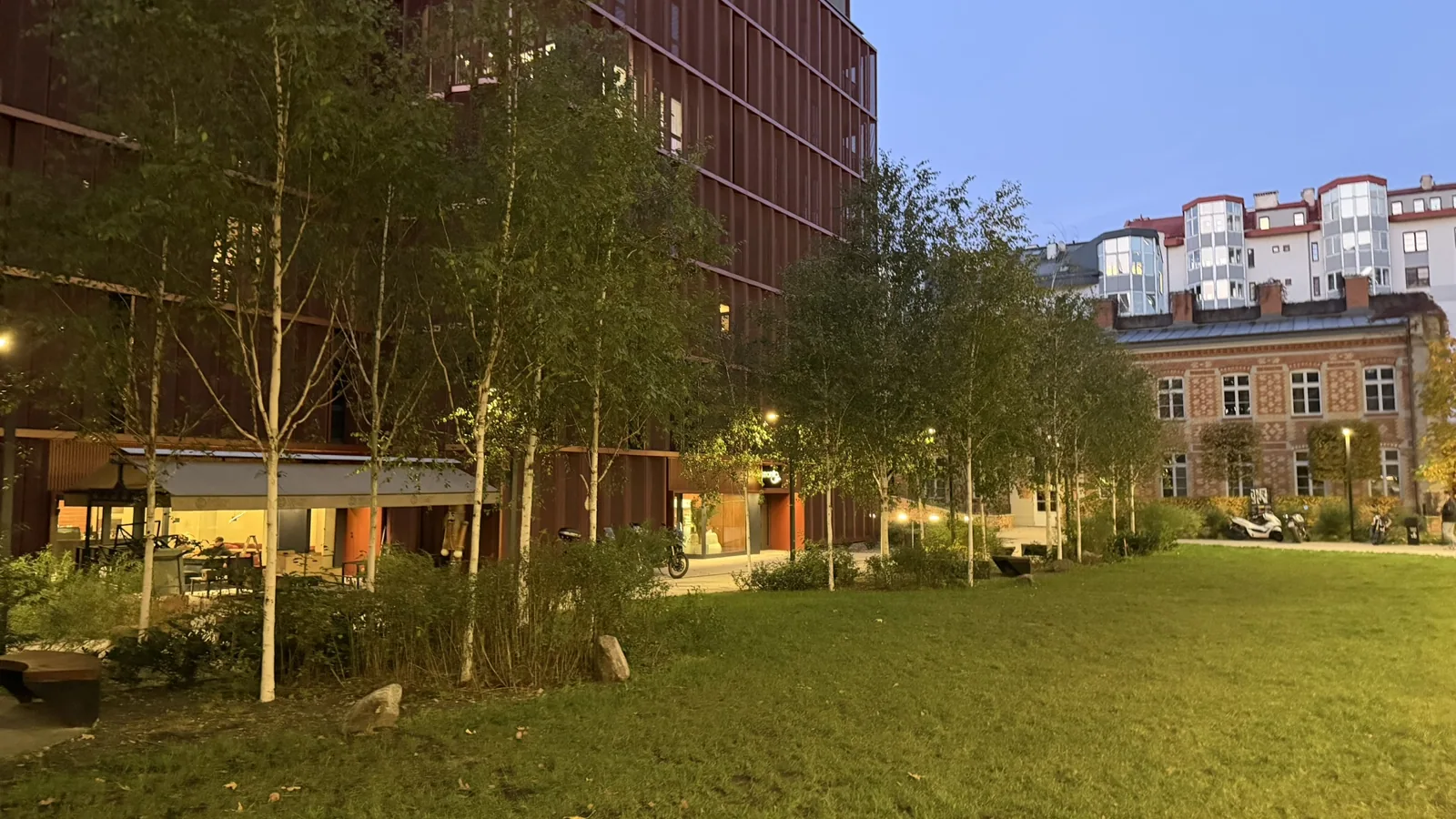
An industrial heritage guide to Warsaw’s factories, power stations, markets and public utilities — what survives, what was rebuilt, and what you can actually visit today.
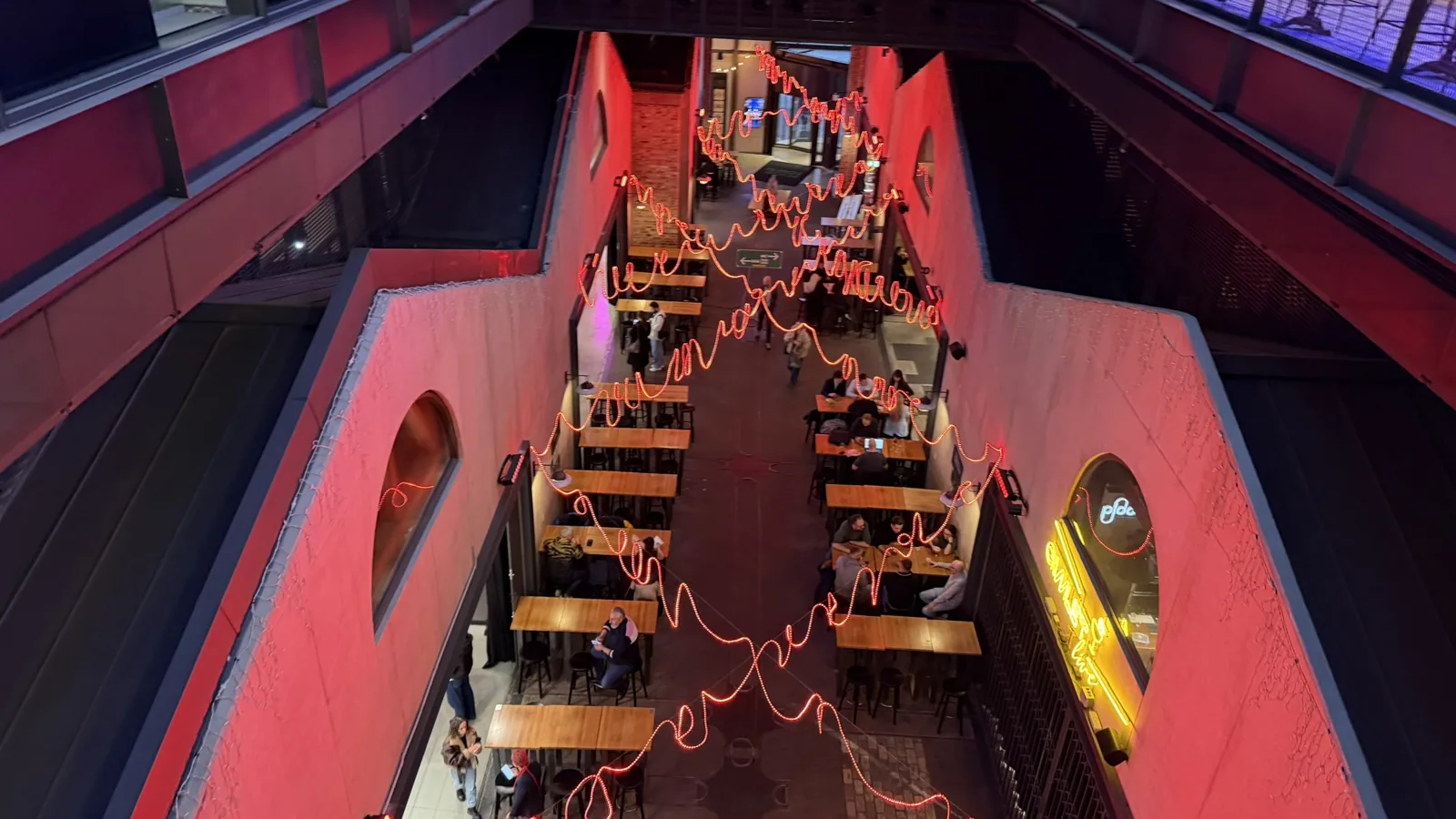
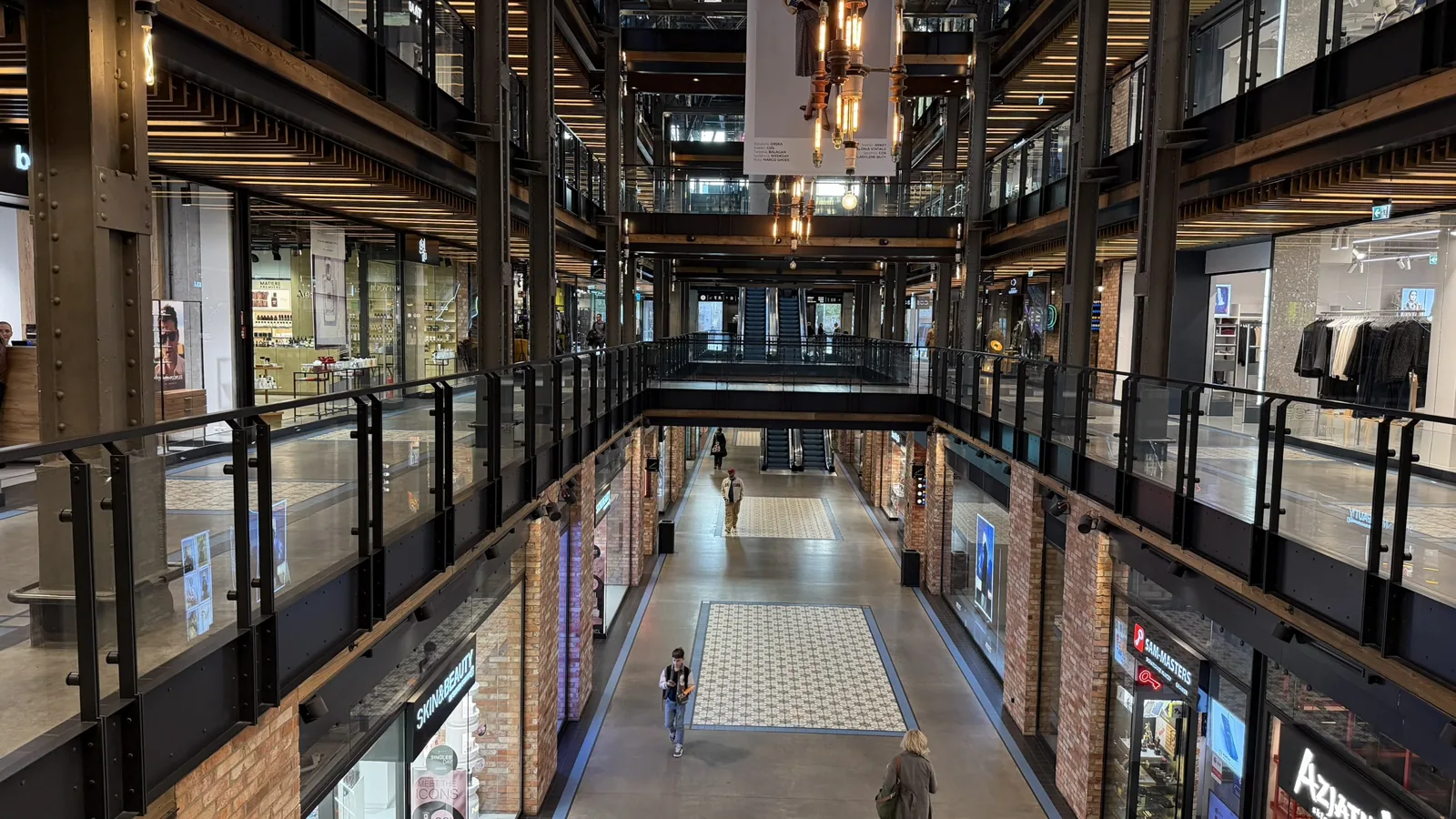
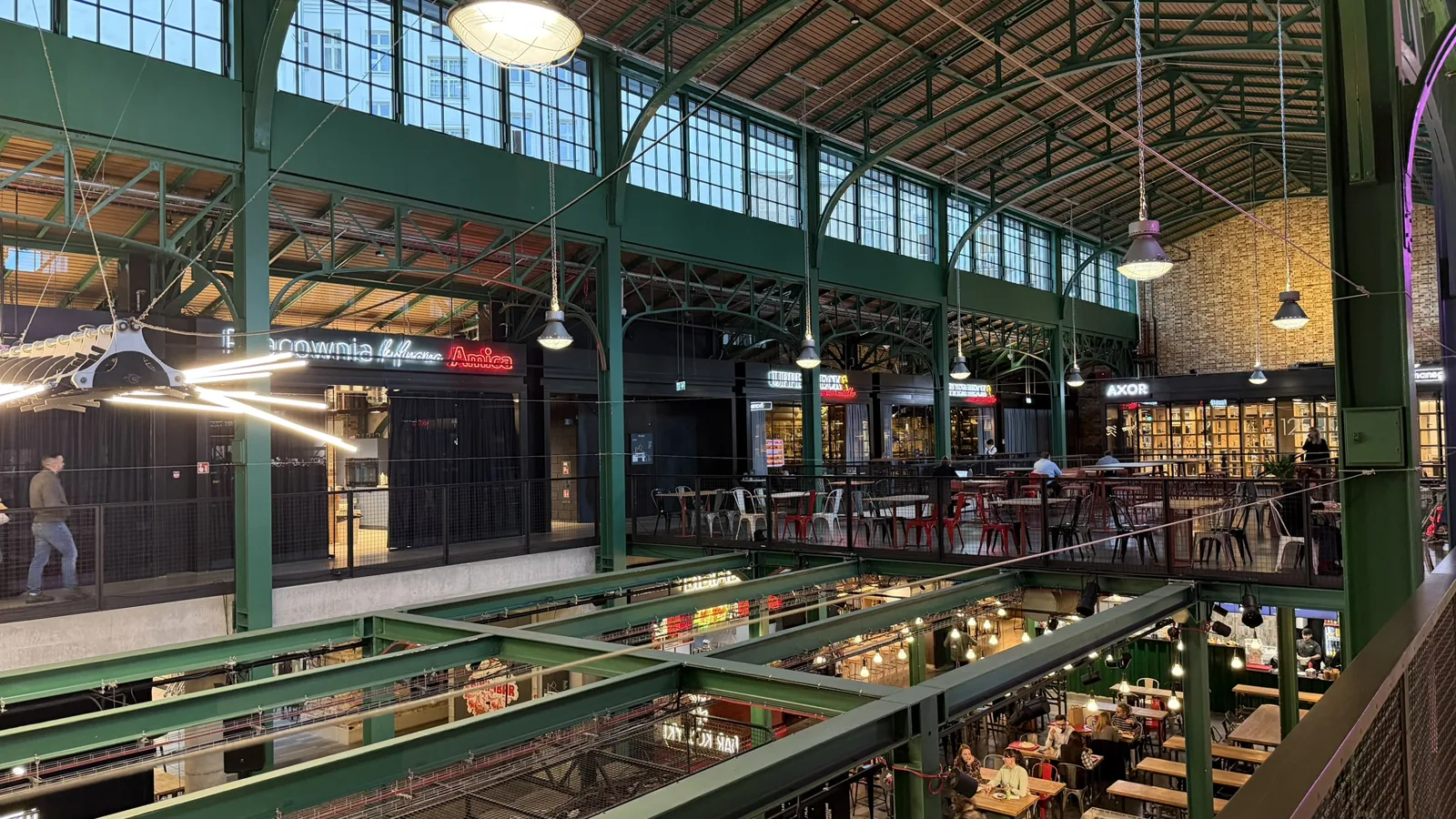
An elevated view along a corridor inside the redeveloped Fabryka Norblina complex.THE CITY THAT WORKED
The Warsaw behind the postcards
The industrial history of Warsaw is easy to miss. Between the rebuilt Old Town and the glass towers, it hides in plain sight: in Wola’s brick courtyards, a power-station chimney near the Vistula, and a market hall where Varsovians still shop for vegetables. This guide explores the former factories and industrial heritage sites you can visit — and the working utilities and vanished factories that help explain them.
These were never just handsome buildings. Their machines supplied homes, railways and businesses; their workers shaped whole neighbourhoods; and their production continued through political upheaval, two world wars and postwar nationalisation. Today, some are restaurants and shopping quarters, some are museums, and some are still working infrastructure. A few can only be seen from outside.
Industrial Warsaw in five moments
1845 onwards · Railways and expansion. The first section of the Warsaw–Vienna Railway opened in 1845. Later rail lines, relatively affordable land and access to markets helped turn Wola into a manufacturing belt; Praga also developed an industrial character.
1905 · Workers demand change. Warsaw’s factories were among the settings of the revolutionary strike wave. Industrial growth brought jobs but also difficult working conditions and labour conflict.
1939–1944 · War and destruction. Factories were seized, looted and damaged. The Wola massacre and fighting around the Mirowskie halls and power station reveal how industrial sites became part of the city’s wartime catastrophe.
1945–1989 · Production continues. Nationalised and reconstructed enterprises made metal goods, beer, machinery and consumer products. Postwar Warsaw did not cease to be industrial.
After 1989 · Closure, adaptation and loss. Some plants closed or moved; others survived. Redevelopment rescued some buildings and changed their meaning, while entire industrial landscapes disappeared.
● Public commercial space: generally enter the public areas; businesses have their own hours. ◈ Museum: check admission and tickets. ■ Working or restricted site: no casual entry. ◉ Exterior view: observe from public streets only. A site can have more than one status.
01 · MAKING THINGS
Factories, breweries and the city’s reinvention
The railways helped draw industry westwards, but making things was never confined to Wola. Metalwork, brewing, spirits and food production left different kinds of physical traces — from heavy machines to red-brick courtyards.
WOLA · METALWORKING · MUSEUM + PUBLIC SPACE
Fabryka Norblina
Walk through Norblin today and you’ll see machinery standing beside cafés and shops. The temptation is to treat it as decorative industrial chic. But this was a genuine metalworks, producing plated tableware alongside sheet metal, wire and pipes. The tight arrangement of workshops and equipment explains more than a polished façade could.
The Norblin enterprise had Warsaw roots well before it arrived at Żelazna. In 1882, Ludwik Norblin, his sister Albertyna and her husband Teodor Werner acquired the Bracia Buch factory here. Their combined business became the joint-stock Norblin, Bracia Buch i T. Werner company in 1893. Its customers and products changed with Warsaw’s fortunes. After destruction in 1939 and 1944, the works were nationalised and operated as Walcownia Metali “Warszawa”; production on Żelazna ended in the early 1980s.
The point of visiting is not simply that machines survived, but that they recall many generations of skilled labour. The on-site museum provides the clearest explanation of how the works functioned and how the surviving equipment fits together. The public courtyard and commercial areas are a different experience from an interpreted museum visit.
Look for: machinery, former workshops, and the contrast between older industrial buildings and new development. Access: public complex; check museum tickets separately. Museum history.
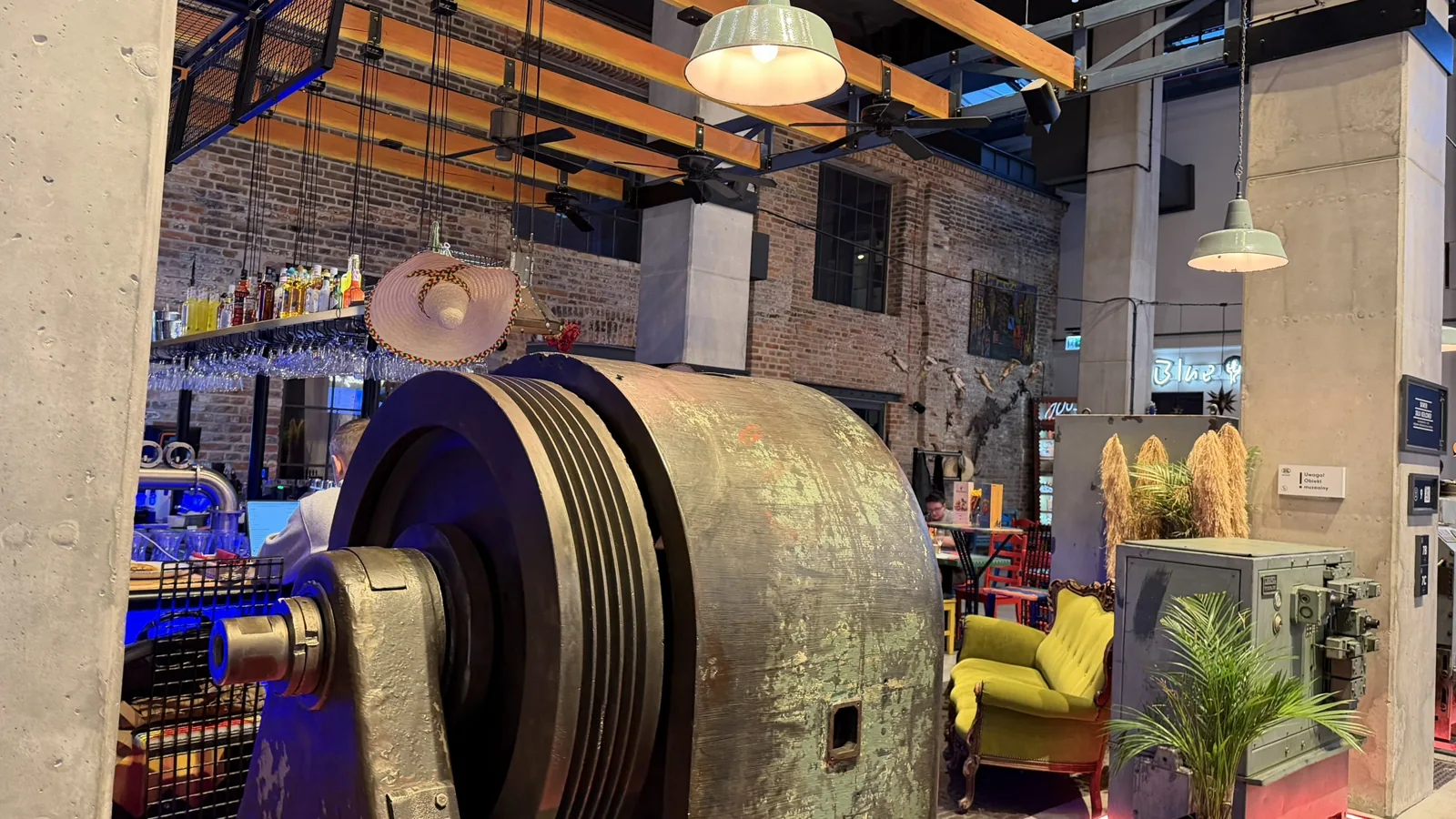
Metalworking machinery displayed among the former workshop buildings at Norblin.
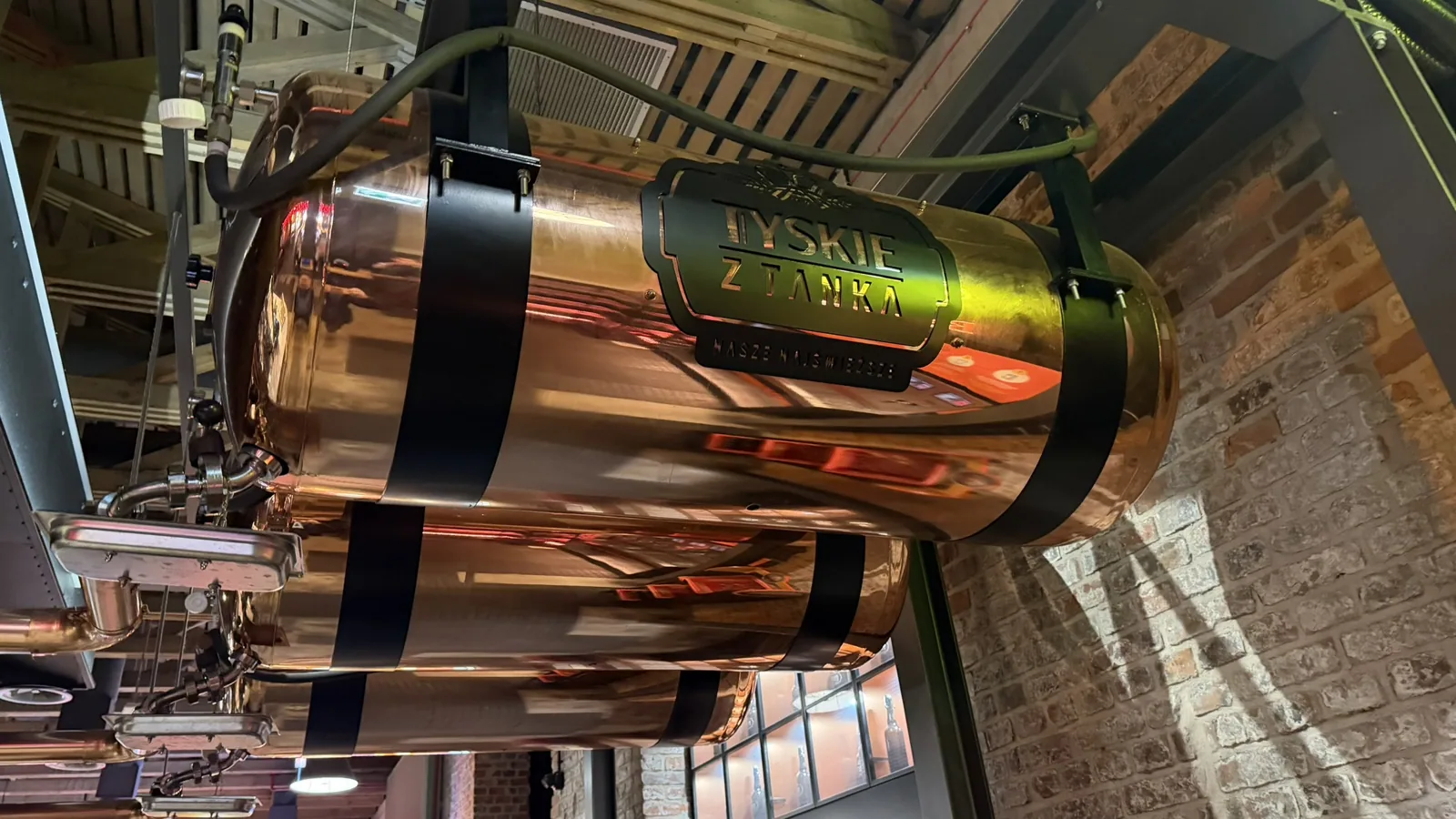
Tyskie beer tanks in Norblin’s contemporary dining area — not historic factory machinery.
WOLA · BREWING · PUBLIC COMMERCIAL SPACE
Browary Warszawskie
In 1846, Błażej Haberbusch, Konstanty Schiele and Jan Henryk Klawe acquired an existing brewery on Krochmalna. Over the following decades the business grew into a defining Warsaw producer; an interwar merger brought five city breweries together. Production, deliveries and employment tied the works to the surrounding streets.
The complex suffered grave wartime destruction. Beer production returned after the war under state ownership, and the Warsaw brewery later bottled Coca-Cola under licence — a surprising chapter in the life of an industrial site often presented only through its nineteenth-century origins. The modern complex mixes retained or reconstructed industrial elements with substantial new construction. Do not assume every brick arch belongs to the original brewery.
Look for: the historic buildings and brickwork among new development. Access: open commercial spaces; different venues keep different hours. Museum of Warsaw’s brewery history.
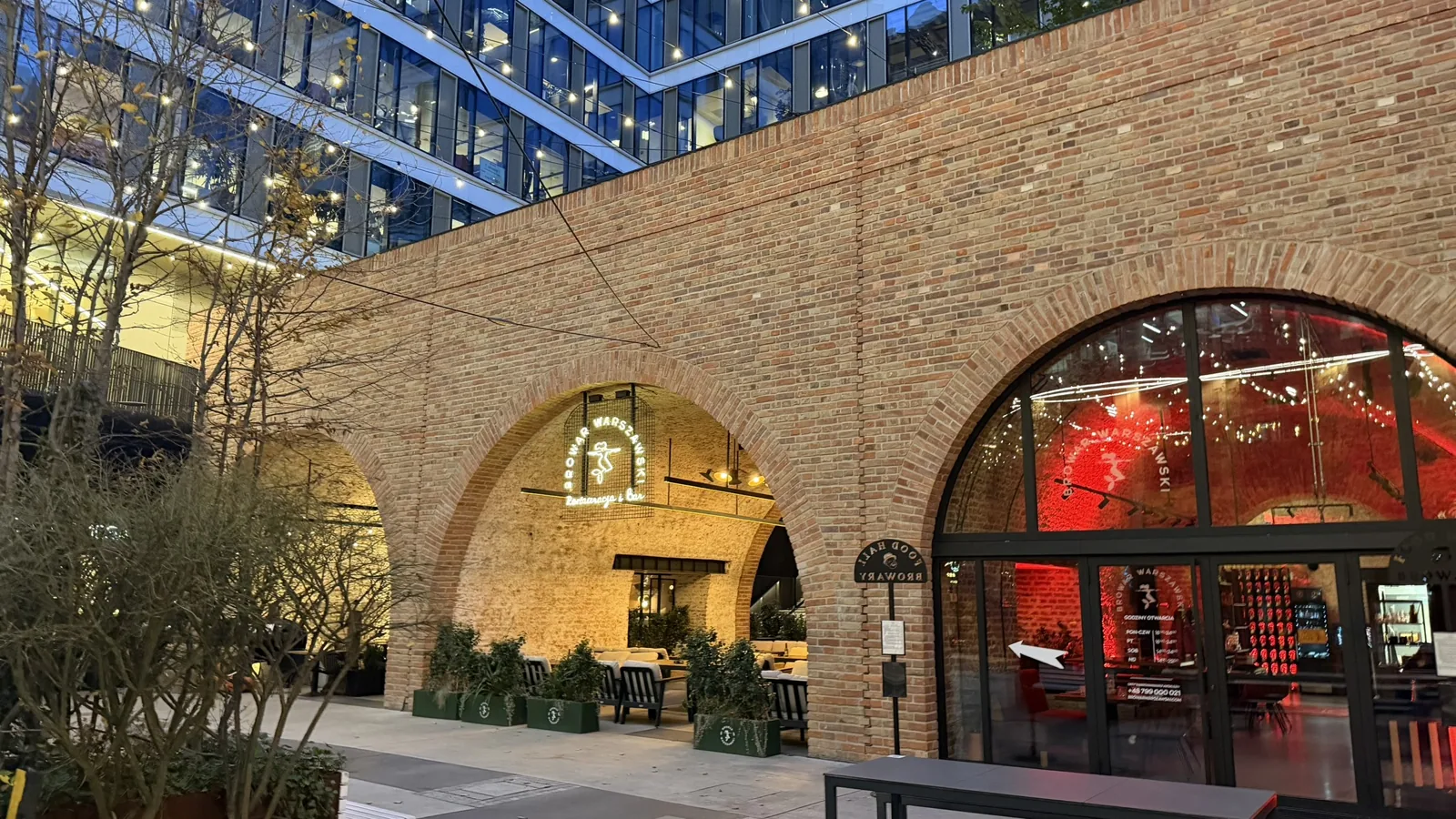
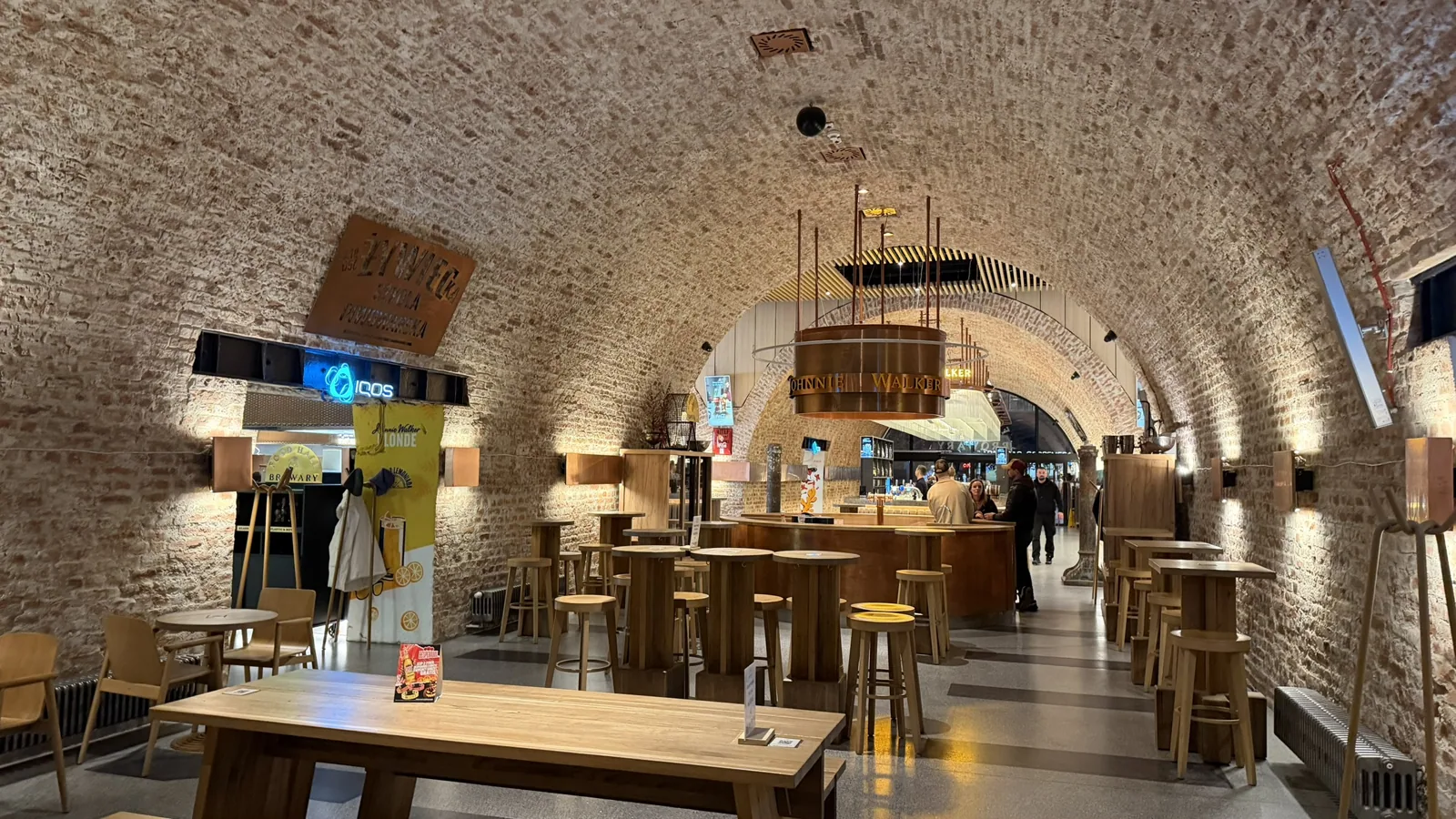
Brick structures and arches in the redeveloped brewery complex.
Vaulted brick spaces at Browary Warszawskie; the precise age of the masonry is not established by this photograph.Browary Warszawskie today combines older-looking brickwork with new urban development.
PRAGA · SPIRITS · PUBLIC COMMERCIAL SPACE
Koneser — the former vodka works
The red-brick complex took shape in 1895–1897, with facilities associated with a private rectification business and a Russian state spirits warehouse. Its industrial role belongs to the history of Praga’s factories and warehouses, not just today’s cultural and hospitality venues.
Look at the gateway and surviving brick architecture before exploring inside. For the fuller right-bank story — transport, tenements, production and changing streets — follow our Praga guide. Access: public areas generally accessible; check individual museum or business opening times.
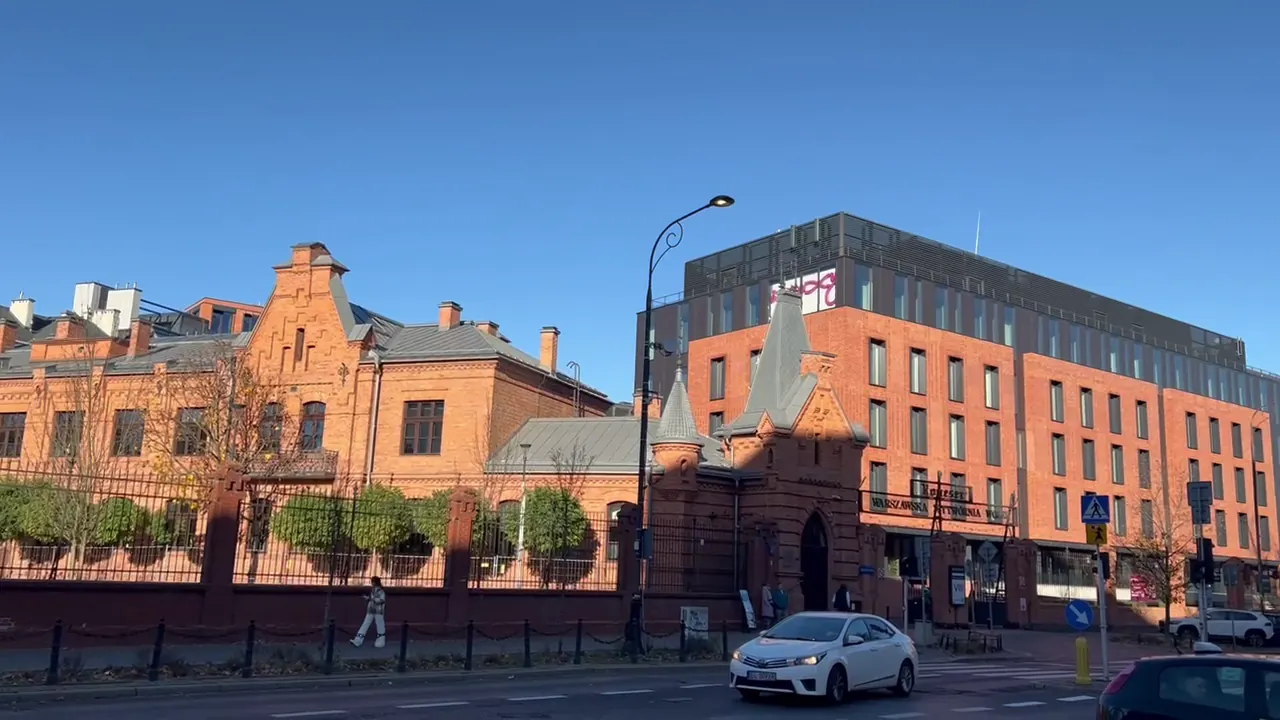
The gateway at Koneser; its brick architecture offers a visible reminder of Praga’s industrial past.02 · ESSENTIAL INFRASTRUCTURE
Powering and supplying the capital
Warsaw’s industrial transformation required electricity, gas, water and transport infrastructure. Some of its most remarkable industrial buildings weren’t factories making things to sell — they made urban life possible.
POWIŚLE · ELECTRICITY · PUBLIC COMMERCIAL SPACE
Elektrownia Powiśle
Built as a generating station and opened in 1904, Elektrownia Powiśle grew alongside the capital’s demand for electricity. Its brick façades, broad industrial volumes and equipment displayed inside the redeveloped complex make it one of the best places to imagine the scale of early municipal power.
Its most remarkable chapter came during the 1944 Warsaw Uprising. Workers and Home Army fighters took control of the strategic plant on 1 August. Under the leadership of the plant’s director, Stanisław Skibniewski, known as “Cubryna”, they held out for 36 days. Workers kept supplies reaching insurgent-controlled facilities and established temporary connections to hospitals, bakeries and workshops. The fighting and bombardment eventually put the station out of operation in September. This was industrial skill turned into a lifeline under siege.
Generation continued after wartime reconstruction and finally ceased in 2001. The repurposed complex opened in 2020. Today’s retail interiors incorporate older structures, reused or displayed equipment and new interventions; the exact provenance of individual machines and controls should be checked against on-site interpretation rather than assumed.
Look for: the scale of the former halls, brickwork, equipment displays and chimneys. Access: public shopping and dining areas; individual businesses vary. 1944 history.
Industrial-scale structure inside the adapted Powiśle generating station.
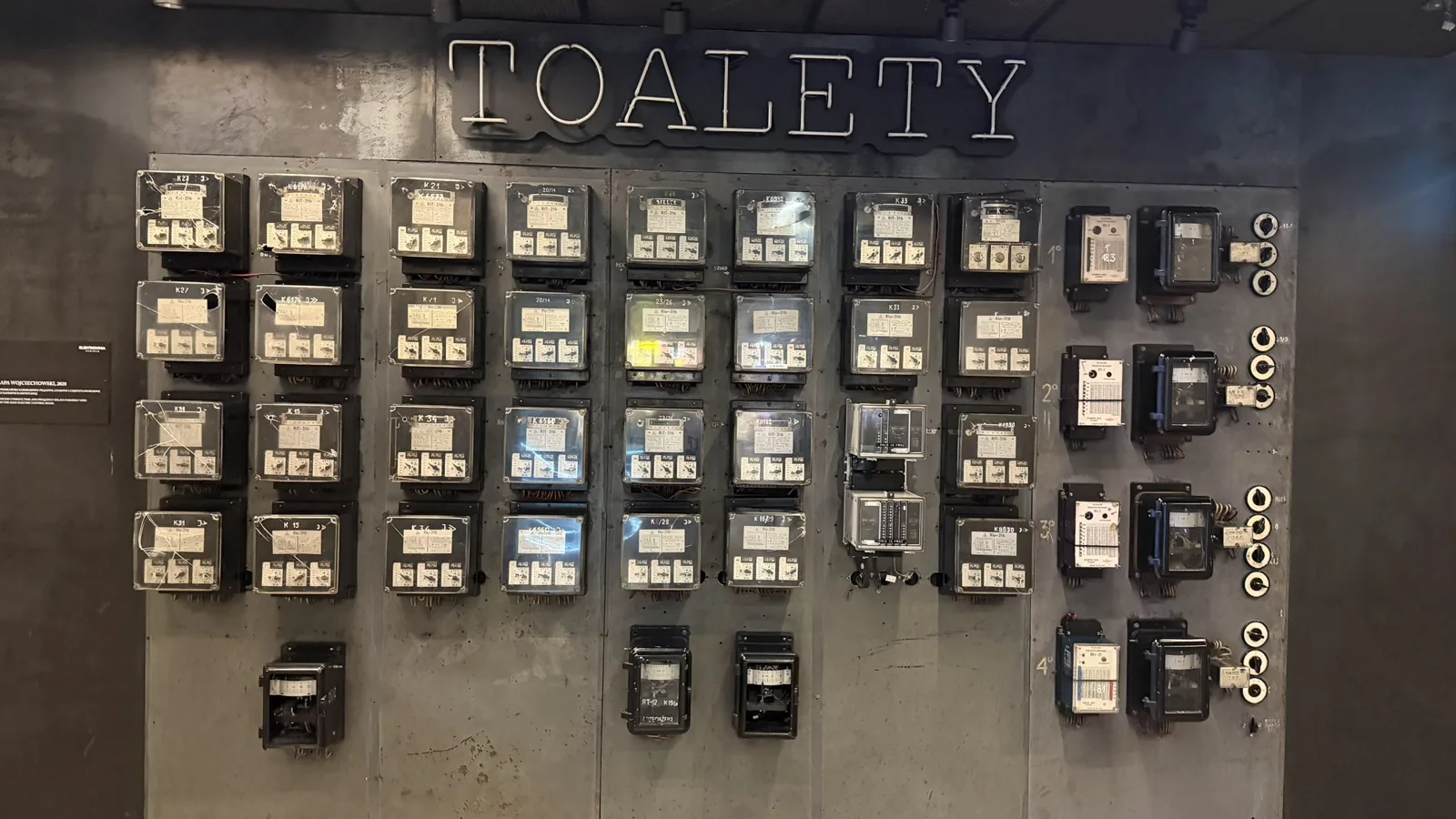
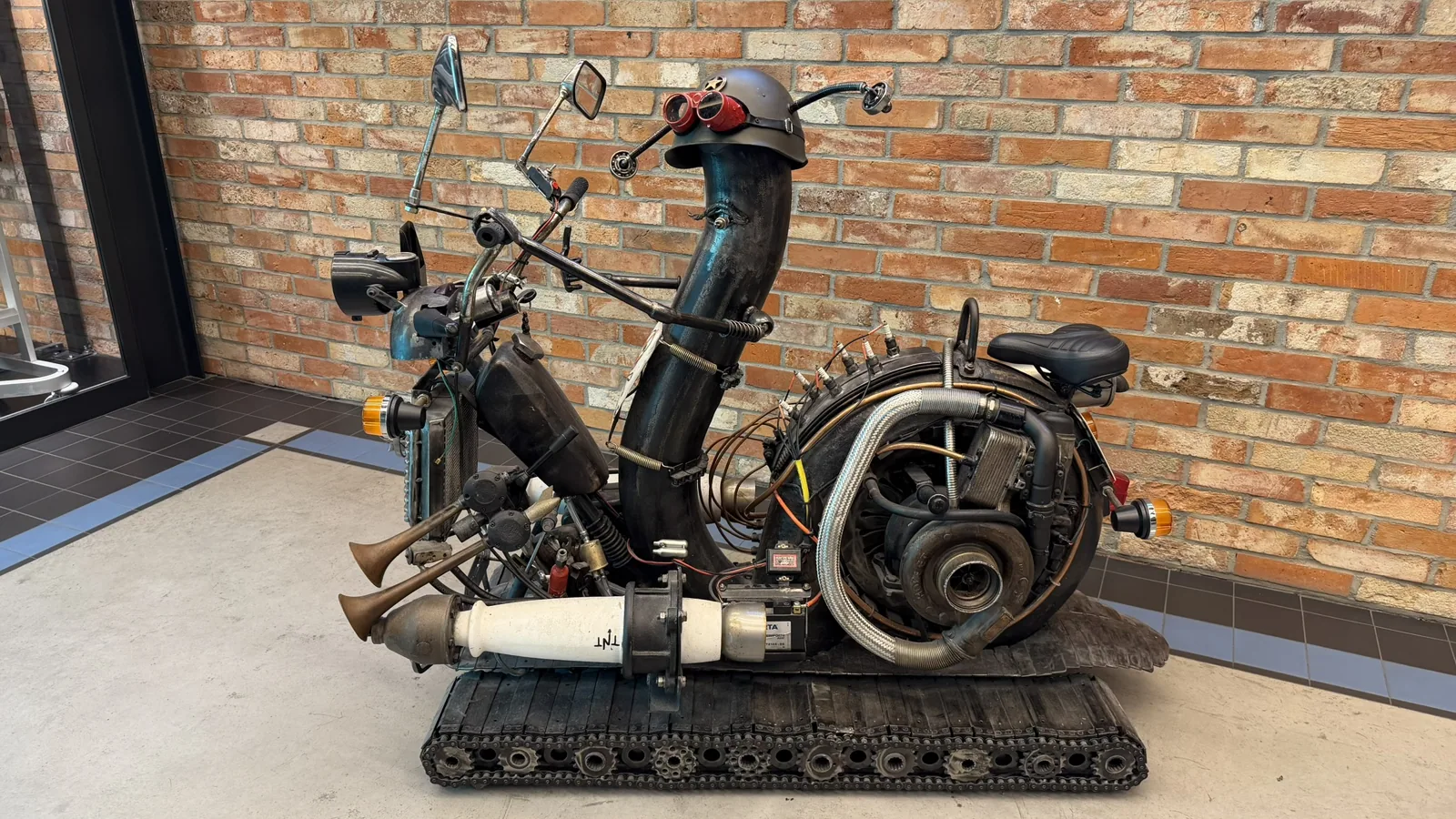
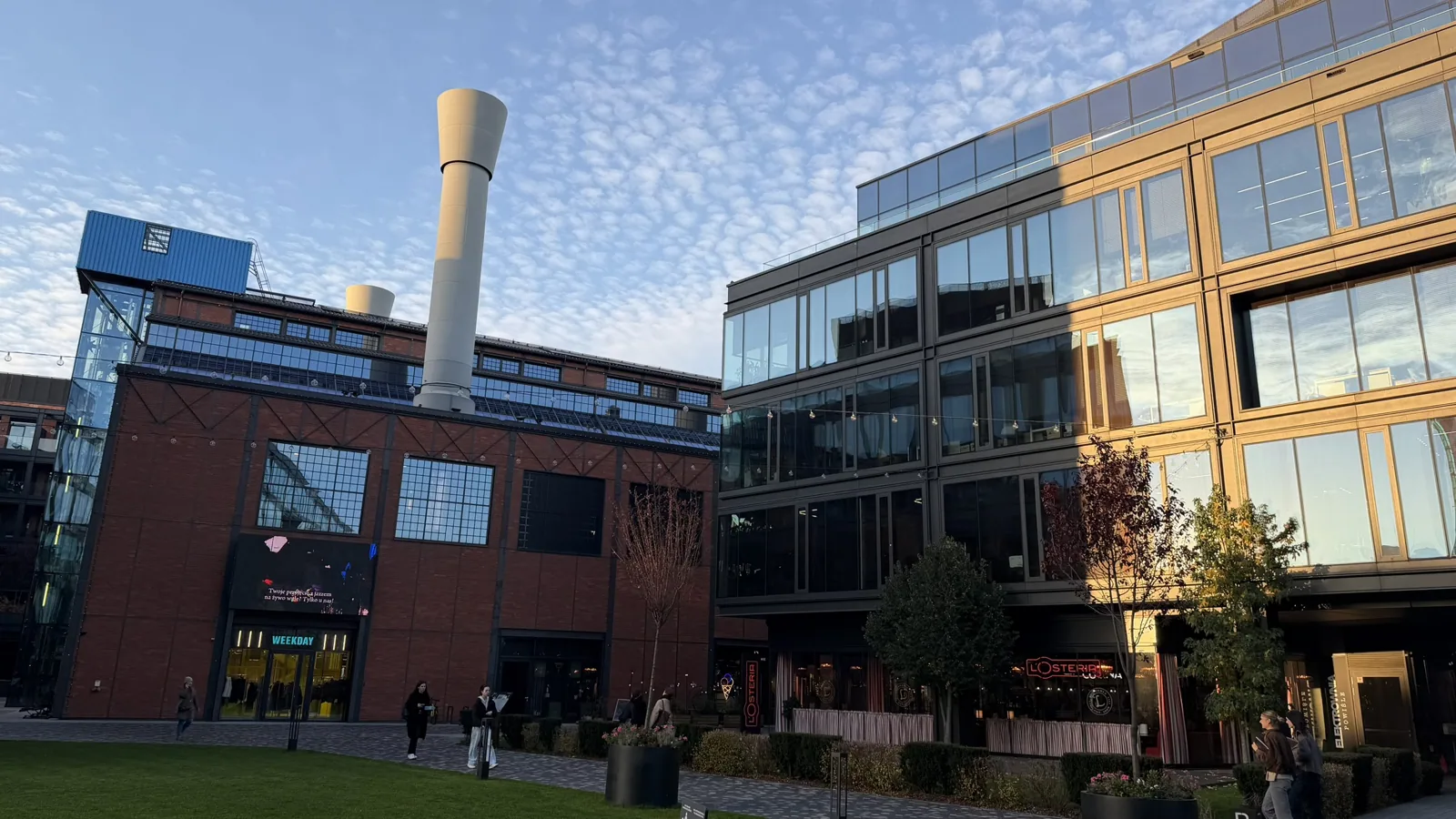
Electrical switchgear displayed inside Elektrownia Powiśle; its precise provenance has not been independently confirmed.A playful, snail-like motorcycle sculpture in Elektrownia Powiśle — a modern display, not power-station equipment.The brick exterior of the former power station beside its modern redevelopment.
WOLA · GAS · TICKETED MUSEUM
Warsaw Gasworks
The Wola gasworks began operating in 1888, supplementing an earlier gasworks on Powiśle. The great brick gas-holder structures make the scale of nineteenth-century urban gas production visible. The history of coal gas connects lighting, domestic services and industrial growth.
The Warsaw Gasworks Museum is a visitable museum with published admission arrangements; check its calendar before travelling. The wider former gasworks is not open for free roaming. Its exterior structures can be appreciated where visible from public space.
OCHOTA · WATER · RESTRICTED UTILITY
Stacja Filtrów — the Lindley waterworks
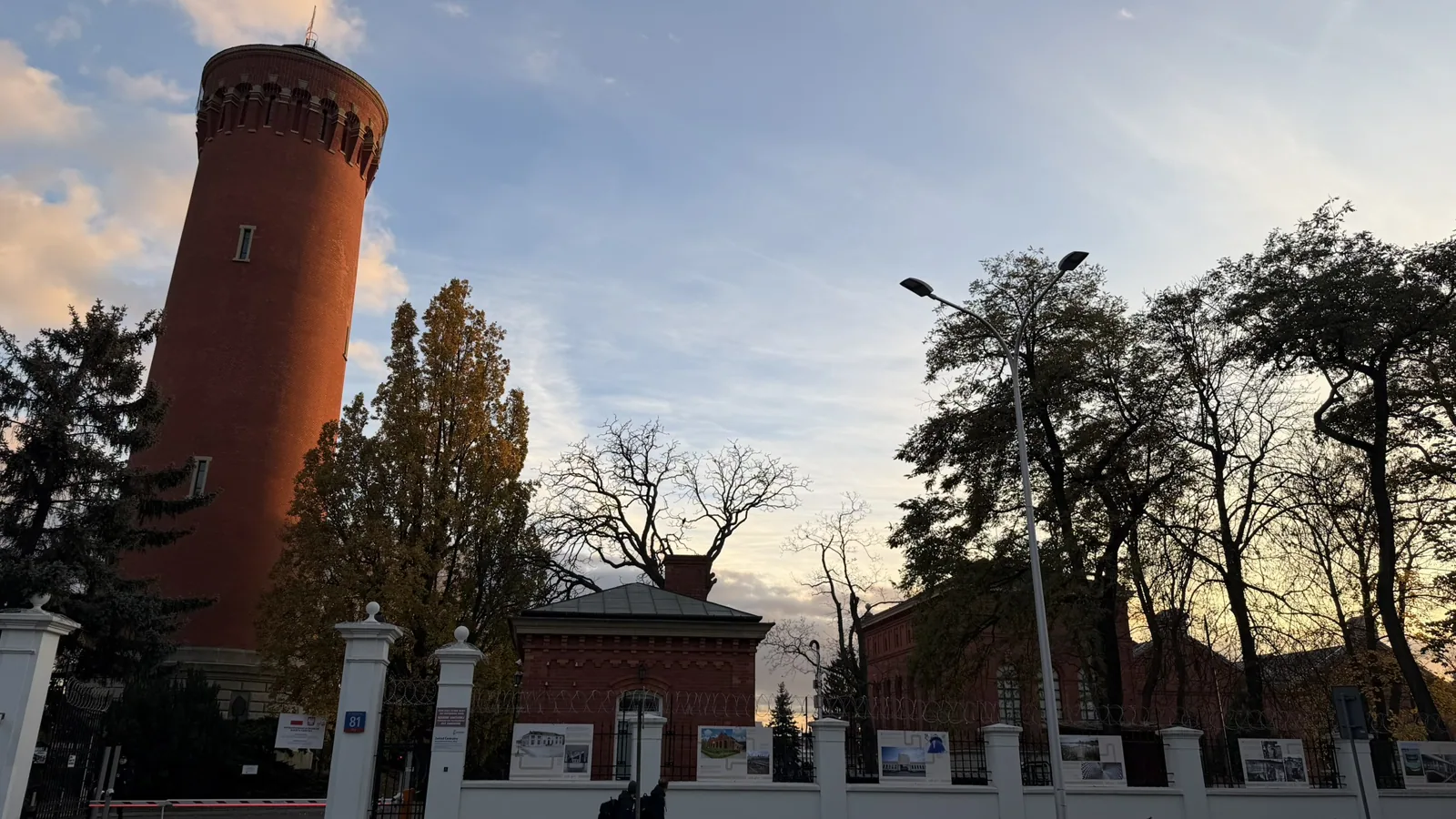
Warsaw’s filter station began supplying treated water in 1886. Its red-brick buildings, filtration system and careful engineering are evidence that clean water was as transformative as a new railway or factory. Unlike many heritage conversions, the complex remains part of the water system.
Visitor warning: The operator’s published guidance says that public tours are suspended until further notice under security alert restrictions. Do not plan an entry without a fresh official confirmation. Photographs from the public street are a safer alternative. Official tour notice.
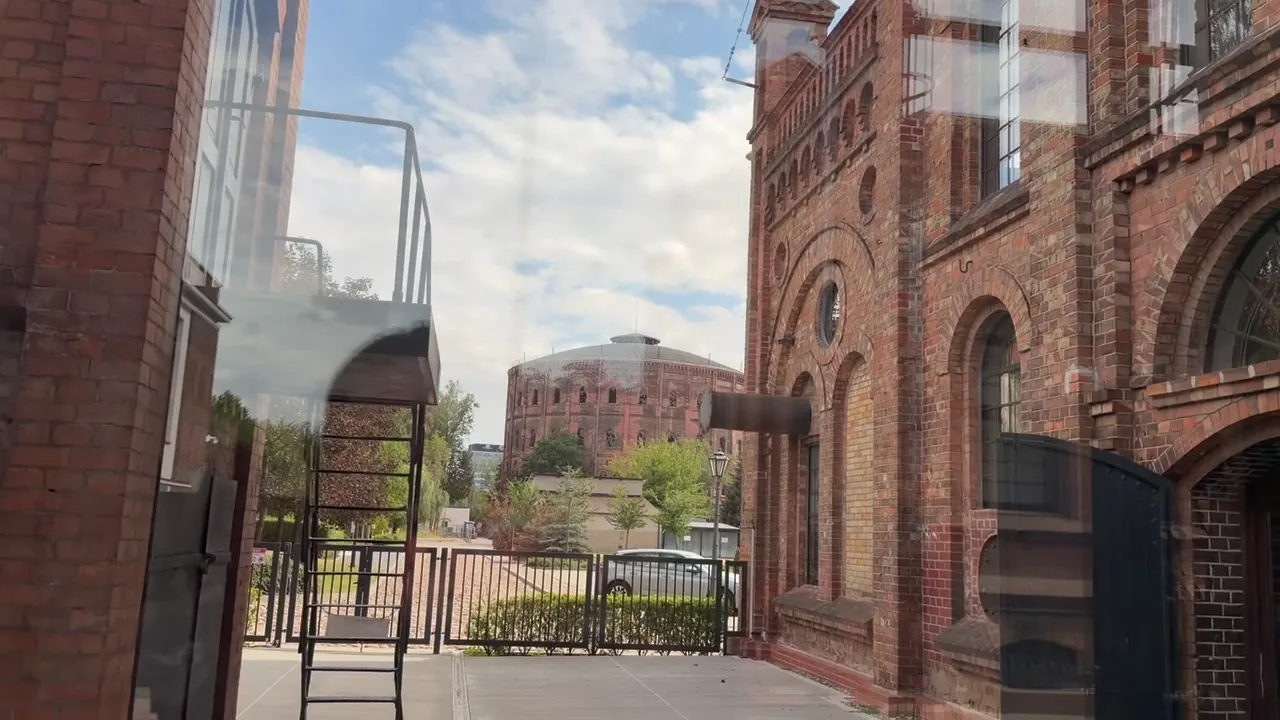
Historic waterworks tower photographed from outside the utility perimeter.WOLA · ELECTRIC TRAMS · TICKETED MUSEUM
The former tram power station
The Warsaw Uprising Museum occupies a former municipal tram power station built in 1904–1908 near Grzybowska and Przyokopowa. Its brick industrial building is part of the story even before you explore its wartime exhibitions. Add it to a Wola route if you have time for a substantial museum visit; check tickets separately.
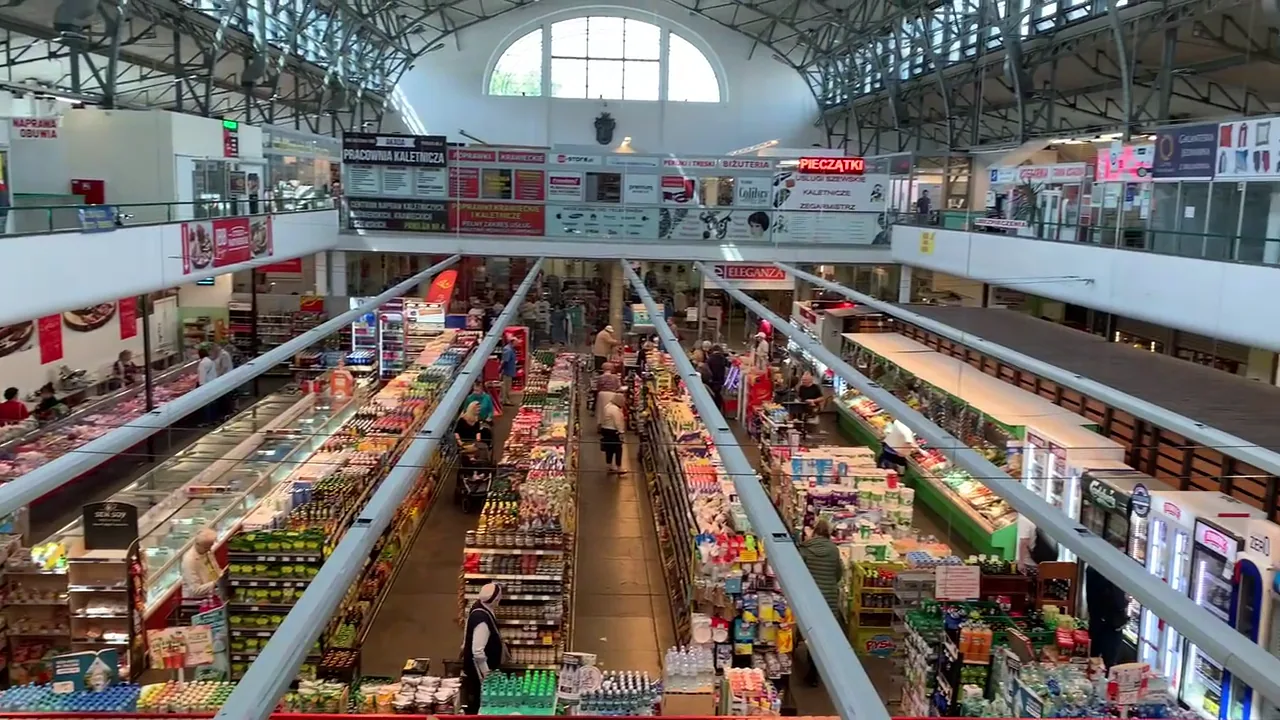
The twin Mirowskie market halls were built in 1899–1902 to organise food trading in a growing capital. They were places of deliveries, stalls, sellers and regular customers — everyday labour often overlooked in histories of grand factories. The area witnessed mass killings of civilians during the Wola massacre in August 1944, and the halls were burned and heavily damaged. That history deserves remembering even amid normal market bustle.
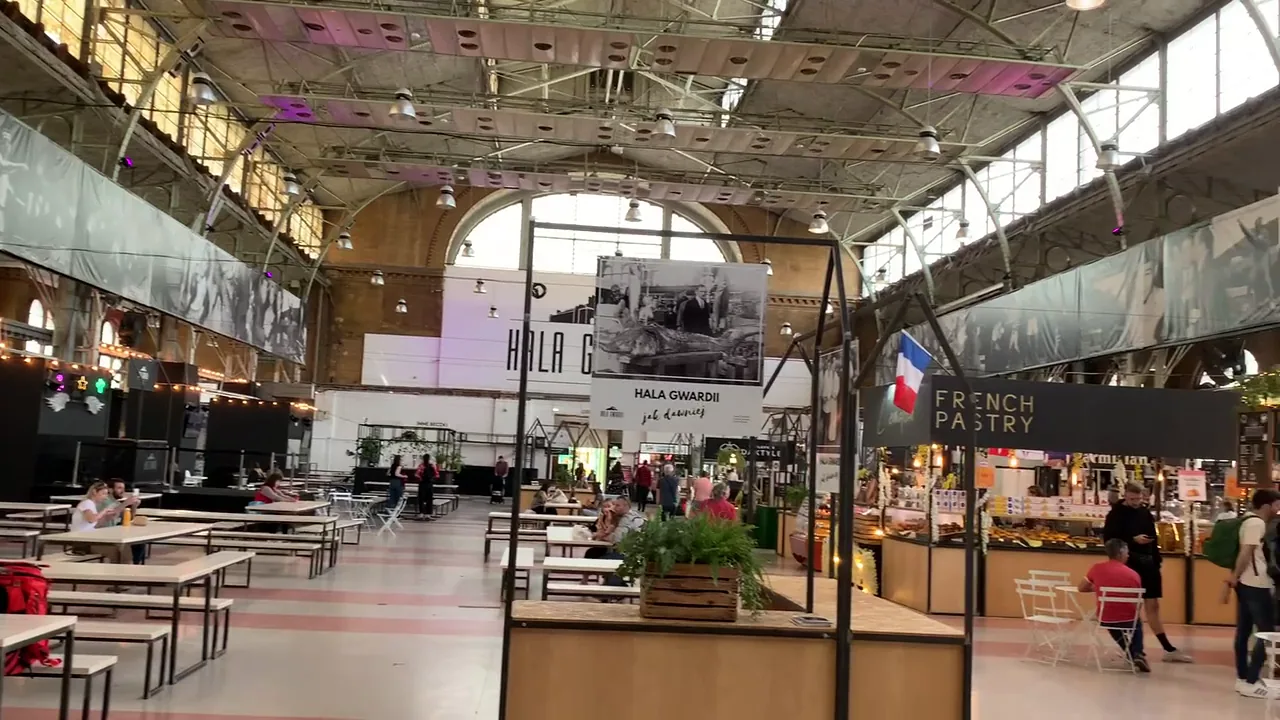
After the war, Hala Mirowska returned to food retail. Hala Gwardii followed a different path, including a celebrated sporting life associated with boxing, before more recent market and hospitality uses. Hala Gwardii is currently closed for modernisation: the city announced its redevelopment contract in December 2025 and a programme continuing to 2029. The accompanying archive photograph shows the hall interior from an earlier period, not a presently accessible food hall.
Visit: Hala Mirowska is a working shopping destination; respect vendors and ask before close-up photography. View Hala Gwardii from public areas only while closed. City redevelopment notice. Explore Wola & Mirów.
Market stalls at Hala Mirowska — an everyday trading role that still distinguishes it from converted food halls.Archive view of Hala Gwardii’s interior; the hall is currently closed for modernisation.
Hala Koszyki — a reconstructed market experience
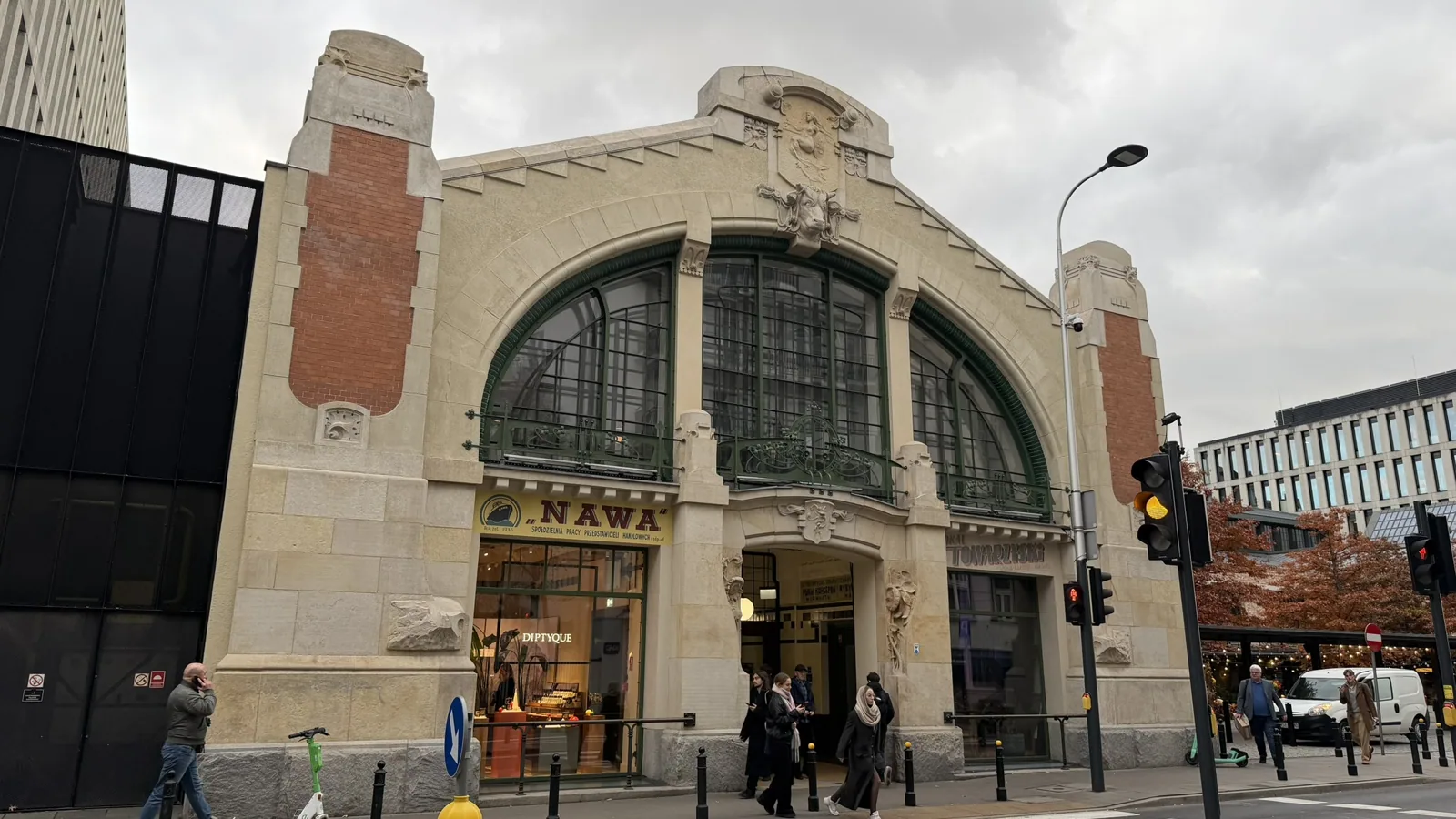
Opened in 1909 and designed by Juliusz Dzierżanowski, Koszyki was a modern covered market with distinctive Art Nouveau features. It was damaged in the Second World War and later underwent a far-reaching redevelopment completed in 2016. Historic gate buildings and selected ironwork were retained or restored, but much of the present main hall is reconstructed. Its elegant dining interior should not be mistaken for a completely intact Edwardian-era market.
That's not a reason to avoid it: Koszyki is lively and visually striking. It is simply a different sort of heritage experience from Mirowska, where food shopping remains part of the building’s daily purpose. Access: public commercial complex; dining venues have their own hours.
The entrance to Hala Koszyki, whose modern form mixes restored historic elements and reconstruction.Modern dining space beneath the hall’s mixed retained, restored and reconstructed metalwork.
04 · WHAT THE BRICKWORK CANNOT TELL YOU
The workers behind the machines
Wola’s industrial growth was also the growth of a working-class district. Rail access drew factories and warehouses; workers and their families lived among workshops, tram depots and commercial streets. Employers, skilled tradespeople, shop assistants, transport workers and market traders helped create the Warsaw that visitors recognise today.
Industrialisation was not an uncomplicated success story. Long working hours, uneven prosperity and tensions over wages and political rights helped make Warsaw’s factories important locations in the 1905 revolutionary strike wave. Warsaw’s industrial districts were also socially diverse, including Polish and Jewish workers, merchants, craft businesses and manufacturers. The city’s Jewish history and industrial history often occupied the same streets; our Jewish Warsaw guide explores the wider context.
Two places here keep the human history close to the surface. At Powiśle, workers’ technical knowledge became vital during the Uprising. At the Mirowskie halls, the fate of civilian traders and residents in 1944 contrasts painfully with the everyday market life that returned after the war. These stories belong alongside the restored walls.
BEMOWO · RESIDENTIAL HERITAGE
Osiedle Przyjaźń — the workers’ village built for a skyscraper
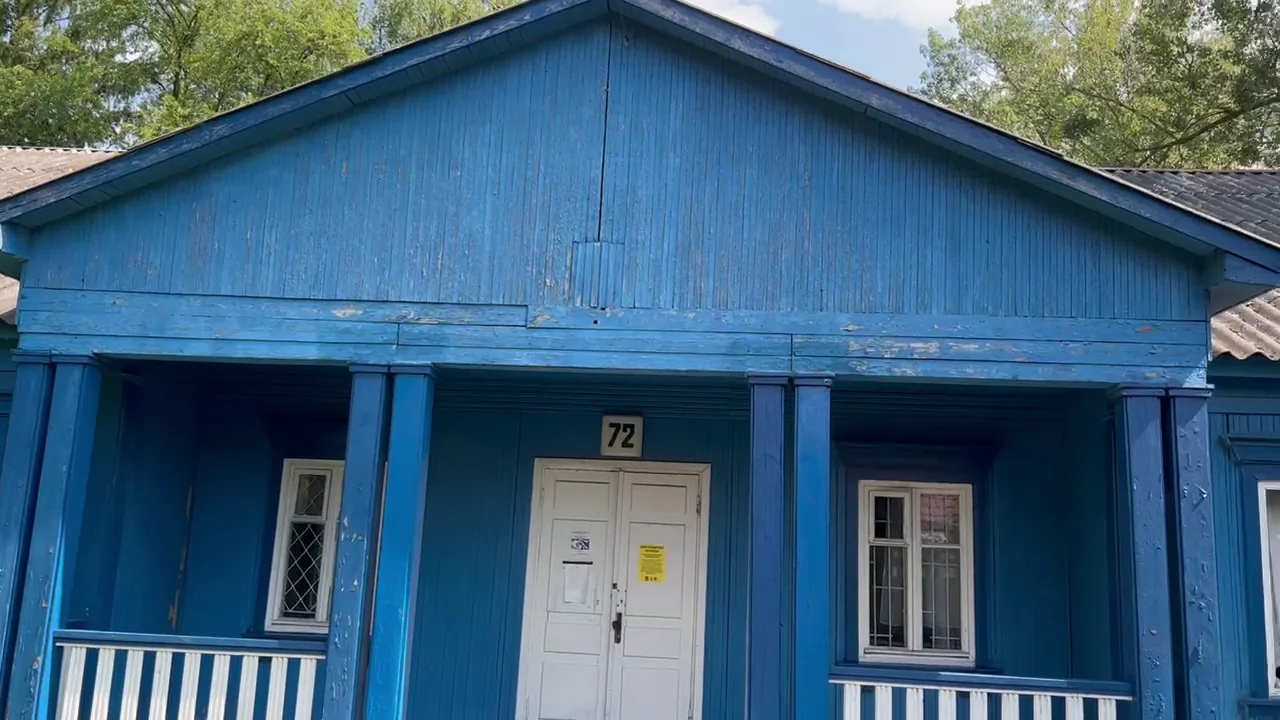
A wooden house at Osiedle Przyjaźń in Bemowo — a surviving reminder of the people who built the Palace of Culture and Science. Original Brit in Poland photograph, also featured in our Hidden Warsaw guide.
Industrial history is also the history of where people lived. Far from the former factory halls of Wola, Bemowo has an unusual surviving example: Osiedle Przyjaźń, built in 1952 to accommodate Soviet construction workers building Warsaw’s Palace of Culture and Science. It was a temporary workforce settlement that became a lasting part of the city. After construction finished in 1955, the wooden buildings and communal spaces were repurposed for students and university staff.
Its low houses and green lanes offer a striking counterpoint to the Palace itself. This is not a nineteenth-century factory village; its place in this guide is as a postwar construction-workers’ community — a reminder that rebuilding Warsaw depended on people as well as machinery and concrete.
Visiting: A residential neighbourhood, not a museum. View the buildings from public streets and respect residents’ homes and gardens. It is a separate Bemowo excursion, not part of either central walking route. See Osiedle Przyjaźń in our Hidden Warsaw guide →
What was lost — and what was saved?
Much of the industrial landscape no longer exists. The vast Lilpop, Rau i Loewenstein engineering works helped supply railway and machine-building needs; its history is central to Wola’s industrial importance even though the visitor cannot walk through an intact complex today. The later motor works at Żerań and tractor production at Ursus tell the story of socialist-era industrial employment and difficult post-1989 transformations.
Meanwhile, regeneration can preserve the outline of a place while changing its purpose entirely. Browary mixes inherited structures with substantial new construction. At Koszyki, reconstruction is part of the building’s modern identity. Norblin and Elektrownia incorporate equipment and industrial volumes into commercial environments. Their new lives make heritage easier to encounter, but can turn hard work into background atmosphere if we forget who used these spaces and why.
So look beyond the fashionable brickwork: for factory inscriptions, surviving tracks, worn thresholds, machines and the patterns of old workshops. Ask what is genuinely old, what has been rebuilt, and what has disappeared. The answer is usually more interesting than the restaurant menu.
05 · FIND YOUR WAY
Industrial Warsaw map
These pins show approximate locations, not confirmed entrances or access permissions. Marker colours distinguish public places, museums, restricted sites and exterior-only heritage.
Map points are for orientation. Official operators may change access conditions without notice.
Core route: Norblin → Browary Warszawskie → Hale Mirowskie. This is a manageable central walk, with the history and photographs providing plenty of reasons to stop. For a shorter outing, concentrate on Norblin and Browary. For a longer day, add the Warsaw Uprising Museum (a substantial separate visit).
Optional western detour: Gasworks Museum — check its calendar first; it is not a casual continuation of the central pedestrian circuit. Koszyki is a separate southward extension, better as another stop than an automatic final leg.
Powiśle to Praga — power and production
Begin at Elektrownia Powiśle, explore its former generating spaces, then cross the Vistula via the Świętokrzyski Bridge towards the right bank and continue to Koneser. Add the Wedel museum in Kamionek only if you have booked ahead and want a longer day.
Our Praga guide covers other industrial streets and sites. Consider public transport between the scattered right-bank destinations rather than assuming this is one short stroll.
Practical checks: The Gasworks Museum publishes its own admission calendar; Stacja Filtrów tours are suspended in the operator’s current notice; Hala Gwardii is closed for rebuilding. No fixed walk times or entrance guarantees are implied by the map.